Simple Habits for Beginner Belly Fat Loss
Build better meals, manage cravings, move more, and create healthy habits you can actually maintain—without extreme diets or overwhelming workouts.
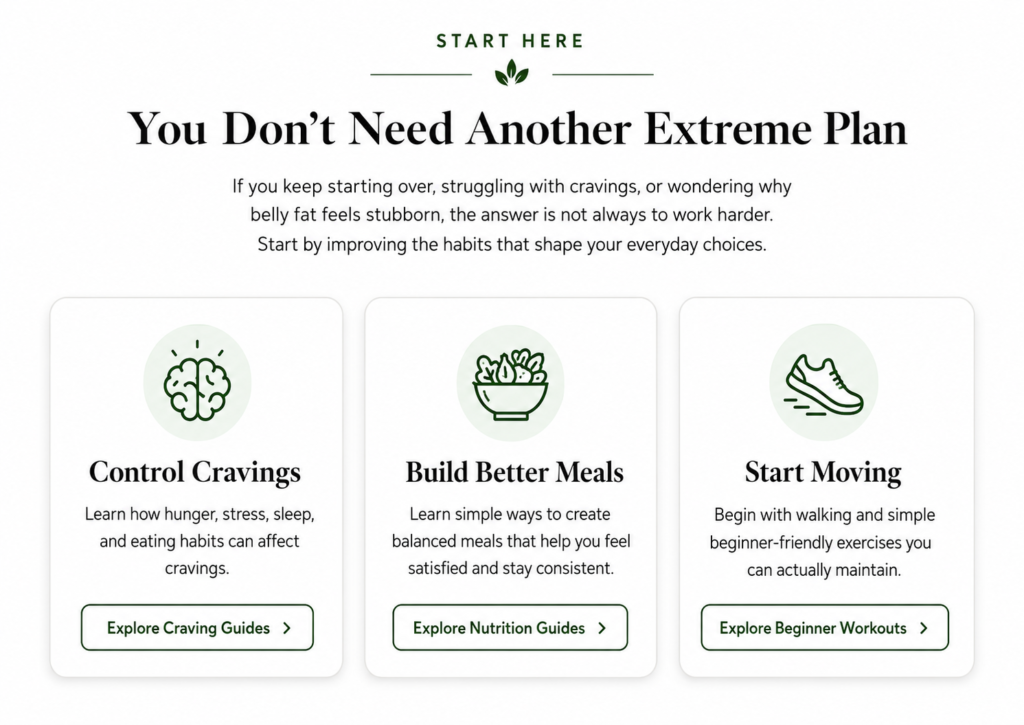
Start With the Free Belly Fat Reset Workbook
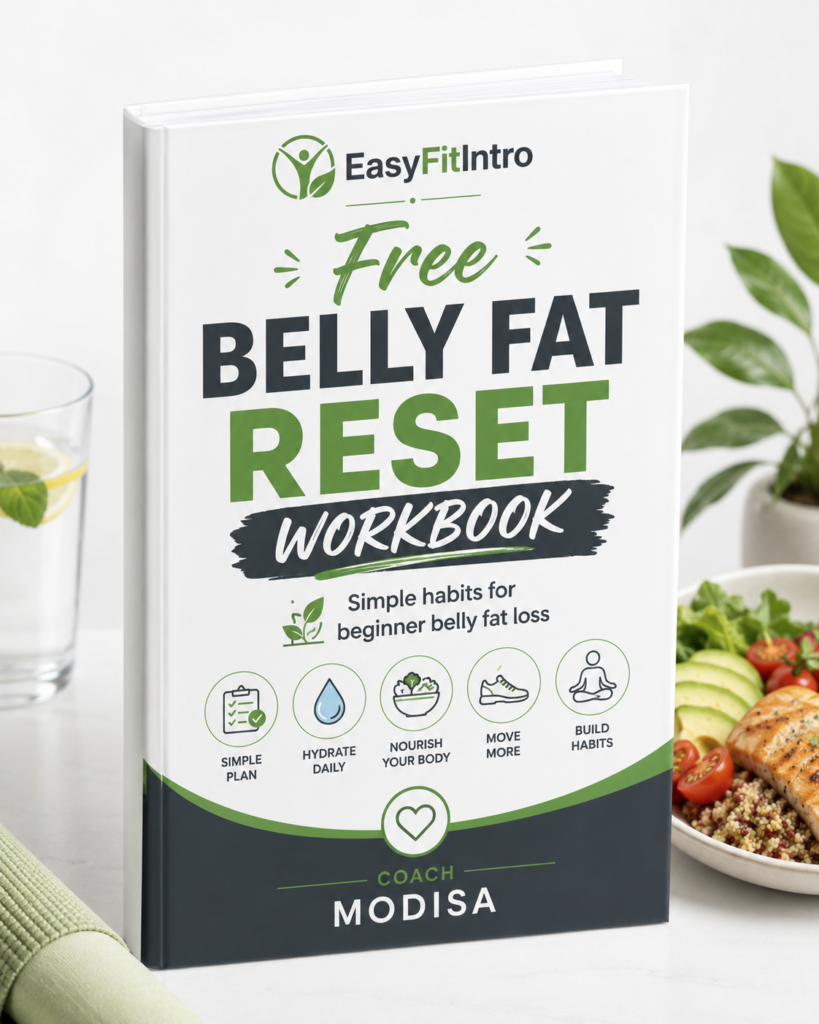
Not sure where to begin?
The EasyFitIntro Belly Fat Reset Workbook gives you a simple starting point for improving hydration, meals, movement, cravings, sleep, and daily consistency.
No starvation diets. No impossible workout schedules. Just practical habits you can start building today.
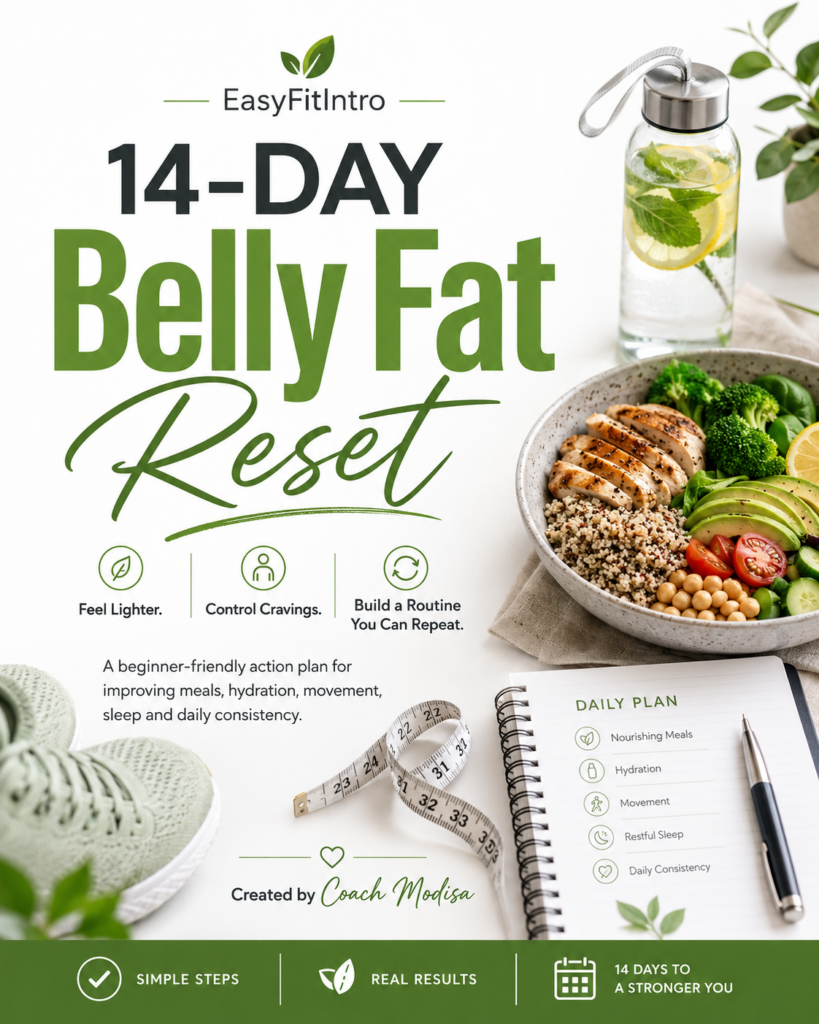
14-Day Belly Fat Reset
Ready for More Structure?
The EasyFitIntro 14-Day Belly Fat Reset is a beginner-friendly digital programme designed to help you build healthier habits around meals, cravings, movement, sleep, and consistency.
Inside the 14-Day Reset
- Daily action pages
- Balanced meal guidance
- Craving-control strategies
- Walking and movement guidance
- Beginner strength exercises
- Progress tracking
- Stress and sleep support
- Coach Modisa guidance videos
Price
R199
Learn One Habit at a Time
- Strength Training for Women Over 40: 7 Beginner Moves That Help With Belly Fat and Protect Your Muscle
- Why Belly Fat Increases During Perimenopause: 7 Changes Women Over 40 Should Know
- Why Small Habits Beat Crash Diets for Belly Fat: 7 Reasons Beginners Finally See Results
- 14-Day Belly Fat Reset for Beginners: A Simple Plan to Build Better Habits and Reduce Cravings
- Belly Fat Is More Than a Cosmetic Issue: 7 Health Risks Beginners Should Know
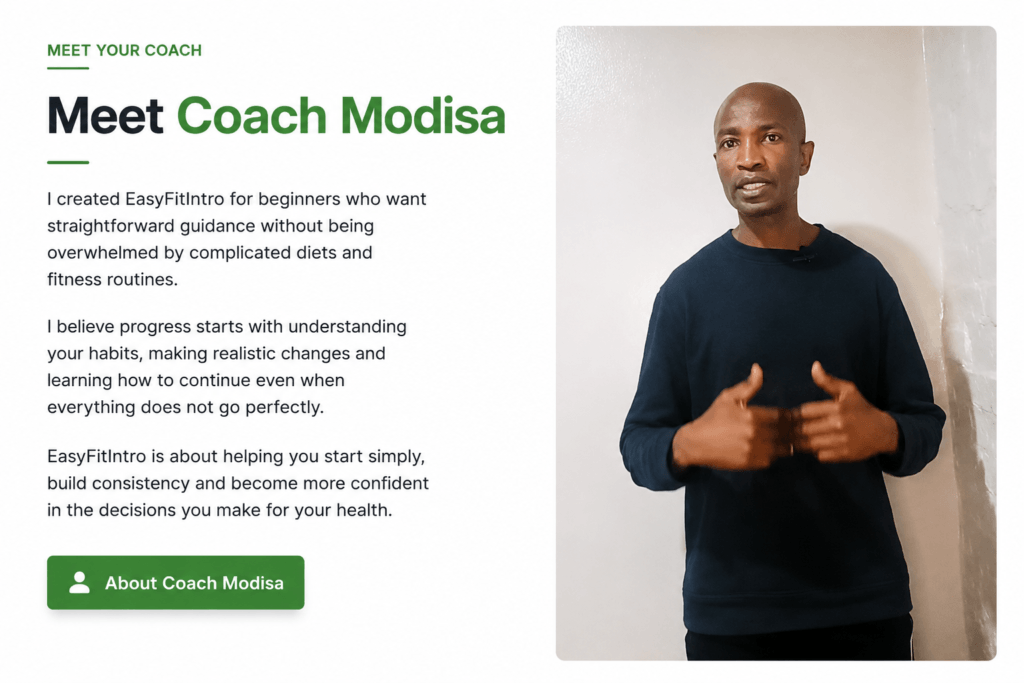
Meet Coach Modisa
I created EasyFitIntro for beginners who want straightforward guidance without being overwhelmed by complicated diets and fitness routines.
I believe progress starts with understanding your habits, making realistic changes and learning how to continue even when everything does not go perfectly.
EasyFitIntro is about helping you start simply, build consistency and become more confident in the decisions you make for your health.
Your Next Healthy Decision Can Start Today
You do not need to change everything at once.
Start with one simple step, build from there, and keep moving forward.