
Introduction
You can eat salads.
You can cut calories.
You can go to the gym.
And still… your belly fat doesn’t move.
It’s frustrating.
The reason? Fat loss is not controlled by calories alone. It’s heavily influenced by hormones—the internal messengers that decide whether your body stores fat or burns it.
When certain hormones are out of balance, your body holds onto belly fat—even if you’re “doing everything right.”
Let’s break down the three biggest hormone imbalances that make abdominal fat stubborn—and how to reset them naturally.
1️⃣ Insulin Imbalance (The Fat Storage Switch)
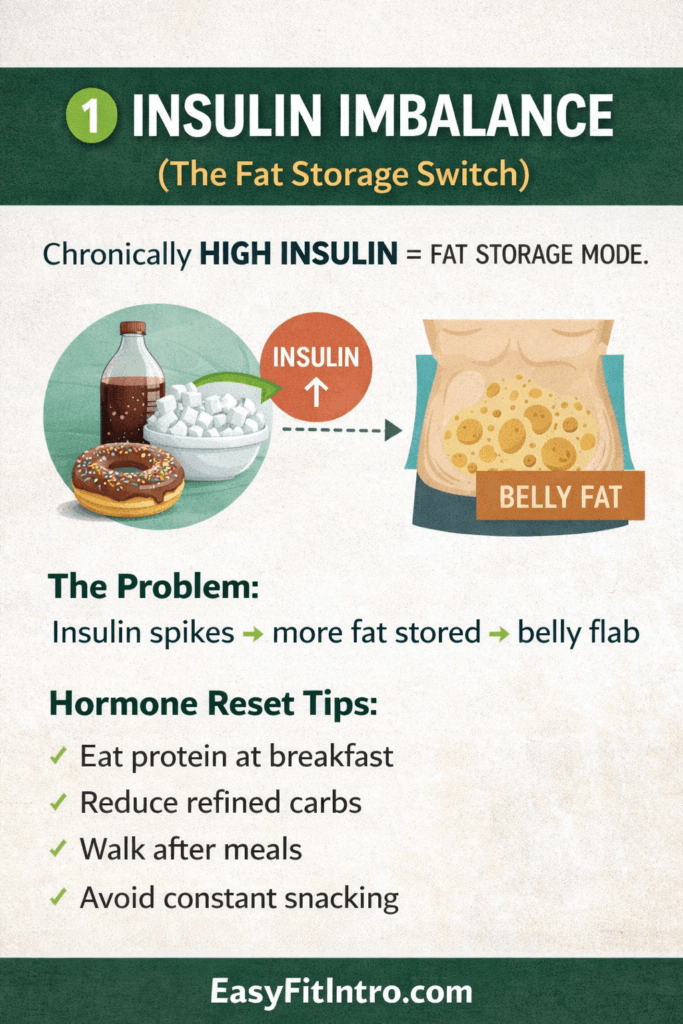
Insulin controls blood sugar. When you eat refined carbs or frequently snack, insulin rises.
If it stays elevated too often:
- Your body stores more fat
- Fat burning slows down
- Belly fat becomes stubborn
Chronically high insulin = fat storage mode.
Why belly fat?
Abdominal fat is highly responsive to insulin spikes. Constant blood sugar swings make it harder for your body to access stored fat.
How to Reset Insulin Naturally:
- Eat protein at breakfast
- Reduce refined carbs
- Walk after meals
- Avoid constant snacking
- Prioritize fiber
When insulin stabilizes, fat burning improves.
2️⃣ Cortisol Imbalance (The Stress Fat Hormone)
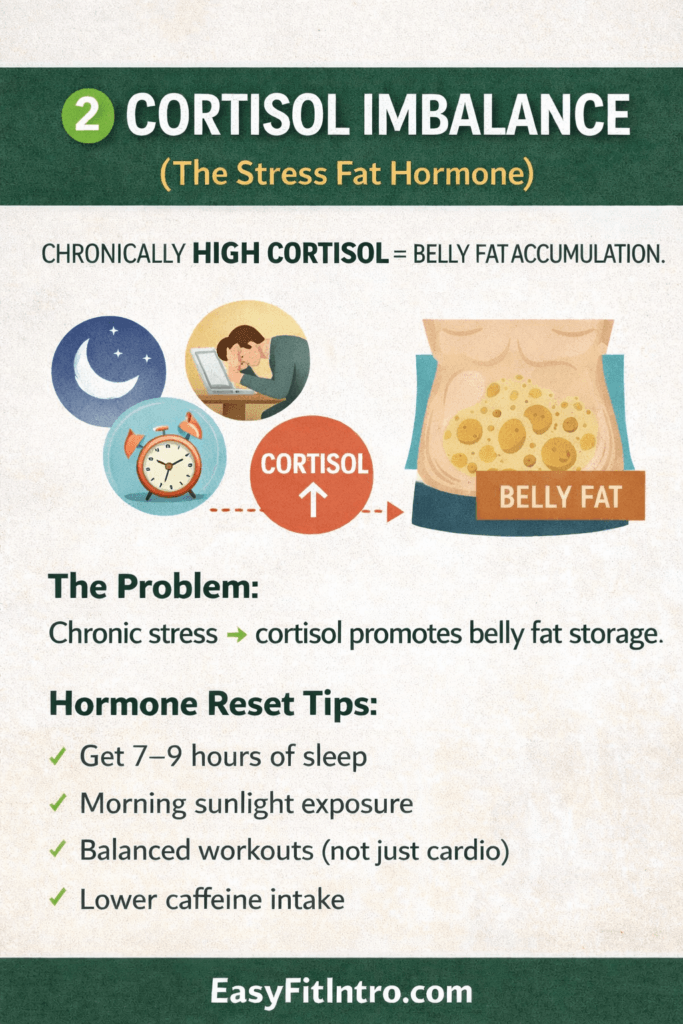
Cortisol is your stress hormone.
It rises when:
- You sleep poorly
- You rush your mornings
- You overtrain
- You’re mentally overwhelmed
Short-term cortisol is normal.
Chronic cortisol? That’s when belly fat increases.
Research shows prolonged stress can increase fat storage specifically around the abdomen.
Why?
Cortisol increases blood sugar to prepare for “danger.” If that energy isn’t used, it gets stored—often as belly fat.
How to Reset Cortisol:
- Get 7–9 hours of sleep
- Morning sunlight exposure
- Resistance training (not excessive cardio)
- Evening wind-down routine
- Manage caffeine timing
Lower stress = easier fat loss.
3️⃣ Ghrelin & Leptin Disruption (The Hunger Chaos)
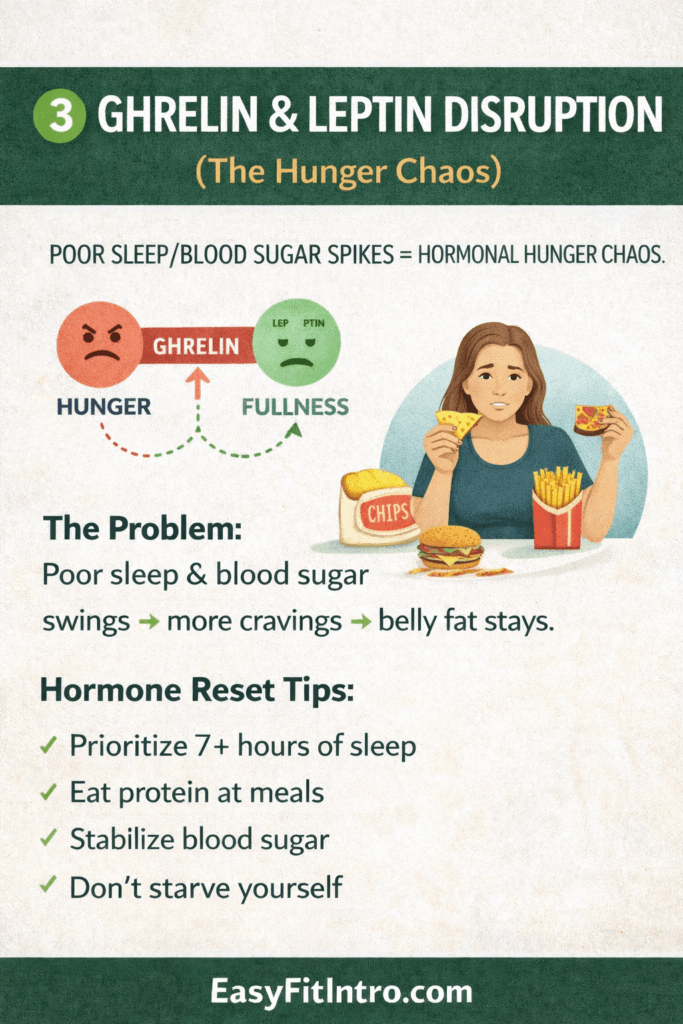
Ghrelin = hunger hormone
Leptin = fullness hormone
When sleep is poor or blood sugar is unstable:
- Ghrelin increases (you feel hungrier)
- Leptin decreases (you don’t feel satisfied)
Result?
Cravings.
Late-night snacking.
Belly fat retention.
This is why dieting often fails—your hormones fight back.
Reset Strategy:
- Prioritize sleep
- Eat enough protein
- Don’t severely restrict calories
- Stabilize blood sugar
When hunger hormones balance, fat loss feels easier—not forced.
Why “Eating Healthy” Sometimes Isn’t Enough
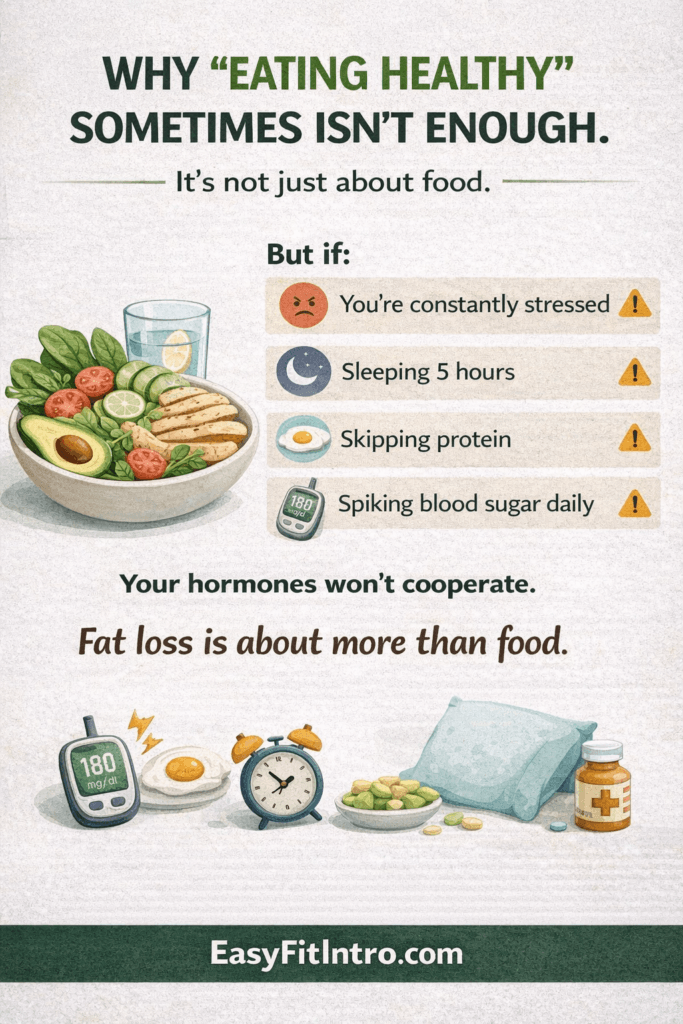
You can eat clean food.
But if:
- You’re constantly stressed
- Sleeping 5 hours
- Skipping protein
- Spiking blood sugar daily
Your hormones won’t cooperate.
Fat loss is not just about what you eat.
It’s about how your body responds internally.
Where the 21-Day Smoothie Challenge Fits
This is exactly why the 21-Day Smoothie Challenge works.
It:
- Combines fiber, protein, and healthy fats
- Reduces blood sugar spikes
- Lowers inflammation
- Simplifies portion control
- Removes guesswork
Instead of calorie obsession, it supports hormonal balance.
When hormones stabilize, fat loss becomes natural—not forced.
👉 You can explore the 21-Day Smoothie Challenge here:
FAQ
Can hormones really prevent fat loss?
Yes. Hormones regulate fat storage, hunger, and energy use. If they’re imbalanced, fat loss slows down.
Is belly fat always hormonal?
Not always—but stress, sleep, and blood sugar play major roles.
Should I cut calories more?
Extreme restriction can worsen hormone imbalance. Focus on balance first.
Final Thoughts
If your belly fat won’t move, stop blaming willpower.
Look at your hormones.
Balance insulin.
Lower chronic stress.
Stabilize hunger signals.
When your internal system works with you instead of against you, results follow.
Stop guessing.
Comment “RESET” if you’re ready to fix this the smart way.