Introduction
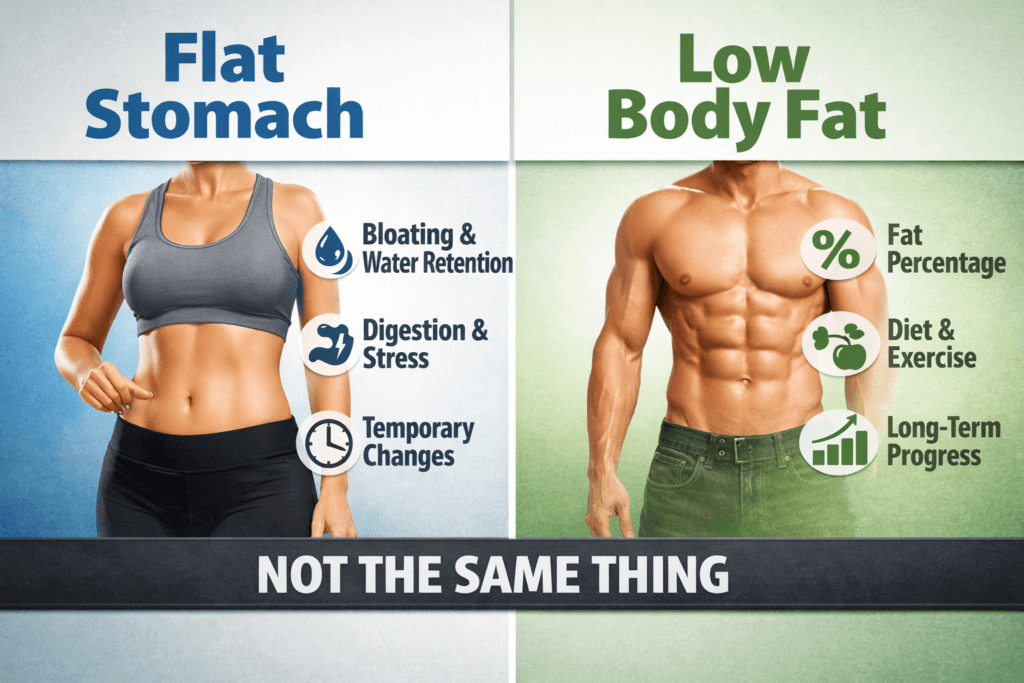
Most people believe a flat stomach equals low body fat.
That misunderstanding leads to extreme dieting, frustration, and emotional roller coasters every time the mirror looks different at night.
Here’s the truth:
A flat stomach and low body fat are not the same thing.
And once you understand the difference, fat loss becomes calmer, smarter, and more sustainable.
Let’s break this down properly.
What Is Low Body Fat (Scientifically Speaking)?
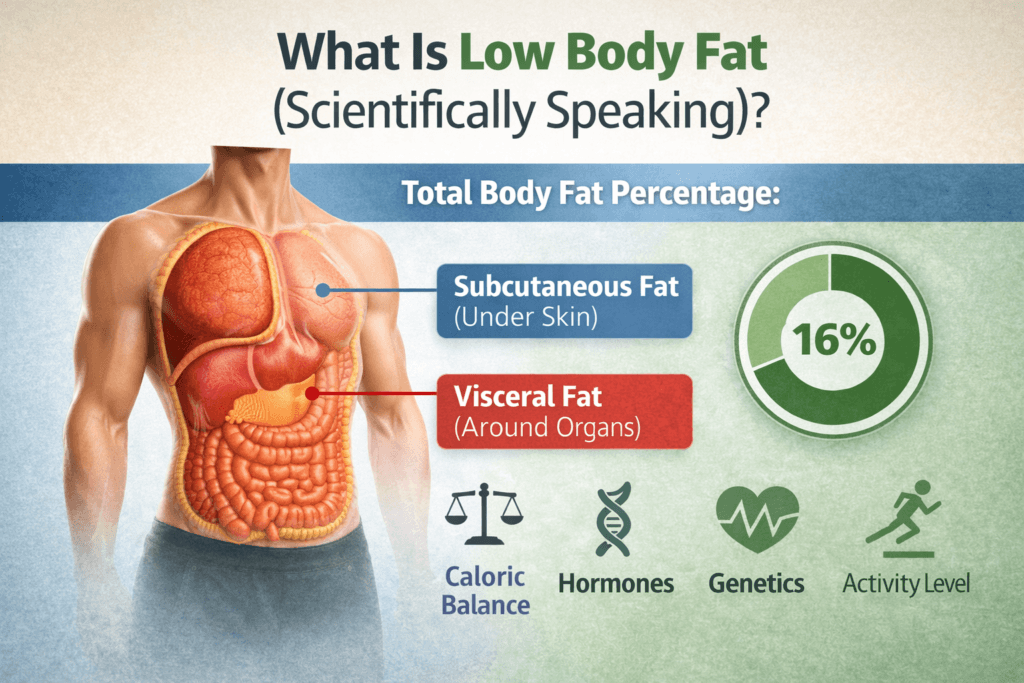
Low body fat refers to your total percentage of fat mass relative to your body weight.
It includes:
• Subcutaneous fat (fat under the skin)
• Visceral fat (fat around internal organs)
Body fat levels are influenced by:
• Long-term caloric balance
• Hormonal environment
• Genetics
• Activity level
• Muscle mass
Reducing body fat requires consistent energy balance and metabolic health over time.
It does NOT fluctuate dramatically in 24 hours.
You cannot gain or lose significant fat in a single day.
That’s physiologically impossible without extreme conditions.
What Creates a “Flat” Stomach?
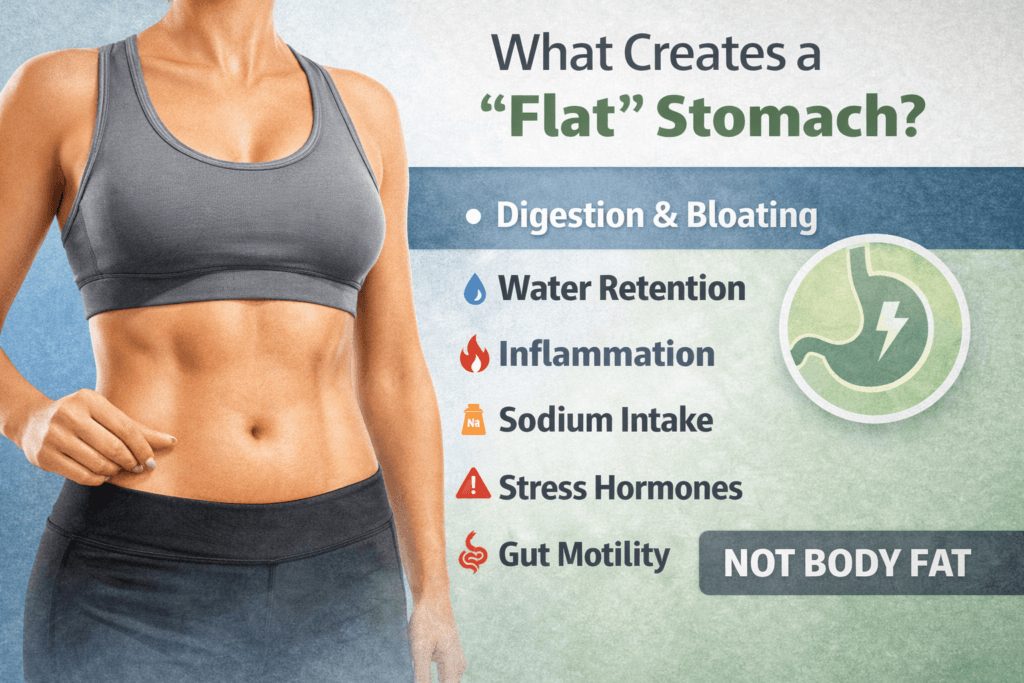
A flat stomach is mostly about:
• Food volume in the digestive tract
• Water retention
• Sodium intake
• Stress hormones (especially cortisol)
• Gut motility
• Inflammation
• Bloating
Notice something?
None of those are body fat.
Flatulence is largely about what’s inside your digestive system and how your body is handling stress and fluid balance.
Why You Look Flatter in the Morning
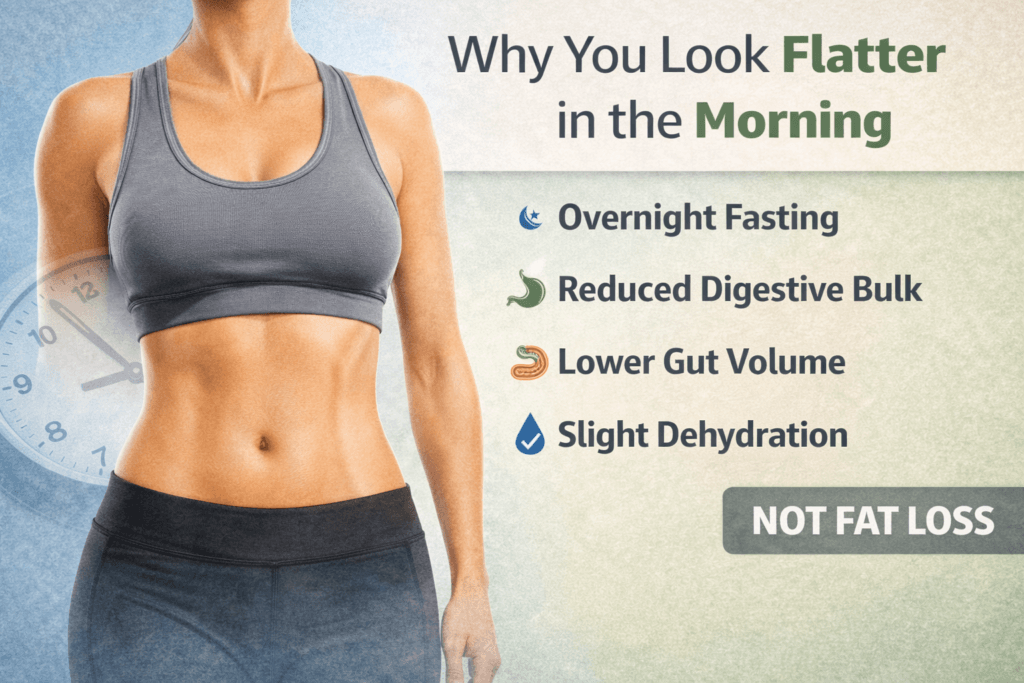
In the morning, you typically:
• Haven’t eaten for 8–10 hours
• Have less digestive bulk
• Have lower gut content
• Experience overnight fluid shifts
Your stomach appears flatter because:
• There’s less volume in your intestines
• You’re slightly dehydrated
• Cortisol is naturally elevated but controlled
This visual flatness is temporary.
It’s not a sign you suddenly lost fat overnight.
Why You Look Bigger at Night
By evening:
• You’ve eaten multiple meals
• You’ve consumed sodium
• You’ve taken in fluids
• You may be stressed
• Your digestion has slowed
That creates:
• Increased stomach volume
• Mild bloating
• Water retention
This is normal physiology.
It is not fat gain.
Actual fat gain requires a sustained calorie surplus over time—not one dinner.
The Hormonal Factor Most People Ignore
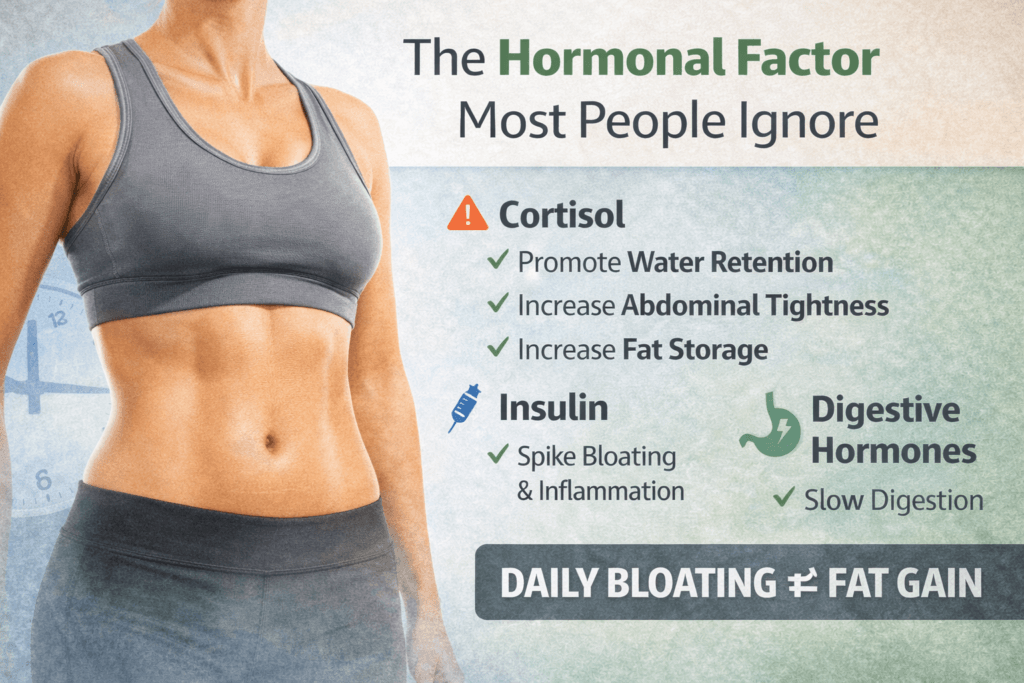
Cortisol, insulin, and digestive hormones play a major role in abdominal appearance.
Chronic stress increases cortisol.
Elevated cortisol can:
• Promote water retention
• Slow digestion
• Increase abdominal tightness
• Encourage visceral fat storage over time
High blood sugar spikes can increase bloating and inflammation.
Poor sleep increases hunger hormones and stress hormones.
So while daily “puffiness” isn’t fat gain, poor hormonal management over time can affect real fat accumulation.
This is where most people get confused.
They chase short-term flatness instead of long-term metabolic stability.
Read: Why hormone balance quickens your belly fat loss.
The Psychological Trap
Many people:
• Eat less when they feel bloated
• Over-restrict
• Panic diet
• Add excessive cardio
• Weigh themselves emotionally
This increases stress.
Stress increases cortisol.
Cortisol increases water retention and central fat storage.
So the panic response actually makes the stomach look worse.
That’s the cycle.
Chasing flatness creates instability.
So What Actually Works?
Instead of chasing a flat stomach daily, focus on:
1️⃣ Stable Blood Sugar
• Protein at breakfast
• Fiber-rich foods
• Avoid constant snacking
2️⃣ Cortisol Management
• Morning sunlight
• Resistance training
• Proper sleep
• Stress reduction
3️⃣ Digestive Support
• Hydration
• Whole foods
• Reduced ultra-processed intake
4️⃣ Consistency Over Drama
Fat loss happens through steady habits—not mirror reactions.
Where the 7-Day Reset Fits
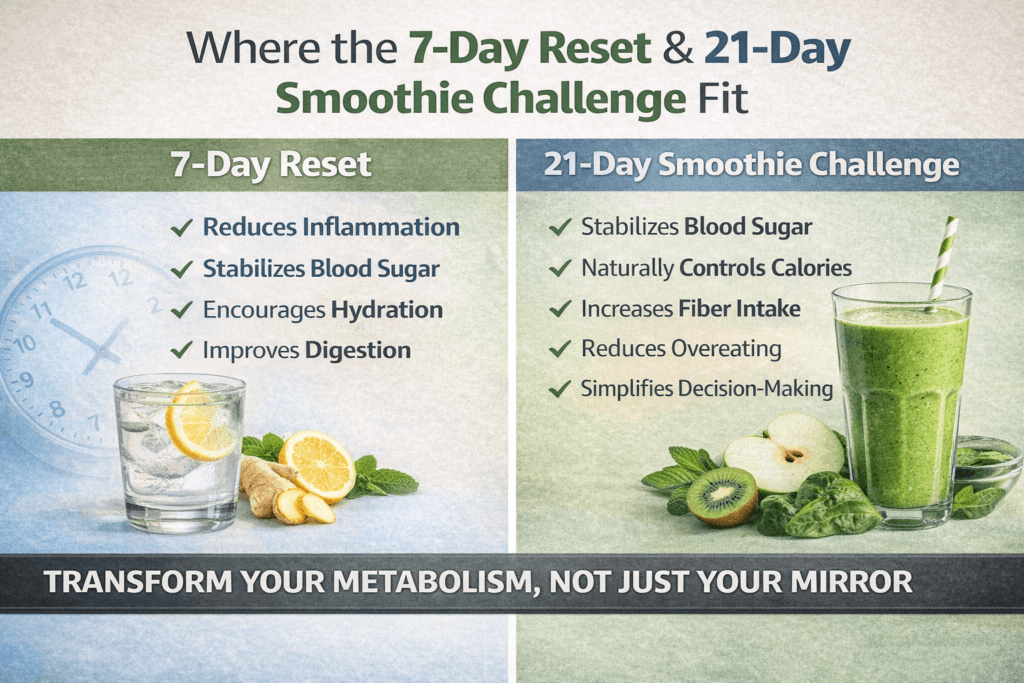
A structured reset works because it:
• Reduces inflammation
• Stabilizes blood sugar
• Encourages hydration
• Improves digestion
• Lowers stress through routine
When your hormones stabilize, your stomach appearance stabilizes too.
That’s why people often feel “leaner” within a week—even before major fat loss occurs.
Try the 21-Day Smoothie Challenge for better results.
The Smoothie Challenge is not magic.
It works because:
• It controls calorie intake naturally
• It stabilizes blood sugar
• It increases fiber intake
• It simplifies decision-making
• It reduces late-night overeating
It supports metabolic consistency.
And consistency reduces both fat accumulation and bloating cycles.
FAQ Section
❓ Can I gain belly fat overnight?
No. Significant fat gain requires a sustained calorie surplus over time.
❓ Why does my stomach feel soft sometimes and tight other times?
Softness relates to subcutaneous fat. Tightness often relates to bloating or water retention.
❓ Should I weigh myself daily?
Only if you understand fluctuations. Otherwise, weekly trends are more meaningful.
❓ Is bloating the same as fat?
No. Bloating is digestive- or fluid-related. Fat accumulation happens gradually.
❓ Why does stress affect my stomach?
Cortisol influences fat storage patterns, digestion, and water retention.
Final Thoughts
If you’ve been chasing a flat stomach instead of building metabolic health, you’ve been fighting the wrong battle.
A flat stomach is temporary.
Low body fat is structural.
Hormonal stability is foundational.
Stop reacting to daily appearance.
Start building long-term health.
Now I want to ask you:
Are you chasing flatness…
or building metabolic strength?
If you want structure, start with the 7-Day Reset and consider joining the 21-Day Smoothie Challenge.
And tell me in the comments:
Do you notice bigger changes in the morning or at night?