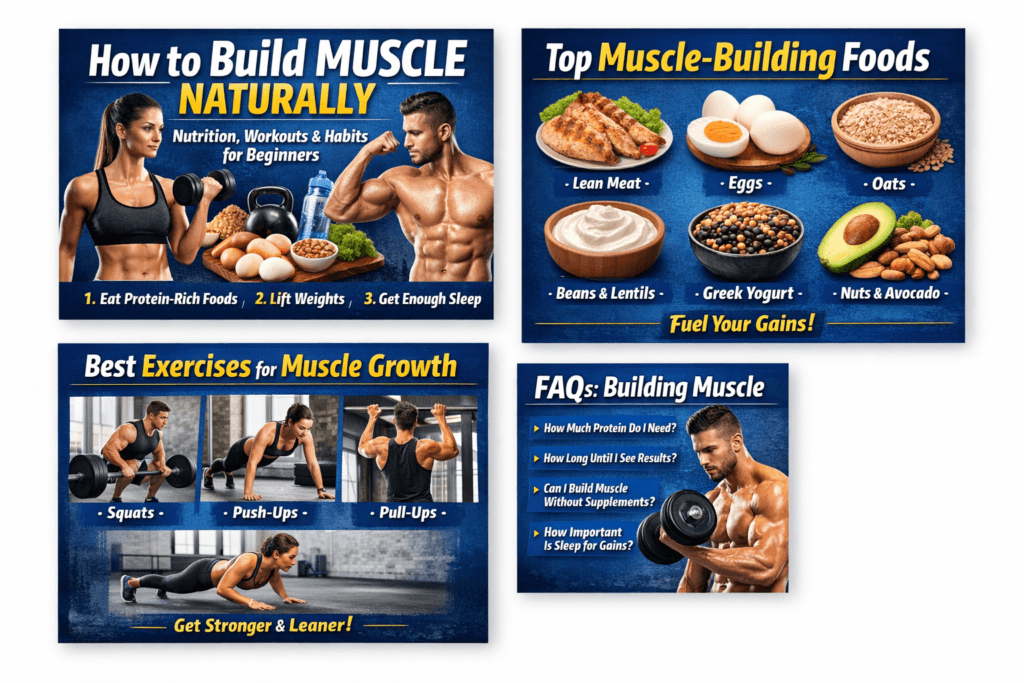
Why Building Muscle Matters (Science-Backed)
Muscle isn’t just about appearance—it’s a metabolic organ.
Research shows that increased muscle mass:
- Raises resting metabolic rate (more calories burned even at rest)
- Improves blood sugar control
- Reduces age-related muscle loss (sarcopenia)
- Supports joint and bone health
According to studies published in the Journal of Applied Physiology, resistance training increases muscle protein synthesis—the biological process that builds new muscle tissue.
Why Protein Is Essential for Muscle Growth
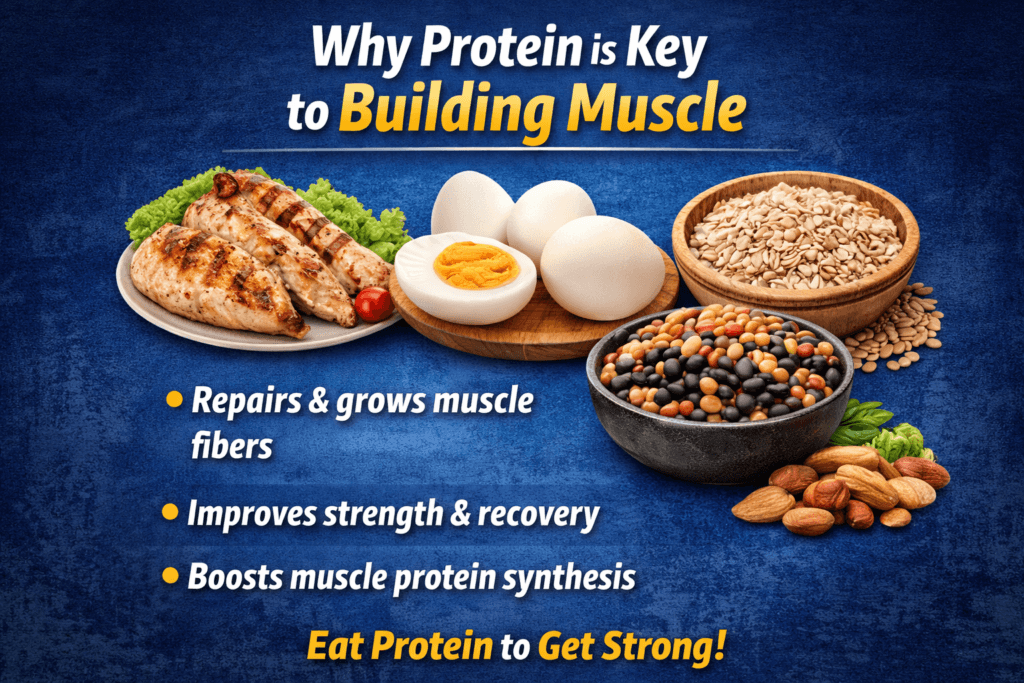
Protein provides amino acids, which are the raw materials your body uses to repair and grow muscle fibers after exercise.
When you train:
- You create microscopic tears in your muscle fibers
- Protein supplies the building blocks to repair those tears
- The muscle rebuilds stronger and thicker
Scientific studies show that consuming enough protein increases muscle protein synthesis and improves muscle recovery and strength.
Best protein sources for muscle gain
- Eggs
- Chicken, turkey
- Fish
- Beans & lentils
- Greek yogurt
- Tofu & tempeh
For beginners, spreading protein across meals works better than eating it all at once.
Why Drinking Water Is Critical for Muscle Growth
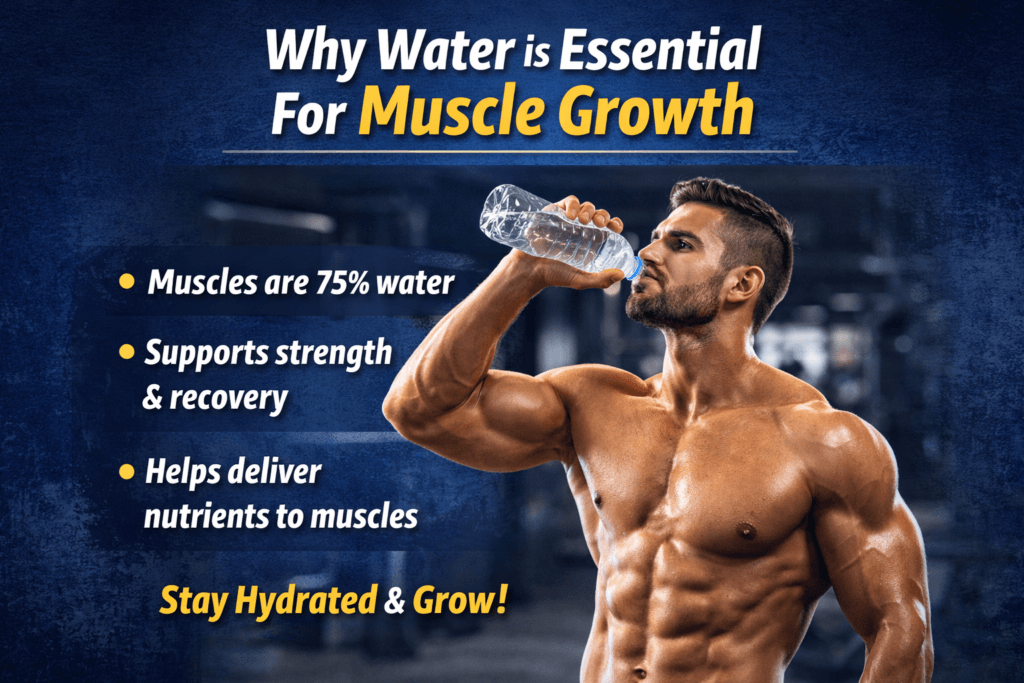
Muscles are about 75% water. Without enough hydration:
- Strength drops
- Recovery slows
- Protein synthesis becomes less efficient
- Muscle cramps increase
Research from the Journal of Strength and Conditioning Research shows dehydration reduces muscle power and performance.
Water also:
- Helps deliver nutrients into muscle cells
- Removes waste products from training
- Supports joint lubrication
If you want muscle to grow, hydration is non-negotiable.
The Science Behind Muscle-Building Workouts
Muscle grows when it’s exposed to progressive overload—meaning it must do more over time.
Exercises that stimulate muscle growth most:
- Squats
- Lunges
- Push-ups
- Rows
- Planks
- Hip bridges
These are compound movements that trigger growth hormone and testosterone, which drive muscle development.
How Often Should Beginners Train for Muscle Gain?
Science shows:
- 3–4 sessions per week
- 48 hours rest between training the same muscle
This allows muscles to recover and rebuild stronger.
Training every day without rest slows growth.
Recovery Is Where Muscle Is Built
Muscle grows after the workout—during rest.
Deep sleep increases:
- Growth hormone release
- Protein synthesis
- Tissue repair
Less sleep = less muscle.
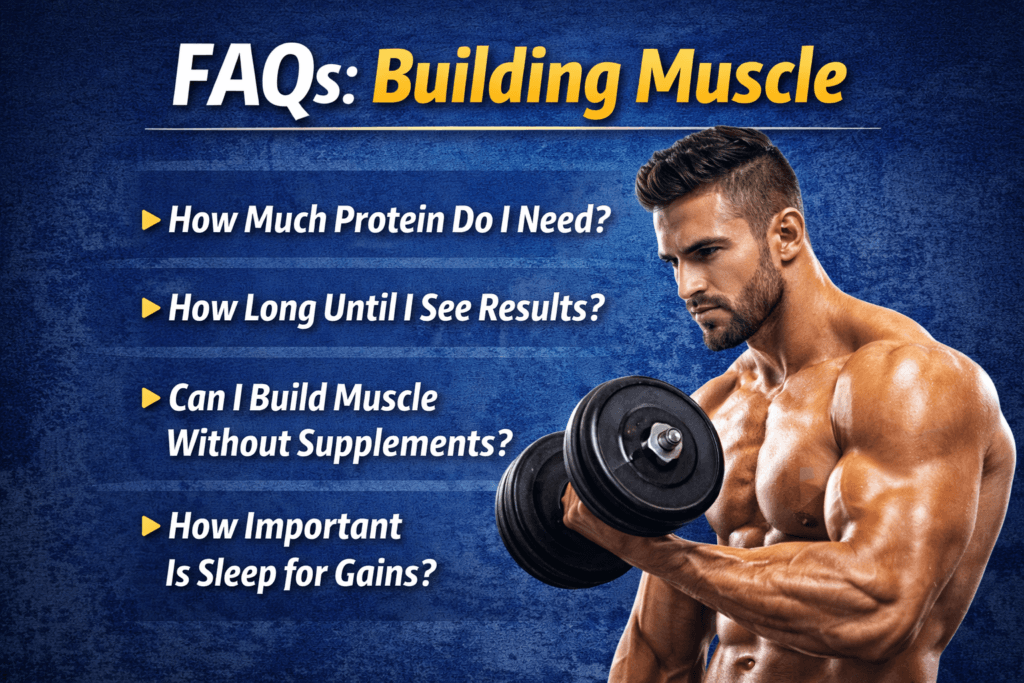
Frequently Asked Questions
1. How long does it take to build muscle naturally?
Most beginners see noticeable strength and shape changes within 4–8 weeks when training and eating correctly.
2. Can you build muscle without supplements?
Yes. Muscle is built from food, training, and sleep. Supplements only help if those three are already in place.
3. How much protein do beginners need to build muscle?
Most research suggests 1.6–2.2 grams of protein per kilogram of body weight for muscle growth.
4. Is it possible to build muscle and lose fat at the same time?
Yes—beginners can experience body recomposition, gaining muscle while losing fat through resistance training and proper nutrition.
5. What foods help build muscle the fastest?
Protein-rich foods (eggs, chicken, beans), carbs (rice, oats, fruit), and healthy fats (nuts, avocado) work together to support muscle growth.
6. Why am I not gaining muscle even though I work out?
Common reasons:
- Not eating enough calories
- Not getting enough protein
- Not resting enough
- Not progressively increasing workout difficulty
7. How important is sleep for muscle gain?
Very. Poor sleep reduces testosterone and growth hormone—both are essential for muscle development.
8. Do women need to train differently to build muscle?
No. Women build muscle through the same process—they just have lower testosterone, so growth is slower but still very effective.
9. Can walking help build muscle?
Walking helps fat loss and recovery, but resistance training is required to stimulate muscle growth.
10. What is the best beginner workout for muscle gain at home?
A combination of:
- Squats
- Push-ups
- Lunges
- Planks
- Rows
3–4 times per week is ideal.
Final Thoughts
Building muscle is not complicated.
It’s built with:
- Protein
- Water
- Strength training
- Rest
- Consistency
Master these, and your body will transform.