Most people focus on strengthening their arms, abs, chest, and legs—but hardly anyone thinks about training one of the most important muscle groups in the body: the pelvic floor. These small, often-overlooked muscles are responsible for bladder control, bowel function, pelvic organ support, and sexual performance.
Kegel exercises (often misspelled as kigel) are simple contractions that target these muscles. The best part? You can do them anywhere, anytime, without anyone noticing. Whether you’re a woman recovering after childbirth, a man recovering from prostate surgery, or someone who wants to prevent leaks or improve sexual health—Kegel exercises can be life-changing.
This complete guide breaks down everything you need to know in simple terms so anyone can follow along.
What Are Kegel Exercises? (Explained Simply)
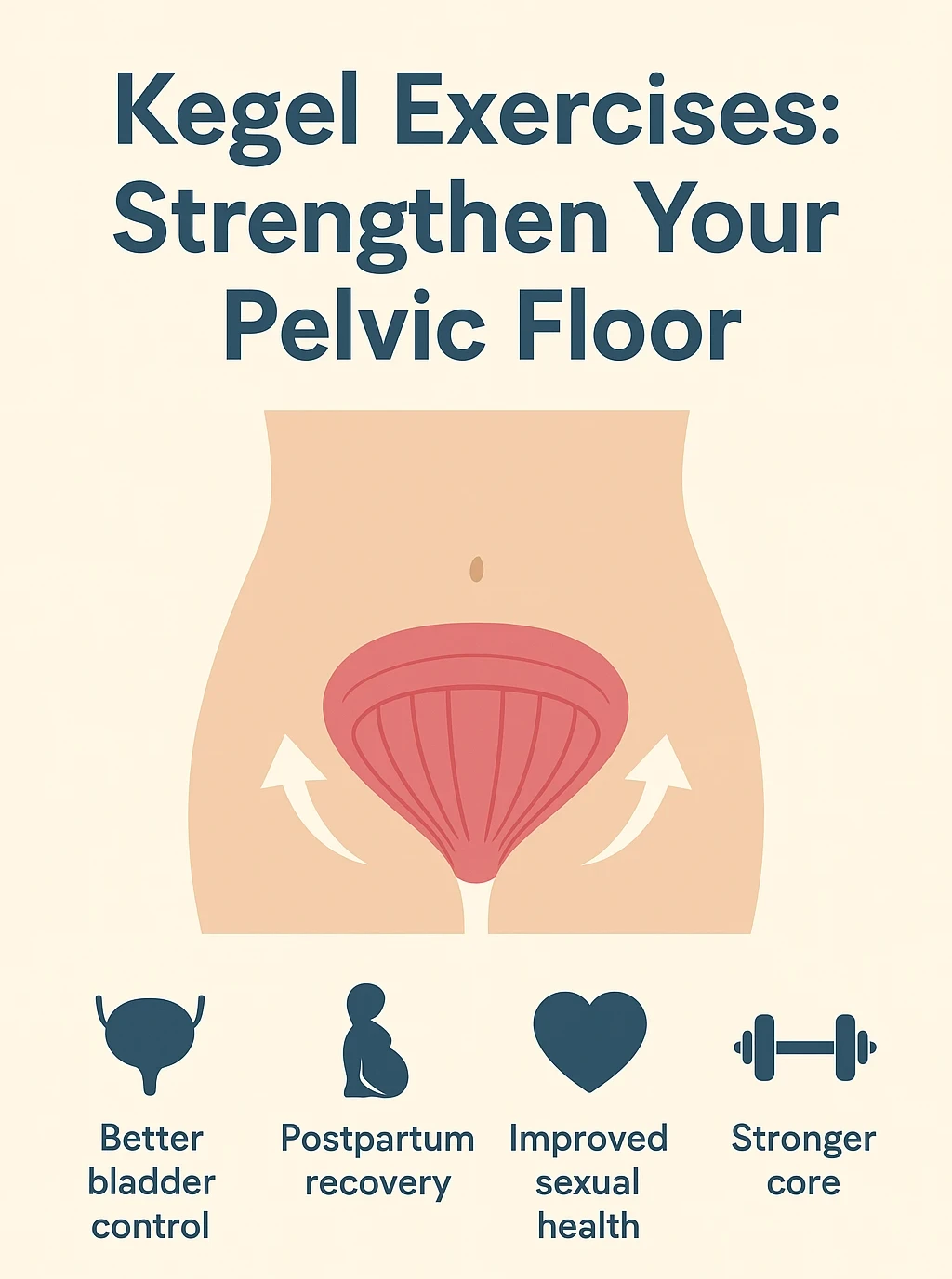
Kegel exercises are controlled squeezes and releases of the pelvic floor muscles—the muscles you use to stop yourself from urinating or passing gas. They sit like a supportive hammock at the bottom of your pelvis.
These muscles play a key role in supporting your:
- Bladder
- Urethra
- Rectum
- Uterus (women)
- Prostate (men)
Strengthening these muscles improves how well they support the organs above them.
Why Pelvic Floor Strength Matters
A weak pelvic floor can lead to:
- Leaking urine when you cough, sneeze, laugh, or jump
- Post-birth recovery problems
- Pelvic organ prolapse
- Poor sexual function (for both men and women)
- Dribbling after urination
- Less bladder control with ageing
The good news? Kegel exercises help address all of the above.
Benefits of Kegel Exercises (For Women & Men)
Kegels are backed by decades of medical research. Their benefits apply to almost everyone—regardless of age or gender.
✔ 1. Better Bladder Control
If you leak a little when laughing, coughing, or exercising, that’s called stress urinary incontinence. It’s extremely common—especially after pregnancy, childbirth, or as you get older.
Kegels strengthen the muscles that keep the urethra closed when pressure hits your bladder.
✔ 2. Improved Sexual Health
For women:
- Better lubrication
- Stronger muscle engagement during sex
- Improved sensitivity
- More powerful orgasms
For men:
- Improved erection quality (pelvic floor muscles help maintain blood flow)
- Better control over ejaculation
- Help with erectile dysfunction when combined with other treatments
✔ 3. Support During Pregnancy & Postpartum Recovery
Pregnancy puts tremendous pressure on the pelvic floor. Kegels help:
- Support pelvic organs as the baby grows
- Prepare your muscles for childbirth
- Reduce urinary leakage during pregnancy
- Speed up healing after birth
- Correct postpartum pelvic floor weakness
✔ 4. Helps After Prostate Surgery (Men)
Many men experience urinary leakage after prostate surgery. Doctors often recommend Kegel exercises to speed up recovery and restore control.
✔ 5. Helps Prevent Pelvic Organ Prolapse
In women, weak pelvic muscles can cause the bladder, uterus, or rectum to drop. Kegels build strength and help prevent or manage early prolapse symptoms.
✔ 6. Can Reduce the Need for Medication or Surgery
For mild-to-moderate pelvic floor issues, consistent Kegels often reduce or eliminate symptoms—saving money, stress, and medical interventions later.
Who Should Do Kegel Exercises?
Kegels are recommended if you:
- Leak when coughing, laughing, or jumping
- Have sudden urges to urinate (overactive bladder)
- Are pregnant or have given birth
- Struggle with constipation
- Lift heavy weights often
- Are recovering from prostate surgery
- Experience pelvic heaviness
- Want to enhance sexual function
Who should NOT do Kegels without guidance?
People with:
- Pelvic pain
- Overly tight pelvic floor
- Painful intercourse
- Difficulty urinating
If this sounds like you, you may need pelvic floor relaxation instead of strengthening.
How to Find Your Pelvic Floor Muscles (So You Don’t Do Them Wrong)
Before you start, you MUST identify the correct muscles. Here are the simplest ways:
Method 1: The Urine-Stop Test
Try to stop urinating midstream one time only to identify the muscles.
(The contraction you feel is the pelvic floor.)
Do NOT make this a habit, as it can cause bladder issues.
Method 2: The Gas-Hold Trick
Pretend you’re trying to stop yourself from passing gas.
That gentle, lifting squeeze is exactly the pelvic floor.
Signs You’re Doing It Wrong:
❌ Your stomach tightens
❌ Your thighs squeeze
❌ Your buttocks clench
❌ You hold your breath
Your Goal:
A gentle “squeeze and lift” inside your pelvis—nothing else moving.
How to Do Kegel Exercises (Step-by-Step for Absolute Beginners)
Find a quiet place to start, though later you can do them anywhere.
Starting Position:
Lie on your back with your knees bent. This makes it easiest to isolate your pelvic floor.
Step-by-Step Kegel Routine:
- Tighten your pelvic-floor muscles (squeeze and lift).
- Hold for 3–5 seconds.
- Release and relax for 3–5 seconds.
- Repeat 10 times.
- Do 2–3 sets per day.
A Complete 6-Week Beginner Program
This program slowly strengthens your pelvic floor without overworking it.
Weeks 1–2
- 2 sets per day
- 5 slow holds × 3 seconds
- 5 rapid squeezes (“quick flicks”)
Weeks 3–4
- 2–3 sets per day
- 8 slow holds × 5 seconds
- 10 quick flicks
Weeks 5–6
- 3 sets per day
- 10 slow holds × 8–10 seconds
- 15–20 quick flicks
- Practice in sitting and standing positions
Most people see improvements in 4–8 weeks.
Common Mistakes to Avoid
Many people THINK they’re doing Kegels—but are strengthening the wrong muscles.
Avoid these mistakes:
❌ Squeezing the butt
❌ Clenching the stomach
❌ Tightening the thighs
❌ Holding your breath
❌ Overdoing too many reps
❌ Doing Kegels while urinating (dangerous long-term)
Why mistakes matter:
Using the wrong muscles means zero benefits—and possibly new problems (like pelvic pain or tension).
Kegel Exercises for Women (Special Notes)
During Pregnancy:
Safe, recommended, and incredibly helpful.
Aim for gentle, consistent training.
Postpartum:
Once cleared by your doctor, begin with small squeezes.
Don’t worry if your muscles feel weak—they will strengthen again.
Signs to see a pelvic floor therapist:
- Pelvic heaviness
- Pain during sex
- Leaking getting worse
- Feeling a bulge in your vagina
Kegel Exercises for Men (Special Notes)
Men get HUGE benefits from Kegels—especially related to bladder control and sexual health.
Helps With:
- Post-prostate surgery recovery
- Dribbling after urination
- Premature ejaculation
- Erectile quality
How to Feel the Muscles:
You should feel a lift at the base of the penis and around the anus.
When Kegels Might Not Be the Answer
Not everyone needs more “tightening.”
Some people actually have a hypertonic (overly tight) pelvic floor, which causes:
- Constipation
- Pain during intercourse
- Lower back or pelvic pain
- Difficulty starting urination
If this is you, you should learn pelvic floor relaxation instead of strengthening.
Contact a pelvic floor physiotherapist for an assessment.
Helpful Tools & Devices (Optional)
You don’t need equipment—but some people prefer tools for feedback.
Options Include:
- Biofeedback devices
- Pelvic floor trainers
- Smart Kegel balls or apps
- Vaginal weights (women only)
Use them only if guided by a professional—especially if you suspect pelvic tension.
Frequently Asked Questions
How long before I see results?
Most people notice improvements in 4–8 weeks with consistent training.
Can men do Kegels?
Absolutely—men benefit just as much as women.
How many times a day should I do Kegels?
2–4 short sessions daily is ideal.
Can I overdo Kegels?
Yes. Too many can cause muscle fatigue or pelvic tightness.
Should I do Kegels while peeing?
No—only once to identify the muscles, not as regular practice.
Your Daily Kegel Checklist (Printable)
- I identified my pelvic floor muscles
- I breathe normally while doing Kegels
- I do 1–3 short sessions daily
- I combine slow holds and quick flicks
- I relax fully between squeezes
- I don’t squeeze my butt or stomach
- I stop if I feel pain
Conclusion: Start Today, Stay Consistent
Kegel exercises are among the simplest, most effective habits you can add to your health routine. They take less than three minutes per session, require no equipment, and can dramatically improve:
- Bladder control
- Pelvic support
- Postpartum recovery
- Sexual function
- Overall confidence
The key is consistency. Start small, do them correctly, and gradually build up.
Your pelvic floor—and your future self—will thank you.