Most people think fat loss is decided at the gym.
Or by what they eat at lunch.
But one of the most overlooked fat-loss windows happens after dinner—right before your body shifts into nighttime repair mode.
That first hour after your evening meal quietly determines:
• whether blood sugar stays stable or crashes
• how hungry you’ll feel later
• how well you sleep
• how much fat your body stores overnight
• how your hormones behave the next day
Get it wrong, and cravings appear before bed.
Get it right, and your body enters sleep primed to burn fat instead of store it.
Let’s break down what actually happens in your body—and the exact evening routine that makes fat loss easier.
Why Evenings Matter So Much for Belly Fat
After dinner, your metabolism doesn’t shut down.
Instead, your body transitions into:
• digestion and nutrient storage
• muscle repair
• hormonal recalibration
• sleep preparation
• circadian rhythm alignment
If blood sugar spikes too high…
if stress hormones stay elevated…
if sleep is disrupted…
Your body becomes more likely to store fat—especially around the abdomen.
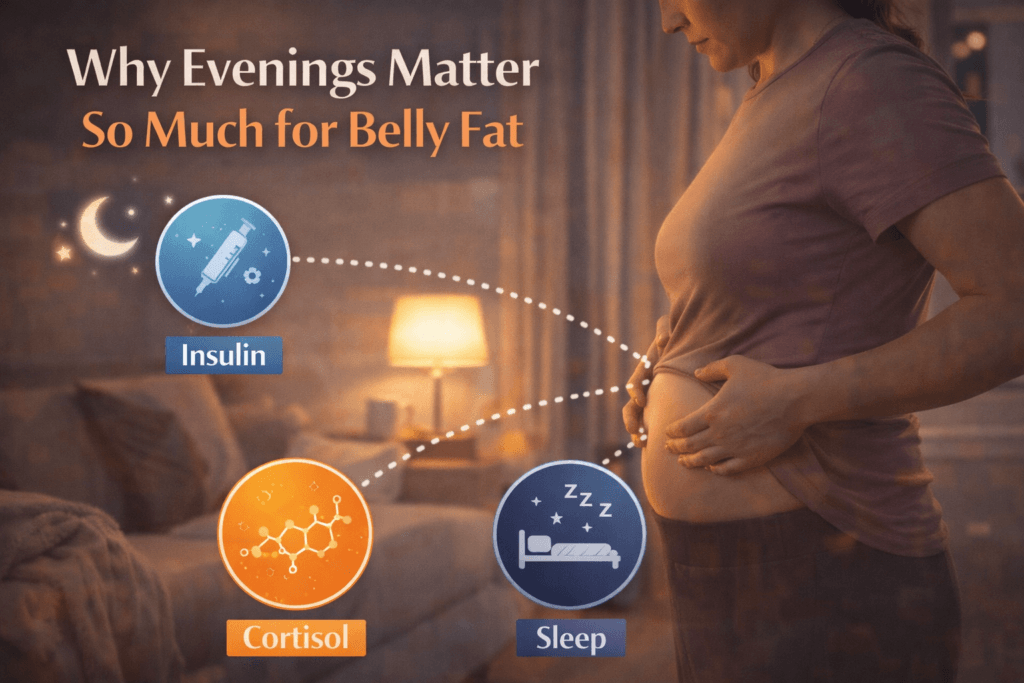
Evening habits influence:
• insulin sensitivity
• cortisol levels
• melatonin release
• growth hormone (fat-burning during sleep)
• next-day appetite
That’s why night routines matter far more than most people realize.
The Common Post-Dinner Mistakes That Stall Fat Loss
Many people unknowingly do this:
📱 collapse onto the couch scrolling
🍫 snack “just a little”
☕ drink caffeine late
📺 bright screens until bedtime
😩 stress-filled evenings
🍷 alcohol to unwind
These habits:
• spike blood sugar again
• delay melatonin
• raise cortisol
• increase late-night hunger
• worsen sleep quality
• impair next-day fat burning
Over time, this pattern trains the body to store energy instead of releasing it.
The 5-Step Post-Dinner Fat-Loss Reset
You don’t need perfection.
You need a sequence.
Here’s what to do in the first 60 minutes after eating.
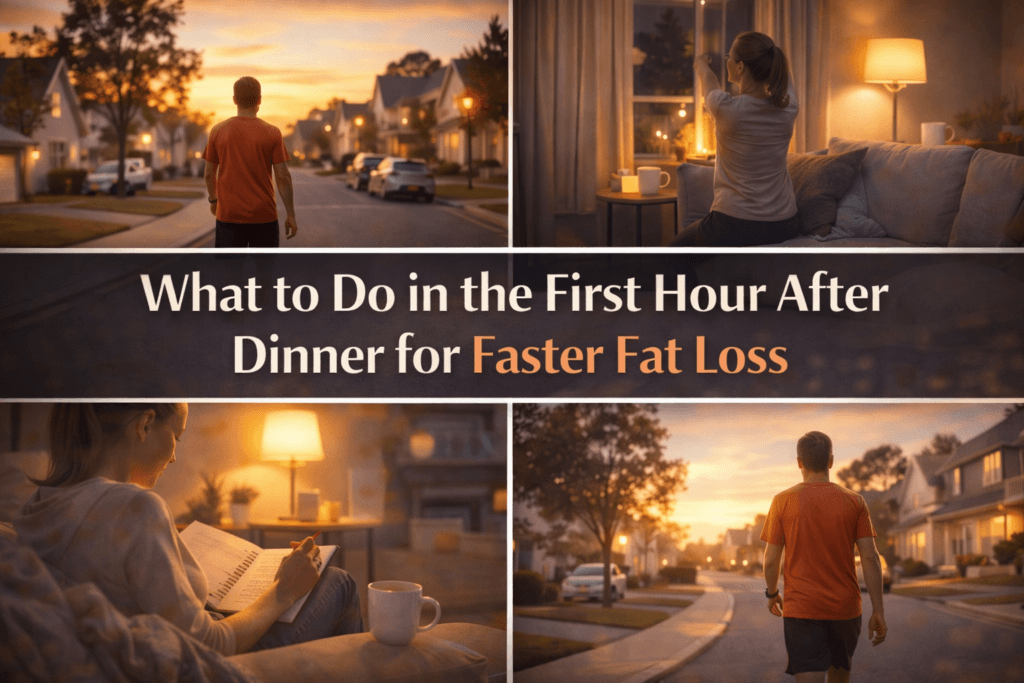
✅ 1) Take a Light Walk (5–15 Minutes)
Walking after dinner:
• lowers post-meal blood sugar
• improves insulin sensitivity
• reduces fat-storage signals
• aids digestion
• relaxes the nervous system
This is one of the simplest—and most powerful—fat-loss habits available.
✅ 2) Cut Bright Screens Early
Blue light from phones and TVs suppresses melatonin.
Poor melatonin =
• shallow sleep
• increased hunger hormones
• higher cortisol
• slower fat loss
Dim lights.
Switch to lamps.
Put screens away at least 60 minutes before bed when possible.
✅ 3) Create a Stress-Down Ritual
Your nervous system must shift into rest mode for overnight fat burning.
Try:
• slow breathing
• stretching
• journaling
• reading
• warm shower
• gratitude list
Calmer evenings = better sleep = better metabolism.
✅ 4) Avoid Late-Night Snacking
If hunger hits, pause first.
Ask:
• Was dinner protein-rich?
• Am I thirsty?
• Am I stressed or bored?
Protein-forward dinners and stable blood sugar reduce nighttime urges dramatically.
✅ 5) Support Sleep Hormones
Good sleep drives:
• growth hormone release
• muscle repair
• fat oxidation
• appetite regulation
• insulin sensitivity
Cool room.
Dark environment.
Consistent bedtime.
Fat loss accelerates when sleep improves.
Evening Chaos vs Fat-Loss Evenings—Comparison Table
| Evening Habit Pattern | Blood Sugar | Sleep Quality | Cravings | Belly-Fat Response |
|---|---|---|---|---|
| Couch + screens + snacks | Unstable | Poor | High | ❌ Slow |
| Alcohol to unwind | Spikes | Fragmented | Moderate | ❌ Slow |
| Heavy late dessert | Roller coaster | Disrupted | High | ❌ Slow |
| Walk + dim lights + relax | Stable | Deep | Low | ✅ Faster |
Why Belly Fat Is Especially Affected at Night
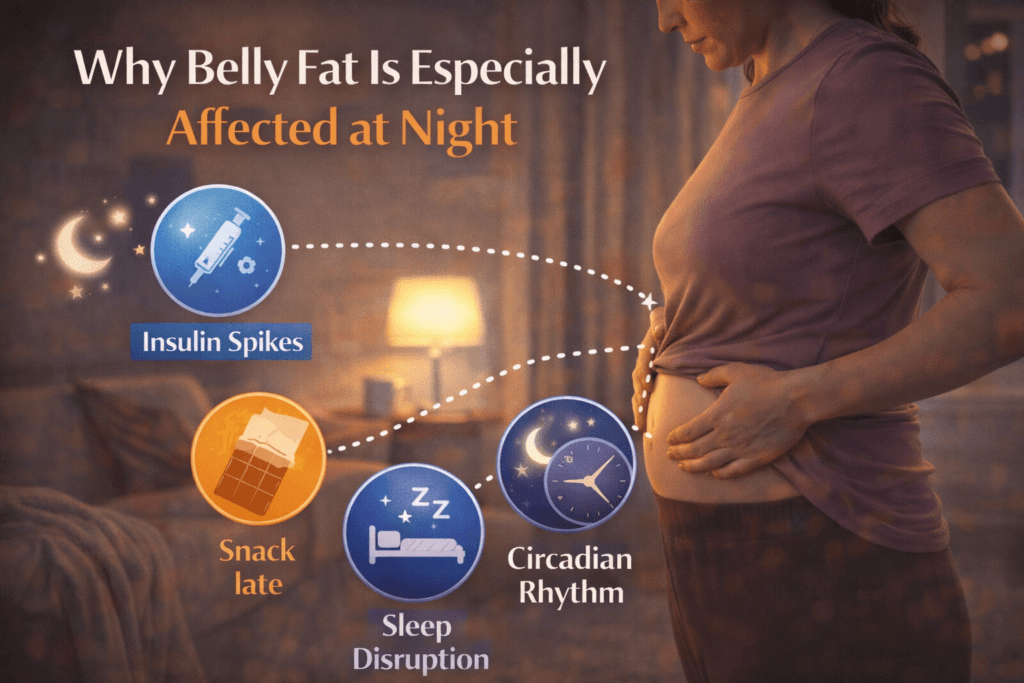
Abdominal fat tissue is highly sensitive to:
• insulin spikes
• cortisol
• sleep disruption
• circadian rhythm chaos
Evenings that stabilize these signals reduce fat-storage pressure overnight—making the waistline one of the first places people notice change.
Where the 21-Day Smoothie Challenge Fits
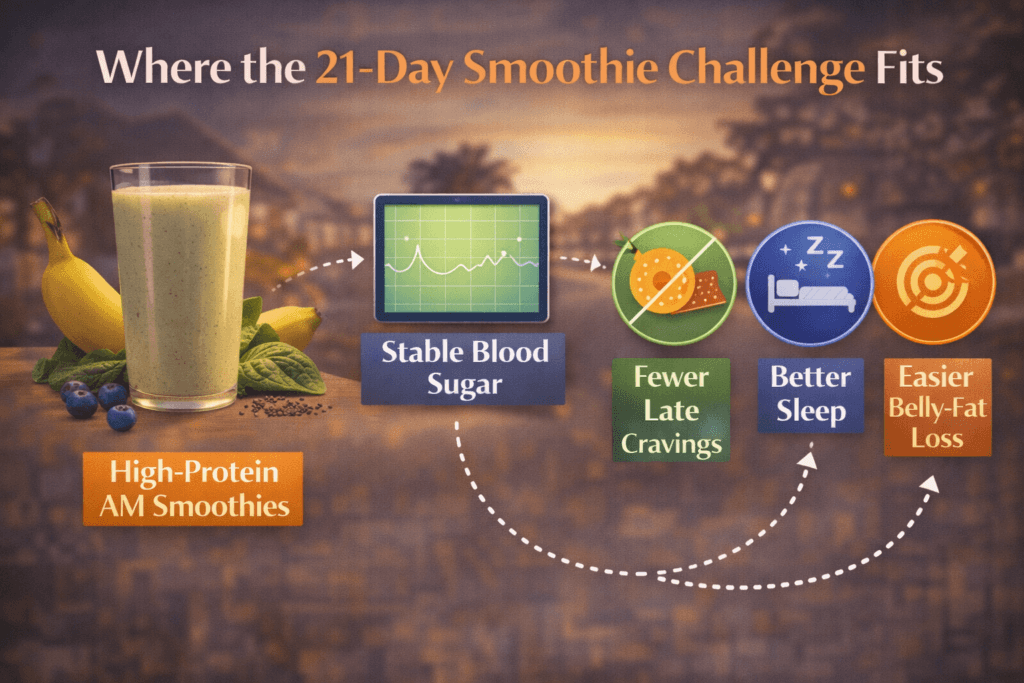
Evenings often fall apart because mornings start poorly.
That’s why the 21-Day Smoothie Challenge works so well alongside this routine.
Protein-first mornings stabilize blood sugar for the entire day, which:
• reduces late-night cravings
• lowers insulin spikes
• keeps energy steady
• supports belly-fat loss
• makes evenings calmer
The challenge gives you done-for-you recipes, portion guides, shopping lists, and daily structure so you can lock in the habits that make nighttime fat loss automatic.
👉 Click here to start the 21-Day Smoothie Challenge
What Results Most People Notice
With consistent post-dinner routines:
3–5 days: digestion improves, fewer late snacks
7–14 days: sleep deepens, energy steadier
3–4 weeks: waistline trending down
6–8 weeks: visible fat-loss momentum
❓ Frequently Asked Questions
Is walking after dinner really that effective?
Yes—even 10 minutes improves blood sugar control.
Can I eat carbs at dinner?
Yes. Pair them with protein and fiber.
What if I train at night?
Finish workouts at least 2–3 hours before bed when possible.
Does alcohol stop fat loss?
Regular evening drinking slows fat burning and disrupts sleep.
What if I’m still hungry before bed?
Try protein-rich dinners first. If needed, a small Greek-yogurt-style snack can help.
How long should I test this routine?
Give it 3–4 weeks consistently.
Final Thoughts
Fat loss doesn’t end at dinner.
It often starts there.
When you control the first hour after eating:
• blood sugar stabilizes
• sleep deepens
• stress hormones fall
• cravings shrink
• belly fat responds
Small nighttime habits…
big metabolic wins.
What does your evening usually look like after dinner?
Scrolling?
Snacking?
TV till bed?
Comment below. 👇
And if mornings and evenings both need structure, check out the 21-Day Smoothie Challenge and start resetting fat loss from both ends of the day.