Introduction: The Belly Fat Reality
Crunches, planks, and endless cardio might make your abs burn — but they probably won’t flatten your stomach on their own. I used to believe that more sit-ups meant less belly fat, but that strategy never delivered the results I expected. Even after weeks of consistent gym sessions, that stubborn lower belly pouch refused to budge.
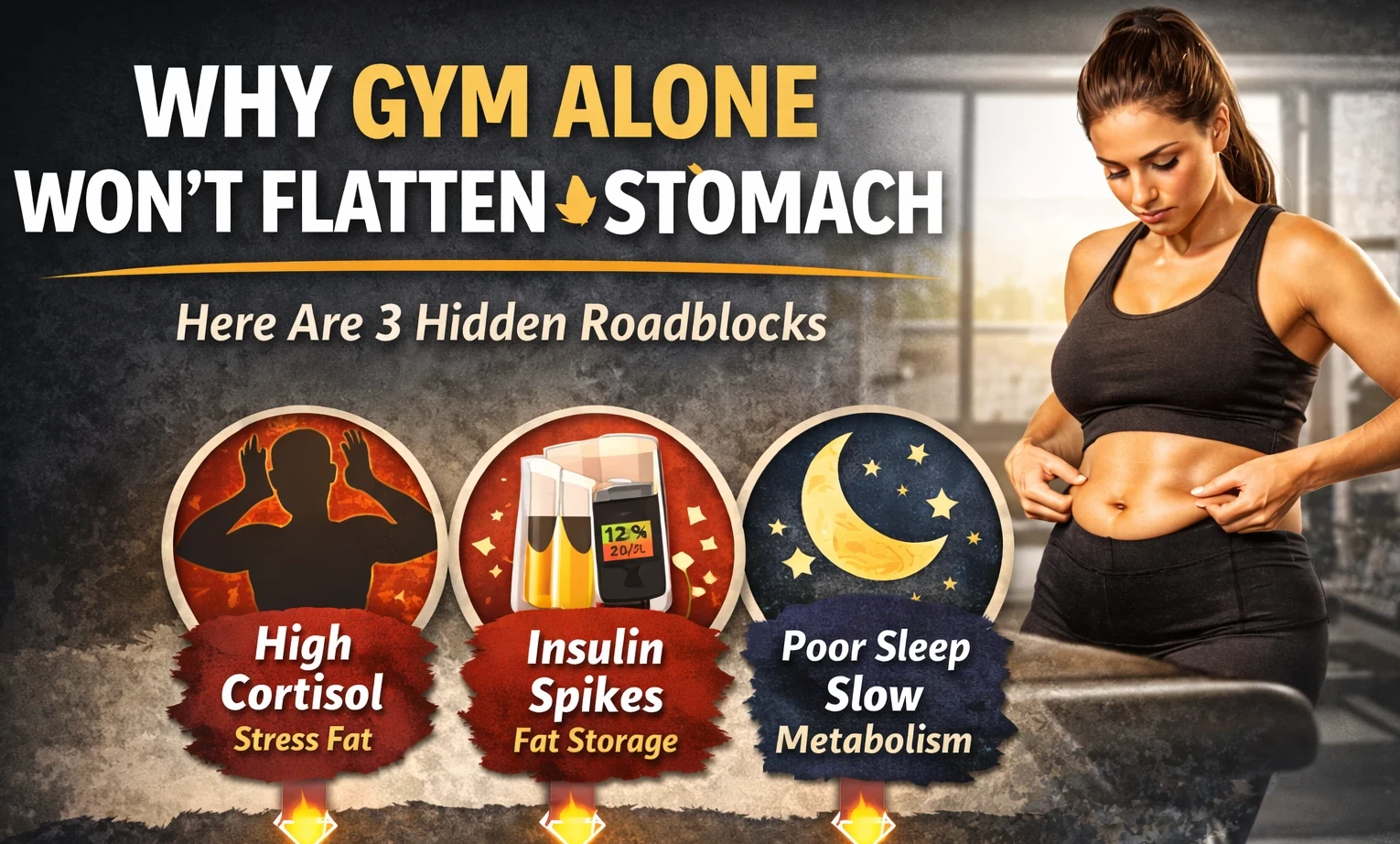
Here’s the truth: belly fat is driven far more by your hormones, blood sugar, stress, sleep, and daily habits than by exercise alone.
If you’ve been working hard in the gym but still feel stuck, you’re not failing—you’re just missing a few key pieces of the fat-loss puzzle. In this guide, I’ll explain why the gym alone usually isn’t enough and what actually helps you achieve a flatter stomach naturally.
The Reality About Belly Fat
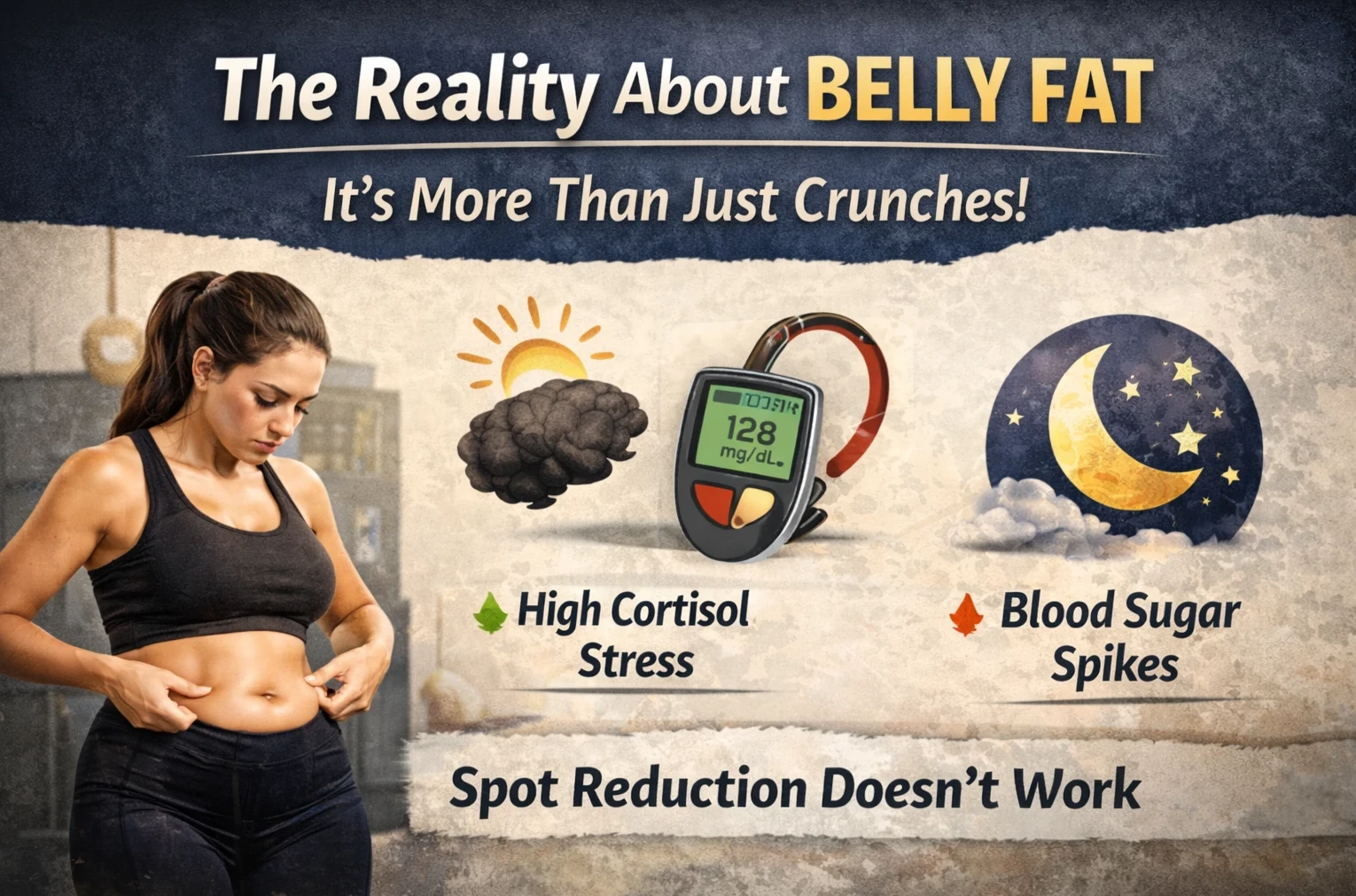
Spot reduction is a myth
Many people believe that doing more ab exercises will shrink belly fat. Science shows this isn’t true. Your body decides where it burns fat first, and you cannot target fat loss in one specific area.
Study Support:
A study in the Journal of Strength and Conditioning Research (2011) found that abdominal exercises alone did not significantly reduce belly fat. Fat loss happens systemically, not locally.
You can out-train your workout with poor habits
You can burn hundreds of calories in the gym, but if you overeat later, your body still stores fat. Exercise helps, but nutrition and hormones matter more.
Study Support:
Research in The British Journal of Sports Medicine (2015) shows that diet has a stronger impact on fat loss than exercise alone.
Hormones decide where fat is stored
Cortisol (your stress hormone) strongly influences belly fat storage. When cortisol is high, your body prefers to store fat around your waist.
Study Support:
A study in Obesity Reviews (2018) found that chronically elevated cortisol is associated with increased visceral (belly) fat.
Daily lifestyle matters more than one gym session
Movement, stress management, sleep, and nutrition throughout the day have a bigger impact than a single workout.
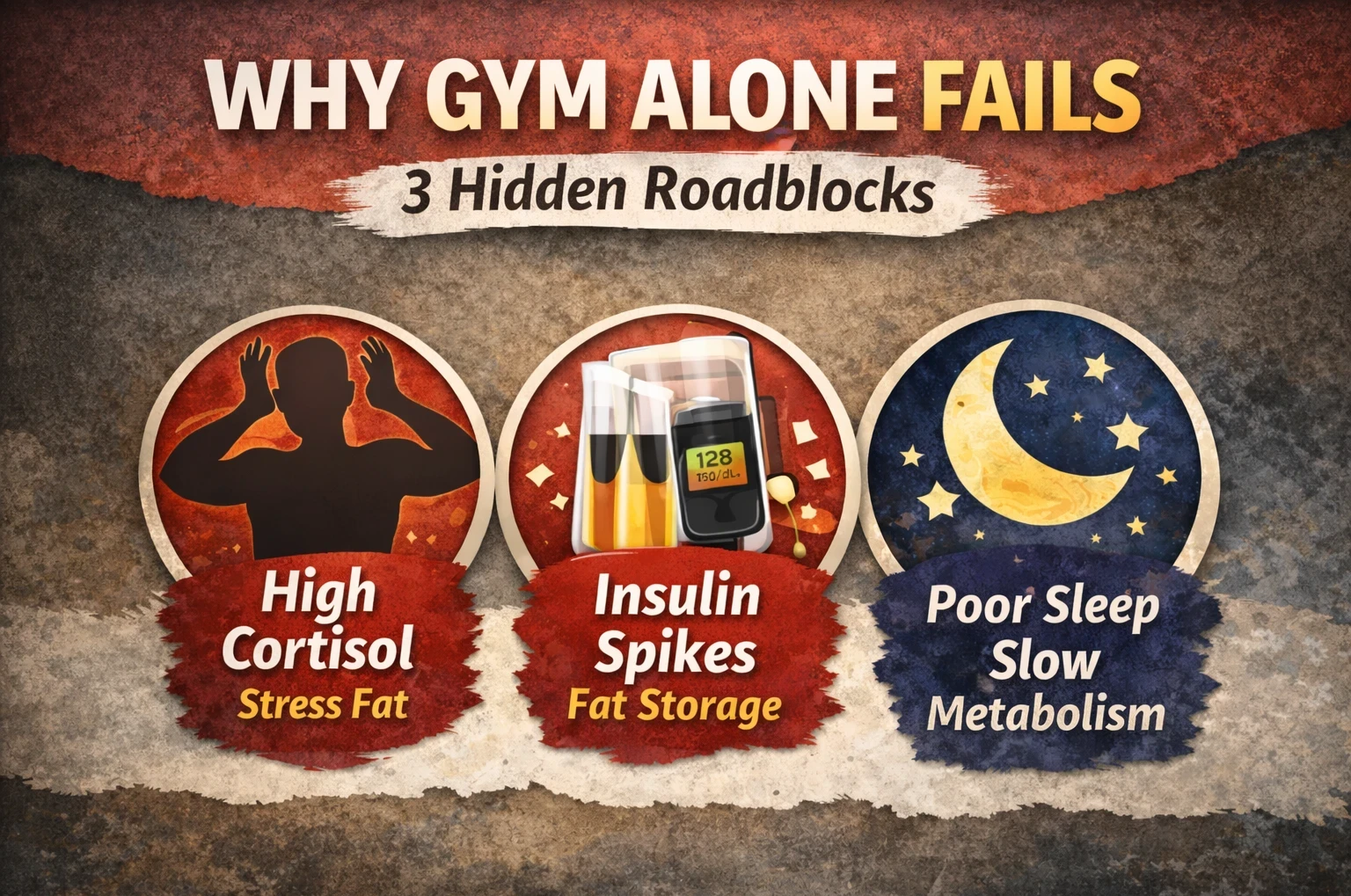
Why Gym Alone Fails
| Roadblock | What it does | Why it keeps belly fat | Fix (Simple Action) |
|---|---|---|---|
| High Cortisol | Stress hormone | Signals fat storage around waist | Morning sunlight + stress breaks |
| Insulin Spikes | Blood sugar hormone | Locks fat into belly | Protein breakfast + fewer sugary snacks |
| Poor Sleep | Disrupts hunger hormones | Increases cravings and lowers fat burning | 7–9 hours sleep |
1) High Stress = High Cortisol = More Belly Fat
Chronic stress—from work, relationships, or even overtraining—keeps cortisol elevated. High cortisol tells your body to hold onto belly fat.
Science Insight:
A study in Psychoneuroendocrinology (2000) found that psychological stress increases cortisol levels, which is linked to central (abdominal) fat storage.
Personally, during my busiest seasons, I trained just as hard but saw little change in my stomach—because my stress was too high.
2) Blood Sugar Swings Keep Fat Locked In
Skipping meals, eating sugary snacks, or consuming processed carbs causes blood sugar spikes and crashes. This keeps insulin high, which promotes fat storage—especially around the belly.
Science Insight:
A study in The American Journal of Clinical Nutrition (2004) showed that high insulin levels are associated with increased abdominal fat.
Once I started adding more protein and reducing sugar, my body responded better than when I just increased workouts.
3) Poor Sleep Slows Fat Loss
Lack of sleep increases hunger and cravings while slowing fat loss.
- Ghrelin (hunger hormone) goes up
- Leptin (satiety hormone) goes down
Science Insight:
A study in Sleep (2004) found that sleep deprivation increases appetite and cravings for high-calorie foods.
When I sleep poorly, I crave carbs and sugar—and belly fat becomes more stubborn.
What Actually Works
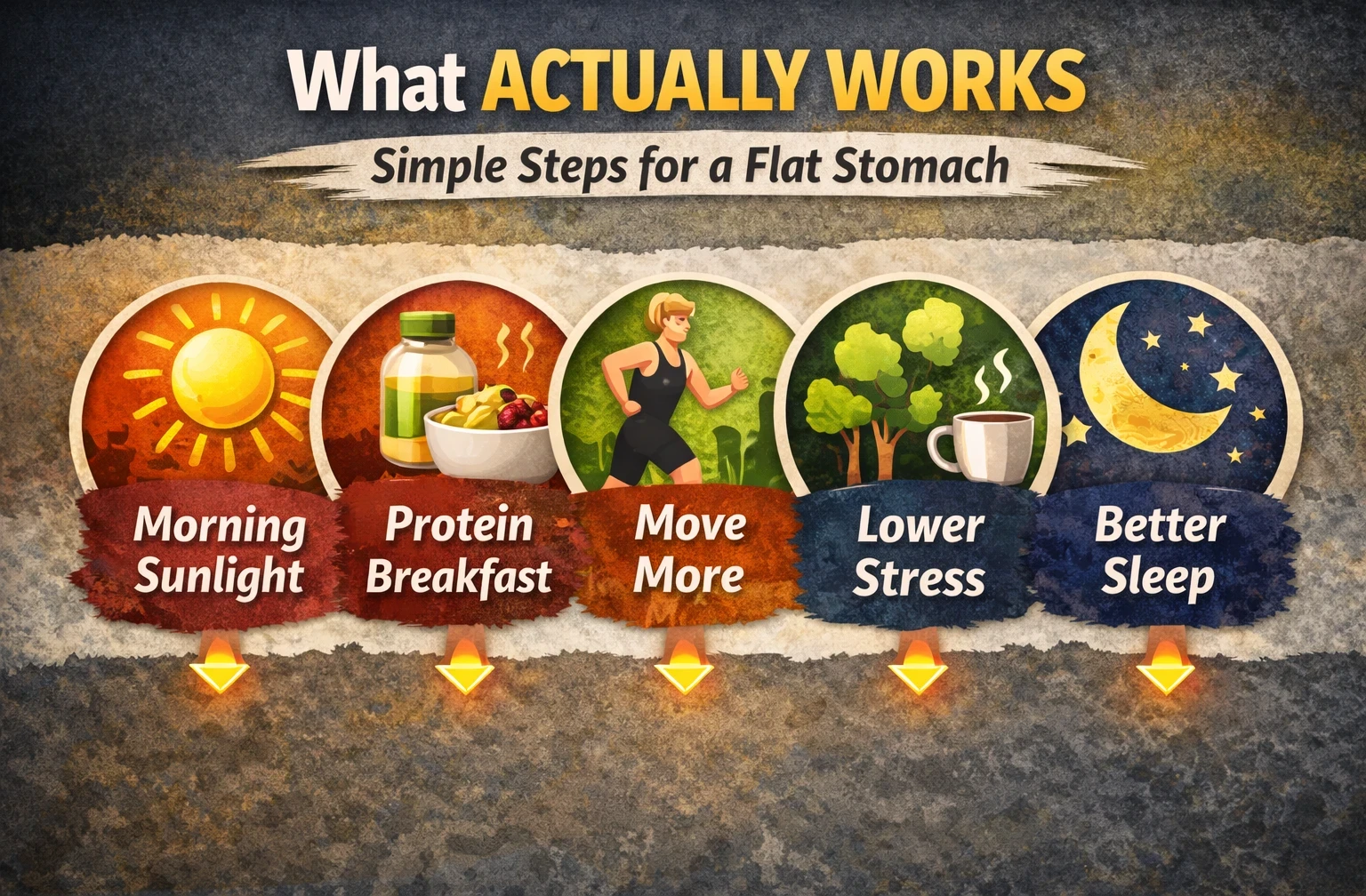
1) Morning Sunlight (Hormone Reset)
Getting 10 minutes of natural sunlight soon after waking helps regulate your circadian rhythm, improves cortisol balance, and supports better sleep.
Science Insight:
A study in PLOS One (2017) showed that morning light exposure improves circadian rhythm and metabolic function.
2) Protein at Breakfast (Blood Sugar Control)
Starting your day with protein keeps blood sugar stable and reduces cravings.
Best options:
- Eggs
- Greek yogurt
- Protein smoothie
- Lean meat or plant protein
Science Insight:
A study in The American Journal of Clinical Nutrition (2013) found that high-protein breakfasts reduce hunger and improve appetite control.
3) Move All Day, Not Just in the Gym
Light daily movement (walking, stretching, and standing breaks) boosts metabolism and lowers stress.
Science Insight:
Research in Diabetologia (2016) shows that frequent movement breaks improve insulin sensitivity and reduce fat storage.
4) Lower Stress Daily
Simple habits that reduce cortisol:
- Deep breathing
- Walking outdoors
- Gentle stretching
- Relaxing music
Science Insight:
A study in Frontiers in Psychology (2019) found that mindfulness and relaxation techniques significantly lower cortisol levels.
5) Prioritize 7–9 Hours of Sleep
Better sleep = better fat loss.
Sleep tips:
- Dark, cool room
- No screens before bed
- Consistent bedtime
Science Insight:
A study in Annals of Internal Medicine (2010) found that adequate sleep improves fat loss compared to sleep restriction.
FAQs
1. Do I have to cut out all carbs?
No. You don’t need to go carb-free. Whole foods like fruit, oats, potatoes, and whole grains are fine in moderation. The problem is refined sugar, white bread, and ultra-processed snacks that spike blood sugar and keep insulin high.
2. Will ab exercises ever help flatten my stomach?
Ab exercises are great for core strength, posture, and stability—but they do NOT burn belly fat on their own. You need nutrition, sleep, stress control, and daily movement to actually reduce belly fat.
3. Is cardio better than weight training for belly fat?
Both are useful, but the best approach is a combination:
-
Resistance training to build muscle and boost metabolism
-
Walking or moderate cardio to reduce stress and burn fat gently
4. How long does it take to see results?
Most people notice changes in 2–6 weeks when they improve sleep, protein intake, and stress habits consistently. Faster results usually come from better habits, not harder workouts.
5. Can stress really cause belly fat?
Yes. Chronic stress raises cortisol, which encourages your body to store fat around your waist. Lowering stress is just as important as exercise for a flatter stomach.
6. Do I need supplements to lose belly fat?
No. You can make significant progress with simple habits: sunlight, protein, movement, stress management, and sleep. Supplements can help some people, but they are not necessary.
7. Is intermittent fasting good for belly fat?
It can work for some people, but not everyone. If fasting increases your stress or ruins your sleep, it may actually make belly fat worse. Your hormones matter more than your eating window.
8. Why is my lower belly the last place to lose fat?
Lower belly fat is often more sensitive to cortisol and insulin. This means stress, poor sleep, and blood sugar swings make it the most stubborn area.
9. Can walking really help flatten my stomach?
Yes. Daily walking lowers stress, improves insulin sensitivity, and supports steady fat burning—all of which help reduce belly fat over time.
10. What is the single most important habit for belly fat loss?
If you had to pick one, improve your sleep. Better sleep balances hunger hormones, reduces cravings, and makes every other healthy habit easier.
| Before (Gym-Only Approach) | After (EasyFitIntro Approach) |
|---|---|
| Train harder, get more tired | Train smarter, feel more energized |
| Belly fat stubborn | Belly fat gradually reduces |
| Cravings all day | More stable appetite |
| High stress | Lower stress |
| Poor sleep | Better sleep |
| Inconsistent results | Steady progress |
Simple Action Plan
- Get 10 minutes of morning sunlight
- Eat protein at breakfast
- Walk daily and move more
- Take mini stress breaks
- Improve sleep habits
If this helped you, comment “HORMONES” and tell me your first focus.
Related articles
👉 “How cortisol traps belly fat”
👉 “Why low energy slows metabolism”
👉 “Morning habits that burn belly fat”
👉 “Fat-burning smoothie recipes”
✅ FINAL THOUGHTS
Losing stubborn belly fat isn’t about doing more—it’s about doing the right things consistently. You don’t need extreme workouts, crash diets, or quick fixes. Real progress comes from aligning your hormones, stabilizing your blood sugar, lowering stress, and prioritizing sleep.
Small daily habits compound over time. Morning sunlight, protein at breakfast, regular movement, and better sleep may seem simple—but they are powerful when practiced consistently. Track your habits, notice your patterns, and be patient with your body. Sustainable fat loss is built step by step, not overnight.
Remember: your body isn’t broken—it just responds to your environment. Change your habits, and your body will follow.
If this helped you, comment “HORMONES” below and tell me one habit you’re committing to this week—morning sunlight, protein breakfast, daily walking, stress breaks, or better sleep. I’d love to hear your plan.