
Introduction
Waking up with a swollen stomach, tight waistband, or puffy face can feel discouraging—especially when you’re trying to lose belly fat. Many people assume it’s just last night’s salty meal or “water weight.”
But morning bloating is often your body sending hormonal, digestive, and metabolic signals that something is off.
Stress hormones, poor sleep, unstable blood sugar, gut inflammation, and dehydration can all cause your body to retain fluid, slow digestion, and cling to fat around your midsection.
Let’s break down why morning bloating happens, what science says about it, and how to fix it naturally—without extreme dieting.
What is morning bloating? Really Is
Bloating happens when your abdomen feels full or distended due to:
• gas buildup in the intestines
• water retention
• slow digestion
• inflammation in the gut lining
Occasional bloating is normal.
Chronic morning bloating, though, often points to habits that also make fat loss harder.
1. Poor Sleep Raises Cortisol and Promotes Water Retention

Short sleep increases cortisol—the stress hormone linked to belly fat storage.
Research shows that sleep deprivation alters fluid balance and insulin sensitivity, making your body hold onto water and store more energy as fat.
What it looks like:
• Puffy face in the morning
• Tight rings or waistbands
• Low energy
• Sugar cravings
Fix it:
• Sleep 7–9 hours
• Stop eating 2–3 hours before bed
• Dim lights at night
• Keep your room cool and dark
👉 “How Poor Sleep Slows Fat Loss and Raises Cortisol”
2. Late-Night Eating Spikes Insulin Overnight
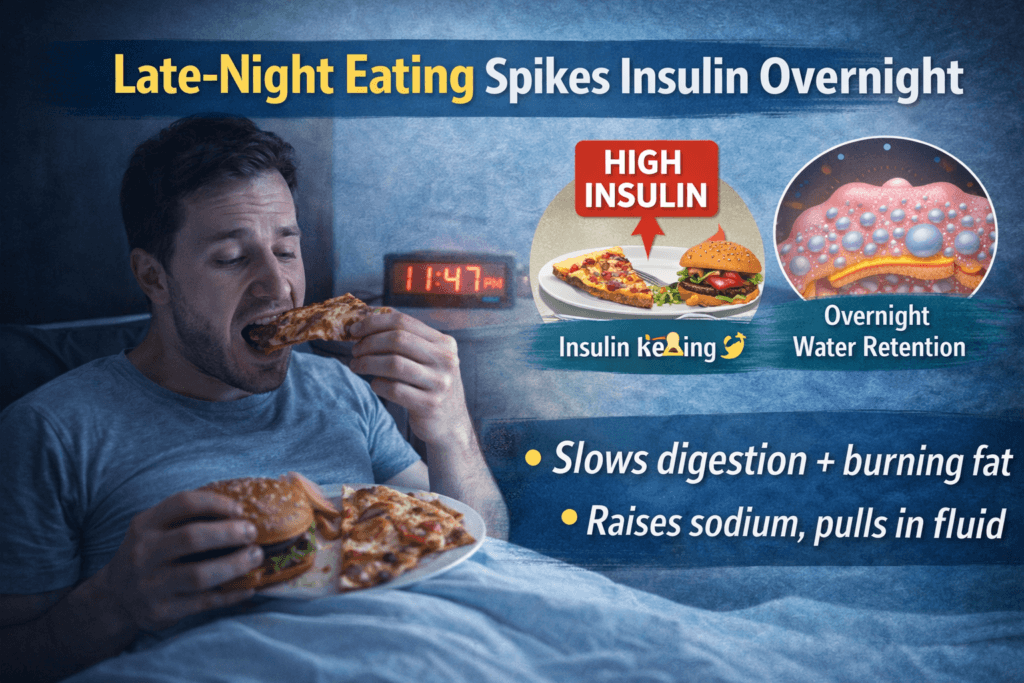
Large late meals—especially refined carbs and salty foods—keep insulin elevated while you sleep.
When insulin stays high:
• fat burning slows
• digestion drags
• sodium pulls water into tissues
That combo equals morning bloat and stubborn belly fat.
Fix it:
• Eat dinner earlier
• Prioritize protein and vegetables.
• Keep carbs moderate at night
• Drink water before bed
👉 “Why Blood Sugar Spikes Make Belly Fat Hard to Lose”
3. Gut Inflammation and Slow Digestion

Ultra-processed foods, alcohol, artificial sweeteners, and low fiber intake disrupt gut bacteria.
Studies link gut inflammation to fluid retention, gas production, and metabolic dysfunction—all enemies of a flat stomach.
Signs it’s gut-related:
• frequent bloating
• constipation
• abdominal pressure
• irregular stools
Fix it:
• Eat fiber-rich vegetables
• Add fermented foods (yogurt, kefir, sauerkraut)
• Cut back on alcohol
• Chew slowly
👉 “How Gut Health Affects Belly Fat and Energy Levels”
4. Dehydration Makes You Retain Water

Counterintuitive but true: when you don’t drink enough water, your body holds onto fluid to protect itself.
Mild dehydration also slows digestion and increases sodium sensitivity—leading to that swollen morning feeling.
Fix it:
• Drink water first thing after waking
• Aim for pale-yellow urine
• Add electrolytes from whole foods (fruit, leafy greens)
👉 “Why Drinking More Water Can Help Flatten Your Stomach”
5. Stress Keeps Your Body in Fat-Storage Mode
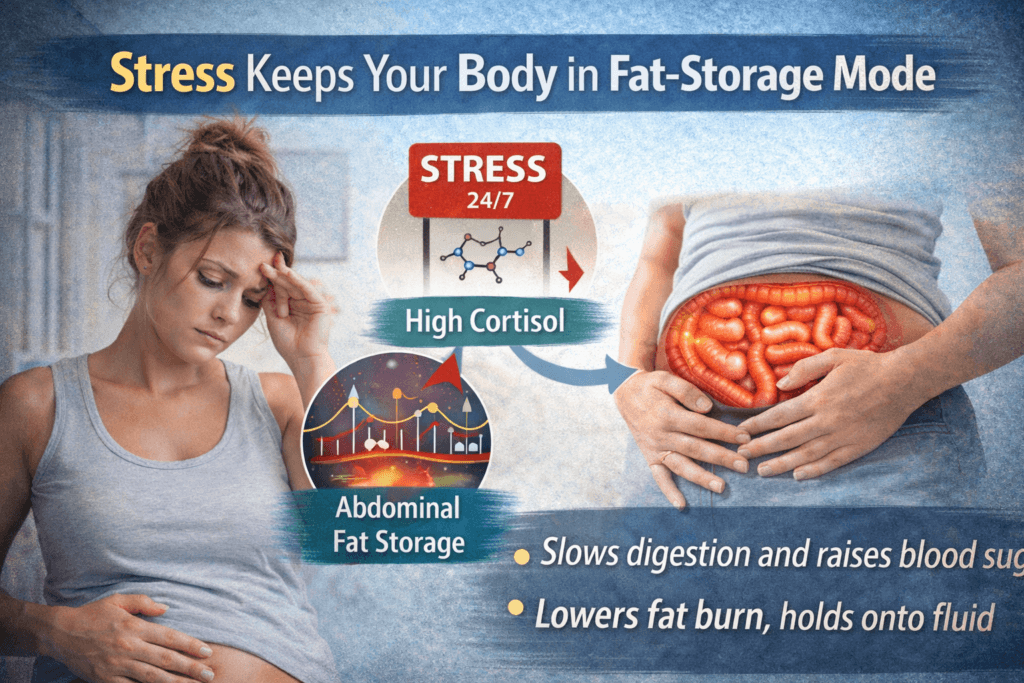
Chronic psychological stress keeps cortisol elevated.
High cortisol encourages:
• abdominal fat storage
• gut permeability
• fluid retention
• blood sugar instability
This “fight-or-flight” state also slows digestion overnight.
Fix it:
• Morning sunlight exposure
• Deep breathing
• Walking after dinner
• Short journaling sessions
👉 Cortisol: The Stress Hormone That Grows Belly Fat”
Quick Comparison: Bloating vs. Fat Gain
| Feature | Temporary Bloating | True Fat Gain |
|---|---|---|
| Appears overnight | Yes | No |
| Changes day to day | Yes | Rarely |
| Improves with hydration | Yes | Sometimes |
| Linked to stress/salt | Often | Indirectly |
| Requires calorie surplus | No | Yes |
Good news: fixing bloating habits often improves fat loss at the same time.
🥤 Smoothie Solution: Support Digestion & Hormones Daily
One easy way to reduce bloating and support belly-fat loss is to start your day with a protein-rich, fiber-loaded smoothie.
The 21-Day Smoothie Challenge inside EasyFitIntro focuses on:
• stabilizing blood sugar
• reducing inflammation
• feeding healthy gut bacteria
• supporting metabolism
It’s a done-for-you reset that fits busy schedules—no complicated meal plans required.
👉 (“Get the Free Smoothie Guide”)
FAQs
Why do I wake up bloated every morning?
Most commonly: poor sleep, late dinners, dehydration, gut irritation, and high stress levels.
Is morning bloating the same as belly fat?
No. Bloating is temporary fluid or gas. Belly fat is stored tissue—but the same habits can cause both.
Can stress really cause bloating?
Yes. Cortisol alters digestion, gut permeability, and water retention.
How long does it take to reduce morning bloating?
Many people see changes in 3–7 days once hydration, sleep, and evening meals improve.
Should I avoid carbs at night?
Not completely—focus on whole-food carbs and smaller portions paired with protein.
Final Thoughts
Morning bloating isn’t random.
It’s feedback from your body.
Fixing sleep, hydration, stress, gut health, and blood sugar control doesn’t just flatten your stomach—it creates the hormonal environment where fat loss finally works.
👇 Question for readers:
Do you wake up bloated most mornings—or only after certain foods or stressful days? Drop a comment below.