
If you’ve ever grabbed your stomach and thought,
“Why does this feel so soft?”
You’re not alone.
Many people assume soft, jiggly belly fat means:
- they’re gaining weight
- they’re doing something wrong
- their diet failed
But the truth is more nuanced.
Soft belly fat is often a mix of:
- stored fat
- water retention
- inflammation
- hormonal stress
- digestive bloating
Understanding what’s happening underneath your skin changes how you fix it.
Let’s break it down properly.
The Two Types of Belly Fat (And Why Texture Matters)
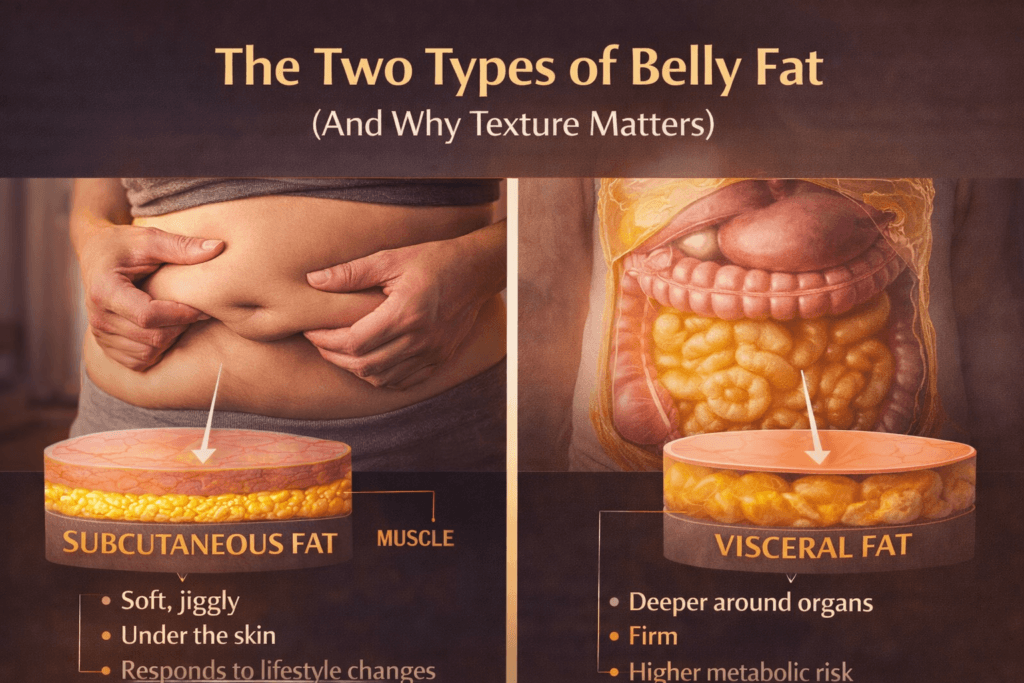
There are two main types of abdominal fat:
1️⃣ Subcutaneous Fat
This is the soft, pinchable fat under the skin.
It’s the “jiggly” type most people feel.
2️⃣ Visceral Fat
This sits deeper around your organs.
It’s firmer and linked more strongly to metabolic risk.
Most soft belly fat is subcutaneous—and it’s more responsive to lifestyle changes than people think.
Why Belly Fat Feels Soft: The Real Causes
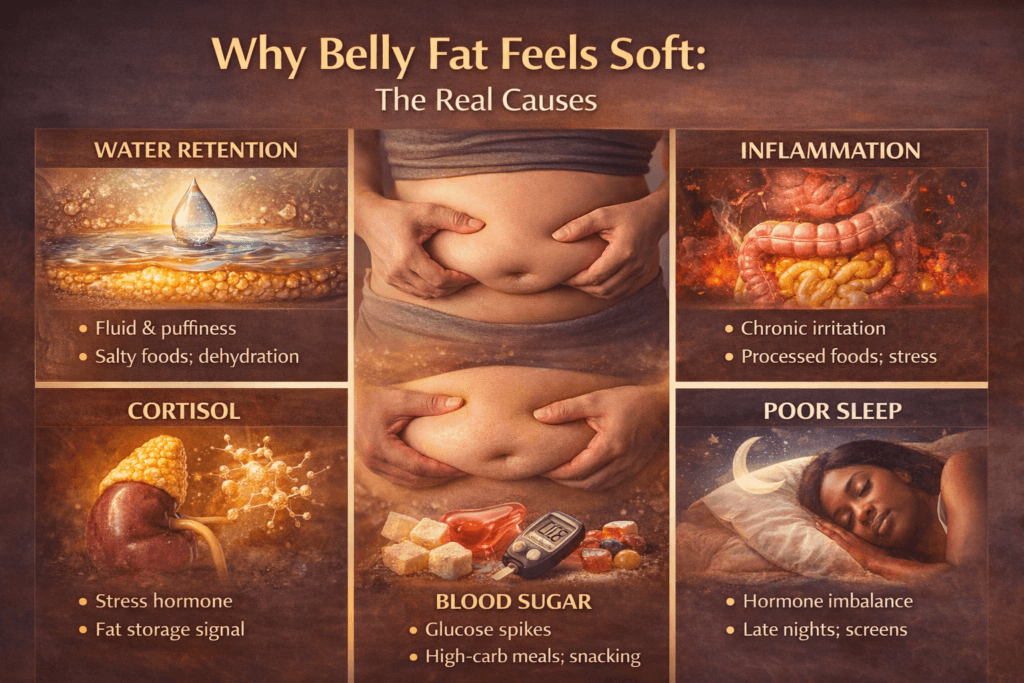
1. Water Retention
High sodium intake, dehydration, hormonal shifts, and stress can cause fluid retention.
When water is trapped in tissues, your stomach can feel:
- puffy
- loose
- swollen
- soft
This is not the same as gaining fat.
Proper hydration and electrolyte balance often reduce this quickly.
2. Inflammation
Chronic low-grade inflammation increases fluid retention and tissue softness.
Common triggers:
- ultra-processed foods
- poor sleep
- high stress
- blood sugar spikes
- gut imbalance
Inflammation affects how tissues store fluid and how tight your midsection feels.
3. Cortisol (Stress Hormone)
Chronic stress elevates cortisol.
Research shows elevated cortisol is associated with increased abdominal fat storage (Epel et al., 2000).
When cortisol remains high:
- fat storage increases centrally
- water retention increases
- tissue feels softer
Stress doesn’t just affect your mind—it reshapes your metabolism.
4. Blood Sugar & Insulin
Frequent glucose spikes increase insulin.
Insulin signals fat storage.
When meals are high in refined carbohydrates without protein or fiber:
- blood sugar spikes
- insulin rises
- fat storage increases
- energy crashes
This pattern contributes to softer fat accumulation over time.
5. Poor Sleep
Sleep restriction increases ghrelin (hunger hormone) and reduces leptin (satiety hormone).
In controlled studies (Spiegel et al., 2004), sleep deprivation significantly increased hunger and appetite.
Poor sleep also worsens insulin sensitivity and cortisol rhythm.
More stress + more insulin = more central storage.
Soft vs. Firm Belly Fat: What’s the Difference?
| Soft Belly Fat | Firm Belly Fat |
|---|---|
| Often includes water retention | Higher visceral fat risk |
| More responsive to hydration | Linked to metabolic disease |
| Influenced by inflammation | Influenced by chronic insulin resistance |
| Fluctuates daily | Slower to change |
Soft belly fat is often more reversible than people think.
How to Reduce Soft, Jiggly Belly Fat Naturally
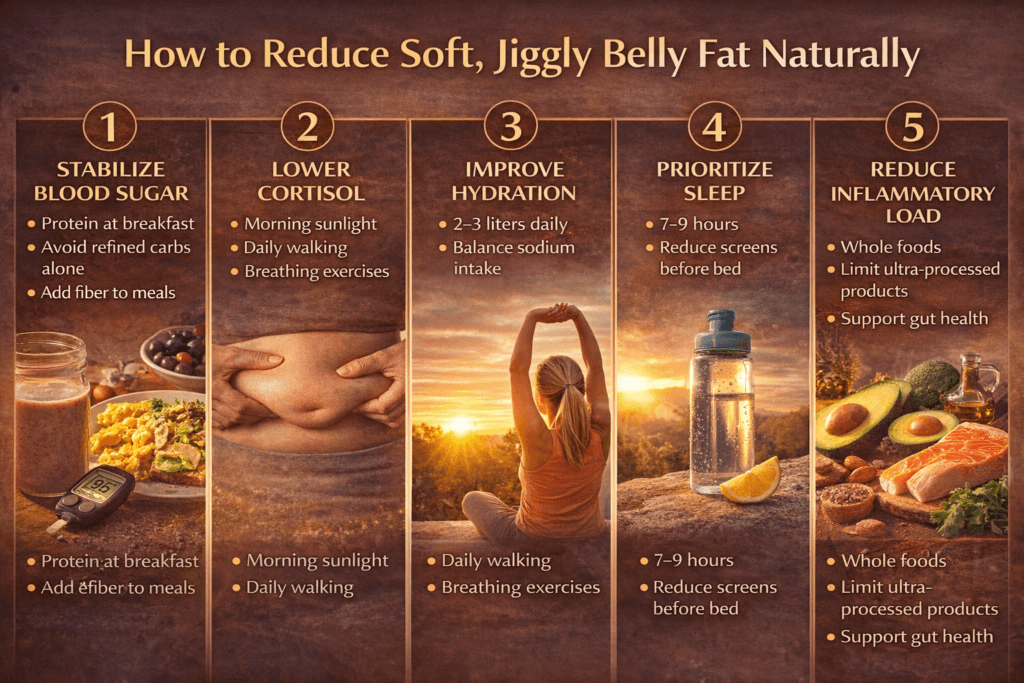
Instead of starving yourself, focus on regulation.
1️⃣ Stabilize Blood Sugar
Protein at breakfast.
Avoid refined carbs alone.
Add fiber to meals.
2️⃣ Lower Cortisol
Morning sunlight.
Daily walking.
Breathing exercises.
Reduce phone use first thing.
3️⃣ Improve Hydration
2–3 liters daily.
Balance sodium intake.
4️⃣ Prioritize Sleep
7–9 hours.
Reduce screens before bed.
5️⃣ Reduce Inflammatory Load
Whole Foods.
Limit ultra-processed products.
Support gut health.
These habits improve insulin sensitivity and reduce fluid retention — which tightens your midsection over time.
7-Day Reset and Smoothie Challenge
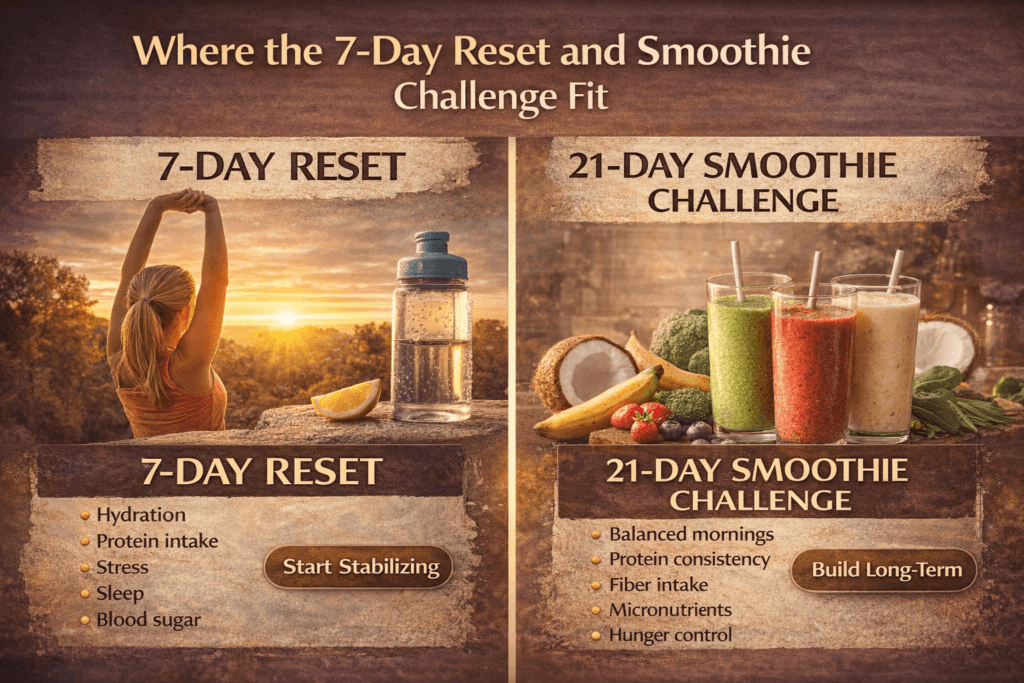
If your belly feels soft, puffy, or jiggly, your body likely needs stabilization, not restriction.
The 7-Day Reset addresses:
- hydration
- protein intake
- stress
- sleep
- blood sugar
Then the 21-Day Smoothie Challenge builds structure around
- balanced mornings
- protein consistency
- fiber intake
- micronutrients
- hunger control
Soft belly fat responds best to consistency—not extremes.
👉 (Read: 7 Reset to Flatten your Stomach here)
👉 (Get your 7-day Smoothie Challenge here)
FAQs
Is soft belly fat easier to lose?
Often yes, because it frequently includes water retention and inflammation.
Does jiggly fat mean it’s “turning into muscle”?
No. Fat does not convert to muscle. They are separate tissues.
Can stress alone cause belly fat?
Chronic stress elevates cortisol, which is associated with increased abdominal storage.
Why does my stomach look flatter some days?
Hydration, sodium intake, digestion, and stress levels fluctuate daily.
How long does it take to tighten soft belly fat?
With consistent blood sugar control and stress reduction, many notice changes within weeks.
Should I do more cardio?
Cardio helps, but hormone regulation and nutrition matter more.
Final Thoughts
Soft, jiggly belly fat is not a sign you’ve failed.
It’s often a signal that your body is stressed, inflamed, or unstable.
Fix the signals.
Stabilize your system.
Lower stress.
Balance blood sugar.
Hydrate properly.
Sleep deeply.
Start with the 7-Day Reset.
Then build long-term structure with the 21-Day Smoothie Challenge.
👇 Comment “SOFT” if you’re ready to fix this properly—and let me know if you’re starting the reset this week.