
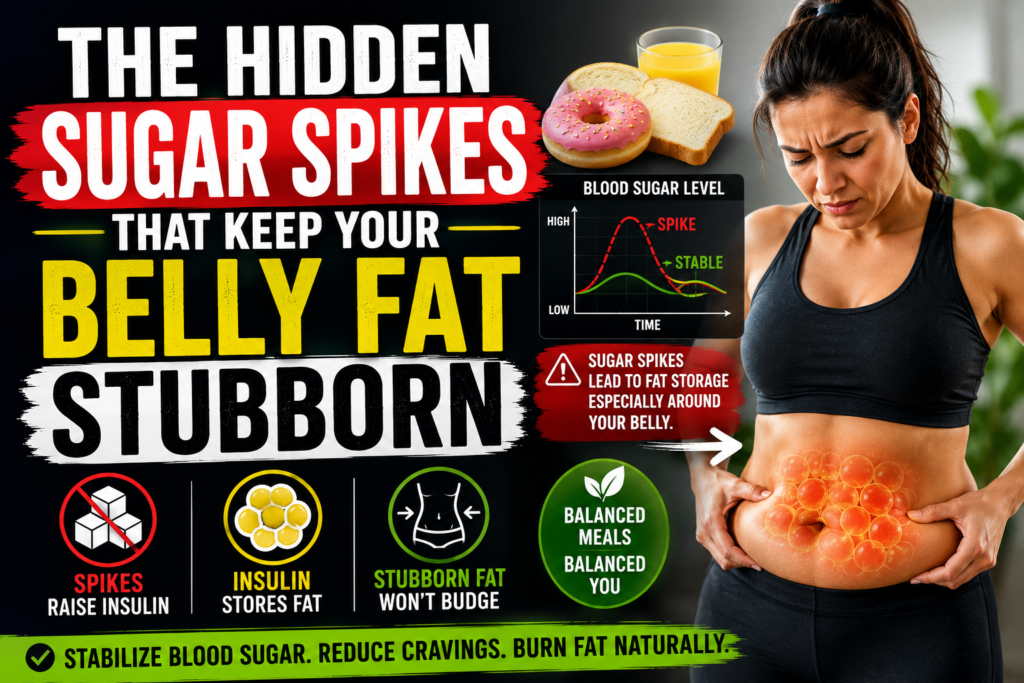
The Hidden Sugar Spikes That Keep Belly Fat Stubborn
You may be eating healthy.
You may be avoiding sweets.
You may even be working out.
But your belly fat still feels stubborn.
Here’s the part most people miss:
Sugar spikes are not only caused by obvious sugar.
They can also come from everyday habits like the following:
- eating fruit alone for breakfast
- drinking fruit juice
- coffee with sugar or creamer
- cereal or toast without protein
- snacking all day
- eating big portions of rice, bread, pasta, pap, or potatoes without enough protein and fiber
- eating late at night after a long stressful day
That matters because when your blood sugar rises quickly, your body releases insulin to bring it back down. Insulin is necessary and normal, but frequent spikes can make it harder for your body to access stored fat for energy.
So the goal is not to fear carbs.
The goal is to stop hidden sugar spikes from keeping your body in fat-storage mode.
What Is a Blood Sugar Spike?
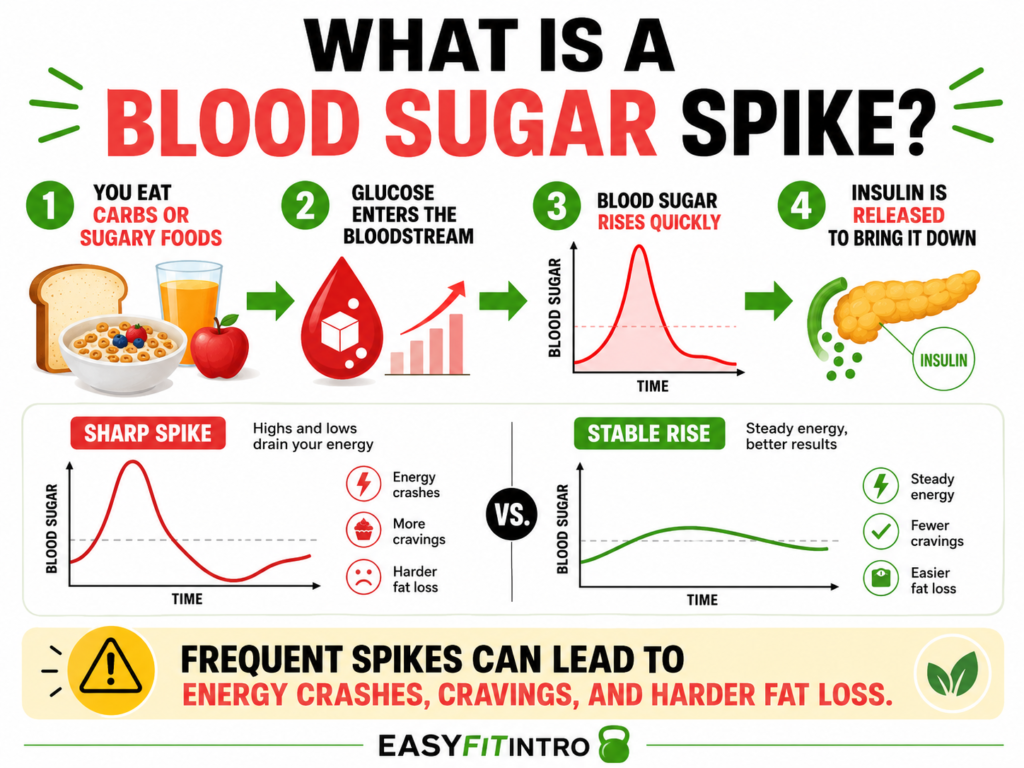
When you eat carbohydrates, your body breaks them down into glucose. Glucose enters the bloodstream and becomes blood sugar. Your body then releases insulin to help move that glucose into your cells for energy.
That’s normal.
The problem starts when your blood sugar rises too high, too often, or too quickly.
The American Diabetes Association explains that carbohydrates break down into glucose and raise blood sugar after eating, while insulin helps process that glucose. The CDC also notes that carbs tend to raise blood sugar more than protein or fat.
Simple version:
| What happens | What it means |
|---|---|
| You eat fast-digesting carbs. | Blood sugar rises quickly. |
| Blood sugar rises. | Insulin is released. |
| Insulin stays high often. | Fat burning becomes harder. |
| Blood sugar crashes later | Cravings and hunger increase |
This is why someone can “eat healthy” and still feel stuck.
The food may not be “bad.”
The problem may be the blood sugar response.
Why Sugar Spikes Keep Belly Fat Stubborn
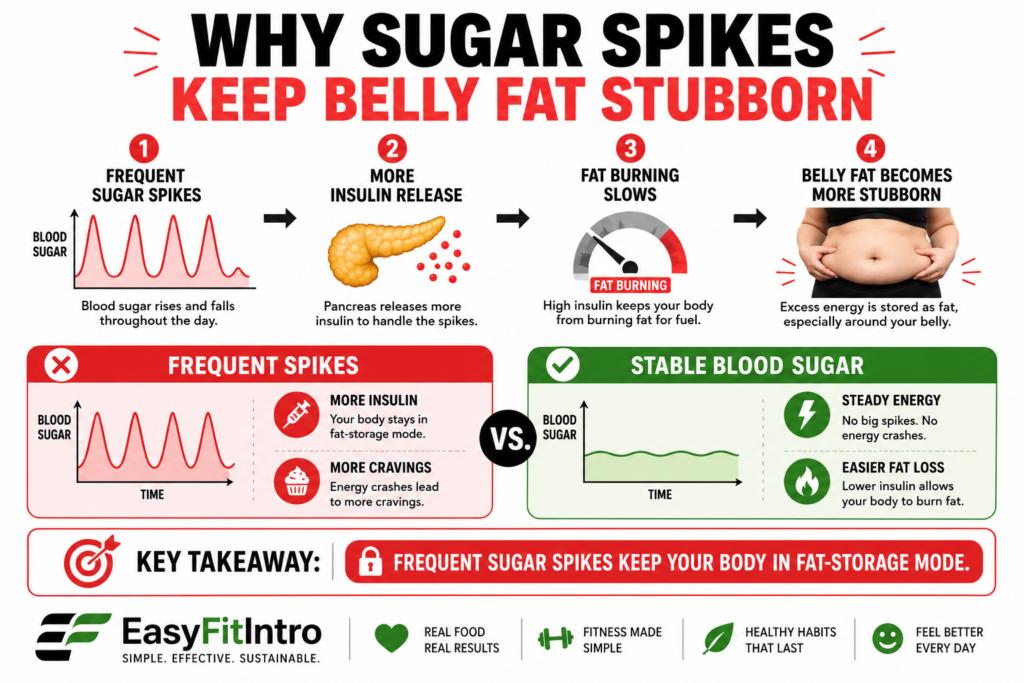
Insulin has an important job: it helps your body manage glucose. But insulin also affects fat storage and fat breakdown.
Research on insulin resistance shows that when the body becomes less responsive to insulin, the pancreas may produce more insulin, leading to higher insulin levels. Insulin is also involved in suppressing the release of fatty acids from fat tissue, which means high insulin can reduce the body’s ability to use stored fat for fuel.
That is why frequent sugar spikes can become a fat-loss problem.
Not because one meal ruins everything.
But because repeated spikes can create a cycle:
| Pattern | What happens | Belly fat effect |
|---|---|---|
| Stable blood sugar | steady energy, fewer cravings | easier to stay consistent |
| Frequent sugar spikes | more insulin release | The body leans toward storage. |
| Sugar crash | hunger, cravings, low energy | Overeating becomes easier. |
| Repeat cycle | unstable energy all day | Belly fat feels harder to lose. |
The real enemy is not carbs.
The real enemy is unbalanced carbs, repeated all day, without enough protein, fiber, movement, or structure.
Hidden Sugar Spike #1: “Healthy” Breakfasts Without Protein
This is one of the biggest mistakes.
Many people start the day with something that looks healthy, but it does not stabilize blood sugar.
Examples:
- fruit only
- cereal only
- toast and tea
- coffee only, then overeating later
- a smoothie made mostly from fruit juice and bananas with no protein or fiber balance
The problem?
These breakfasts can digest quickly and leave you hungry again soon. Harvard’s Nutrition Source explains that high-glycemic carbohydrates are digested quickly and can cause bigger blood sugar fluctuations, while lower-glycemic foods digest more slowly and create a more gradual rise.
Better breakfast examples:
| Instead of this | Try this |
|---|---|
| Fruit only | fruit + Greek yogurt + chia seeds |
| Toast only | eggs + whole-grain toast + avocado |
| Cereal only | oats + peanut butter + protein source |
| Coffee only | eggs, oats, or a balanced smoothie |
| Juice smoothie | whole fruit + greens + protein + healthy fat |
Coach tip:
If your breakfast has carbs, add:
- protein
- fiber
- healthy fat
That combination slows digestion and keeps your energy more stable.
Hidden Sugar Spike #2: Drinking Calories
Liquid sugar is one of the easiest ways to spike blood sugar without realizing it.
Common examples:
- fruit juice
- sweet tea
- soda
- energy drinks
- flavored coffees
- large smoothies made mostly from fruit and juice
Even natural sugar can become a problem when it is concentrated and easy to drink quickly.
The Mayo Clinic recommends whole fruits over fruit juice because whole fruits provide more fiber, and fiber helps moderate digestion and manage blood sugar levels.
Better options:
- water first thing in the morning
- unsweetened tea
- black coffee or coffee with less sugar
- lemon water
- smoothies built with whole fruit, greens, fiber, and protein
A smoothie can be good or bad depending on how it is built.
A sugar-heavy smoothie can spike you.
A balanced smoothie can support stable energy.
Hidden Sugar Spike #3: Snacking All Day
Snacking is not always bad.
But constant snacking can become a problem when it keeps your body in a repeated cycle of eating, spiking, crashing, and craving.
The issue is not just the snack.
It is the pattern.
Examples:
- biscuits with tea
- chips “just for energy”
- sweet yogurt
- cereal bars
- dried fruit in large amounts
- bread snacks
- sugary coffee between meals
What to do instead:
Aim for:
- 3 solid balanced meals per day
- 1 planned snack only if needed
- protein-based snacks instead of sugar-based snacks
Smart snack examples:
| Snack | Why it works better |
|---|---|
| Greek yogurt + nuts | Protein and fat slows digestion. |
| boiled eggs | protein, low sugar |
| apple + peanut butter | fiber + fat + slower energy |
| cottage cheese + berries | protein + fiber |
| nuts + fruit | better than fruit alone |
The CDC explains that soluble fiber forms a gel-like substance in the stomach, slows digestion, and helps control blood sugar.
So instead of asking, “Is this snack healthy?”
Ask:
“Will this snack stabilize me or spike me?”
That question changes everything.
Hidden Sugar Spike #4: Big Carb Portions Without Balance
This one is important, especially in normal daily meals.
Carbs are not the enemy.
But large carbohydrate portions without enough protein, fiber, or healthy fat can cause a bigger glucose response.
Examples:
- big plate of rice with little protein
- pap with very few vegetables or meat
- pasta with no vegetables
- bread-heavy meals
- potatoes without protein/fiber balance
- cereal or oats with added sugar and no protein
Better plate structure:
| Plate section | What to include |
|---|---|
| ½ plate | vegetables or salad |
| ¼ plate | protein: chicken, fish, eggs, beans, lean meat |
| ¼ plate | carbs: rice, pap, sweet potato, oats, whole grains |
| Add-on | Healthy fats: avocado, nuts, olive oil |
This does not mean you must remove rice, pap, bread, or potatoes.
It means you must balance them.
Practical examples:
Instead of:
Big pap + small protein + no vegetables
Try:
Moderate pap + chicken/fish/eggs + vegetables
Instead of:
Bread and tea only
Try:
Whole-grain toast + eggs + avocado
Instead of:
Rice-heavy plate
Try:
Rice + chicken + vegetables + salad
This is how you keep your meals realistic without making fat loss miserable.
Hidden Sugar Spike #5: Late-Night Eating
Late-night eating can become a hidden belly fat trigger because it often comes with the wrong pattern:
- stress
- cravings
- large portions
- sugary snacks
- tired decision-making
- poor sleep afterward
When you eat late, especially a heavy carb meal or sugary snack, it can affect your blood sugar rhythm and sleep quality. And poor sleep can make hunger and cravings worse the next day.
This becomes a loop:
| Night habit | Next-day effect |
|---|---|
| late heavy meal | sluggish digestion |
| sugary snack at night | cravings the next morning |
| poor sleep | more hunger hormones |
| low energy | more caffeine and sugar |
What to do instead:
- eat dinner earlier when possible
- Keep dinner balanced, not carb-heavy.
- take a 10-minute walk after dinner
- drink water or herbal tea instead of snacking automatically
- create a “kitchen closed” time
You don’t need perfection.
You need a rhythm your body can trust.
What Actually Works: How to Stop Hidden Sugar Spikes
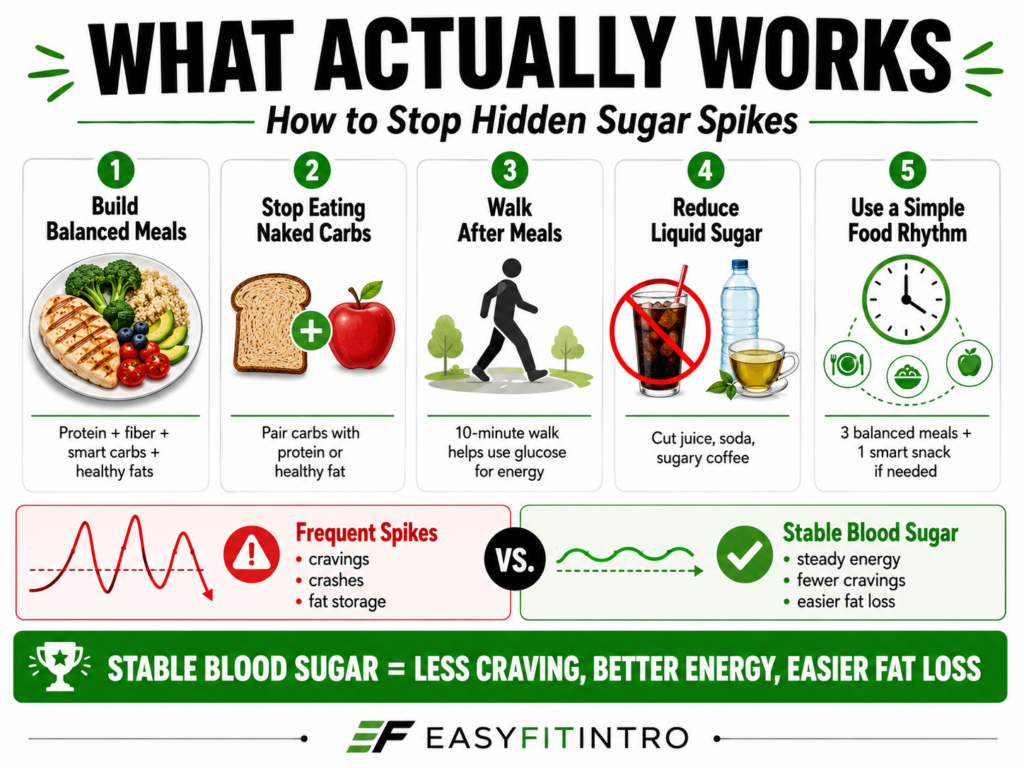
Now let’s make this practical.
Here is the system.
1. Build Balanced Meals
Every main meal should include:
- protein
- fiber
- healthy fats
- smart carbs
Protein, fiber, and fats slow digestion and can reduce the speed of glucose absorption. Joslin Diabetes Center explains that fiber, protein, and fats help slow carbohydrate digestion and delay absorption into the blood, helping prevent glucose spikes after meals.
Simple formula:
Protein + fiber + smart carbs + healthy fat
Examples:
- eggs + oats + peanut butter
- chicken + vegetables + rice
- fish + sweet potato + salad
- Greek yogurt + berries + chia seeds
- smoothie with greens + berries + protein + seeds
2. Stop Eating “Naked Carbs”
A “naked carb” is a carb eaten alone.
Examples:
- bread alone
- fruit alone
- cereal alone
- rice cakes alone
- juice alone
- biscuits alone
They digest faster and can create a bigger spike.
Better pairings:
| Naked carb | Better pairing |
|---|---|
| apple alone | apple + peanut butter |
| toast alone | toast + eggs |
| oats alone | oats + Greek yogurt |
| rice alone | rice + chicken + vegetables |
| smoothie with juice | smoothie with greens + protein + seeds |
This one habit can change your energy and cravings fast.
3. Walk After Meals
Walking after meals is one of the simplest blood sugar tools.
You don’t need to train hard.
You just need to move.
Research on post-meal walking shows that walking after eating can improve the glucose response after meals, and a study on postprandial walking found that a 30-minute brisk walk improved glycemic response after meals with different carbohydrate levels.
Simple version:
- walk 10 minutes after lunch
- walk 10 minutes after dinner
- or stand and move lightly if you can’t walk
This helps your muscles use glucose for energy.
That means less sugar sitting in the blood.
4. Reduce Liquid Sugar
This is a powerful fix.
Start with these swaps:
| Instead of | Try |
|---|---|
| fruit juice | whole fruit + water |
| sweet tea | unsweetened tea |
| soda | sparkling water |
| sugary coffee | coffee with less sugar |
| fruit-heavy smoothie | balanced smoothie |
This does not mean smoothies are bad.
It means smoothies must be built correctly.
A proper smoothie should include:
- whole fruit, not juice
- greens
- fiber
- protein
- healthy fat
That is why structure matters.
5. Use a Simple Food Rhythm
Most people fail because they try to be perfect.
You don’t need perfection.
You need repeatability.
Try this daily rhythm:
| Time | Focus |
|---|---|
| Breakfast | protein + fiber |
| Lunch | balanced plate |
| Snack if needed. | protein-based |
| Dinner | lighter, balanced meal |
| After meals | short walk |
This creates stability.
And stability is where fat loss becomes easier.
FREE Belly Fat Reset Workbook: Start Here
If you’re tired of guessing what is keeping your belly fat stuck, start with a simple reset plan.
? Download the FREE Belly Fat Reset Workbook here:
Inside, you’ll learn how to:
- Identify hidden belly fat triggers
- improve your daily food structure
- reduce bloating and cravings
- build a simple system your body can respond to
Stop guessing.
Start fixing the real cause.
Try the 21-Day Smoothie Challenge.
If you want a simple way to stabilize your meals, reduce cravings, and support fat loss without overthinking everything, the 21-Day Smoothie Challenge is a powerful place to start.
? Try the 21-Day Smoothie Challenge here:
It helps you:
- follow a structured plan
- use real ingredients
- support digestion
- reduce cravings
- make healthy eating easier
The goal is not extreme dieting.
The goal is to give your body consistent nutrition so it can finally respond.
Related Posts You May Find Helpful
If this article helped you, read these next:
- Healthy Foods That Actually Cause Bloating:
- The Hidden Reasons Your Belly Fat Doesn’t Go Away:
- Why Exercise Alone Isn’t Enough to Lose Belly Fat:
- Flat Stomach vs Low Body Fat:
FAQ: Hidden Sugar Spikes and Belly Fat
Can healthy foods spike blood sugar?
Yes. Healthy foods can still spike blood sugar if they are high in fast-digesting carbs, eaten in large portions, or eaten without protein, fiber, or healthy fat. Fruit, oats, rice, bread, and smoothies can all be healthy, but they need balance.
Does insulin cause belly fat?
Insulin does not “cause” belly fat by itself. Your body needs insulin. But frequent high insulin can make it harder to burn stored fat because insulin helps the body store energy and reduces fat breakdown.
What breakfast helps prevent sugar spikes?
A good breakfast includes protein, fiber, and healthy fat. Examples include eggs with whole-grain toast and avocado, oats with Greek yogurt and chia seeds, or a balanced smoothie with greens, berries, protein, and seeds.
Are smoothies good or bad for blood sugar?
It depends on how they are made. A smoothie made with fruit juice, too much fruit, and no protein can spike blood sugar. A balanced smoothie with whole fruit, greens, fiber, and protein can support steadier energy.
How do I stop cravings after eating?
Start by stabilizing blood sugar. Build meals with protein, fiber, and healthy fats. Avoid eating carbs alone. Drink water, walk after meals, and reduce sugary drinks. Cravings often improve when blood sugar becomes more stable.
Do I need to cut carbs to lose belly fat?
No. You do not need to fear carbs. You need to control portions, choose better sources, and pair carbs with protein, fiber, and healthy fats.
Final Thought
If your belly fat feels stubborn, don’t only ask:
“Am I eating healthy?”
Ask:
“Is my blood sugar stable?”
That question changes the game.
Because fat loss is not only about eating less.
It is about giving your body the right signals consistently.
Stabilize your blood sugar.
Reduce cravings.
Support your hormones.
Build a system you can actually repeat.
That is how your body starts responding.
Your Turn
Have you noticed cravings, energy crashes, or belly fat that won’t move even when you eat healthy?
Drop a comment below. I’d like to hear what you’ve tried.