
Walking After Meals: Control Blood Sugar & Burn Belly Fat
Introduction
You might be eating “healthy,” cutting sugar, and hitting the gym—yet stubborn belly fat still hangs on.
One simple habit could be missing:
Walking after meals.
This gentle movement isn’t about burning tons of calories. It works by influencing hormones—especially insulin and blood sugar—two of the biggest drivers of fat storage.
In this article, you’ll learn:
- Why post-meal walking works biologically
- What science says about blood sugar and fat storage
- How long and how fast to walk
- Who benefits most
- How to stack this habit with hydration and smoothies for faster results
Let’s break it down.
How Blood Sugar and Insulin Drive Fat Storage
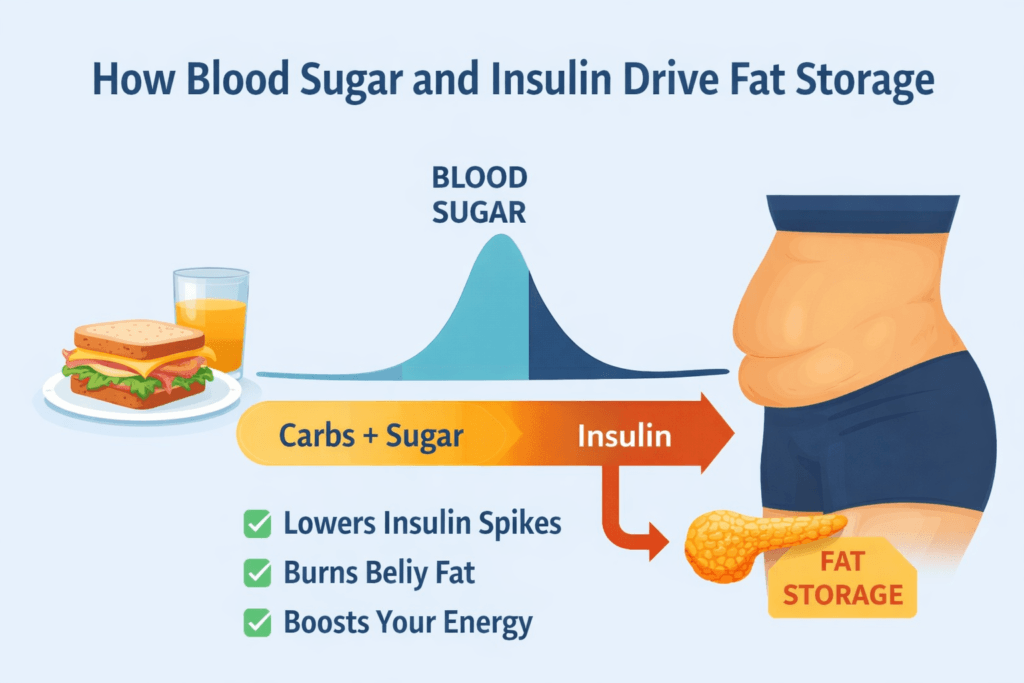
When you eat—especially carbohydrates—your blood sugar rises.
Your pancreas releases insulin, a hormone that helps move glucose into cells for energy or storage.
The problem?
Repeated large spikes in blood sugar → high insulin → your body shifts into fat-storage mode, particularly around the abdomen.
Over time this can contribute to:
- insulin resistance
- energy crashes
- cravings
- stubborn belly fat
What Studies Show
Research published in Diabetes Care and Sports Medicine shows that light walking after meals significantly lowers post-meal glucose spikes compared to sitting.
Muscles act like sponges for glucose when they contract—pulling sugar out of the bloodstream without needing as much insulin.
That’s metabolic gold.
Why Walking After Meals Works So Well
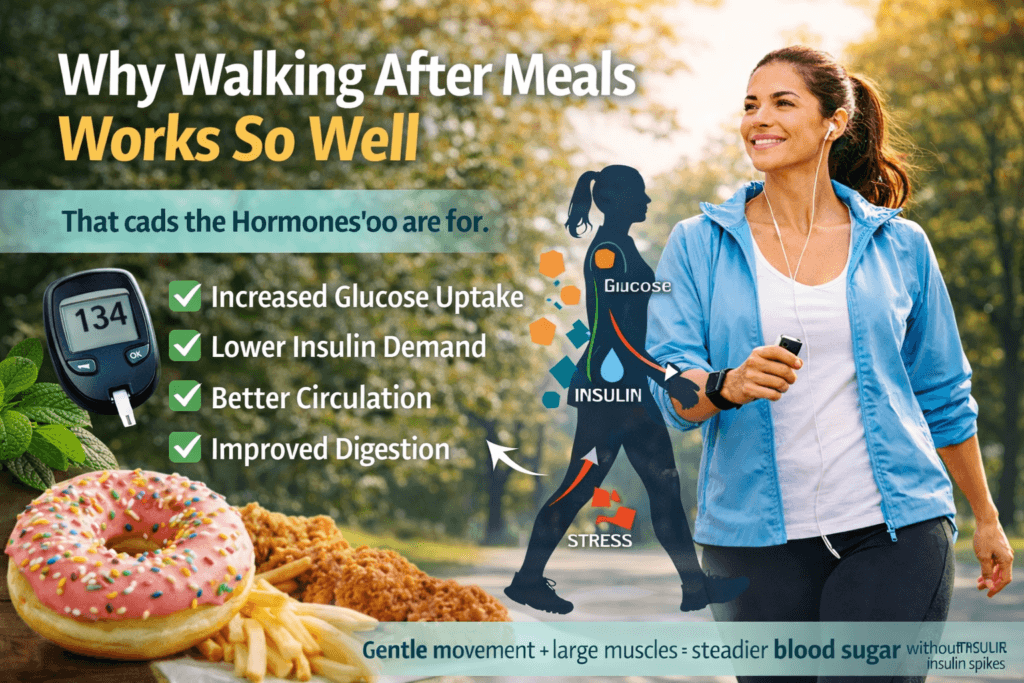
Walking activates large muscle groups in your legs and hips.
That causes:
✔ increased glucose uptake
✔ lower insulin demand
✔ better circulation
✔ improved digestion
✔ steadier energy
And unlike intense workouts, walking is:
- low stress
- easy to repeat daily
- safe for beginners
- cortisol-friendly
That’s why it fits perfectly into a hormone-balanced fat-loss approach.
? Sitting vs Walking After Meals—What’s the Difference?
| Behavior After Eating | Blood Sugar Response | Insulin Demand | Fat-Storage Signal | Energy Levels |
|---|---|---|---|---|
| Sitting/Scrolling | Large spike | High | Strong | Afternoon crash |
| Light walking (10–15 min) | Smaller rise | Lower | Reduced | Steadier |
| Longer walk (20–30 min) | Even flatter curve | Lowest | Minimal | Sustained |
How Long Should You Walk After Meals?
You don’t need an hour.
Science suggests benefits start at 5–10 minutes, with stronger effects at:
? 10–20 minutes after meals.
Best Timing:
- Start within 30 minutes of eating
- Especially helpful after carb-heavy meals
- Dinner walks are excellent for nighttime blood sugar control
Pace:
- Easy to moderate
- You should be able to talk but feel slightly warm
- No breathless sprinting required
Who Benefits Most From This Habit?
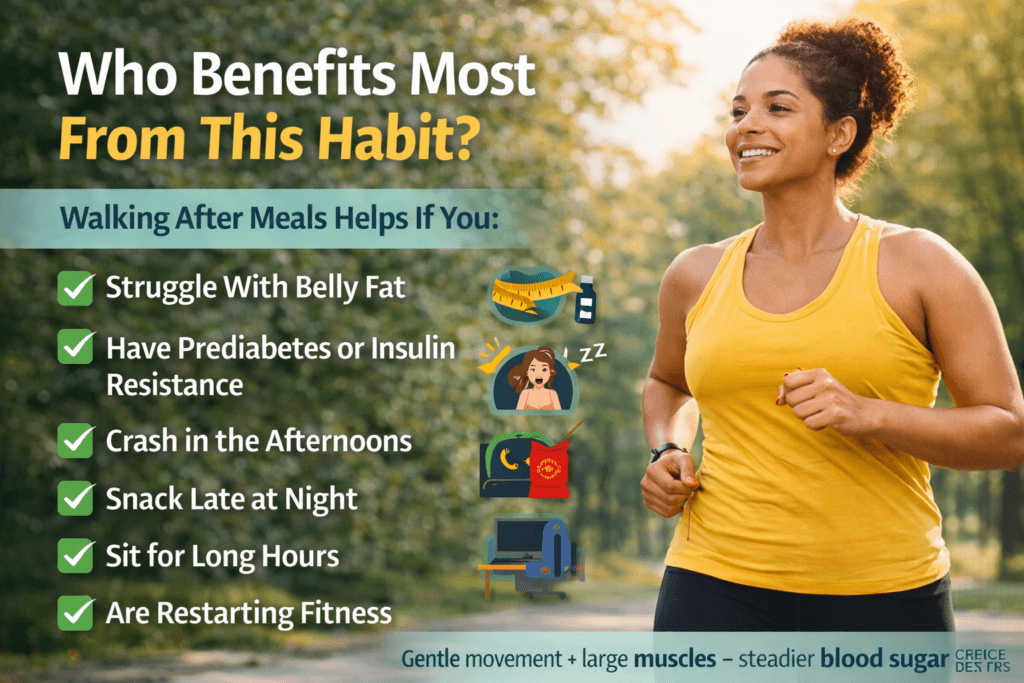
Walking after meals is powerful if you:
- struggle with belly fat
- have prediabetes or insulin resistance
- crash in the afternoons
- snack late at night
- sit for long hours
- are restarting fitness
It’s one of the highest-ROI habits for metabolic health.
Stack This Habit for Faster Results
Walking works even better when combined with:
? Hydration
Drinking water before and after meals supports digestion and appetite control.
: Why Drinking Water Keeps Your Belly Flatter & Boosts Fat Loss)
? Morning Sunlight
Improves insulin sensitivity and circadian rhythm.
5 Morning Habits to Lower Cortisol, Balance Blood Sugar & Burn Belly Fat Naturally)
? Protein-Rich Smoothies
Protein slows glucose absorption and keeps you full longer.
? 21-Day Smoothie Challenge
If you want an easy way to stabilize blood sugar and reduce cravings, my 21-Day Smoothie Challenge shows you how to build high-protein, fiber-rich smoothies that support hormones, digestion, and fat loss—without extreme dieting.
It’s designed for busy people who want simple daily wins that add up.
Common Mistakes to Avoid
❌ Walking too intensely (raises stress hormones)
❌ Waiting hours after eating
❌ Only doing it occasionally
❌ Skipping dinner walks while snacking at night
Consistency beats perfection.
FAQs
Does walking after meals really help belly fat?
Yes—indirectly. By lowering insulin spikes and improving glucose handling, your body spends less time in fat-storage mode.
Is it better than going to the gym?
They serve different purposes. Gym workouts build muscle and fitness. Post-meal walks improve metabolic control daily.
What if I can’t walk after every meal?
Do it after your largest meal—usually dinner.
Can slow walking still help?
Absolutely. Gentle movement is enough to activate muscles and flatten glucose curves.
Should I walk indoors or outdoors?
Both work. Outdoor walks add stress-reducing and vitamin-D benefits.
Final Thoughts
You don’t need extreme diets or endless cardio to improve fat loss.
Sometimes the biggest metabolic upgrade is:
a short walk after eating.
Try it for seven days and notice:
- steadier energy
- fewer cravings
- flatter evenings
- better digestion
? Drop a comment on EasyFitIntro:
Do you already walk after meals—or will you start tonight?