? Introduction: The Misleading “Weight Loss” During Stress
Have you ever gone through a stressful period and noticed the scale dropping?
It feels like progress.
But here’s the truth most people don’t understand:
? Stress-related weight loss is not real fat loss.
In fact, research shows that chronic stress:
- Breaks down muscle tissue
- Disrupts hormones
- Promotes fat storage—especially around the belly
So even if your weight drops…
? Your body composition may actually be getting worse.
Let’s break this down using real science.
? What Happens to Your Body Under Stress
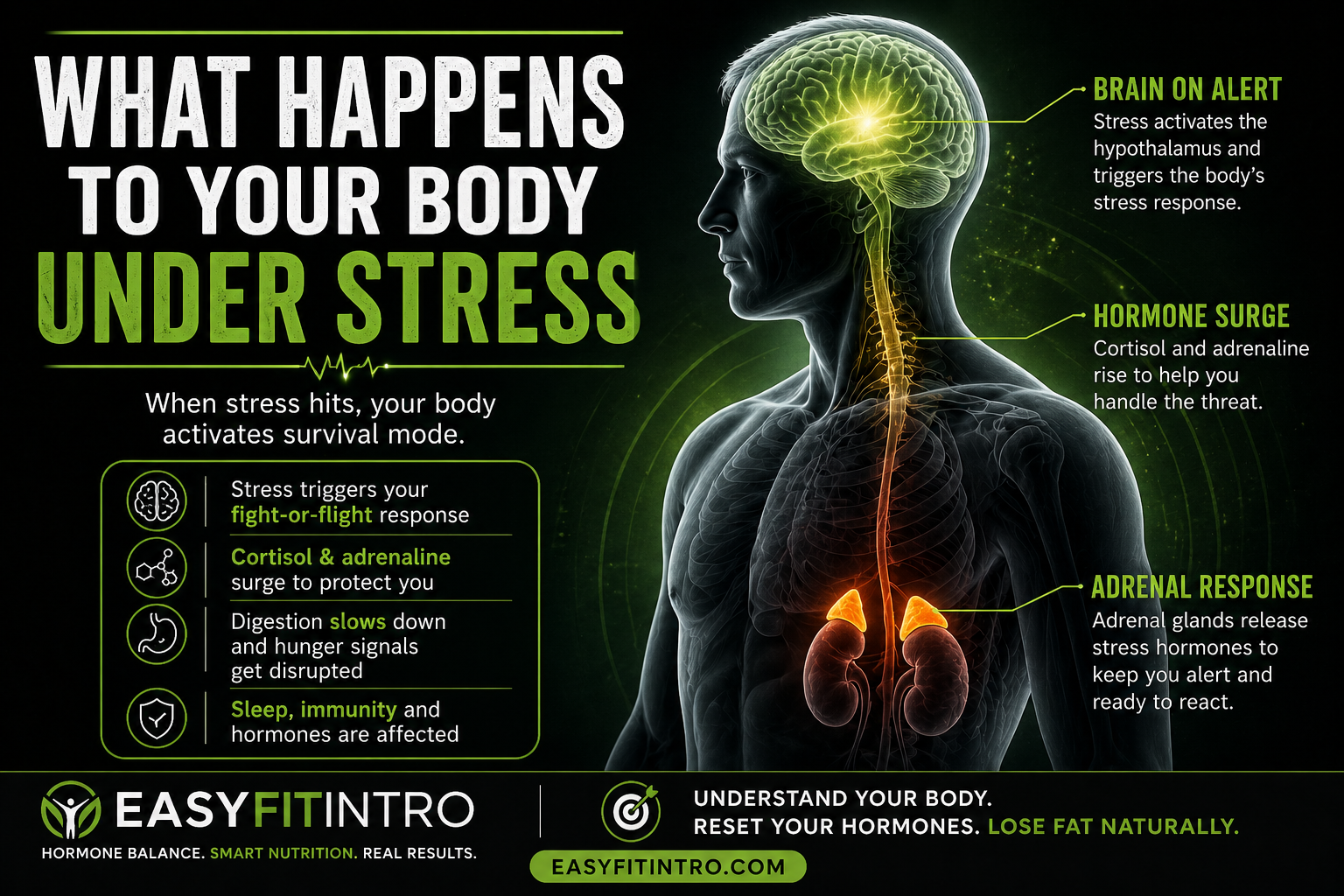
When you’re stressed, your body activates the fight-or-flight response, controlled by the hypothalamic-pituitary-adrenal (HPA) axis.
This leads to the release of the following:
- Cortisol (primary stress hormone)
- Adrenaline
? Scientific insight:
A study published in Endocrine Reviews shows that chronic cortisol elevation:
- Increases protein breakdown (muscle loss)
- Alters fat distribution
- Impairs insulin sensitivity
? Translation:
Your body shifts from fat-burning to survival mode
? If you want to understand how hormones control fat storage more deeply, read this:
[Hormones vs Calories: What Actually Controls Fat Loss]
⚖️ Why You Lose Weight During Stress
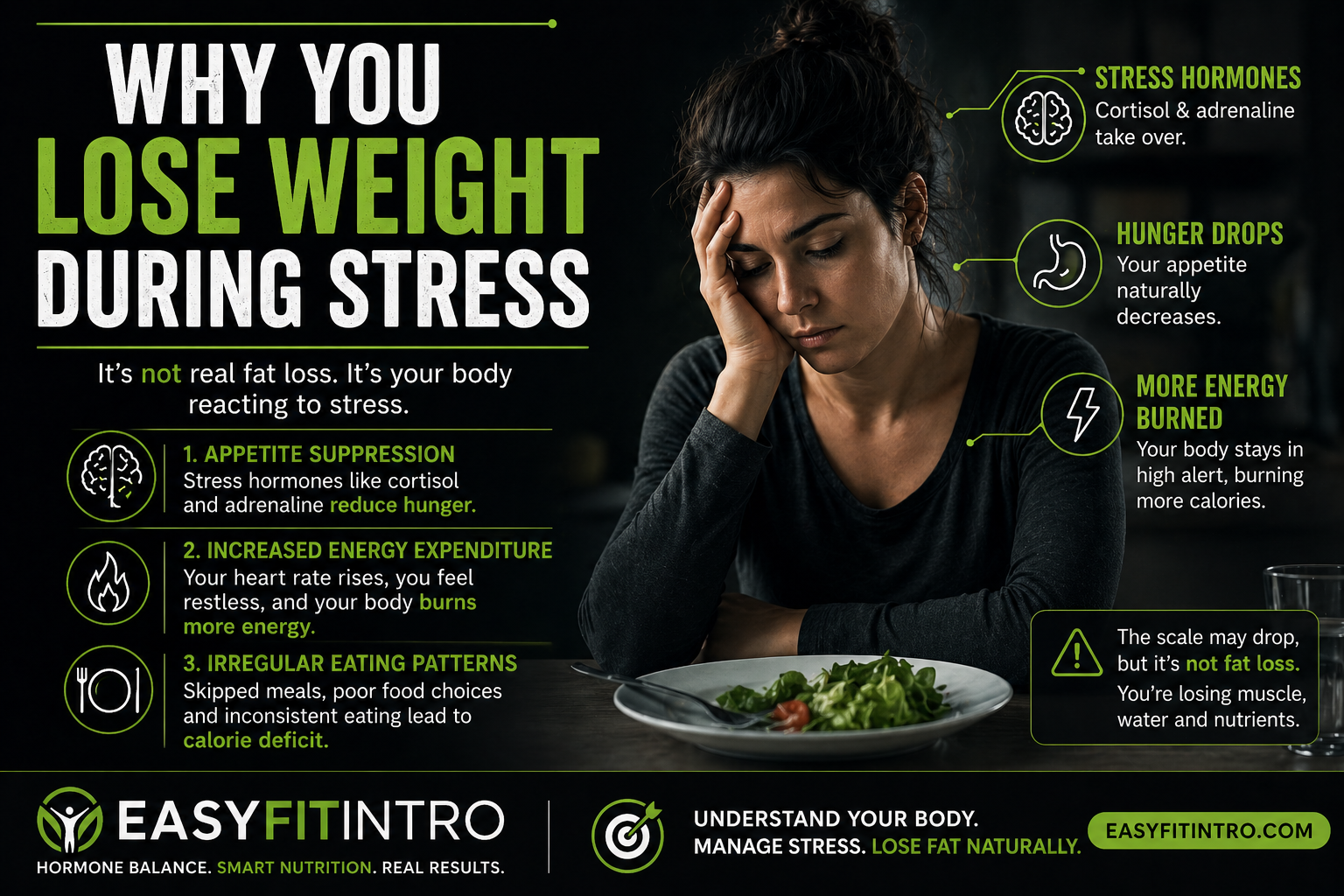
1. Appetite Suppression
Stress hormones suppress hunger signals.
? Research from Psychoneuroendocrinology shows:
- Acute stress reduces appetite in many individuals
- Eating behavior becomes irregular
? What you eat (and drink) during stress also matters more than you think:
[The Hidden Drinks That Keep Belly Fat Stubborn]
? You eat less → weight drops
? This is why many people struggle with belly fat even when they’re trying hard. Here’s a deeper breakdown:
[Why Belly Fat Is Different From Other Body Fat]
2. Increased Energy Expenditure
Stress increases:
- Heart rate
- Nervous system activity
- Restlessness
? Your body burns more energy even at rest
⚠️ But here’s the problem:
This is NOT controlled fat loss.
? What You’re Actually Losing (Science-Based)
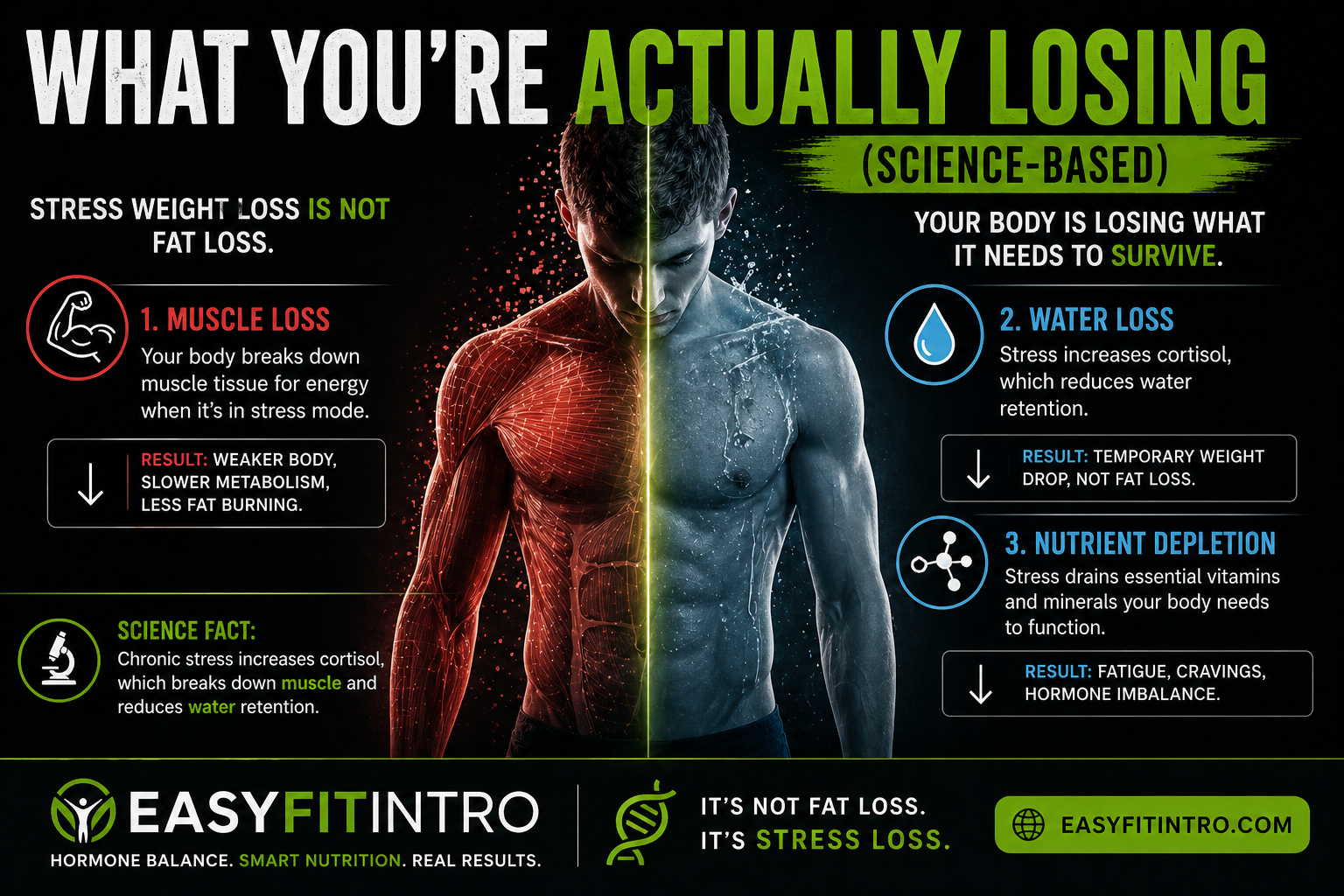
❌ Muscle Loss
High cortisol triggers gluconeogenesis:
? Your body converts muscle protein into energy
? Study (Journal of Clinical Endocrinology & Metabolism):
- Chronic stress increases muscle breakdown significantly
❌ Water Loss
Stress affects:
- Hydration levels
- Electrolyte balance
? Quick drop on the scale = mostly water
❌ Nutrient Depletion
Skipping meals leads to the following:
- Low micronutrients
- Low energy
- Hormonal imbalance
? The Belly Fat Paradox (Critical Insight)
Here’s where things get interesting:
? You can lose weight AND gain belly fat.
? Why?
Cortisol:
- Increases visceral fat storage
- Targets fat accumulation around the abdomen
Study (Obesity Journal):
? High cortisol levels are strongly linked to abdominal fat gain
Result:
- Smaller frame
- Weaker muscles
- More belly fat
? This is called:
“Skinny fat” (poor body composition)
? Even daily habits can make this worse without you realizing it:
[Morning Mistakes That Make Fat Loss Harder]
? What Happens After Stress Ends
Once stress reduces:
- Appetite rebounds
- Cravings increase (especially sugar)
- Insulin spikes
? Research shows:
? Post-stress eating often leads to fat regain—not muscle recovery
? What you do after eating also plays a major role in fat storage:
[What to Do in the First Hour After Dinner for Faster Fat Loss]
Outcome:
- Rapid weight regain
- Increased fat storage
- Slower metabolism
⚠️ Common Misconceptions
❌ “At least I lost weight.”
No—you lost muscle and stability.
❌ “Stress helps me stay lean.”
No—it damages long-term fat loss ability.
❌ “Scale dropping = progress”
Not without understanding what is being lost
? Stress Weight Loss vs Real Fat Loss
| Stress Weight Loss | Healthy Fat Loss |
|---|---|
| Muscle breakdown | Fat loss |
| Hormonal imbalance | Hormonal balance |
| Temporary | Sustainable |
| Fat regain likely | Fat loss mainta |
? How to Support REAL Fat Loss (Hormone-Based)
1. Stabilize Blood Sugar
- Eat balanced meals (protein + fats + carbs)
- Avoid long fasting under stress
2. Reduce Cortisol Daily
- Walking (10–20 min)
- Breathing exercises
- Sunlight exposure
3. Prioritize Sleep
? Sleep deprivation increases cortisol and hunger hormones
? Poor sleep = belly fat signal
4. Maintain Muscle
- Light resistance training
- Enough protein
? Muscle = metabolic protection
? If you’re serious about resetting your body naturally, start here first:
[Free Belly Fat Reset Workbook]
? Why smoothies help
When stress is high, eating becomes difficult.
Smoothies help by:
- Delivering nutrients quickly
- Supporting hormone balance
- Reducing decision fatigue
? That’s why the 21-Day Smoothie Challenge works:
- It simplifies nutrition
- Supports blood sugar stability
- Helps reduce bloating
? Free Belly Fat Reset Workbook
If you struggle staying consistent during stress:
? Download the Free Belly Fat Reset Workbook
It helps you:
- Track habits
- Stay structured
- Avoid falling into stress cycles
❓ FAQ (SEO Boost Section)
1. Is stress weight loss healthy?
No. It usually involves muscle loss, dehydration, and hormonal imbalance rather than fat loss.
2. Why do I lose appetite when stressed?
Stress hormones like cortisol and adrenaline suppress hunger to prioritize survival.
3. Can stress cause belly fat?
Yes. Chronic cortisol elevation promotes fat storage specifically in the abdominal area.
4. Why do I gain weight after stress?
Appetite rebounds, cravings increase, and metabolism slows—leading to fat gain.
5. How can I lose fat without harming my body?
Focus on:
- Balanced meals
- Stress management
- Sleep
- Consistent routines
? Final Thoughts
If your weight drops during stress:
? It’s not progress — it’s a warning sign.
Your body is:
- Protecting itself
- Breaking down muscle
- Holding onto fat
? Real fat loss happens when:
- Hormones are stable
- Stress is managed
- Your body feels safe
? Comment below:
“I choose real fat loss.”
Let’s build this the right way.