🧠 Introduction: The Confusing Truth About Stress and Belly Fat
Have you ever noticed this?
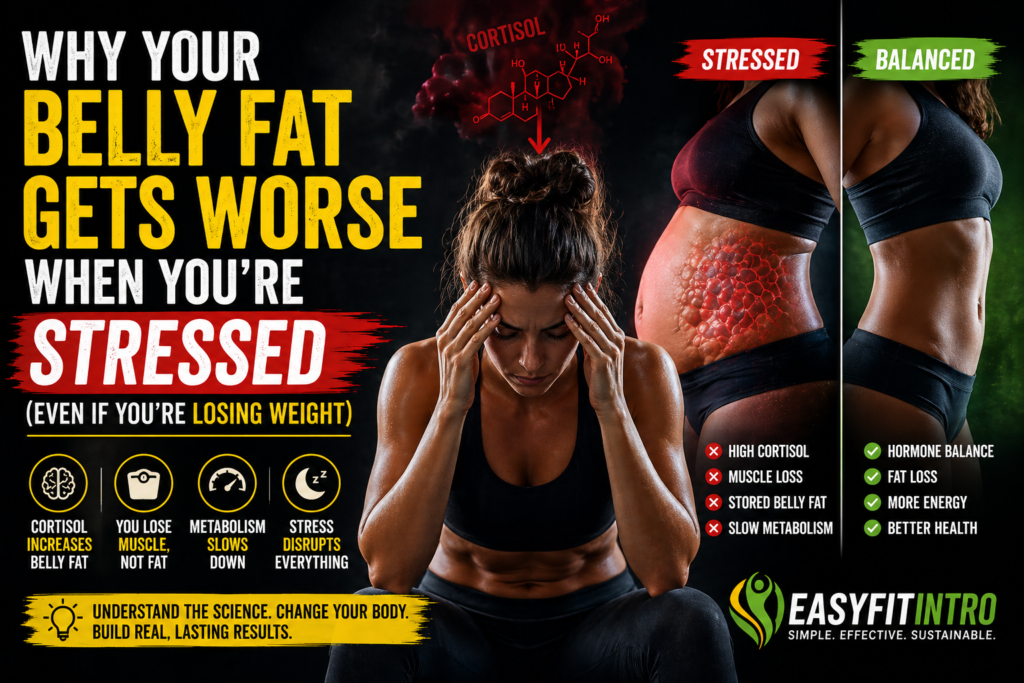
You go through a stressful period…
You lose weight…
But your stomach still doesn’t look flat—or even looks worse.
👉 That’s not your imagination.
And it’s not a lack of discipline.
👉 It’s your hormones — specifically cortisol — working against you.
👉 If you want to understand how hormones control fat loss, read this:
Hormones vs Calories: What Actually Controls Fat Loss
This is where most people get misled:
Weight loss ≠ fat loss
And stress can actually make belly fat more stubborn
Let’s break this down using real science so you understand what’s actually happening inside your body.
🧬 What Stress Does to Your Body (The Science)
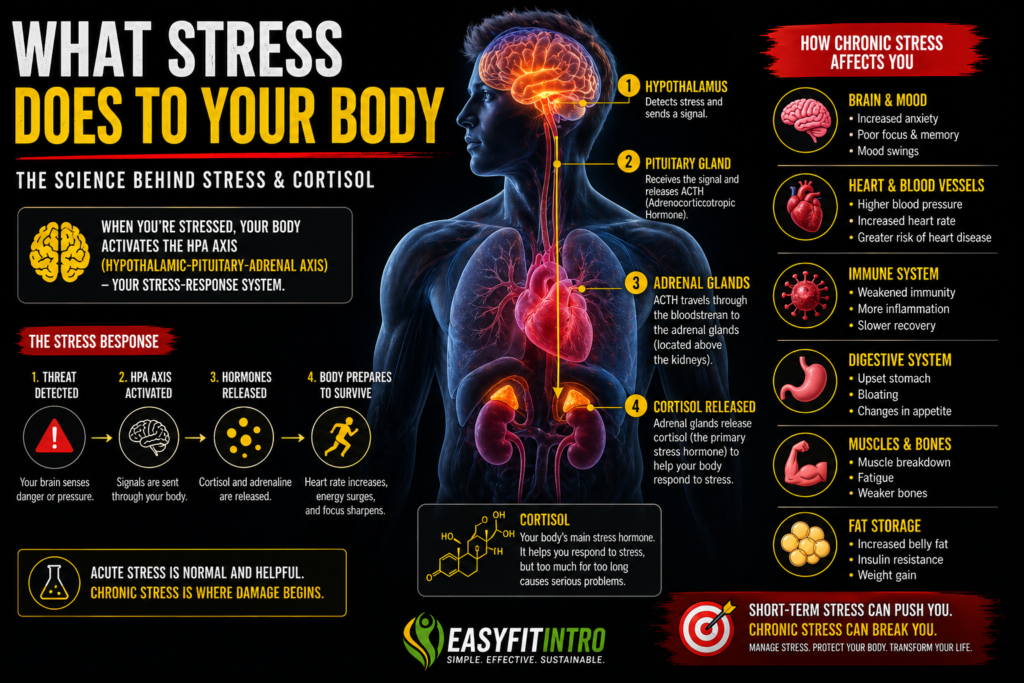
When you’re stressed, your body activates the HPA axis (hypothalamic-pituitary-adrenal axis)—your stress-response system.
This leads to the release of the following:
- Cortisol (primary stress hormone)
- Adrenaline
🔬 Scientific Insight:
According to research in Endocrine Reviews, chronic cortisol elevation
- Increases protein breakdown (muscle loss)
- Alters fat distribution
- Reduces insulin sensitivity
👉 In simple terms:
Your body shifts from fat-burning mode to survival mode
👉 This is why belly fat behaves differently from the rest of your body:
Why Belly Fat Is Different From Other Body Fat
⚖️ Why You May Be Losing Weight During Stress
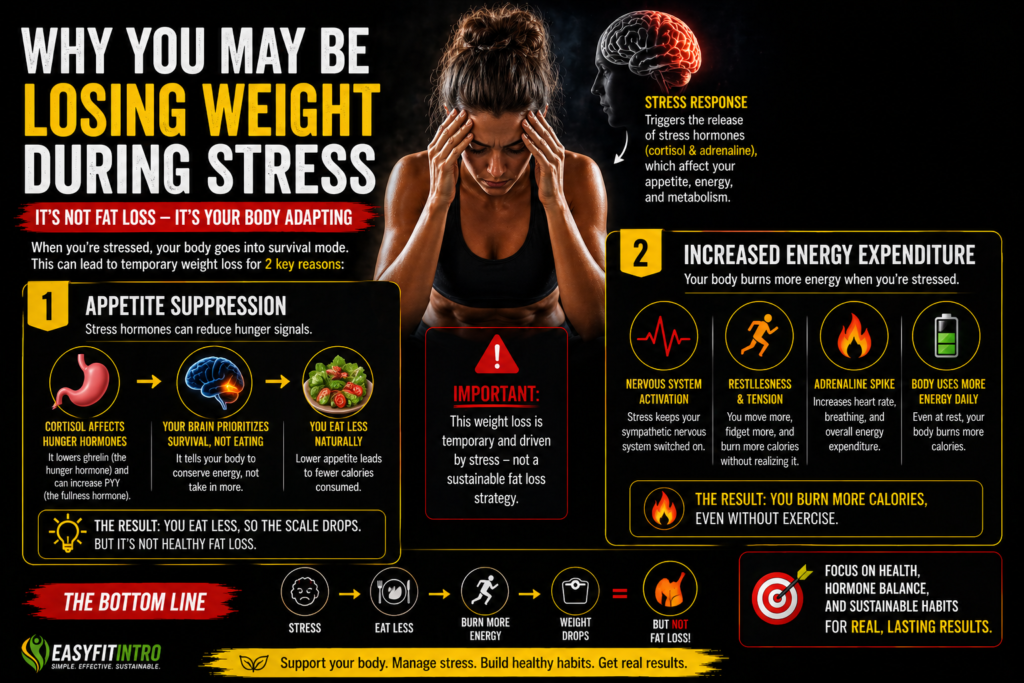
1. Appetite Suppression
Stress hormones can reduce hunger signals.
🔬 Psychoneuroendocrinology research shows:
- Acute stress decreases appetite in many individuals
👉 You eat less → scale drops
👉 What you consume during stress also plays a major role:
The Hidden Drinks That Keep Belly Fat Stubborn
2. Increased Energy Expenditure
Stress increases:
- Nervous system activity
- Restlessness
- Energy burn
👉 Your body uses more energy even without exercise
⚠️ But Here’s the Problem
👉 This is NOT controlled fat loss.
🚨 What You’re Actually Losing (Not Fat)
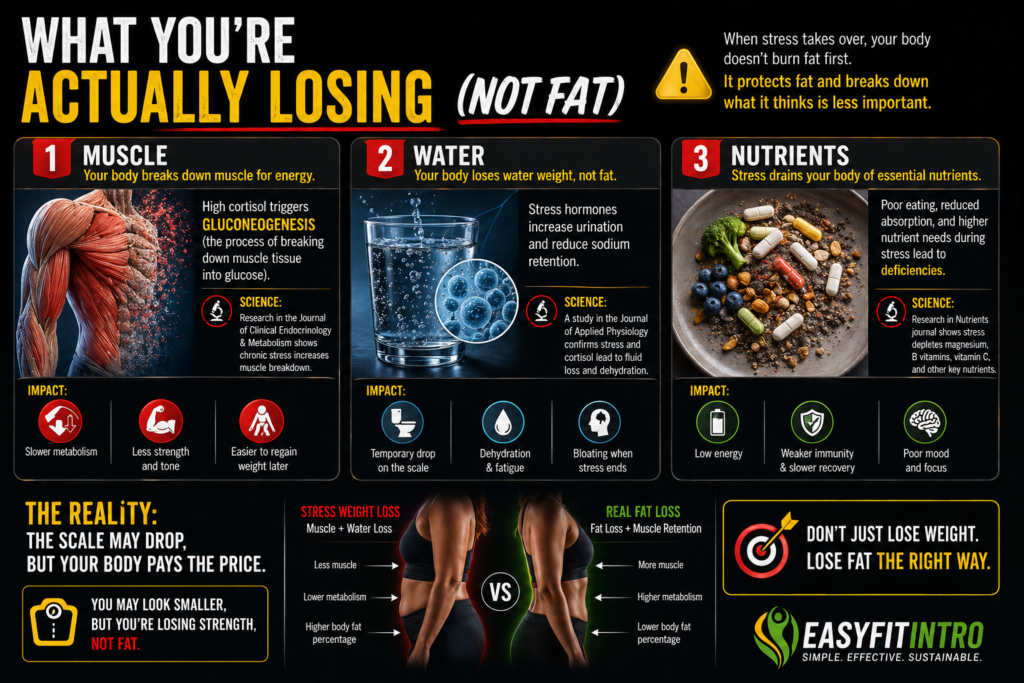
When weight drops under stress, your body is often losing the following:
❌ Muscle
High cortisol triggers:
👉 Gluconeogenesis (breaking down muscle for energy)
🔬 The Journal of Clinical Endocrinology & Metabolism confirms:
- Chronic stress increases muscle breakdown
❌ Water
- Reduced food intake
- Hormonal shifts
👉 Leads to dehydration and water loss
❌ Nutrients
Skipping meals =
- Low vitamins
- Low minerals
- Low recovery ability
🧠 The Belly Fat Paradox (Most Important Part)
Here’s where things get serious:
👉 You can lose weight and still gain belly fat.
🔬 Why This Happens
Cortisol does something very specific:
- Increases visceral fat storage (belly fat)
- Disrupts insulin function
- Promotes fat storage in the abdominal area
🔬 Study Insight:
Research published in Obesity Journal shows the following:
👉 Elevated cortisol levels are strongly linked to abdominal fat accumulation
👉 Even daily habits can make this worse without you realizing it:
Morning Mistakes That Make Fat Loss Harder
⚖️ The Result
You end up with:
- Smaller body frame
- Less muscle
- More belly fat
👉 This is known as:
“Skinny fat”—poor body composition
🔁 What Happens After Stress Ends
Once stress drops:
- Appetite rebounds
- Cravings increase (especially sugar + carbs)
- Insulin spikes
👉 You eat more → fat returns quickly
👉 What you do after eating also affects fat storage more than you think:
What to Do in the First Hour After Dinner for Faster Fat Loss
🔬 Research Insight:
Post-stress eating patterns often lead to:
👉 Fat regain (not muscle recovery)
⚠️ The Dangerous Cycle
Stress → Weight loss → Muscle loss → Hunger rebound → Fat gain → Repeat
📊 Stress Weight Loss vs Real Fat Loss
| Factor | Stress Weight Loss | Healthy Fat Loss |
|---|---|---|
| Source | Muscle + water | Body fat |
| Hormones | Imbalanced | Balanced |
| Sustainability | Temporary | Long-term |
| Metabolism | Slows down | Improves |
| Body Composition | Worse | Better |
🧠 Why Belly Fat Is So Hormone-Sensitive
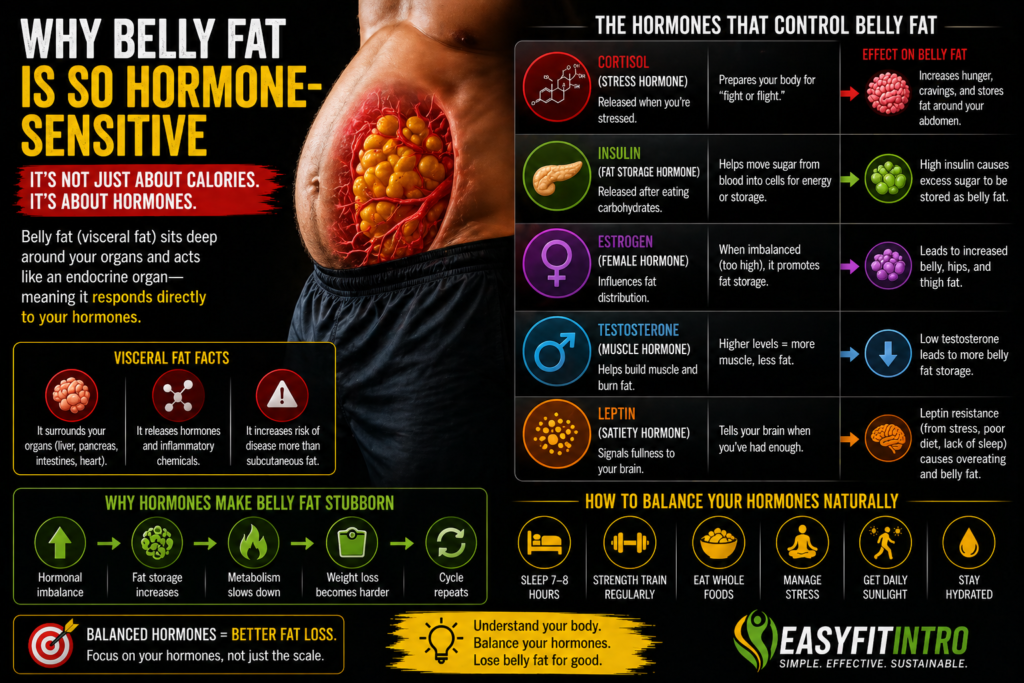
Belly fat responds strongly to:
- Cortisol
- Insulin
- Sleep quality
- Stress levels
👉 That’s why:
You can eat “healthy” and still not lose belly fat
🔥 Real-Life Triggers Making It Worse
Most people unknowingly increase cortisol through the following:
- Poor sleep
- Skipping meals
- Too much caffeine
- Emotional stress
- Lack of routine
👉 These keep your body in fat-storage mode
🧠 How to Fix This (Real Fat Loss Strategy)
This is where EasyFitIntro separates from generic advice.
1. Stabilize Your Blood Sugar
- Eat regular meals
- Include protein, fats, carbs
👉 This lowers cortisol spikes
2. Reduce Daily Stress (Simple, Not Complicated)
- 10–20 min walks
- Deep breathing
- Sunlight exposure
👉 Small actions = big hormonal shifts
3. Fix Your Sleep
🔬 Poor sleep increases:
- Cortisol
- Hunger hormones (ghrelin)
👉 Result: More belly fat storage
4. Maintain Muscle
- Bodyweight training
- Enough protein
👉 Muscle protects your metabolism
👉 If you want a structured way to reset your body, start here:
[Free Belly Fat Reset Workbook]
🥤 Where Smoothies Fit (EasyFitIntro System)
When stress is high, eating properly becomes difficult.
👉 Smoothies help you:
- Get nutrients quickly
- Balance blood sugar
- Support hormone function
That’s why many beginners use the following:
👉 The 21-Day Smoothie Challenge
To simplify nutrition and reduce stress on the body
📘 Free Belly Fat Reset Workbook
If you struggle staying consistent during stressful periods:
👉 Download your Free Belly Fat Reset Workbook
It helps you:
- Track habits
- Stay consistent
- Avoid falling back into stress cycles
❓ FAQ (SEO Boost Section)
1. Can stress cause belly fat even if I lose weight?
Yes. Cortisol promotes fat storage in the abdominal area even during weight loss.
2. Why does my stomach stay big even when I lose weight?
Because your body may be losing muscle and water, not fat — while storing fat in the belly.
3. Is stress-induced weight loss healthy?
No. It often leads to muscle loss, hormonal imbalance, and fat regain.
4. How do I reduce cortisol naturally?
- Sleep well
- Eat regularly
- Reduce stress
- Stay active
5. How do I lose belly fat the right way?
Focus on:
- Hormonal balance
- Nutrition
- Consistency
- Stress management
🔥 Final Thoughts
If your weight drops during stress:
👉 Don’t celebrate too early.
Your body is not improving — it’s compensating.
👉 Real fat loss happens when:
- Your hormones are balanced
- Your routine is stable
- Your body feels safe
👉 Comment below:
“I choose real fat loss.”
Let’s build this the right way.
👉 You may also find these helpful: