

You’ve had a long day. Something is on your mind. You’re not really hungry, but somehow you find yourself standing at the fridge, or reaching for the biscuit tin, or finishing a packet of chips without noticing.
Afterwards, you might feel guilty. And the next time stress shows up, the same thing happens again.
If this sounds familiar, I want you to hear this first: you are not weak, and you’re not alone. Emotional eating is one of the most common struggles women share with me. It’s not a lack of willpower. It’s a habit your brain learned for a reason, and habits can be changed.
Let’s look at why it happens and gentle, practical ways to break the cycle.
What Is Emotional Eating?
Emotional eating is eating in response to feelings rather than physical hunger. Stress, worry, sadness, boredom, loneliness, tiredness, even celebration: food becomes the way we cope.
Everyone eats emotionally sometimes. A slice of birthday cake or a comforting meal after a hard day is part of being human. It becomes a problem when food is your main way of coping, and it starts affecting your health, your weight or how you feel about yourself
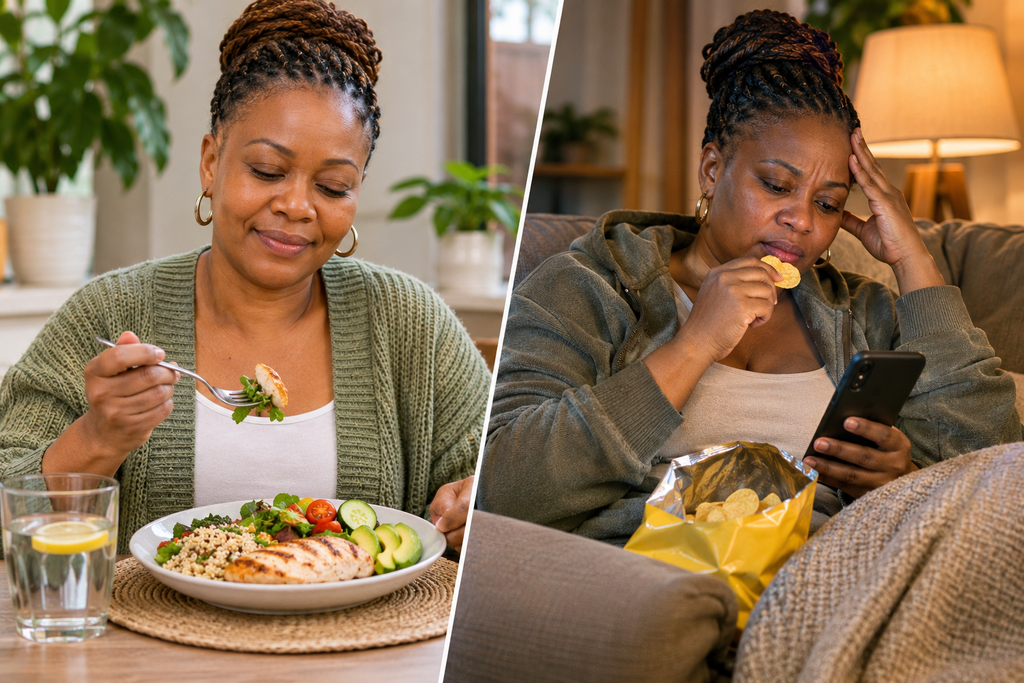
Physical Hunger vs Emotional Hunger
Learning to tell the difference is the first step.
Physical hunger:
Builds gradually
Can be satisfied by many different foods
Comes with physical signs, like a rumbling stomach or low energy
Stops when you’re full
Usually doesn’t bring guilt
Emotional hunger:
Comes on suddenly and feels urgent
Craves specific comfort foods, often sweet, salty or fried
Is triggered by a feeling or situation
Doesn’t stop when you’re full
Often leaves you feeling guilty afterwards
Why Emotional Eating Is So Common After 40
Midlife often brings a lot of responsibility at once: work pressure, children, caring for ageing parents, money worries. Many women spend their days looking after everyone else, and food becomes the one quick comfort that’s just for them.
Stress Affects Appetite

When stress stays high, many people find themselves craving sugary, fatty comfort foods. Those foods give a quick feeling of relief, so the brain learns: “When I feel stressed, food helps
Poor Sleep Makes It Harder
Tiredness makes cravings louder and self-control harder. If night sweats, a busy mind or a full schedule are cutting your sleep short, emotional eating often gets worse.
Hormone Changes
Through perimenopause, changing hormones can affect mood, sleep and appetite, which can make emotional eating feel stronger than it used to.
Habit
Over time, eating becomes linked with certain moments: the TV in the evening, a stressful phone call, the quiet after the kids go to bed. Your brain reaches for food automatically.
8 Gentle Ways to Stop Emotional Eating
1. Pause and Ask: “What Am I Really Feeling?”
Before you eat, pause for just a moment and ask yourself: Am I hungry, or am I stressed, tired, bored, lonely or upset? Simply naming the feeling takes away some of its power. A helpful check is HALT: am I Hungry, Angry, Lonely or Tired?
2. Wait 10 Minutes
Emotional cravings often rise quickly and then fade. Drink a glass of water, set a timer for 10 minutes, and do something else. If you’re still hungry afterwards, eat a proper snack. Often, the urge will have passed
3. Build Your “Stress Swap” List
If food is your only tool for stress, you’ll keep reaching for it. Write down a few other things that help you feel better, and keep the list on your phone or fridge:
A 10-minute walk
Five slow, deep breaths
Calling or messaging a friend
Writing down what’s bothering you
A warm shower or a cup of rooibos tea
Stretching or listening to music
4. Eat Regular, Balanced Meals
When you skip meals or eat very little during the day, emotional eating hits much harder in the evening. Aim for three regular meals with protein, vegetables and fibre-rich carbs. A steady body handles stress much better.
5. Protect Your Sleep
Go to bed at the same time each night, put your phone away 30 minutes before bed, and keep your bedroom cool and dark. When you’re rested, cravings are quieter and it’s easier to make calm choices.
6. Change Your Environment
If comfort foods are on the counter, they’ll call your name when you’re stressed. Keep them out of sight, or out of the house, and put easy, healthier snacks where you’ll see them first: fruit, nuts, yoghurt or boiled eggs.
7. Eat Mindfully
When you do eat, sit down, put your phone away and slow down. Notice the taste and how full you feel. Eating while scrolling or watching TV makes it easy to eat far more than you intended.
8. Be Kind to Yourself
This might be the most important one. Guilt and harsh self-talk often lead to more emotional eating, not less. If you have a moment where you eat for comfort, don’t throw away the whole day. Simply notice what happened, learn from it, and make your next choice a kind one.
This might be the most important one. Guilt and harsh self-talk often lead to more emotional eating, not less. If you have a moment where you eat for comfort, don’t throw away the whole day. Simply notice what happened, learn from it, and make your next choice a kind one.
When to Get Extra Support
For some people, emotional eating is part of something bigger. Please speak to your doctor or a mental health professional if you:
Often eat large amounts of food while feeling out of control
Feel intense guilt, shame or distress around food
Are using food to cope with ongoing sadness, anxiety or depression
There’s no shame in asking for help. You deserve support, not just willpower
Frequently Asked Questions
How do I know if I’m an emotional eater?
If you often eat when you’re not physically hungry, especially in response to stress, boredom, tiredness or other feelings, and crave specific comfort foods, emotional eating may be part of your pattern.
Why do I crave sugar when I’m stressed?
Sugary comfort foods give a quick feeling of relief, so the brain learns to seek them out during stress. Poor sleep and skipped meals can make those cravings even stronger.
Can emotional eating cause belly fat?
Regularly eating extra comfort foods, especially sugary or fried ones, can contribute to weight gain, including around the middle. Ongoing stress and poor sleep can also play a role.
How long does it take to stop emotional eating?
It’s different for everyone. Like any habit, it takes time and practice. Many women notice they feel more in control within a few weeks of pausing before eating, eating regular meals and finding new ways to handle stress.
Is it okay to eat for comfort sometimes?
Yes. Occasional comfort eating is part of being human. The goal isn’t to never eat for comfort again. It’s to have other ways to cope, so food isn’t your only option.
You don’t need to fix everything at once. This week, try just one thing: pausing to ask “What am I really feeling?” before you eat, or making your own Stress Swap list.
Every pause is a small victory, and those victories add up to real change.
Start Free: The Belly Fat Reset Workbook
If you’d like help spotting your triggers and choosing your first habit, my free Belly Fat Reset Workbook walks you through it step by step.
👉 Download the Free Belly Fat Reset Workbook
Want a Daily Plan? Join the 14-Day Belly Fat Reset
The 14-Day Belly Fat Reset Challenge includes support for cravings, stress and sleep, plus balanced meals and gentle movement, with one simple step each day.
👉 Join the 14-Day Belly Fat Reset for R199
Be gentle with yourself. You’re learning a new way, one small step at a time. 💛
— Coach Modisa
This article is for educational purposes only and isn’t a substitute for medical or psychological advice. If you’re struggling with your eating or your mood, please speak to your doctor or a mental health professional.