
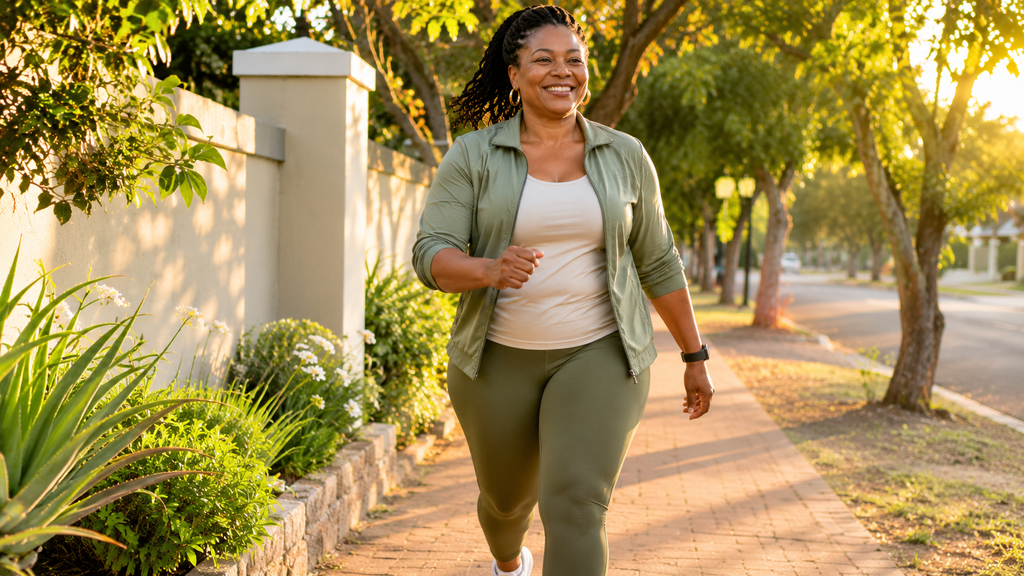
When most women think about losing belly fat, they picture intense workouts, sweaty classes or running for miles.
But one of the most effective habits is something you already know how to do: walking.
It’s free. It needs no gym and no equipment. It’s gentle on your joints. And research shows it can make a real difference for your belly, your blood sugar and your health, especially after 40.
Let’s look at why walking works, how much you need, and a simple plan to start this week.
Why Walking Is So Good for Women Over 40
It Helps With Visceral Belly Fat
Visceral fat is the deeper belly fat that wraps around your organs and is linked with blood sugar, blood pressure and heart health. Research comparing different types of exercise suggests that aerobic activity, like walking, is one of the most effective ways to reduce visceral fat.
That doesn’t mean walking “spot-reduces” your stomach. No exercise does that. But regular walking supports overall fat loss, including the deeper belly fat that matters most for your health.
It’s Kind to Your Body
Hard workouts can add stress to an already stressed, tired body. Walking does the opposite. It’s gentle, it’s easy on your joints, and many women find it calming. For women dealing with perimenopause, poor sleep or high stress, that matters.
It Helps Your Blood Sugar
This is one of the most exciting findings, and it’s coming up next.
It’s Easy to Stick With
The best exercise is the one you’ll actually do. Walking fits around work, family and real life. You can do it in the morning, at lunch, after supper, with a friend or alone. That’s why it works long-term.
The Power of a Short Walk After Meals
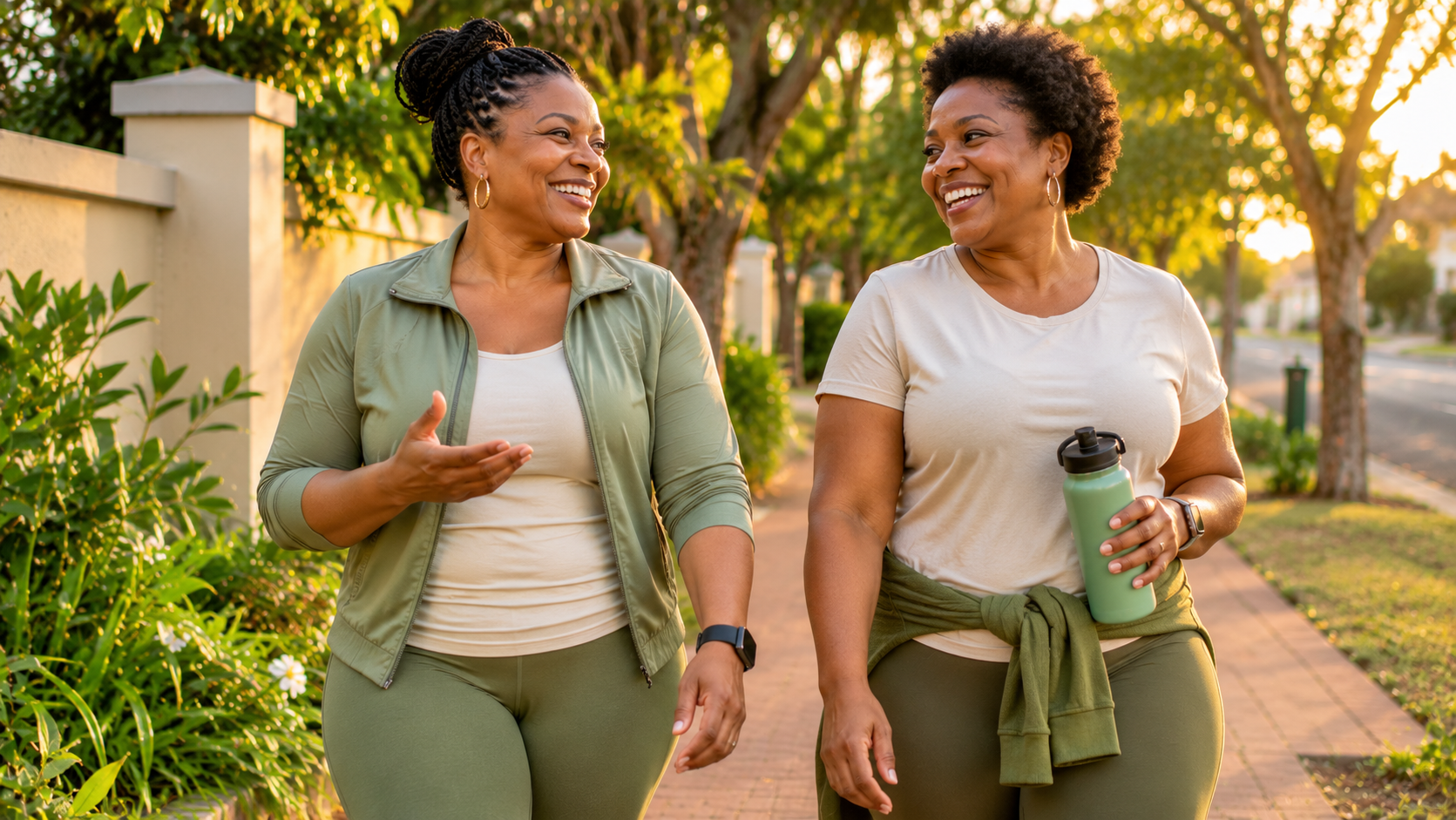
Here’s a simple habit with big benefits.
A 2022 review of studies found that short light walks of just 2 to 5 minutes, spread through the day and after meals, helped lower blood sugar levels compared with sitting. Walking worked better than simply standing.
Why? Your muscles use glucose (sugar) for energy. When you move after eating, your muscles help clear sugar from your blood, so it rises and falls more gently instead of spiking and crashing.
That’s important, because blood sugar spikes and crashes are often what sits behind the afternoon slump and sudden sugar cravings.
Try this: after your biggest meal of the day, walk for 10 minutes. If 10 feels like too much, start with 2 to 5. Even walking around the house or yard counts.
Blood sugar tends to rise within about an hour after eating, so it’s best to get moving fairly soon after your meal.
How Much Should You Walk?
The Weekly Guideline
Health guidelines recommend that adults get about 150 minutes of moderate activity a week, such as brisk walking, plus muscle-strengthening activities on at least 2 days. That works out to about 30 minutes a day, 5 days a week.
You don’t have to do it all at once. Three 10-minute walks count just as much.
What About 10,000 Steps?
You’ve probably heard you need 10,000 steps a day. Interestingly, that number started as a marketing slogan for a pedometer, not a scientific target.
A large 2022 study combining data from nearly 50,000 adults found that more steps were linked to a lower risk of early death, but the benefit levelled off: at around 8,000 to 10,000 steps a day for adults under 60, and 6,000 to 8,000 steps for adults over 60.
So you don’t need to obsess over 10,000. And here’s the encouraging part: the biggest benefit came from moving from very few steps to a moderate amount. If you walk very little now, every extra step counts.
What Is “Brisk”?
Brisk walking means walking fast enough that you breathe a little harder but can still talk. You shouldn’t be able to sing comfortably. That’s a good moderate pace.
Your Simple 4-Week Walking Plan
Start where you are. If you’re already active, move up a week.
Week 1: Start small
- Walk 10 minutes a day, at a comfortable pace.
- Add a 2–5 minute walk after supper.
Week 2: Build the habit
- Walk 15 minutes a day.
- Keep your after-supper walk, and stretch it to 10 minutes.
Week 3: Pick up the pace.
- Walk 20 minutes a day.
- For part of each walk, speed up to a brisk pace for a few minutes, then slow down again.
Week 4: Reach the goal.
- Walk 25–30 minutes a day, 5 days a week, mostly at a brisk pace.
- Keep your 10-minute after-meal walk.
Remember: a missed day doesn’t undo your progress. Just walk tomorrow.
7 Tips to Make Walking a Habit
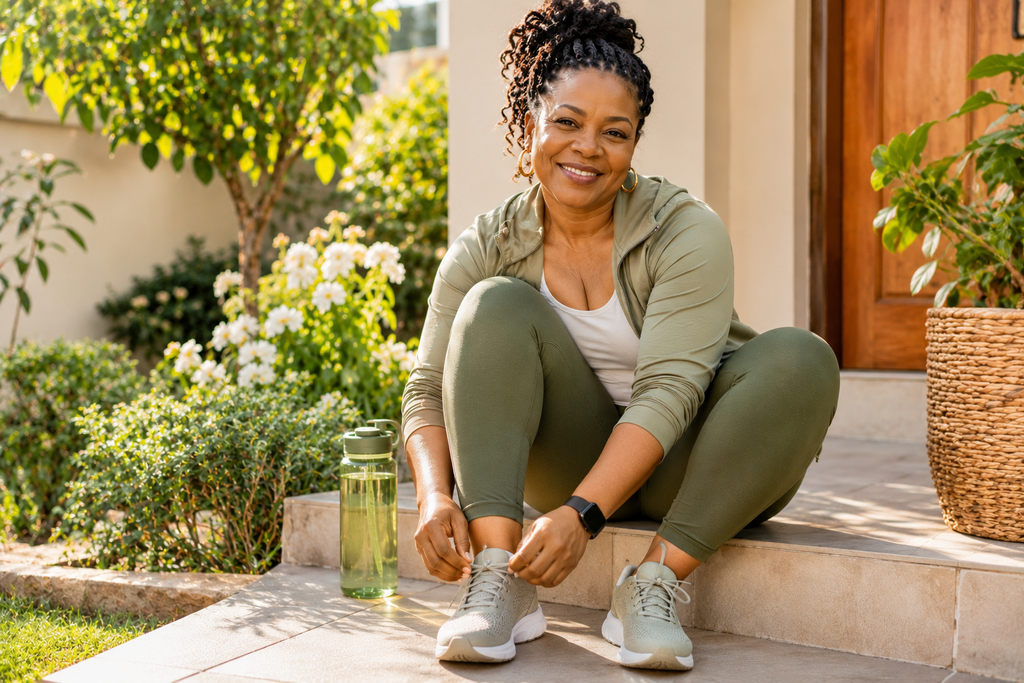
- Attach it to something you already do. “After supper, I walk” is easier to remember than “I’ll walk sometime.”
- Put your shoes by the door. Remove the small barriers.
- Walk with someone. A friend, partner, child or neighbour makes it social and helps you stay consistent.
- Listen to something. A podcast, music or a voice note from a friend makes the time fly.
- Break it up. Three 10-minute walks are just as valuable as one 30-minute walk.
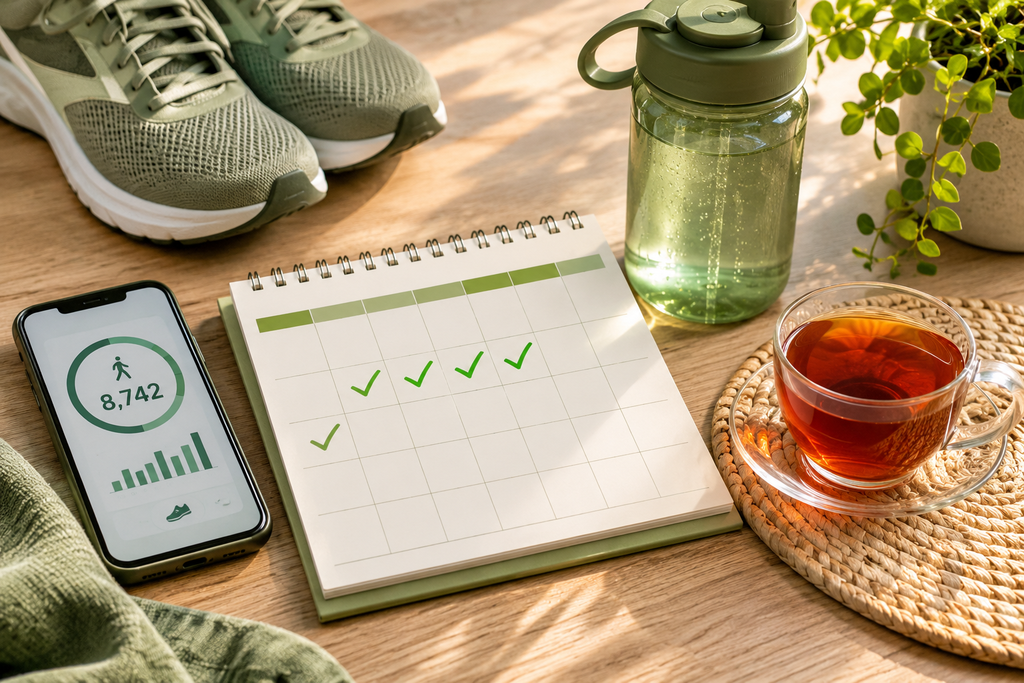
- Track it simply. A tick on a calendar or your phone’s step counter helps you see progress.
- Walk safely. Choose well-lit, familiar routes, walk with someone where possible, and avoid isolated areas, especially early in the morning or after dark.
Walking + Strength Training: The Best Combination
Walking is wonderful for your heart, your blood sugar and visceral fat. Strength training protects your muscle and bones, which naturally decline after 40.
The best plan includes both: walk most days and do strength training 2–3 times a week. Together, they support each other in a way neither can alone.
And as always: no exercise burns belly fat from one spot. Belly fat changes as your overall habits change, including balanced meals, protein, sleep and stress management, with walking as one powerful piece of the puzzle.
Frequently Asked Questions
Can walking reduce belly fat?
Yes. Research suggests aerobic activity like walking is one of the most effective ways to reduce visceral belly fat, alongside healthy eating, good sleep and stress management. It won’t target your stomach alone, but it supports overall fat loss, including the belly.
How long should I walk to lose belly fat?
Aim to build up to about 30 minutes a day, 5 days a week, at a brisk pace. Start with 10 minutes and increase gradually. Adding a short walk after meals helps your blood sugar too.
Is walking after meals good for you?
Yes. A 2022 review found that short, light walks after meals and throughout the day helped lower blood sugar compared with sitting. Even 2 to 5 minutes helps.
Do I need 10,000 steps a day?
Not necessarily. A large study found the health benefits of steps levelled off at around 8,000 to 10,000 steps for adults under 60, and 6,000 to 8,000 for adults over 60. Any increase from where you are now is beneficial.
Is walking enough on its own?
Walking is excellent, but for the best results, combine it with strength training 2–3 times a week to protect your muscle and bones after 40.
Is it safe to start walking if I have a health condition?
Walking is gentle for most people, but if you have a heart condition, joint problems, diabetes or another health concern, check with your doctor before starting a new routine. Start slowly and build gradually.
Your First Step Starts Today
You don’t need a gym membership, fancy shoes or an hour a day. You need 10 minutes and a pair of comfortable shoes.
Tonight, after supper, take a short walk. Notice how you feel. Then do it again tomorrow.
Step by step, quite literally, you’re building a healthier, stronger you.
Start Free: The Belly Fat Reset Workbook
If you’d like help building a simple daily routine, my free Belly Fat Reset Workbook helps you choose and track your first habits.
👉 Download the Free Belly Fat Reset Workbook
Want a daily plan? Join the 14-Day Belly Fat Reset
The 14-Day Belly Fat Reset Challenge includes walking and movement guidance, balanced meals, beginner strength exercises, and sleep and stress support, with one simple step each day.
👉 Join the 14-Day Belly Fat Reset for R199.
See you on your walk. 🚶♀️💛
— Coach Modisa
This article is for educational purposes only and isn’t a substitute for medical advice. If you have a health condition or concerns, please speak to your doctor before starting a new exercise routine.