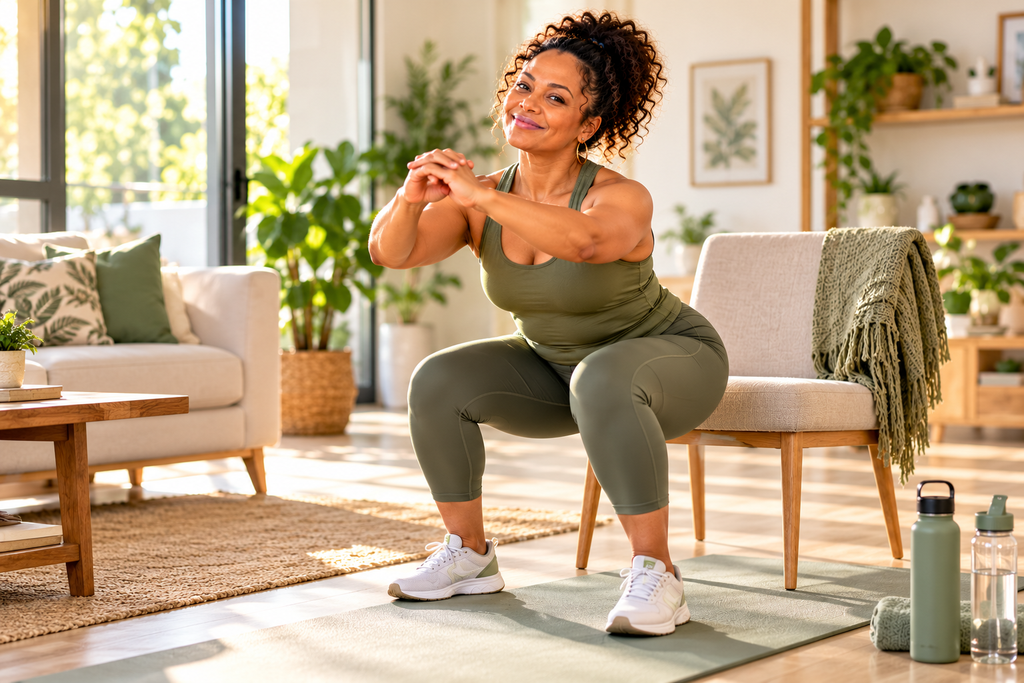
If the words “strength training” make you picture heavy barbells, grunting bodybuilders and a gym you’d never feel comfortable walking into, you’re not alone.
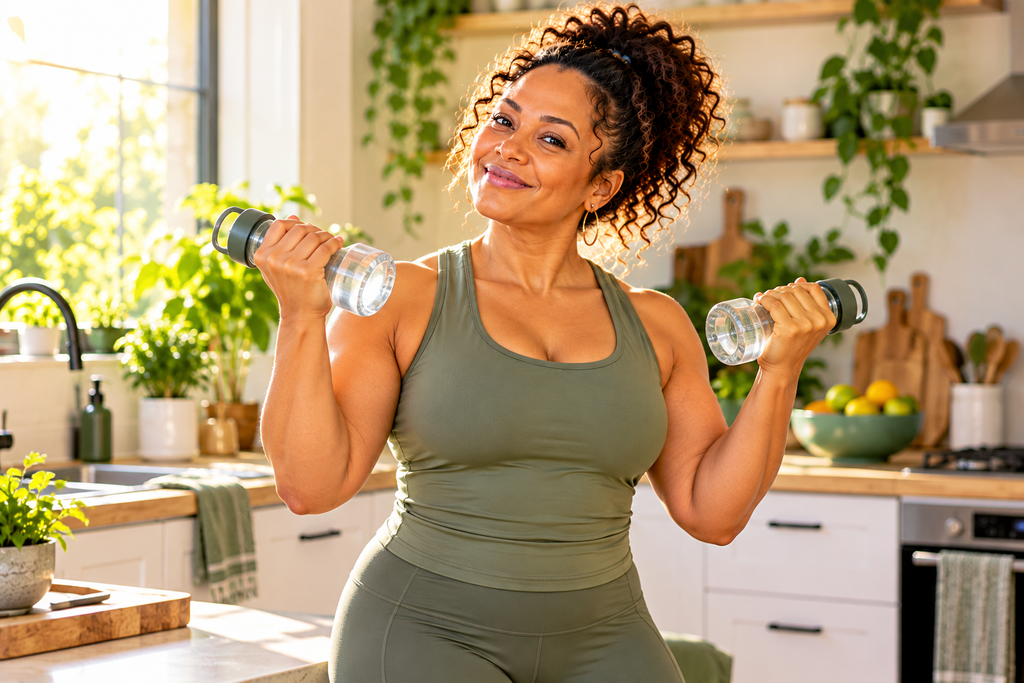
But here’s the truth: strength training for women over 40 can be as simple as standing up from a chair, pushing against a wall, or lifting two water bottles in your kitchen. No gym. No fancy equipment. No intimidation.
And it may be one of the most important habits you can build for your body in midlife, for your belly, your strength, your bones and how you feel every single day.
Let’s look at why it matters, what the research says, and seven beginner moves you can start this week.
Why Strength Training Matters So Much After 40
You Naturally Start Losing Muscle
As women move through their 40s and into perimenopause, the body starts to change. Research that followed women through the menopause transition found that muscle mass begins to decline while body fat increases, often even when the scale barely moves.
Less muscle can mean less strength, lower energy, more difficulty with everyday tasks, and a body that uses slightly less energy at rest. The good news is that muscle responds to strength training at any age.
It Helps Protect Muscle While You Lose Weight
When you lose weight, some of what you lose can be muscle, not just fat. Health guidelines note that muscle-strengthening activities can help maintain muscle mass during weight loss. That means the weight you lose is more likely to be fat, which is exactly what you want.
It Supports Your Bones
Strength training also increases bone strength. This matters more for women after menopause, when bone loss speeds up and the risk of osteoporosis rises.
It Supports Healthier Blood Sugar
Muscles use glucose for energy. Building and keeping muscle helps your body handle blood sugar more effectively. That’s especially helpful if you’ve noticed more cravings, energy crashes or belly fat in your 40s.
Does Strength Training Help With Belly Fat?
Yes, and research supports it, with an important honest note.
A large review that combined 58 studies found that strength training reduced body fat percentage, total fat mass and visceral fat (the deeper belly fat linked with health risks) in healthy adults. The changes were modest, but they were real.
Here’s the honest note: research also suggests that aerobic activity like walking may reduce visceral fat even more effectively than strength training alone.
So the best approach isn’t choosing one or the other. It’s combining both: walking for your heart and belly fat and strength training for your muscles, bones and metabolism. Together, they support each other.
And as always: no exercise “spot-reduces” belly fat. Crunches won’t target the fat on your stomach. Belly fat changes as your overall habits change, and strength training is one powerful piece of that puzzle.
How Much Strength Training Do You Need?
Health guidelines recommend that adults do muscle-strengthening activities on 2 or more days a week, working all the major muscle groups: legs, hips, back, abdomen, chest, shoulders and arms. Alongside that, they recommend about 150 minutes of moderate activity, like brisk walking, each week.
For a beginner, that might look like:
- 2–3 short strength sessions a week (about 20 minutes each)
- A daily walk of 20–30 minutes, or start with 10
That’s it. You don’t need to train every day, and you don’t need hour-long workouts.
7 Beginner Strength Moves for Women Over 40
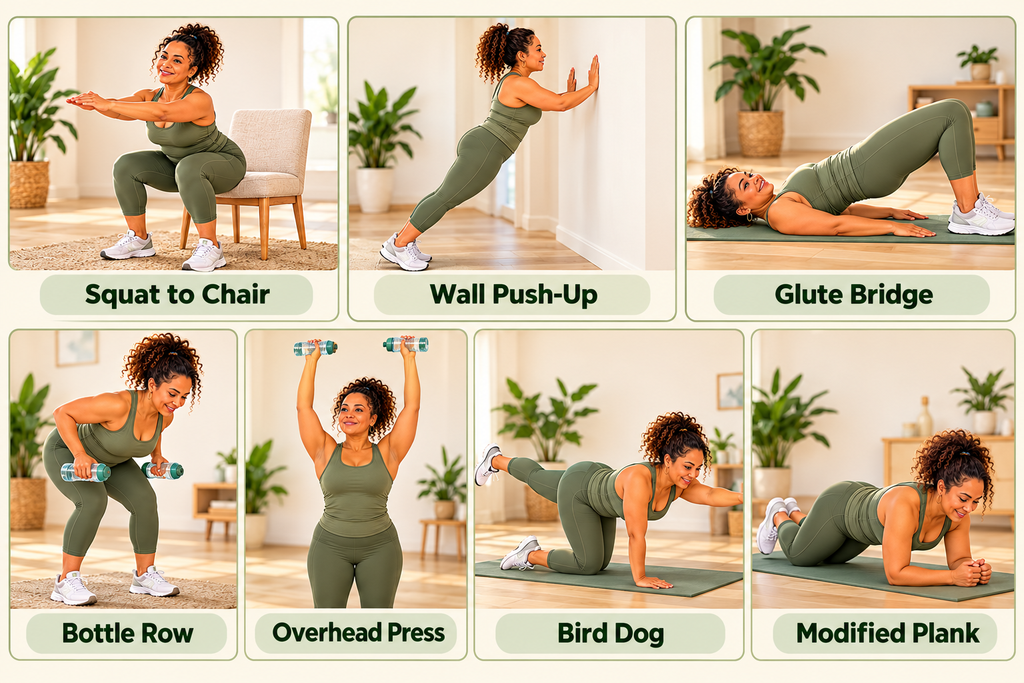
You only need a sturdy chair, a wall, a mat or towel, and two water bottles (500 ml or 1 litre) or light dumbbells.
For each move, do 10–12 repetitions, rest 30–60 seconds, then move to the next exercise. Complete the circuit 2 times, building up to 3 as you get stronger.
1. Squat to a Chair (Legs and Hips)
How to do it: Stand in front of a sturdy chair with your feet hip-width apart. Push your hips back and bend your knees as if you’re about to sit. Lightly touch the chair with your bottom, then press through your heels to stand up tall.
Why it helps: Your legs and hips hold some of your biggest muscles. Strong legs make everyday life, like stairs, getting up from the floor and carrying shopping, so much easier.
Tip: Keep your chest lifted and your knees pointing in the same direction as your toes.
2. Wall Push-Up (Chest, Shoulders and Arms)
How to do it: Stand an arm’s length from a wall and place your hands on it at shoulder height. Keeping your body straight, bend your elbows to bring your chest towards the wall, then push back.
Why it helps: It strengthens your upper body without putting pressure on your wrists or knees.
Tip: To make it harder over time, use a kitchen counter, then a sturdy table.
3. Glute Bridge (Hips and Lower Back)
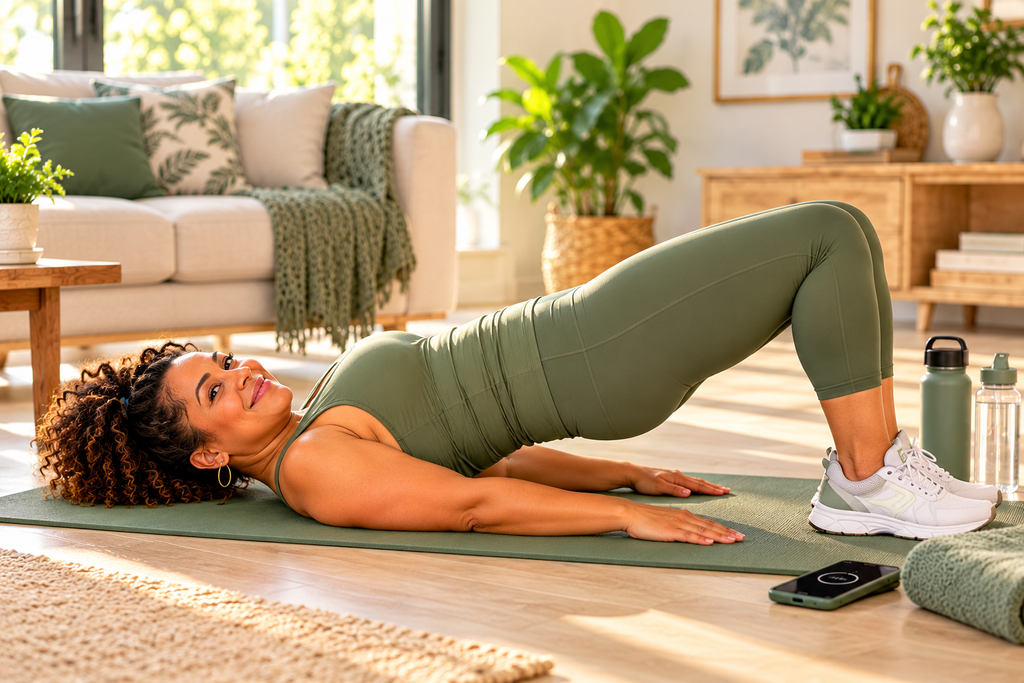
How to do it: Lie on your back with your knees bent and feet flat on the floor. Squeeze your bottom and lift your hips until your body forms a straight line from shoulders to knees. Pause, then lower slowly.
Why it helps: Strong glutes support your lower back and hips and improve posture.
Tip: Push through your heels, and don’t arch your lower back at the top.
4. Bent-Over Row With Water Bottles (Back)
How to do it: Hold a water bottle in each hand. Hinge forward at the hips with a flat back and soft knees. Pull your elbows back towards your ribs, squeezing your shoulder blades together, then lower slowly.
Why it helps: It strengthens your upper back, which improves posture and helps balance all the forward-leaning we do at desks and on phones.
Tip: Keep your neck in line with your spine, looking at the floor slightly ahead of you.
5. Overhead Press With Water Bottles (Shoulders and Arms)
How to do it: Sit tall on a chair or stand, holding a bottle in each hand at shoulder height. Press them up overhead until your arms are straight, then lower slowly back to your shoulders.
Why it helps: It builds shoulder and arm strength for everyday tasks like lifting things onto shelves.
Tip: Keep your tummy gently tight and don’t lean back.
6. Bird Dog (Core and Back)
How to do it: Start on your hands and knees. Slowly extend your right arm forward and your left leg back at the same time. Hold for 2–3 seconds, then return and switch sides. That’s one repetition.
Why it helps: It strengthens your deep core and lower back while improving balance, and it’s gentler on the back than crunches.
Tip: Move slowly and keep your hips level, as if balancing a cup of tea on your lower back.
7. Modified Plank (Core)
How to do it: Rest on your forearms and knees, with your body in a straight line from head to knees. Hold for 15–30 seconds, breathing steadily.
Why it helps: It builds core strength that supports your back and posture.
Tip: When it feels easier, try lifting onto your toes for a full plank.
Your Simple 20-Minute Routine
- Warm up (3–5 minutes): march on the spot, roll your shoulders and swing your arms gently.
- Circuit (about 15 minutes): do all 7 moves, 10–12 reps each (plank 15–30 seconds), resting briefly between moves. Repeat the circuit 2 times.
- Cool down (2–3 minutes): gentle stretches for your legs, chest and back.
Do this 2–3 times a week on non-consecutive days, for example Monday, Wednesday and Friday.
How to Progress Without Getting Hurt
When 12 repetitions feel easy, you’re ready to make it slightly harder. Choose one change at a time:
- Add a third round
- Use heavier bottles or light dumbbells
- Slow down each movement (for example, 3 seconds down, 1 second up)
- Choose a harder version (lower surface for push-ups, a full plank)
Effort vs pain: feeling your muscles working, and some mild soreness a day or two later, is normal. Sharp pain, joint pain or dizziness is not. Stop and rest, and speak to your doctor if it continues.
Common Worries (and the Truth)
“I’ll get bulky.”
Building large muscles takes years of heavy, dedicated training. Beginner strength training helps you look and feel firmer and stronger, not bulky.
“I’m too old to start.”
You’re not. Muscle responds to training at every age, and women in their 50s, 60s and beyond see real benefits.
“My joints hurt.”
The moves in this guide are low-impact and gentle on joints. Start with smaller movements and fewer repetitions, and check with your doctor or a physiotherapist if you have joint problems.
“I don’t have time.”
Twenty minutes, two or three times a week, is enough to start. That’s less than an hour a week.
Frequently Asked Questions
Is strength training good for belly fat in women over 40?
Yes. Research shows strength training can reduce body fat and visceral fat, the deeper belly fat linked with health risks. For the best results, combine it with regular walking, balanced meals, good sleep and stress management.
How often should a beginner over 40 do strength training?
Start with 2–3 sessions a week on non-consecutive days. Health guidelines recommend muscle-strengthening activities on at least 2 days a week.
Do I need weights or a gym?
No. Your body weight, a chair, a wall and two water bottles are enough to start. You can add light dumbbells later as you get stronger.
Is walking or strength training better for belly fat?
Both help in different ways. Walking may be slightly more effective for reducing visceral fat, while strength training protects muscle, bones and metabolism. The best plan includes both.
How long before I see results?
Many women feel stronger and more energetic within a few weeks. Changes in body shape and how your clothes fit usually take longer, often 8–12 weeks of consistent training alongside healthy habits.
Is it safe to start strength training if I have a health condition?
If you have a health condition or joint or back problems or take medication, check with your doctor before starting. Begin slowly and listen to your body.
Stronger Starts Today
You don’t need a gym membership, a personal trainer or an hour a day. You need a chair, a wall, two water bottles, and 20 minutes, two or three times a week.
Start with the first session this week. Do your best, notice how you feel, and build from there. Every squat and every push-up is an investment in a stronger, healthier you, today and for the decades ahead.
Start Free: The Belly Fat Reset Workbook
If you’d like help building strength training into a simple daily routine, my free Belly Fat Reset Workbook helps you choose and track your first habits.
👉 Download the Free Belly Fat Reset Workbook
Want a Daily Plan? Join the 14-Day Belly Fat Reset
The 14-Day Belly Fat Reset Challenge includes beginner strength exercises, walking guidance, balanced meals, and sleep and stress support, with one simple step each day.
👉 Join the 14-Day Belly Fat Reset for R199
You’re stronger than you think. Let’s build on it, one rep at a time. 💪
— Coach Modisa
This article is for educational purposes only and isn’t a substitute for medical advice. If you have a health condition, injury or concerns, please speak to your doctor before starting a new exercise routine.