You’ve probably heard it before: “Eat more protein.”
But how much is “more”? Where do you get it if you’re busy, on a budget, or don’t eat much meat? And does it really make a difference to cravings and belly fat?
If you’re a woman over 40, protein may be one of the simplest and most powerful changes you can make. Let’s break it down in plain English, with everyday South African foods and no complicated calculations.
Why Protein Matters More After 40
It Helps Protect Your Muscle
From our 40s onwards, many women start losing muscle, especially through perimenopause. Muscle keeps you strong, supports healthy blood sugar, protects your joints and makes everyday life easier.
Read More: Why Belly Fat Increases During Perimenopause
Protein provides the building blocks your body uses to maintain and repair muscle. And when you combine it with strength training, the two work together.
Read More: Strength Training for Women Over 40
It Helps You Feel Fuller for Longer
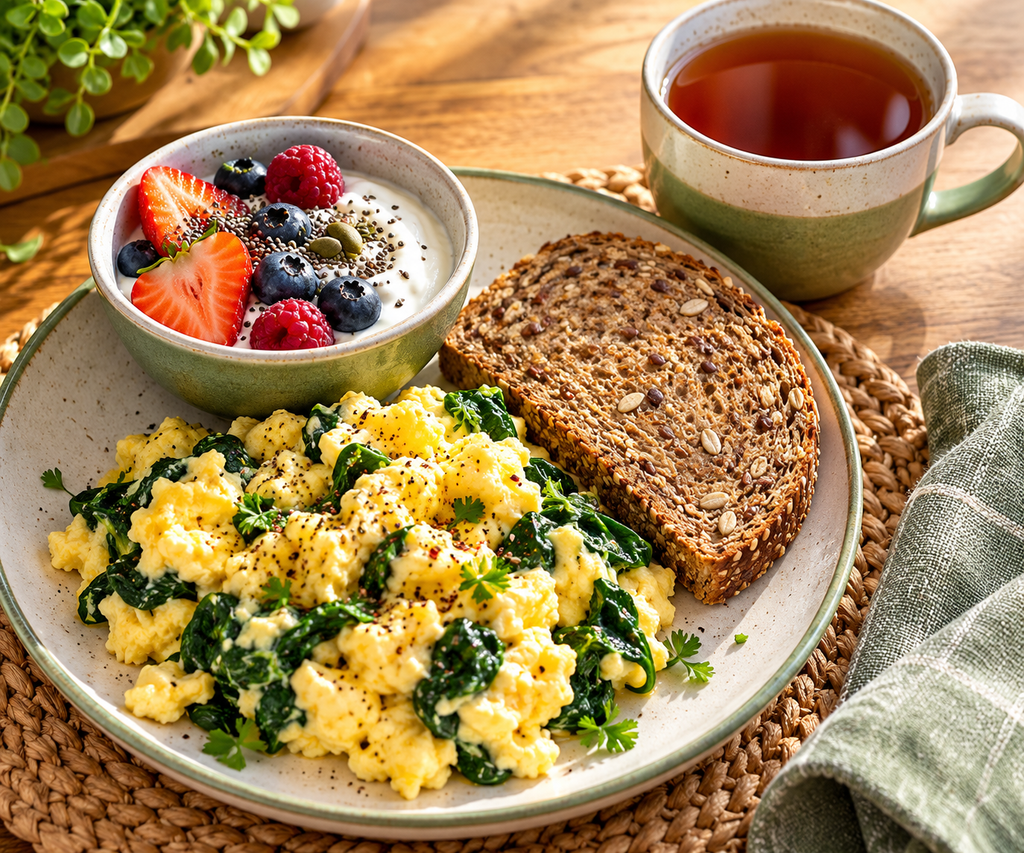
Protein tends to be more filling than many carbohydrate-heavy or sugary foods. A protein-rich breakfast, for example, can help you stay satisfied until lunch instead of reaching for biscuits at 10am.
It Helps Steady Your Energy and Cravings
Meals built around protein and fibre tend to raise blood sugar more gently than meals made mostly of white bread, sugary cereal or pastries. That can mean fewer energy crashes and fewer strong sugar cravings later in the day.
Read More: How Blood Sugar Spikes Lock Belly Fat in Place
It Supports You While Losing Weight
When you lose weight, some of what you lose can be muscle. Enough protein, combined with strength training, helps your body hold on to muscle, so more of what you lose is fat.
How Much Protein Do You Need?
The Official Minimum
The standard recommendation for adults is about 0.8 grams of protein per kilogram of body weight per day. This is a minimum, set to prevent deficiency, not necessarily the best amount for strong muscles as we age.
What Experts Suggest as We Get Older
Expert groups studying ageing have recommended that adults over 65 aim for 1.0 to 1.2 grams per kilogram per day, and a little more for those who are active and exercising.
Many nutrition experts believe women in midlife who are strength training or trying to lose weight can also benefit from aiming toward the 1.0 to 1.2 g/kg range, rather than just the minimum.
A Simple Example
For a woman who weighs 75 kg:
- Minimum (0.8 g/kg): about 60 g of protein a day
- Muscle-friendly range (1.0–1.2 g/kg): about 75–90 g of protein a day
The Easier Way: Think Per Meal
If numbers feel overwhelming, here’s a simpler goal: aim for about 25–30 g of protein at each main meal. That’s roughly the amount researchers suggest helps older adults’ muscles respond best, and it spreads protein through the day instead of loading it all into supper.
Three meals with 25–30 g each puts most women comfortably in a healthy range.
Protein in Everyday South African Foods
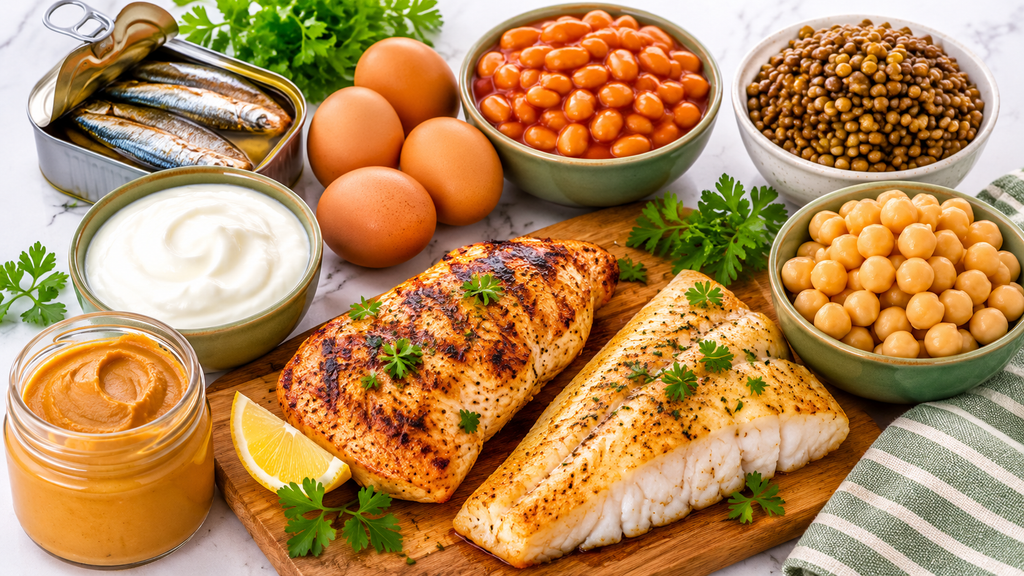
These are approximate amounts, since brands and portions vary:
Animal sources
- 2 large eggs: about 12 g
- 1 tin of pilchards in tomato sauce (about 155 g): about 25–30 g
- 1 tin of tuna, drained: about 25 g
- Palm-sized piece of cooked chicken breast (about 100 g): about 30 g
- Piece of baked hake (about 120 g): about 20–25 g
- Plain Greek yoghurt (175 g tub): about 15–18 g
- Glass of maas or milk (250 ml): about 8 g
- Matchbox-sized piece of cheese (30 g): about 7 g
Plant sources
- 1 cup of cooked beans (e.g., sugar beans): about 14–15 g
- 1 cup of cooked lentils: about 18 g
- 1 cup of cooked chickpeas: about 14 g
- 2 tablespoons of peanut butter: about 7–8 g
- A handful of peanuts or almonds (30 g): about 6–7 g
- Soya mince (1 cup cooked): about 20 g or more, depending on the brand
Tip: pilchards, eggs, beans and soya mince are some of the most affordable protein sources in South Africa.
A Sample High-Protein Day (About 90 g)
Breakfast (about 25 g): 2 eggs scrambled with spinach, 1 slice of seed loaf, and a small tub of plain yoghurt on the side
Lunch (about 30 g): a big salad with a tin of tuna, chickpeas, tomato and cucumber
Snack (about 8 g): an apple with a tablespoon of peanut butter
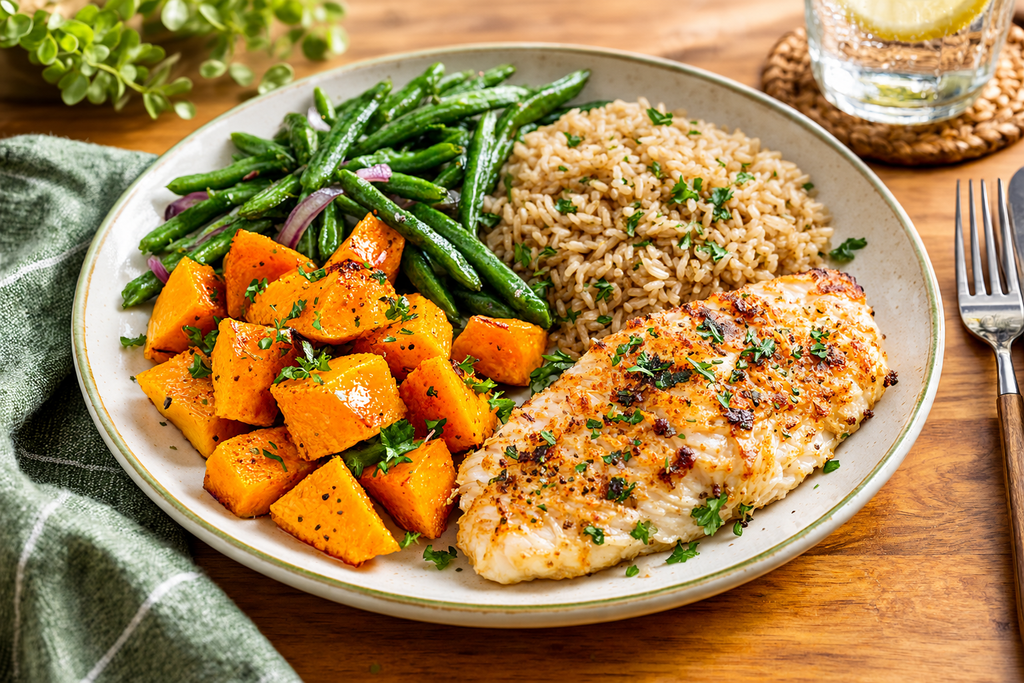
Supper (about 30 g): baked chicken or hake with roasted butternut, green beans and a small portion of brown rice
Vegetarian swap: replace the tuna with a cup of lentils and some cheese, and the chicken with a bean and soya mince stew.
7 Easy Ways to Eat More Protein
- Start breakfast with protein. Eggs, yoghurt or peanut butter on seed loaf instead of jam, sugary cereal or plain toast.
- Build every plate around protein. Decide on your protein first, then add vegetables and carbs.
- Keep tins in the cupboard. Pilchards, tuna, beans and chickpeas make quick, affordable meals.
- Add beans or lentils to stews and soups. They boost protein and fibre at the same time.
- Swap your snack. Choose yoghurt, a boiled egg or a handful of nuts instead of biscuits.
- Cook extra chicken or fish. Leftovers make an easy high-protein lunch the next day.
- Pair protein with strength training. Protein supports muscle, but strength training gives your muscles the reason to grow and stay strong.
A Few Important Notes
- Kidney disease: if you have kidney problems, speak to your doctor before increasing protein. Some people need to limit protein, not increase it.
- You don’t need protein shakes. Everyday food is enough for most women. Shakes can be convenient, but they’re optional.
- Protein isn’t a magic fat burner. It supports fullness, steadier energy and muscle, but belly fat changes as your overall habits change: balanced meals, movement, sleep and stress all matter.
- Increase gradually. If you add a lot of beans or lentils at once, your stomach may need time to adjust. Drink plenty of water.
Frequently Asked Questions
How much protein should a woman over 40 eat per day?
The official minimum is about 0.8 g per kilogram of body weight. Many experts suggest active women in midlife can benefit from about 1.0–1.2 g/kg, which is roughly 75–90 g a day for a 75 kg woman. A simple target is 25–30 g of protein at each main meal.
Does protein help with belly fat?
Protein doesn’t burn belly fat directly. But it helps you feel fuller, steadies cravings and protects muscle while you lose weight, all of which support belly fat loss alongside other healthy habits.
Can I get enough protein without meat?
Yes. Eggs, dairy, beans, lentils, chickpeas, soya mince, nuts and peanut butter are all good sources. Combining a few at each meal makes it easier to reach your target.
Is too much protein bad for you?
For healthy people, eating protein within the ranges in this article is generally considered safe. If you have kidney disease or another medical condition, check with your doctor first.
Do I need protein shakes?
No. Most women can meet their needs with everyday food. Shakes are a convenient option, not a requirement.
What’s the easiest first step?
Add protein to your breakfast. It’s the meal most women are most likely to skip or fill with toast, cereal or tea alone.
Start With Your Next Meal
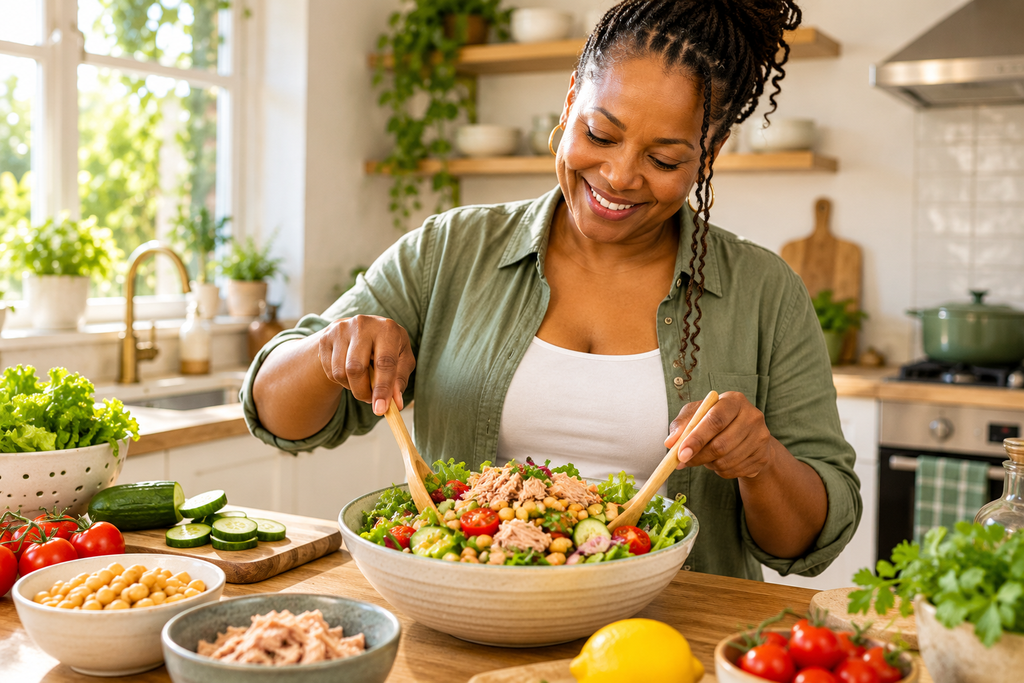
You don’t need to count every gram or overhaul your whole diet. Start with one meal, ideally breakfast, and build it around protein. When that feels easy, do the same for lunch.
Small, steady changes like this add up to stronger muscles, steadier energy and fewer cravings.
Start Free: The Belly Fat Reset Workbook
If you’d like help choosing your first habit, my free Belly Fat Reset Workbook walks you through it step by step.
👉 Download the Free Belly Fat Reset Workbook.
Want a daily plan? Join the 14-Day Belly Fat Reset.
The 14-Day Belly Fat Reset Challenge includes practical meal guidance built around protein and fibre, plus walking, strength, sleep and stress support, with one simple step each day.
👉 Join the 14-Day Belly Fat Reset for R199.
Here’s to stronger muscles and calmer cravings, one meal at a time. 💛
— Coach Modisa