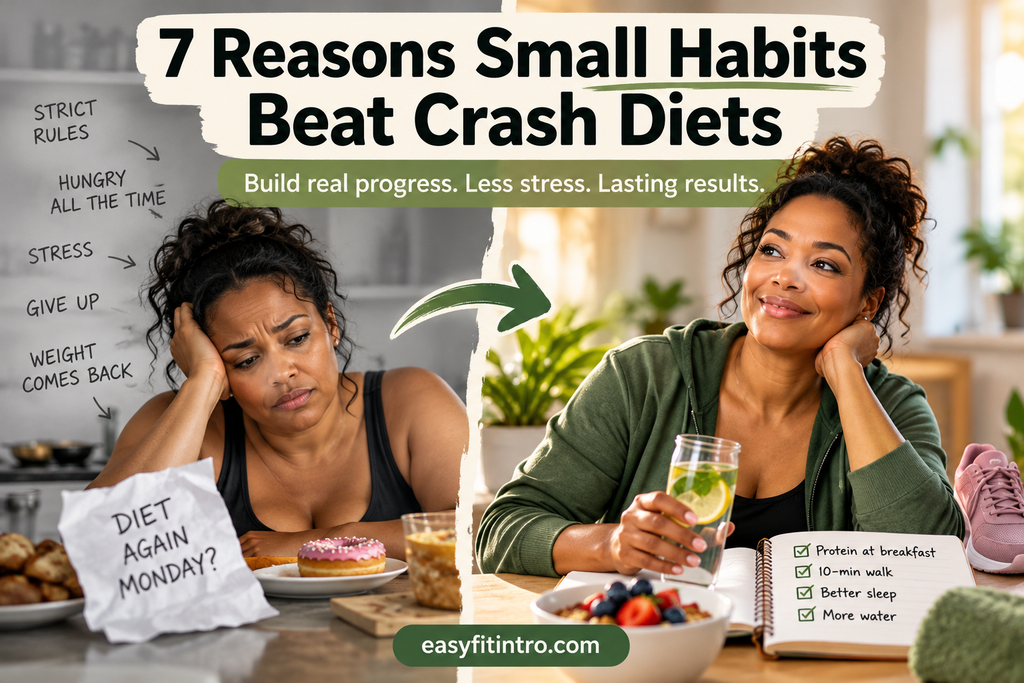
If you’ve ever started a diet on Monday with total determination, you know how the story usually goes.
The first few days feel strong. You’re cutting out bread, skipping dessert, and maybe drinking nothing but shakes. The scale drops a little, and you feel hopeful.
Then life happens. A stressful day at work. A family birthday. A night of bad sleep. Suddenly the plan feels impossible; you “blow it,” and by the following week you’re back where you started, often feeling worse about yourself than before.
If that sounds familiar, I want you to hear this first: you didn’t fail. The plan was never built for real life.
Crash diets ask for perfect willpower over a short burst of time. Small habits ask for something much gentler: one manageable change, repeated until it becomes part of who you are. For women over 35 dealing with stubborn belly fat, shifting hormones, busy schedules, and stress, that difference matters enormously.
Here are 7 reasons small habits work better and how to start today.
What Counts as a “Crash Diet”?
A crash diet is any plan built on extreme restriction for quick results: very low calories, cutting out entire food groups, juice-only “cleanses,” or rules so strict you can only follow them for a few weeks.
A small habit is the opposite. It’s a single, specific action you can do on your worst day as well as your best. For example:
- Eating protein at breakfast
- A 10-minute walk after dinner
- Going to bed at the same time each night
- Drinking a glass of water before your afternoon coffee
These don’t feel dramatic. That’s exactly why they work.
7 Reasons Small Habits Beat Crash Diets
1. Diets End, but Habits Don’t
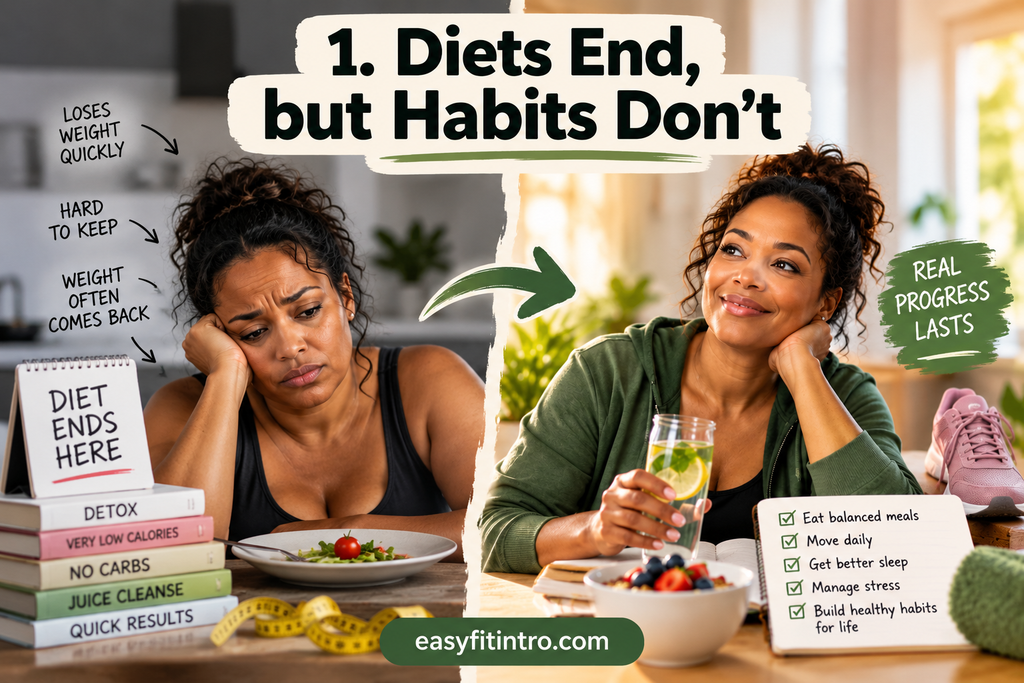
Every crash diet has a finish line. The real question is what happens after it.
When a diet ends, most people go back to the eating patterns, sleep routines, and stress levels they had before. And since those patterns created the belly fat in the first place, it’s no surprise the weight often finds its way back.
Interestingly, research suggests the speed of weight loss itself isn’t the main problem. In one well-known study, people who lost weight quickly and people who lost it slowly regained weight at similar rates over the following years. What makes the difference is whether your daily habits change for good.
Small habits don’t have an end date. They become the way you live, and the way you live is what shapes your body over the long term.
Read More: Why Belly Fat Comes Back After Dieting
2. Small Habits Survive Real Life
Crash diets tend to work on paper and fall apart in real life. They don’t allow for a sick child, a long workday, a celebration, or simply a tired evening.
Small habits are built for those days. You can still take a 10-minute walk when you’re busy. You can still add protein to breakfast while travelling.
Even better, research on habit formation found that missing a single day didn’t reduce people’s chances of forming a habit. One missed day isn’t failure. It’s just a day. The key is starting again tomorrow, rather than deciding the whole week is ruined.
That one insight alone can break the “start over every Monday” cycle.
Read More: Why You Keep Restarting Your Weight Loss Journey
3. They’re Kinder to Your Stress Levels
Many women over 35 are already running on high stress: work, family, caring for parents, and hormone changes all add up.
Strict dieting can add to that load. Constantly counting, restricting, and fighting hunger is mentally exhausting, and severe restriction can affect sleep, mood, and cravings. Some research suggests that the act of strict calorie restriction may itself increase stress on the body.
Small habits work with your body. Instead of fighting hunger all day, you build balanced meals that keep you fuller. Instead of punishing workouts, you add gentle movement that helps you feel calmer. A calmer body is a body that finds healthy habits easier to keep.
4. They Help Protect Your Muscle
This one matters more with every birthday.
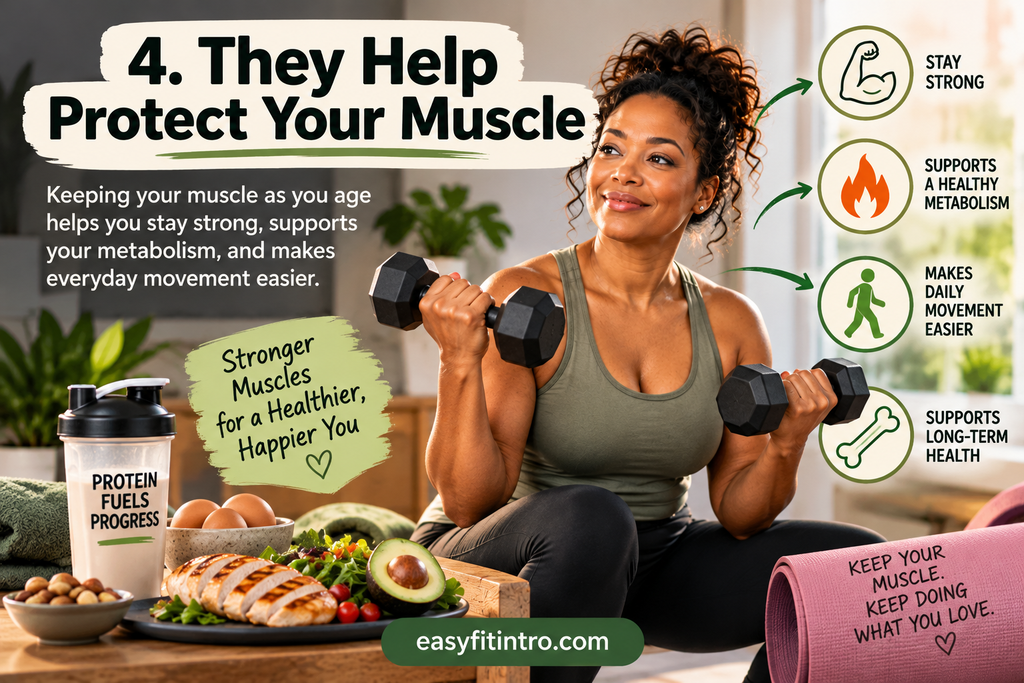
When you eat far too little, especially too little protein, your body may lose muscle along with fat. And muscle is valuable: it helps you stay strong, supports your metabolism, and keeps everyday movement easier as you age. Women naturally tend to lose muscle as they get older, so protecting it is important.
Small habits like adding protein to each meal and doing simple strength exercises at home help you keep that muscle while you improve your health. A crash diet that leaves you lighter but weaker isn’t a win.
5. They Avoid the Hidden Risks of Rapid Weight Loss
Crash diets can carry risks most people never hear about. For example, health authorities note that losing weight very quickly, such as on very low-calorie diets, may raise your chances of developing gallstones. Repeatedly losing and regaining weight, often called yo-yo dieting, may make that risk higher.
Very restrictive plans can also make it hard to get enough vitamins, minerals, and protein.
Small, steady changes don’t put your body through that kind of shock. If you’re ever considering a very low-calorie plan, it should be done under medical supervision.
6. Even Modest Changes Bring Real Health Benefits
Many women believe that if they can’t lose a lot of weight quickly, there’s no point trying. That simply isn’t true.
According to health authorities, losing even 5 to 10 percent of your body weight can bring meaningful health improvements, including better blood pressure, cholesterol, and blood sugar. For a woman weighing 80 kg, 5 percent is just 4 kg.
You don’t need a dramatic transformation to start feeling and functioning better. Small, steady progress counts, and it often shows up first as better energy, steadier moods, fewer cravings, and clothes fitting more comfortably.
7. Small Habits Become Automatic Over Time
This is where the magic happens.
At first, a new habit takes effort. You have to remember the walk, plan the protein breakfast, and set the bedtime alarm. But with repetition, it gets easier until one day you do it without thinking.
How long does that take? A well-known study from University College London found that new habits took an average of about 66 days to become automatic. Some took as little as 18 days, and others much longer. The popular “21 days to form a habit” idea isn’t backed by that research.
That might sound like a long time, but here’s the encouraging part: the habit gets easier along the way. And once one habit runs on autopilot, you have the energy to add the next. Small habits stack, building on each other into a completely different daily life.
How to Start: The One-Habit Method
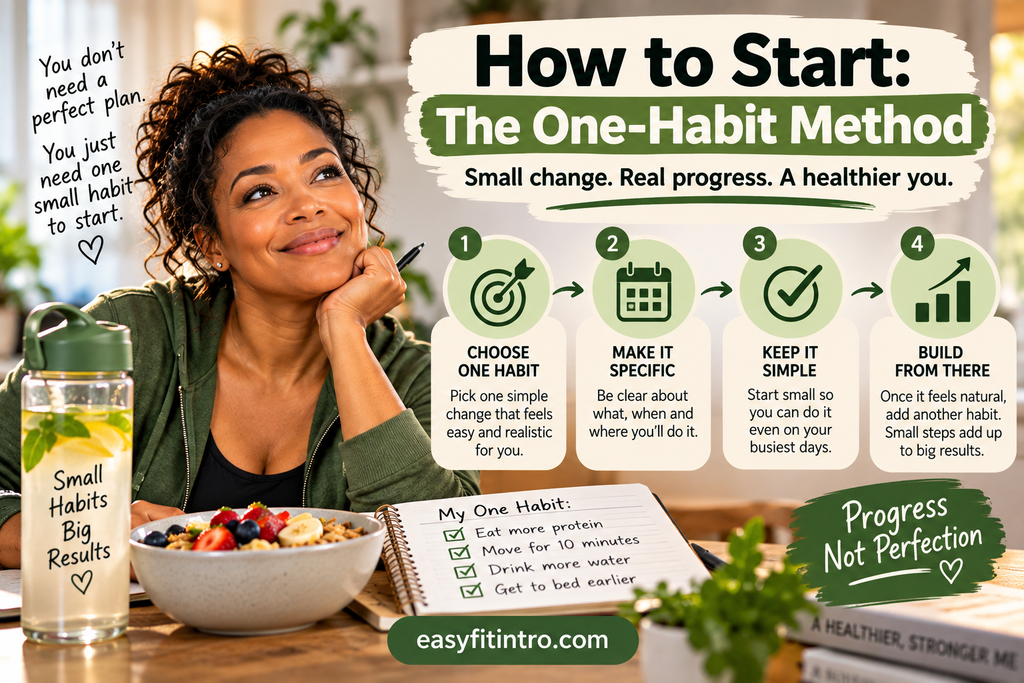
Ready to try a different approach? Here’s a simple way to begin.
Step 1: Pick one habit. Choose the change that feels easiest, not the one that feels most impressive. Good starting options include protein at breakfast, a 10-minute walk after your biggest meal, a regular bedtime, or five minutes of slow breathing when you feel stressed.
Step 2: Attach it to something you already do. Link your new habit to an existing routine. For example: “After I pour my morning tea, I’ll eat my protein breakfast,” or “After dinner, I’ll walk for 10 minutes.”
Step 3: Make it small enough for your worst day. If 30 minutes feels hard on a busy day, make it 10. The goal is consistency, not intensity.
Step 4: Track it simply. A tick on a calendar is enough. Seeing your progress builds motivation.
Step 5: Expect missed days, and keep going. A missed day is normal. Just pick it up again tomorrow.
Step 6: Add the next habit once the first feels easier. Then build from there.
One honest reminder: no single food, drink, or exercise “burns” belly fat specifically. Belly fat changes as your overall habits change. That’s why consistency matters more than any trick.
Frequently Asked Questions
Do crash diets work for belly fat?
Crash diets may cause quick weight loss at first, but much of it can be water and sometimes muscle, and the results are hard to keep once the diet ends. Long-term change in belly fat comes from habits you can maintain: balanced eating, regular movement, strength training, good sleep, and stress management.
How many habits should I start with?
Just one. Starting several habits at once is one of the most common reasons beginners feel overwhelmed and quit. Once your first habit feels easier, add a second.
What’s the best first habit for belly fat?
There’s no single best habit for everyone. Many women find that protein at breakfast or a short walk after their biggest meal is an easy, effective place to start. Pick the one that best fits your day.
How long before I notice results?
It’s different for everyone. Many women notice non-scale changes first, such as more energy, fewer cravings, better sleep, or clothes fitting differently, before the tape measure or scale moves. Focus on consistency over weeks and months rather than days.
What if I miss a day?
Simply start again the next day. Research on habit formation found that missing a single day didn’t reduce people’s chances of building a lasting habit. One day off isn’t a reason to give up on the week.
Is it too late to start building better habits after 50?
Not at all. Healthier habits can benefit your body at any age. If you have a health condition, check with your doctor before starting a new exercise routine, then start small and build gradually.
Your Next Small Step
You don’t need another crash diet. You don’t need perfect willpower. And you definitely don’t need to wait for Monday.
You need one small habit, started today and repeated until it becomes part of you.
Small steps are how real change happens, and they’re the kind of change that lasts.
Start Free: The Belly Fat Reset Workbook
If you’re not sure which habit to start with, my free Belly Fat Reset Workbook helps you choose and track your first steps.
👉 Download the Free Belly Fat Reset Workbook.
Want a Daily Plan? Join the 14-Day Belly Fat Reset.
If you’d love someone to guide you, one small step at a time, the 14-Day Belly Fat Reset Challenge gives you a simple daily plan for eating, movement, sleep, and stress. It’s designed for women who’ve tried everything and are ready for an approach that fits real life.
👉 Join the 14-Day Belly Fat Reset for R199
You’ve got this. Let’s start small, starting today.
— Coach Modisa
This article is for educational purposes only and isn’t a substitute for medical advice. If you have a health condition or concerns, please speak to your doctor before changing your diet or exercise routine.