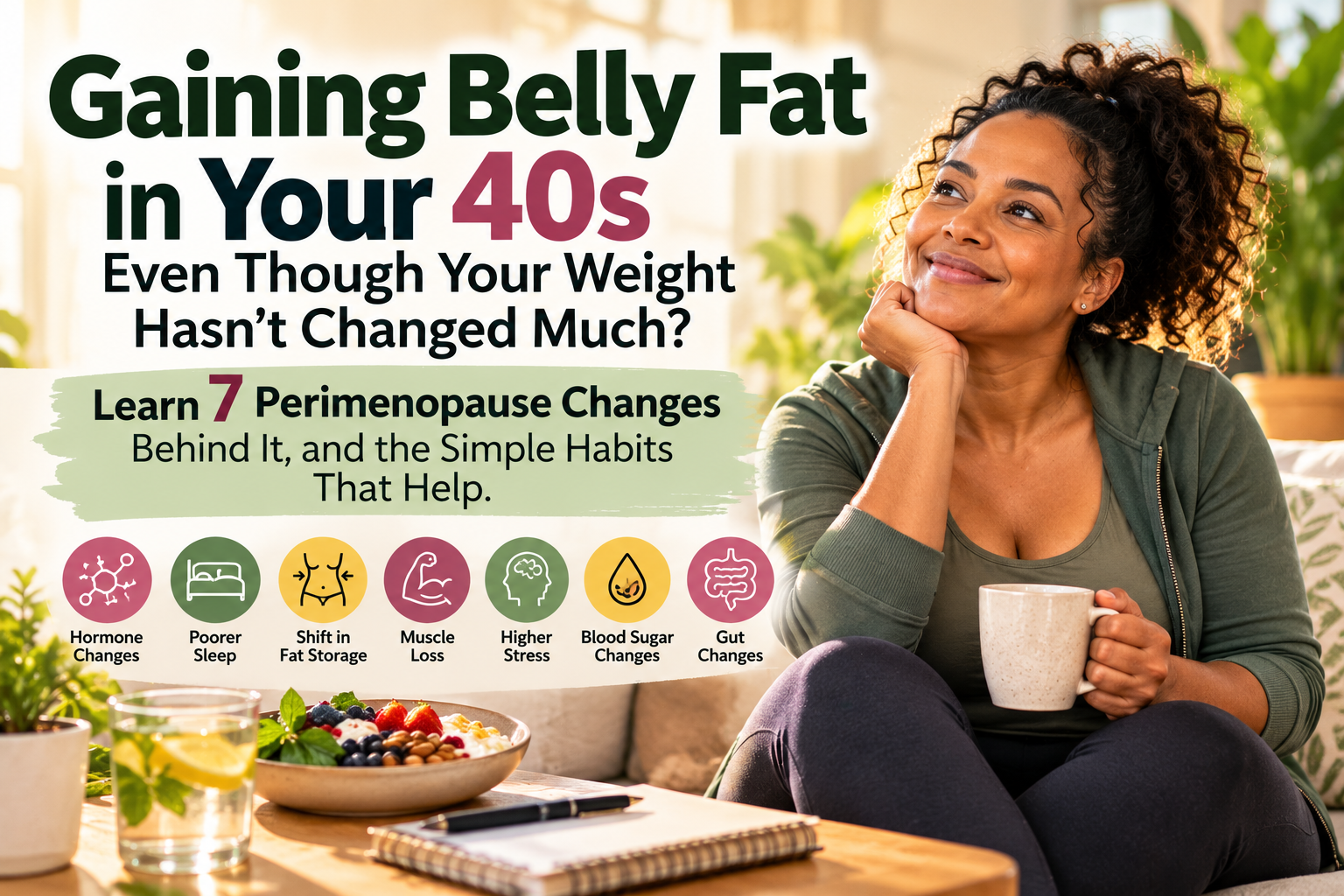
You’re eating the way you always have. Maybe you’re even trying harder than before. But somehow your waistband feels tighter, your middle feels softer, and the belly that never used to be there has arrived and refuses to leave.
If this sounds like you, I want you to know something important: you’re not imagining it, and it’s not a lack of willpower.
For many women, the years leading up to menopause bring real changes in how the body stores fat, builds muscle and sleeps. Understanding those changes is the first step to working with your body instead of fighting it.
Let’s walk through what’s happening and what actually helps.
What Is Perimenopause?
Perimenopause is the transition leading up to menopause. It often begins in a woman’s 40s, although it can start earlier, and it can last several years. During this time, hormone levels, especially oestrogen, rise and fall unpredictably before eventually declining.
Menopause itself is officially reached after 12 months in a row without a period. In South Africa, as elsewhere, it usually happens around age 51, but every woman’s timeline is different.
Many women experience symptoms like irregular periods, hot flushes, night sweats, mood changes, poorer sleep, and changes in body shape, especially around the middle.
7 Changes Behind Perimenopause Belly Fat
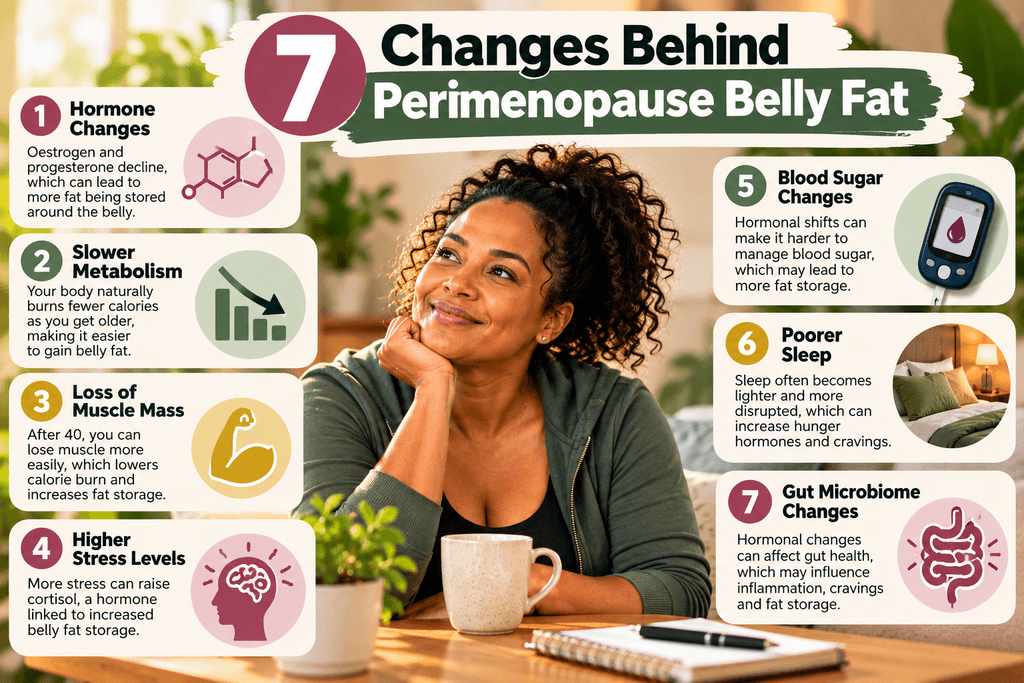
1. Falling Oestrogen Changes Where Fat Is Stored
Before midlife, many women tend to store fat on the hips and thighs. As oestrogen declines, the body tends to store more fat around the abdomen instead.
That’s why some women notice their shape changing, from “pear” to more of an “apple”, even if their overall weight hasn’t shifted much. This new fat isn’t just under the skin. More of it can be deeper visceral fat, which is linked with blood sugar, blood pressure and heart health.
Read More: Belly Fat Is More Than a Cosmetic Issue.
2. Fat Gain Speeds Up, Even When the Scale Doesn’t
This is one of the most surprising and one of the most validating findings.
A large long-term study called SWAN (the Study of Women’s Health Across the Nation) followed women through the menopause transition using detailed body scans. Researchers found that when the transition began, the rate of fat gain doubled while muscle started to decline. Yet overall body weight didn’t speed up in the same way.
In other words, the scale may barely move while your body composition changes underneath: more fat, less muscle. This is why your waist measurement and how your clothes fit can tell you more than your weight during these years.
3. You Start Losing Muscle
The same research showed lean mass, which is mostly muscle, beginning to decline during the transition.
Muscle matters for so much more than looks. It helps you stay strong, supports healthy blood sugar levels, protects your joints and keeps everyday activities easier as you age. Less muscle can also mean your body uses slightly less energy at rest.
The encouraging part: muscle responds to strength training at any age. This is one area where you have real power to change the story.
4. Your Sleep Gets Disrupted
Hot flushes and night sweats often wake women up during the night. Many women also find it harder to fall asleep, wake too early, or simply don’t feel rested.
Poor sleep affects much more than your mood. It can increase hunger and cravings, lower your energy for movement and make healthy choices harder the next day. Research has also linked frequent hot flushes and night sweats with gains in weight and waist size during midlife.
If your sleep has fallen apart, your belly fat struggle may be partly a sleep struggle.
Read More: Internal links. Why Your Body Stores Fat When You’re Tired
5. Stress Feels Heavier
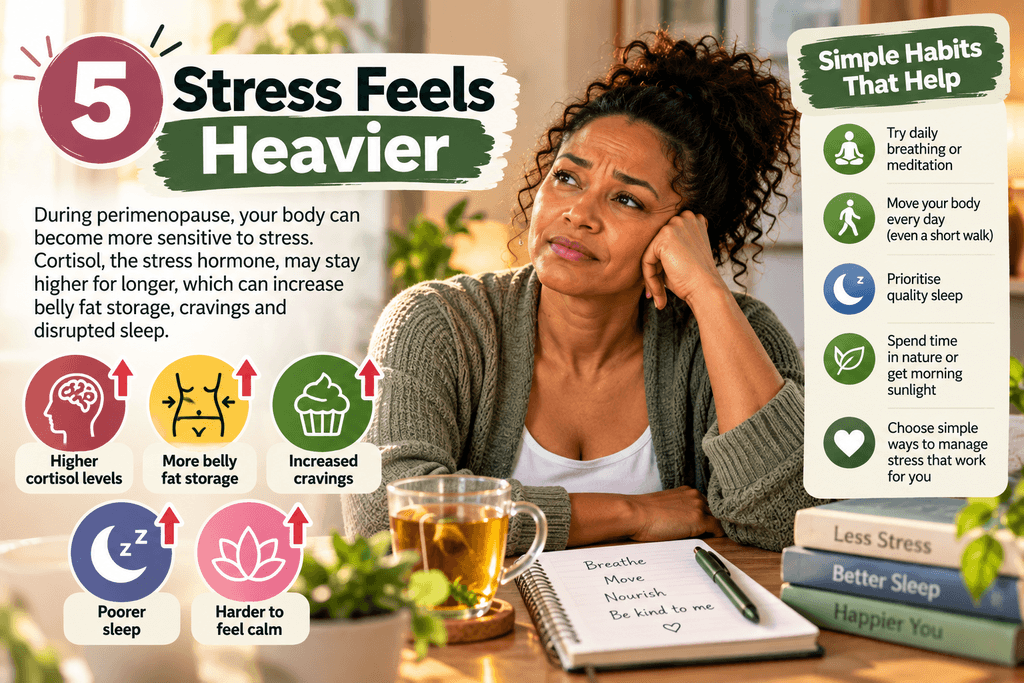
Midlife often comes with a heavy load: work pressure, children, caring for ageing parents, finances, relationships. Add hormone-related mood changes, and many women feel more stressed than ever.
Ongoing stress can affect sleep, appetite and cravings, and many women reach for comfort foods when they’re overwhelmed. Research also suggests chronic stress may be linked with more fat stored around the middle.
You can’t remove every stress from your life. But small daily ways to calm your nervous system really do add up.
Read More: The Stress Hormone That Grows Belly Fat,
6. Your Body Handles Blood Sugar Differently
As body composition changes, with more abdominal fat and less muscle, many women find their bodies don’t manage blood sugar as smoothly as before. Energy crashes after meals, stronger sugar cravings and feeling hungry soon after eating can be signs worth discussing with your doctor.
Building meals around protein, fibre and vegetables helps keep energy steadier, and strength training helps your muscles use blood sugar well.
7. Life Gets Busier, and Movement Drops
This one isn’t about hormones, but it matters just as much. Busy schedules, tiredness and joint aches can quietly reduce how much we move each day. Fewer steps, more sitting and skipped workouts add up over months and years.
The fix doesn’t have to be dramatic. Small amounts of daily movement count more than occasional intense workouts.
What Actually Helps With Perimenopause Belly Fat
Here’s the hopeful part. While you can’t stop the hormone changes, you can make choices that support your body through them. And none of them involve crash diets.
Prioritise strength training. This is the big one. Two to three short sessions a week of squats to a chair, wall push-ups, glute bridges or light dumbbells help protect and rebuild muscle. Health authorities specifically recommend weight-bearing exercise for women around and after menopause.
Eat protein at every meal. Protein supports muscle and helps you feel fuller for longer. Think eggs, yoghurt, beans, lentils, fish, chicken or pilchards.
Fill half your plate with vegetables and add fibre. These support steadier blood sugar and healthy digestion.
Walk every day. Start 10 minutes after your biggest meal and build up gradually.
Protect your sleep. Keep a regular bedtime and wake time, keep your bedroom cool, and wear light layers if night sweats wake you.
Calm your stress in small ways. Five slow breaths, a short walk outside or a few minutes away from your phone all count.
Talk to your doctor about symptoms. If hot flushes, night sweats or mood changes are affecting your life, speak to a healthcare provider. There are options that can help, and they can guide you on what’s right for your body.
One honest reminder: no single food, drink or exercise burns belly fat specifically. Belly fat changes as your overall habits change. That’s why small, consistent steps matter more than any quick fix.
Frequently Asked Questions
Why am I gaining belly fat in perimenopause when I haven’t changed how I eat?
Hormone changes, especially falling oestrogen, shift fat storage toward the abdomen. Research also shows fat gain can speed up while muscle declines during the transition, even when overall weight doesn’t change much. Poorer sleep and higher stress can add to it.
Is perimenopause belly fat permanent?
No. While hormone changes make it easier to store fat around the middle, habits like strength training, protein-rich meals, regular walking, good sleep and stress management can make a real difference over time.
What’s the best exercise for perimenopause belly fat?
There’s no exercise that targets belly fat directly. The most helpful combination is strength training to protect muscle plus regular walking or other moderate activity. Consistency matters more than intensity.
Can poor sleep really affect belly fat?
Yes, it can play a role. Poor sleep increases hunger and cravings, lowers energy for movement and makes healthy choices harder. Research has linked frequent night sweats and hot flushes with gains in weight and waist size during midlife.
When should I talk to a doctor?
If symptoms like hot flushes, night sweats, heavy or irregular periods, or mood changes are affecting your daily life, or if you’re worried about your weight or health, speak to your doctor. They can check things like blood pressure, blood sugar and cholesterol and discuss options with you.
Is it too late if I’m already past menopause?
Not at all. Building muscle, improving sleep and creating healthy daily habits benefit your body at every age.
You’re Not Broken; Your Body Is Changing.
If you’ve been blaming yourself for the belly that appeared in your 40s, please let that go. Your body isn’t failing you. It’s going through a real transition, and it needs a slightly different kind of support than it did at 30.
You don’t need to do everything at once. Choose one habit from this article, whether that’s protein at breakfast, two short strength sessions this week or a regular bedtime, and start there.
Start Free: The Belly Fat Reset Workbook
If you’d like help choosing your first steps, my free Belly Fat Reset Workbook walks you through them.
👉 Download the Free Belly Fat Reset Workbook.
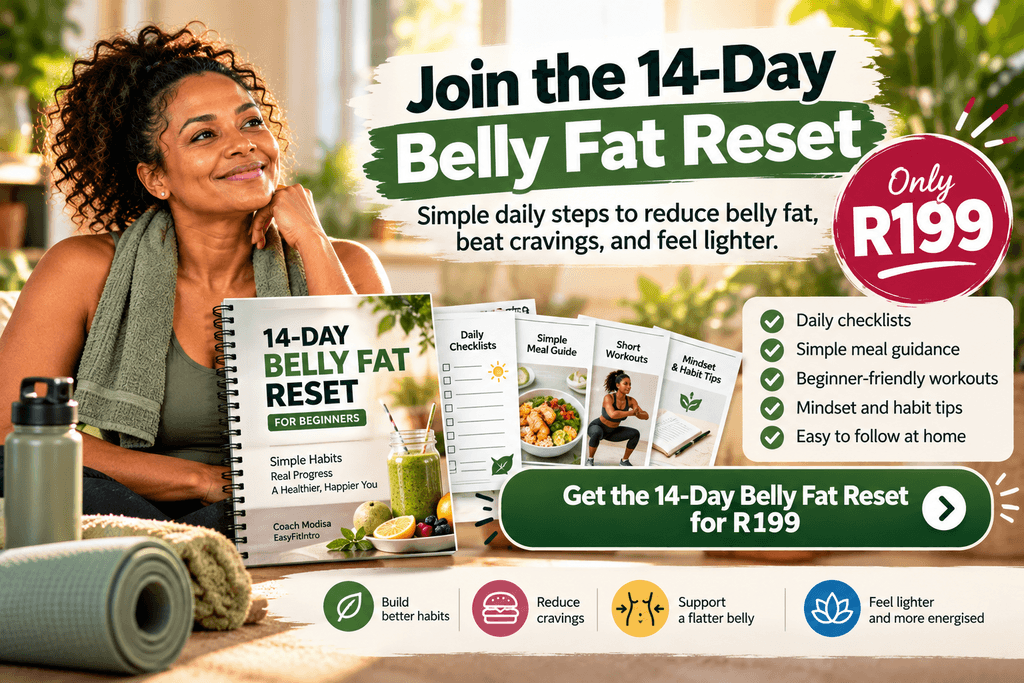
Want a daily plan? Join the 14-Day Belly Fat Reset.
The 14-Day Belly Fat Reset Challenge gives you one simple step each day for eating, movement, sleep and stress, designed for women whose bodies are changing and who are ready for an approach that works with them, not against them.
👉 Join the 14-Day Belly Fat Reset for R199.
You’ve got this. One small step at a time.
— Coach Modisa
This article is for educational purposes only and isn’t a substitute for medical advice. If you’re experiencing menopause symptoms or have health concerns, please speak to your doctor.