Introduction
Let’s be honest about where this usually starts.
For most women, the worry about belly fat begins in front of a mirror. Maybe your favourite jeans stopped closing comfortably. Maybe you avoid photos, or you’ve started choosing tops that “hide the middle. “Maybe you just don’t feel like yourself anymore.
Those feelings are real and valid. You’re allowed to want to feel confident in your body.
But there’s something more important I want you to know, and most diet ads never mention it: the fat around your middle isn’t only about appearance. Depending on what kind of fat it is and where it sits, it can say something important about what’s happening inside your body.
That’s not meant to scare you. It’s meant to help you see why small habits you start now matter so much, and why it’s worth taking care of yourself before a doctor’s visit forces the conversation.
Let’s walk through it together, in plain English.
First, Not All Belly Fat Is the Same
There are two main types of fat around your stomach area.
Subcutaneous fat sits just beneath the skin. It’s the soft layer you can pinch. It’s also found on your arms, hips and thighs. It’s the fat most of us notice first.
Visceral fat is stored deeper inside your abdomen, wrapped around organs like your liver, pancreas and intestines. You can’t pinch it, and you can’t always see it. Someone can look slim and still carry more visceral fat than is healthy.
The reason visceral fat gets so much attention from doctors is that it isn’t just “stored energy sitting there.” Researchers describe it as metabolically active. It releases substances that can affect inflammation, how your body handles insulin, and how your liver processes fat. That’s why excess visceral fat is linked with more health concerns than fat stored on the hips or thighs.
Why This Matters More After 35

If you’ve noticed that weight seems to “move to your middle” as you get older, you’re not imagining it. During the midlife years, and especially around menopause, hormonal shifts mean women’s bodies tend to store more fat around the abdomen rather than on the hips and thighs. Some women gain inches at the waist even when the scale barely moves.
This is exactly why the scale alone doesn’t tell the full story.
A Simple Check You Can Do at Home
You can’t measure visceral fat precisely without a medical scan. But your waist measurement is a useful, easy clue.
Stand up straight, breathe out gently, and wrap a tape measure around your bare waist just above your hip bones. Keep it snug but not tight. For women, a waist of about 88 cm (35 inches) or more is considered one of the risk factors doctors look at for metabolic health. Some international guidelines use a lower cut-off, around 80 cm.
Treat this number as information, not a judgement. It isn’t a diagnosis, and it doesn’t define you. It’s a starting point you can track as your habits change.
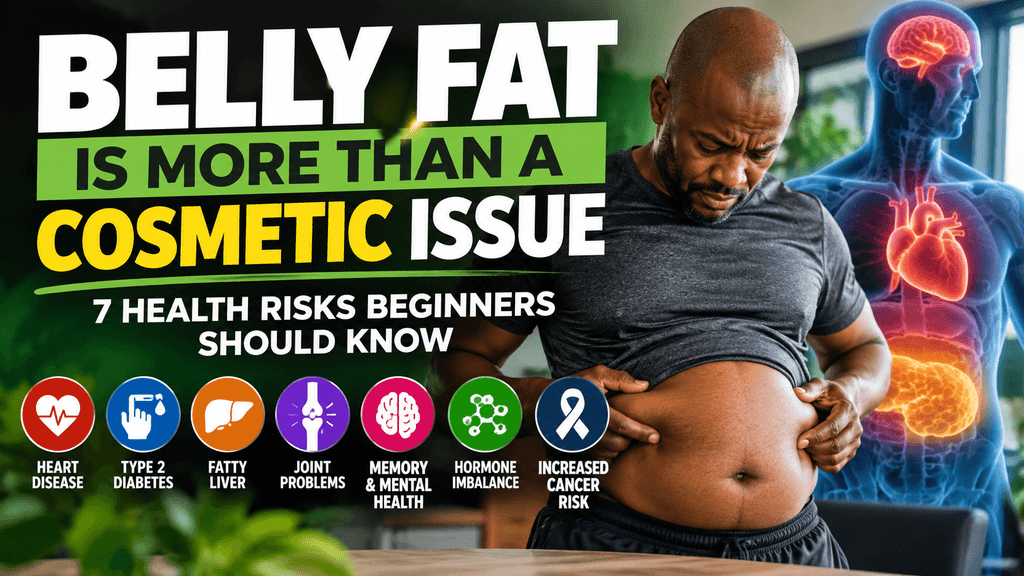
7 Health Risks Linked to Excess Belly Fat
An important note before we start: having belly fat does not mean you will develop any of these conditions. Health depends on many factors, including genetics, age, activity, sleep, stress and family history. Research shows that excess abdominal fat, particularly visceral fat, is associated with a higher risk of the conditions below. Knowing that gives you a reason to act early.
1. Insulin Resistance and Type 2 Diabetes
Insulin is the hormone that helps move sugar from your blood into your cells for energy. With insulin resistance, your cells stop responding to insulin as well as they should, so your body has to produce more of it to keep blood sugar in check.
Excess visceral fat is closely linked with insulin resistance. Over time, insulin resistance can raise the risk of prediabetes and type 2 diabetes.
What makes this tricky is that insulin resistance can develop quietly for years. Some women notice signs like energy crashes after meals, strong sugar cravings, or feeling hungry again soon after eating. None of these prove insulin resistance on their own, but they’re worth mentioning to your doctor, who can check your blood sugar with a simple test.
2. High Blood Pressure
Carrying excess weight, especially around the middle, is linked with a higher risk of high blood pressure (hypertension). Doctors include raised blood pressure in the same group of metabolic warning signs as a large waistline.
High blood pressure is often called a “silent” condition because many people feel completely fine. That’s why regular checks matter. Your local clinic or pharmacy can take a reading in a few minutes.
3. Unhealthy Cholesterol and Triglyceride Patterns
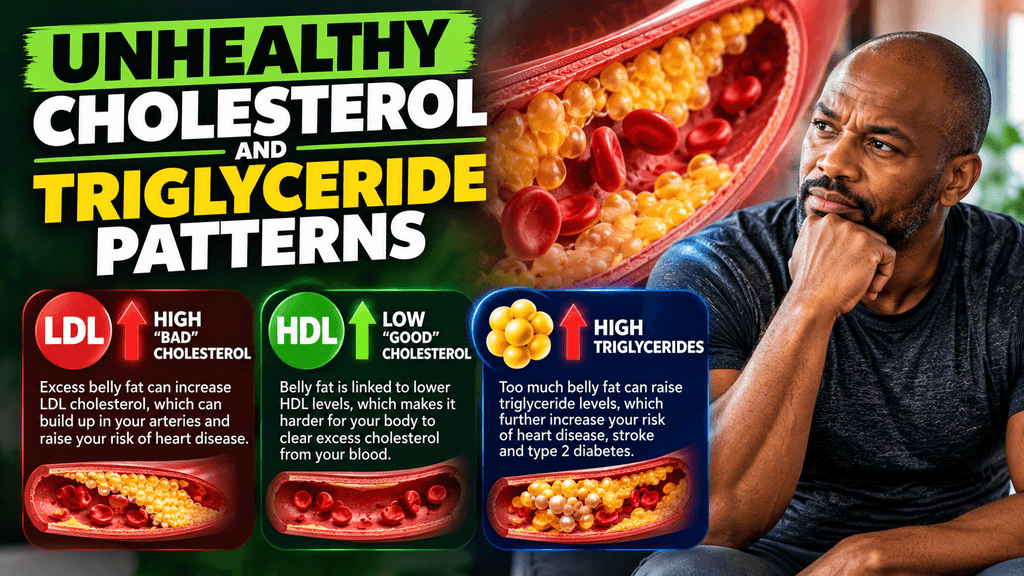
Excess abdominal fat is associated with an unhelpful pattern of blood fats. That usually means higher triglycerides, a type of fat in your blood, and lower HDL cholesterol, the “good” cholesterol that helps clear cholesterol from your arteries.
You can’t feel these changes, and a blood test is the only way to know your numbers. It’s one of the easiest and most useful checks to ask for at your next visit.
4. Cardiovascular Disease
This is one of the most studied links. In 2021, the American Heart Association published a scientific statement concluding that abdominal fat is a heart disease risk marker even in people whose BMI falls in the “healthy” range.
That’s a big deal, because many women have been told their weight is “fine” based on BMI alone. Where your fat is stored can matter as much as how much you weigh. For that reason, experts recommend that waist size be checked alongside BMI.
5. Metabolic Syndrome
Metabolic syndrome isn’t a single disease. It’s the name doctors use when several risk factors show up together. The five markers are:
- A large waistline
- High triglycerides
- Low HDL (“good”) cholesterol
- Raised blood pressure
- Raised fasting blood sugar
Having three or more of these means a person meets the criteria for metabolic syndrome, which raises the risk of heart disease, stroke and type 2 diabetes.
Notice that the waistline is the only one you can actually see. The other four can only be picked up through checks and blood tests. That’s why your waist can act as an early nudge to get the full picture.
6. Fatty Liver Disease
Your liver is supposed to hold a little fat, but when too much builds up, it can lead to a condition now called MASLD (metabolic dysfunction-associated steatotic liver disease). You may know it by its older name, non-alcoholic fatty liver disease.
Obesity, and especially fat concentrated around the waist, is one of the main risk factors, along with insulin resistance, type 2 diabetes and high triglycerides. Most people with early fatty liver have no symptoms at all.
The encouraging news: fatty liver is strongly influenced by lifestyle. Improving eating habits, activity levels and overall weight can make a meaningful difference, especially when it’s caught early.
7. How These Risks Can Build on Each Other Over Time
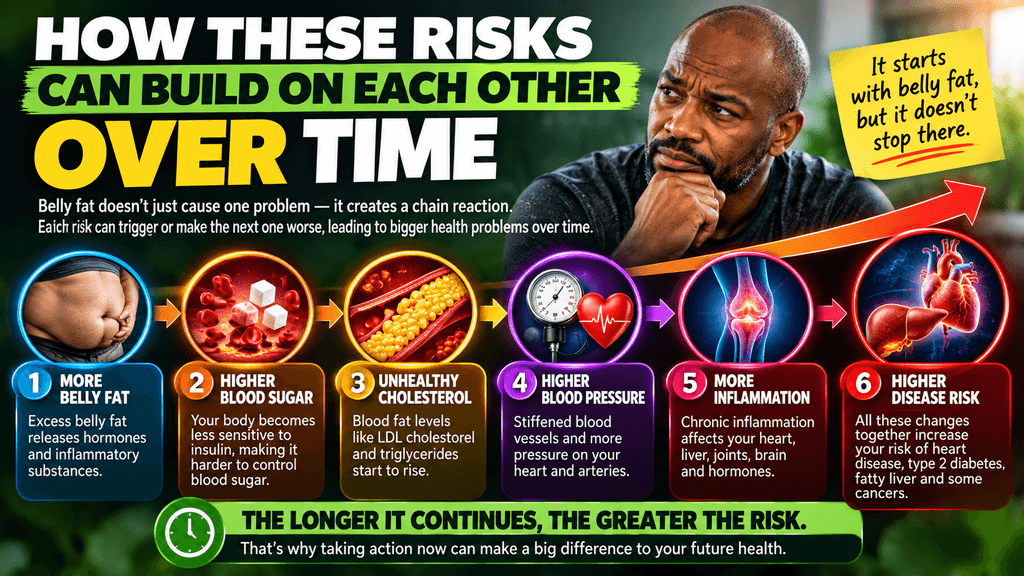
This is the part I most want you to understand. These risks rarely show up one at a time.
Insulin resistance, raised blood sugar, blood pressure changes, unhealthy blood fats and fatty liver are closely connected. They tend to cluster together and can reinforce one another over the years. For example, insulin resistance is linked with both fatty liver and unhealthy cholesterol patterns, and all three are linked with heart health.
That can sound overwhelming. But look at it the other way around: the same healthy habits support all of these areas at once. You don’t need seven separate plans for seven separate risks. A handful of consistent daily habits can support your blood sugar, blood pressure, cholesterol, liver and heart together.
You Don’t Have to Wait Until Something Goes Wrong
Many women only take action after a scary test result or a warning from their doctor. You don’t have to wait for that moment.
And no, this doesn’t mean crash diets, cutting out entire food groups, or punishing yourself at the gym. Those approaches usually backfire. They’re hard to maintain, they can raise stress, and they often lead to the “start over every Monday” cycle.
Here’s what research consistently supports, in beginner-friendly terms:
Build balanced plates. Aim for meals that include a source of protein, plenty of vegetables, and fibre-rich carbohydrates like beans, lentils, oats or whole grains. This combination helps you feel fuller for longer and supports steadier energy.
Walk more, starting where you are. You don’t need to run marathons. Regular walking adds up. Health guidelines recommend about 150 minutes of moderate activity per week, which works out to roughly 20–30 minutes a day, and research suggests that level of activity can help reduce abdominal fat. If that feels like a lot right now, start with 10 minutes after dinner.
Add some strength training. Building and keeping muscle becomes more important as we get older. Simple bodyweight moves at home, like squats to a chair, wall push-ups and glute bridges, are a great beginning. If you have any health conditions, check with your doctor first.
Protect your sleep. Poor sleep affects hunger hormones, cravings and energy. Aim for a consistent bedtime and a calming wind-down routine.
Manage stress in small ways. Chronic stress affects how you eat, sleep and move. Even five minutes of slow breathing, a short walk outside, or time away from your phone can help.
Focus on sustainable progress. Even modest, gradual improvements in overall weight and fitness are linked with better metabolic health.
One honest note: you can’t “spot-reduce” belly fat. No single food, drink or exercise burns fat from your stomach specifically. Crunches strengthen your core, which is great, but they don’t target the fat around your middle. Belly fat changes as your overall habits change. That’s actually good news, because it means you don’t need gimmicks. You need consistency.
Know your numbers. If you’re over 35 and haven’t had a check-up in a while, ask your doctor or clinic about checking your blood pressure, blood sugar and cholesterol. It’s one of the kindest things you can do for your future self.
Frequently Asked Questions About Belly Fat Health Risks
Why is belly fat unhealthy?
Not all belly fat carries the same risk. The main concern is visceral fat, the deeper fat stored around your abdominal organs. It’s metabolically active, which means it can affect inflammation, insulin and how your liver handles fat. Excess visceral fat is linked with a higher risk of type 2 diabetes, high blood pressure, unhealthy cholesterol, fatty liver and heart disease. Having belly fat doesn’t mean you’ll develop these conditions, but it’s a good reason to start building healthier habits.
How do I know if I have visceral fat?
Only a medical scan can measure visceral fat precisely. Your waist measurement is a helpful everyday clue, though. For women, a waist of about 88 cm (35 inches) or more is one of the risk factors doctors look at, and some guidelines use a lower cut-off of around 80 cm. For a fuller picture, ask your doctor or clinic to check your blood pressure, blood sugar and cholesterol.
Can I have visceral fat even if I’m not overweight?
Yes. Some people with a “healthy” weight or BMI still carry excess fat around their middle. The American Heart Association has noted that abdominal fat can raise heart disease risk even when BMI is in the healthy range. That’s why your waist measurement can tell you something the scale can’t.
Why am I gaining belly fat in my 40s even though my weight hasn’t changed much?
This is very common for women in midlife. Hormonal changes, especially around perimenopause and menopause, shift where the body stores fat. More tends to go to the abdomen and less to the hips and thighs. Changes in sleep, stress levels and muscle mass can also play a part. It’s not a personal failure, and supportive daily habits can still make a real difference.
Can stress cause belly fat?
Stress alone isn’t the whole story, but it can play a role. Research suggests that ongoing stress may be linked with more fat stored around the middle. Chronic stress also affects sleep, cravings and energy, which makes healthy habits harder to keep. Small daily stress-relief practices, like a short walk, slow breathing or a consistent bedtime routine, support your overall health and make the other habits easier to stick with.
Will crunches or sit-ups get rid of belly fat?
Unfortunately, no. You can’t “spot-reduce” fat from one area of your body. Core exercises strengthen the muscles underneath, which is valuable for posture and everyday movement, but they don’t target the fat on top. Belly fat changes as your overall habits change: balanced eating, regular walking, strength training, good sleep and stress management.
How long does it take to reduce belly fat?
It’s different for everyone. Age, hormones, genetics, starting point and consistency all play a role. Some women notice non-scale changes first, like better energy, fewer cravings, improved sleep or clothes fitting differently, before the tape measure moves. Aim for steady habits you can keep for months, not a quick fix you’ll abandon in two weeks.
Is it too late to lower my health risks if I’m over 50?
Not at all. It’s never too late to benefit from healthier habits. Improving eating patterns, moving more, building strength and protecting your sleep can support your metabolic health at any age. If you have existing health conditions, talk to your doctor before starting a new exercise routine. Then start small and build from there.
Start Before It Becomes a Bigger Problem

If you’ve read this far, I want you to hear this clearly: you are not behind, and it is not too late.
You don’t need the perfect Monday, the perfect meal plan, or a completely new life. You need one small change that you actually start.
Maybe it’s a 10-minute walk after dinner tonight. Maybe it’s adding protein to your breakfast tomorrow. Maybe it’s measuring your waist today, simply as your starting point.
Pick one. Just one. Then build from there.
Small habits, repeated consistently, are what change your health over time.
Your Easiest Next Step: The Free Belly Fat Reset Workbook
If you’re not sure where to begin, start with my free Belly Fat Reset Workbook. It walks you through simple, beginner-friendly first steps so you can build habits that support your health without extreme dieting.
👉 Download the Free Belly Fat Reset Workbook
Ready for More Support? The 14-Day Belly Fat Reset
If you’d like a structured plan that turns these habits into a daily routine, the EasyFitIntro 14-Day Belly Fat Reset is your next step. It gives you two weeks of guidance on eating, movement, sleep and stress, so you’re not figuring it out alone. Doors are opening soon. Grab the free workbook above and you’ll be the first to know when it’s live.
You’ve got this. Let’s start today.
— Coach Modisa
This article is for educational purposes only and isn’t a substitute for medical advice. If you have concerns about your health, or you’re living with a medical condition, please speak with your doctor before making changes to your diet or exercise routine.