
You finish eating.
You feel full, tired, and ready to sit down.
The television goes on. Your phone comes out. Before you realize it, the rest of the evening passes with very little movement.
This may seem harmless, especially if you exercised earlier in the day.
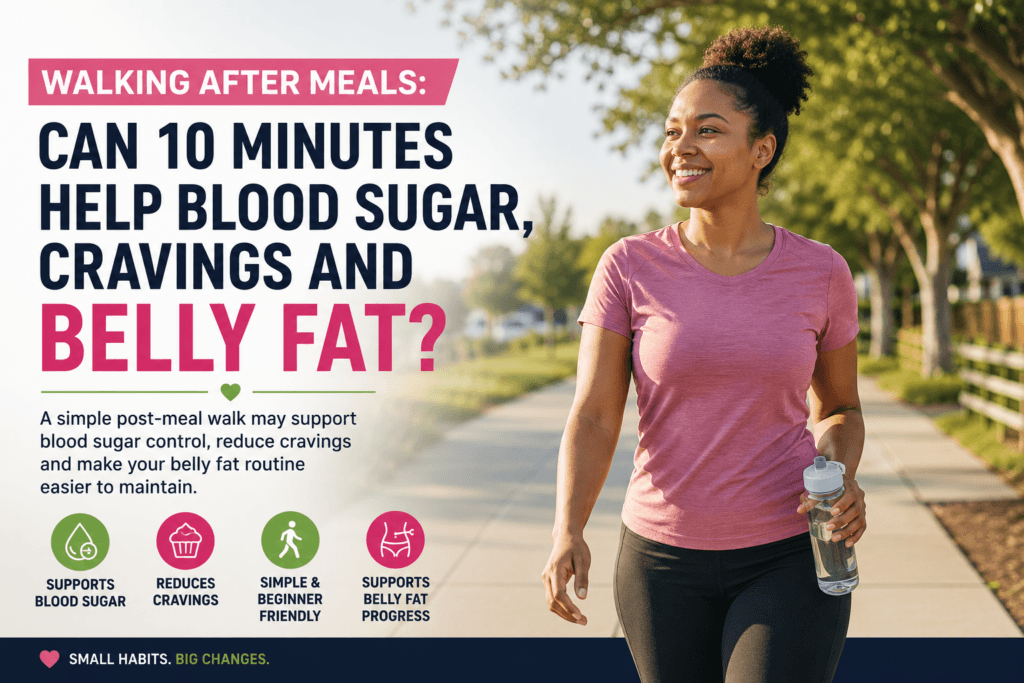
But there is one simple habit that may help you become more active, support your body’s response to meals, and make your belly-fat routine easier to maintain:
Take a short walk after eating.
You do not need to run.
You do not need a treadmill.
You do not need to complete an exhausting workout while your stomach is full.
For many beginners, walking comfortably for approximately 10 minutes after a meal is a realistic place to start.
Walking after meals does not magically melt stomach fat. No single exercise can force your body to burn fat from only one area.
However, a post-meal walk may help reduce the rise in blood glucose after eating, interrupt long periods of sitting, and increase the amount of activity you complete throughout the day. [1]
Those small actions can become part of a routine that supports long-term fat-loss progress.
What Happens in Your Body After You Eat?
When you eat a meal containing carbohydrates, your digestive system breaks them down into glucose.
That glucose enters your bloodstream and becomes available for energy.
Your pancreas normally releases insulin, which helps move glucose from the bloodstream into cells where it can be used or stored.
This process is normal.
The problem is not that blood glucose rises at all. It is expected to rise after eating.
However, the size and duration of the rise can be influenced by:
- The amount and type of carbohydrates eaten
- Whether the meal contains protein, fiber, and fat
- Your activity level
- Your insulin sensitivity
- Your sleep and stress
- Certain health conditions and medications
When you begin walking, your working muscles require energy.
Muscle contractions can increase glucose uptake, which is one reason gentle activity after eating may help moderate the post-meal glucose response.
What Does the Research Say About Walking After Meals?
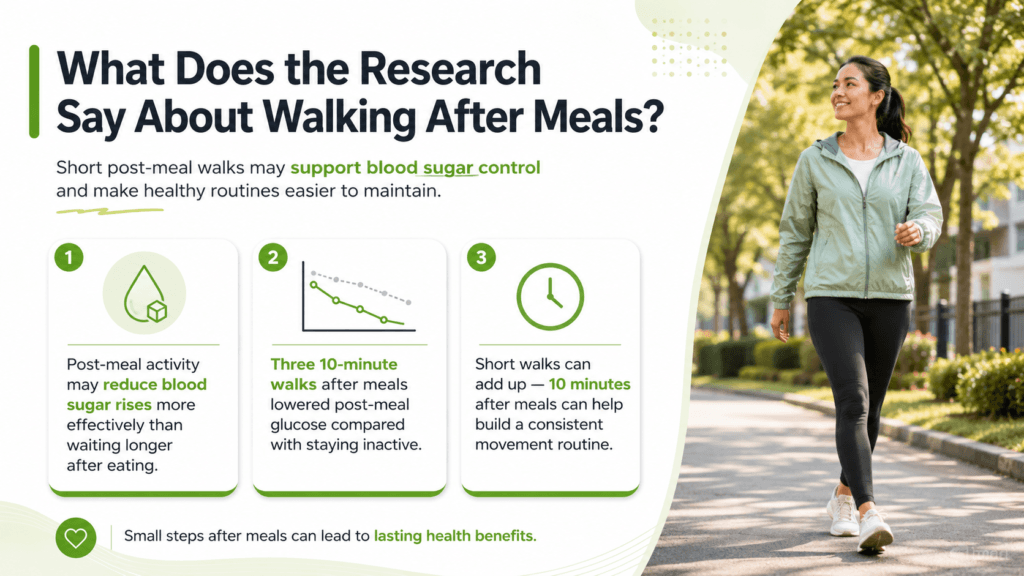
A systematic review and meta-analysis examining exercise around mealtimes found that activity performed after eating reduced post-meal glucose more effectively than exercising before eating or waiting longer after the meal. [1]
Another small crossover study compared:
- Three 10-minute walks completed after breakfast, lunch and dinner
- One continuous 30-minute walk
- No planned walking
The three short post-meal walks lowered post-meal glucose compared with remaining inactive and produced benefits similar to the longer walking session for certain glucose measurements. [2]
This does not prove that every person will experience the same result.
It does show that short walks can matter.
You do not always need a large, uninterrupted block of exercise to begin becoming more active.
Is a 10-Minute Walk Really Enough?
Ten minutes is not the final destination for everyone.
But it can be an excellent beginning.
Consider what happens when you take a 10-minute walk after three meals:
- Breakfast: 10 minutes
- Lunch: 10 minutes
- Dinner: 10 minutes
That becomes 30 minutes of movement in one day.
Completed five days per week, that would add up to 150 minutes—the general weekly moderate-activity target recommended for adults. [3]
Your walks may not all be brisk enough to count as moderate-intensity exercise, especially when you first begin.
That is fine.
The immediate goal is to break the pattern of eating and remaining seated for hours.
Start with what you can manage and gradually increase your pace, duration, or frequency.
Can Walking After Meals Reduce Belly Fat?
Walking after meals cannot target belly fat directly.
Doing hundreds of abdominal exercises cannot force fat to disappear only from your stomach either. One controlled study found that six weeks of abdominal exercises improved muscular endurance but did not significantly reduce abdominal fat or waist measurements. [4]
Your body decides where fat is lost based on several factors, including:
- Genetics
- Overall energy balance
- Hormones
- Age
- Sex
- Sleep
- Stress
- Activity
- Eating habits
Walking can still contribute to belly fat progress because it may help you:
- Increase daily energy expenditure
- Improve overall fitness
- Spend less time sitting
- Build a consistent activity routine
- Support healthier blood-glucose management
- Maintain momentum on days when you cannot complete a full workout
The important difference is this:
Walking supports the process. It does not promise fat loss from one specific area.
Regular movement must work alongside balanced eating, sleep, stress management, and realistic portions.
Related reading: Why Exercise Alone Isn’t Enough to Lose Belly Fat
Why Post-Meal Walking May Help With Cravings
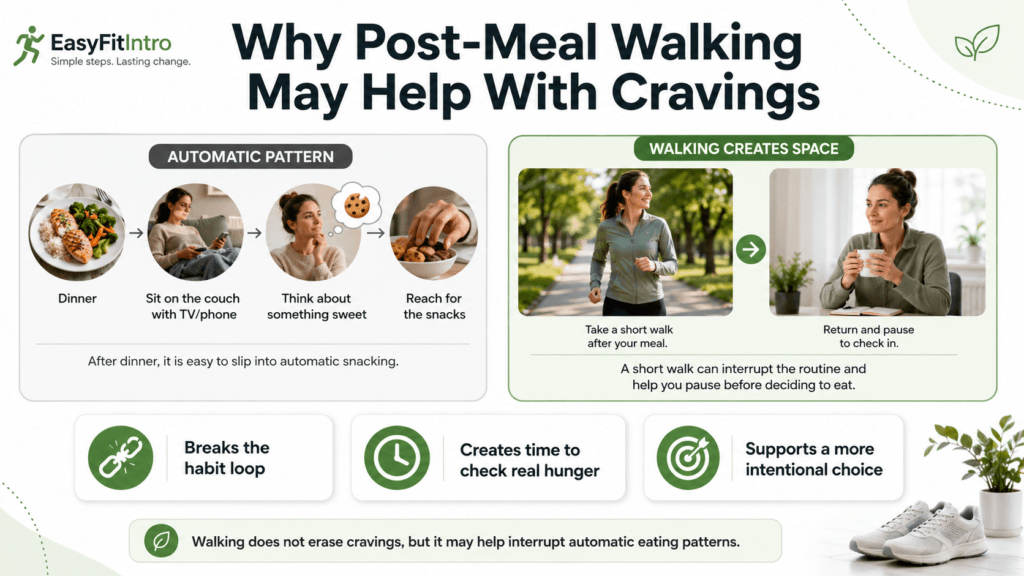
Walking does not switch off every craving.
Cravings can be affected by hunger, habit, tiredness, stress, emotions, food availability, and the composition of your meals.
But a short walk can interrupt an automatic pattern.
For example:
- You finish dinner.
- You immediately sit in front of the television.
- You begin thinking about something sweet.
- You enter the kitchen and snack without checking whether you are hungry.
Now compare that with:
- You finish dinner.
- You drink some water.
- You walk for 10 minutes.
- You return and check whether you are physically hungry or simply following a habit.
The walk creates space between the urge and your response.
That does not mean you are forbidden from eating afterwards.
It means you have a better chance of making the decision intentionally.
Related reading: The 24-Hour Craving Control Plan: What to Do Morning, Afternoon and Night
The Best Time to Walk After Eating
Research suggests that beginning activity relatively soon after eating may be more effective for reducing the immediate post-meal glucose rise than waiting for a long period. [1]
A practical starting point is:
Begin a comfortable walk approximately 10–30 minutes after finishing your meal.
You do not need to watch the clock obsessively.
Allow yourself enough time to feel comfortable, especially after a large meal.
If walking immediately causes nausea, reflux, cramping, or discomfort, wait longer or begin with very gentle movement.
The habit must work for your body—not against it.
How Fast Should You Walk?
You do not need to sprint.
For beginners, use the talk test:
- Gentle pace: You can speak comfortably.
- Moderate pace: You can talk, but you are breathing a little harder.
- Hard pace: Speaking in complete sentences becomes difficult.
Begin at a gentle or moderate pace.
After a large meal, walking very quickly may feel uncomfortable.
Your first target is consistency, not exhaustion.
What If You Cannot Walk Outside?
Walking outside is useful, but it is not your only option.
You can:
- Walk through a shopping centre
- Walk around your house
- March gently in place
- Walk up and down a passage
- Complete light household movement
- Walk around your workplace
- Use a treadmill
- Complete seated marching if standing is difficult
- Take a few gentle laps around your yard
The activity does not need to look impressive.
Your body responds to movement—not to whether it was recorded for social media.
The EasyFitIntro 10-Minute Post-Meal Walk
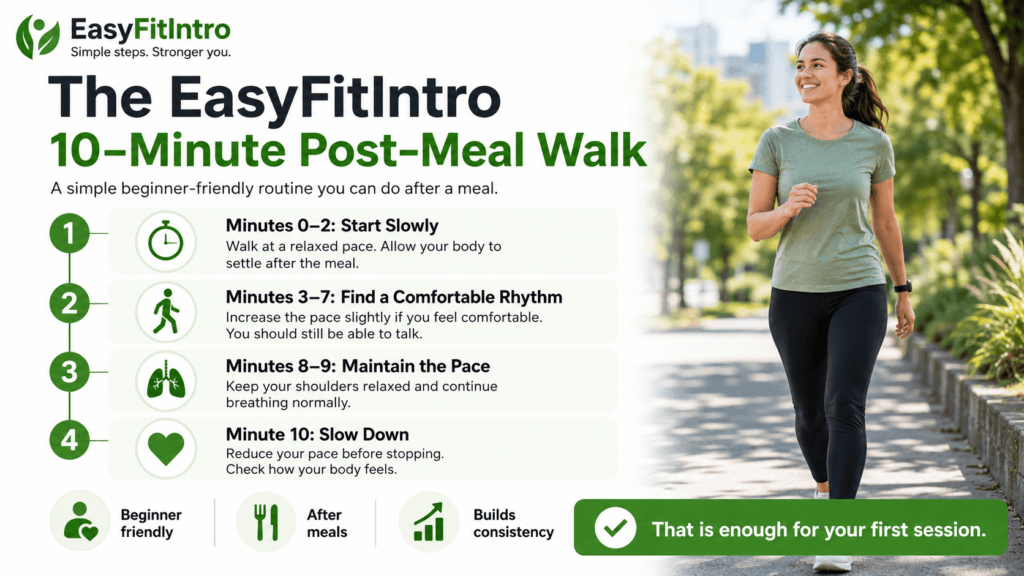
Try this beginner structure.
Minutes 0–2: Start Slowly
Walk at a relaxed pace.
Allow your body to settle after the meal.
Minutes 3–7: Find a Comfortable Rhythm
Increase the pace slightly if you feel comfortable.
You should still be able to talk.
Minutes 8–9: Maintain the Pace
Keep your shoulders relaxed and continue breathing normally.
Minute 10: Slow Down
Reduce your pace before stopping.
Check how your body feels.
That is enough for your first session.
A 7-Day Beginner Walking Plan
Do not begin by forcing yourself to walk after every meal.
Attach the habit to one meal first.
Day 1
Walk for 5–10 minutes after dinner.
Day 2
Repeat the dinner walk.
Notice your energy and cravings afterwards.
Day 3
Walk for 10 minutes after lunch or dinner.
Day 4
Complete one 10-minute walk and reduce one long period of sitting.
Day 5
Walk after two meals if your body feels comfortable.
Day 6
Choose your most realistic meal and repeat the walk.
Day 7
Review:
- How many walks did you complete?
- Which meal was easiest to walk after?
- Did you feel less sluggish?
- Did the walk interrupt evening snacking?
- Can you continue the habit next week?
The aim is not to achieve seven perfect days.
The aim is to discover where the habit fits naturally into your life.
How to Make the Habit Easier
1. Decide Before the Meal
Do not wait until you finish eating to decide whether you will walk.
Tell yourself:
“After dinner, I will walk for 10 minutes.”
2. Keep Your Shoes Ready
Place comfortable shoes where you can see them.
Reduce the number of decisions required.
3. Invite Someone
Walk with:
- Your partner
- A family member
- A colleague
- A neighbour
- Your children
Movement can also become connection time.
4. Use an Existing Route
You do not need to plan a new route every day.
Walk:
- Around your block
- To the end of the street and back
- Around the office building
- Through a nearby shopping area
- Inside your home
5. Set a Small Minimum
Your minimum may be five minutes.
Once you begin, you may choose to continue.
On a difficult day, completing the minimum still protects the habit.
Common Mistakes to Avoid
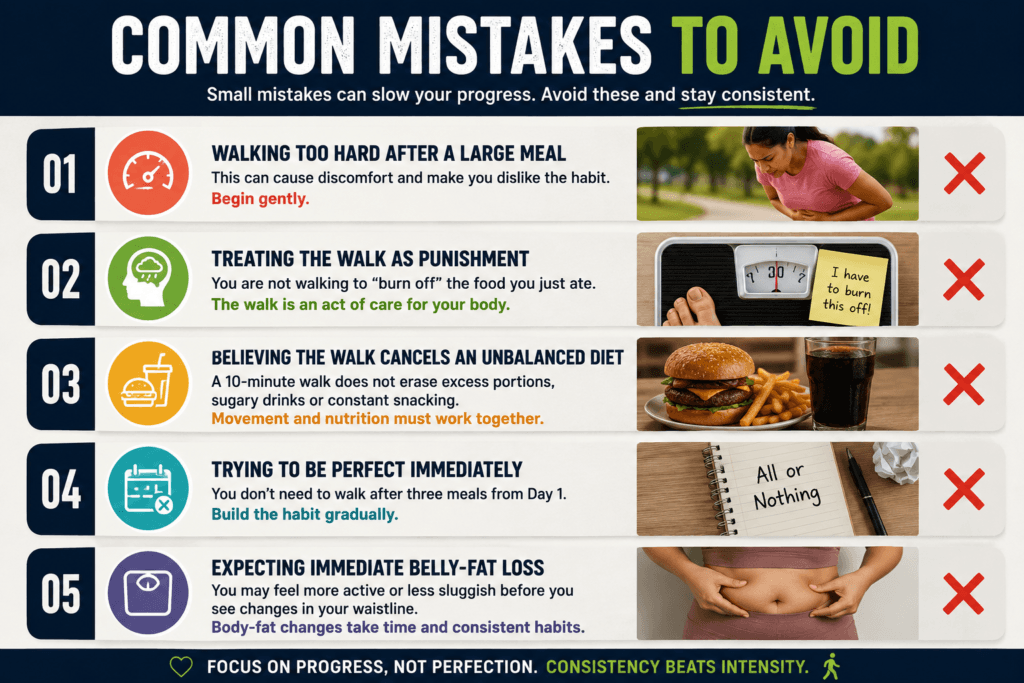
Mistake 1: Walking Too Hard After a Large Meal
This can cause discomfort and make you dislike the habit.
Begin gently.
Mistake 2: Treating the Walk as Punishment
You are not walking to “burn off” the food you just ate.
Food is not something you must earn or repay.
The walk is an act of care for your body.
Mistake 3: Believing the Walk Cancels an Unbalanced Diet
A 10-minute walk does not erase excessive portions, sugary drinks, or constant snacking.
Movement and nutrition must support each other.
Mistake 4: Trying to Be Perfect Immediately
You do not need to walk after three meals from Day 1.
Build the habit gradually.
Mistake 5: Expecting Immediate Belly-Fat Loss
You may feel more active or less sluggish before you see changes in your waistline.
Body-fat changes require time and consistent habits.
Who Should Be Careful?
Most generally healthy adults can begin with gentle walking.
However, speak with an appropriate healthcare professional before changing your activity routine if you:
- Have heart or lung disease
- Experience chest pain, fainting or unexplained shortness of breath
- Have serious joint or mobility problems
- Are recovering from surgery or injury
- Are pregnant and have exercise restrictions
- Have foot ulcers or severe diabetic neuropathy
- Take medication that affects blood glucose
People who use insulin or certain glucose-lowering medications may be at risk of low blood glucose during or after exercise. [5]
Follow your healthcare team’s guidance regarding glucose monitoring, medication, meals, and activity.
Stop walking and seek appropriate medical help if you experience chest pain, severe breathlessness, fainting, or another concerning symptom.
How Post-Meal Walking Fits Into a Complete Belly-Fat Plan
Walking is only one part of the process.
For stronger results, combine it with:
Balanced Meals
Include:
- A clear protein source
- Vegetables or fruit
- A sensible carbohydrate portion
- A small amount of healthy fat where needed
Hydration
Drink water regularly rather than waiting until you are extremely thirsty.
Strength Training
Include beginner resistance exercises when appropriate to support strength and muscle.
Sleep
Poor sleep can make appetite, cravings, and consistency more difficult.
Stress Management
High stress may influence emotional eating, sleep, and food choices.
Craving Awareness
Learn to distinguish physical hunger from boredom, tiredness, stress, and routine.
No single habit does everything.
But a simple habit practiced consistently can strengthen the entire routine.
Frequently Asked Questions
Should I walk after every meal?
Not necessarily.
Begin after one meal and observe how you feel. You can increase the frequency gradually.
Is walking after dinner good for belly fat?
It cannot directly target belly fat. However, it increases daily movement and may support the habits required for overall fat-loss progress.
Can I walk immediately after eating?
Some people feel comfortable beginning soon after a meal. Others need to wait 10–30 minutes. Begin gently and pay attention to digestive comfort.
Is five minutes worth doing?
Yes.
Five minutes is better than remaining inactive when five minutes is what you can manage. You can build from there.
Is walking better than going to the gym?
They serve different purposes.
Walking is accessible and supports aerobic activity. Strength training helps maintain and build muscle. A strong long-term plan can include both.
Will walking stop my cravings?
Not always.
It may interrupt automatic snacking and give you time to assess whether you are physically hungry. Your meals, sleep, stress, and habits still matter.
Can I walk indoors?
Yes.
Walking around your home, marching in place, using a treadmill, or moving through a shopping center can all count.
Final Message
You do not need to wait until you have enough time for a one-hour workout.
Start with the ten minutes available after your meal.
Walk gently.
Clear your mind.
Allow your muscles to work.
Then repeat the habit tomorrow.
One short walk will not transform your body overnight.
But repeated short walks can help transform your routine—and your routine is what eventually transforms your results.
Take the Next Step
If cravings, inconsistent meals, low energy, and stubborn belly fat keep disrupting your progress, the Free EasyFitIntro Belly Fat Reset Workbook can help you identify the habits that need attention.
Inside, you will find practical checklists and beginner-friendly actions covering:
- Balanced meals
- Hydration
- Movement
- Craving control
- Sleep
- Daily consistency
GET YOUR FREE BELLY FAT RESET WORKBOOK
Start with one small action today.
Your ten-minute walk can be the first one.
Research notes for the numbered references
[1] A systematic review and meta-analysis found that post-meal activity had a greater immediate effect on post-meal glucose than exercising before eating or waiting longer after the meal.
[2] A crossover study found that three 10-minute post-meal walks improved post-meal glucose compared with inactivity and produced effects comparable to a single 30-minute walk for some outcomes.
[3] Current adult physical-activity guidance recommends at least 150 minutes of moderate-intensity activity weekly, with strength activity on two days.
[4] A controlled study found that abdominal exercises alone did not significantly reduce abdominal fat or waist circumference, supporting our decision not to promise spot reduction.
[5] Physical activity can lower blood glucose and raise the risk of hypoglycemia in people using insulin or certain glucose-lowering medications.
Join the Conversation
Have you ever tried walking after meals?
Comment below and share:
- Which meal would be easiest for you to walk after?
- Do you struggle more with afternoon cravings or night cravings?
- Would a 10-minute walk feel realistic for your current routine?
Your answer may help another beginner realise they are not alone.