
Introduction
Cravings rarely begin at the exact moment you reach for chocolate, biscuits, chips, or a sugary drink.
They often begin hours earlier.
A poor night’s sleep may leave you tired in the morning. A rushed breakfast may fail to keep you satisfied. A small lunch may lead to an afternoon energy crash. Work stress may increase your desire for comfort food. By evening, you may feel exhausted, extremely hungry, and ready to snack on anything nearby.
That is why controlling cravings is not only about what you do when the craving appears.
It is about how you structure the entire day.
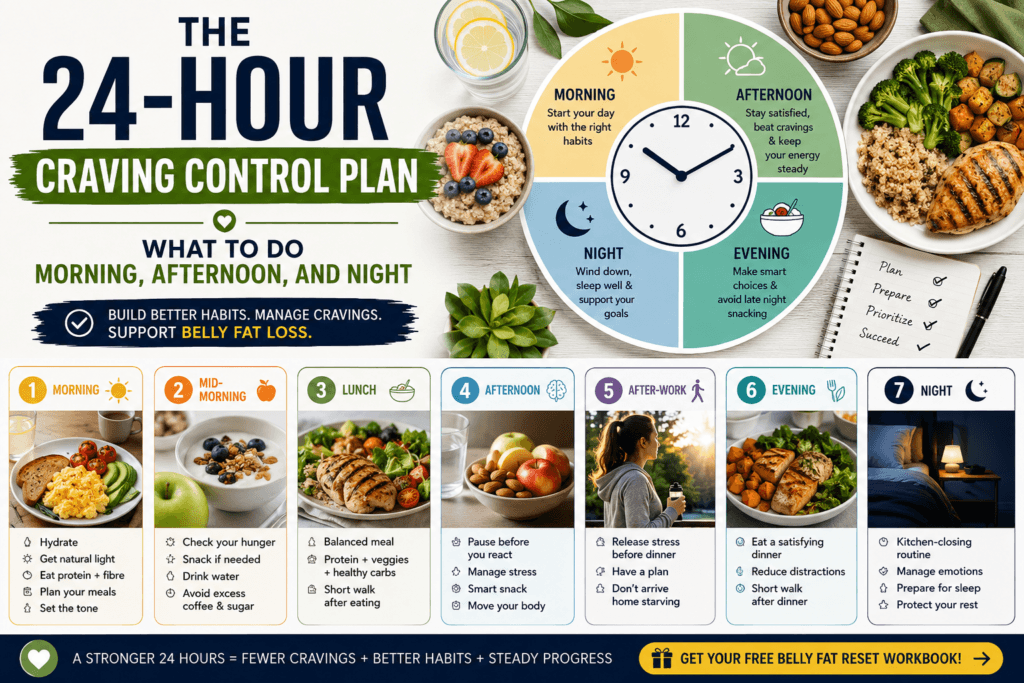
This 24-hour craving control plan will show you how to build a steadier routine from morning until bedtime.
The goal is not to eliminate every craving.
Cravings are normal. You may still want sweet or salty foods even when your routine is strong.
The goal is to reduce the conditions that make cravings feel overwhelming and help you respond with more awareness when they appear.
Why Cravings Need a Full-Day Strategy
Most people fight cravings at the final stage.
They try to resist the biscuit, ignore the chocolate, or force themselves to stay out of the kitchen.
But by that point, several problems may already have built up:
- You slept poorly.
- You started the day dehydrated.
- You relied only on coffee.
- Your meals lacked protein or fiber.
- You waited too long between meals.
- You experienced a stressful day.
- You had no planned snack.
- You arrived home extremely hungry.
- You used food as your only way to relax.
Willpower becomes much less reliable when you are tired, stressed, underfed, and surrounded by tempting food.
A stronger approach is to prevent the craving from becoming so intense.
Think of craving control as a system:
Better sleep → stronger morning → balanced meals → steadier afternoon → calmer evening → better sleep again
Every part supports the next.
Part 1: Your Morning Craving-Control Plan
Your morning does not need to be perfect.
It only needs to give your body a steadier start.
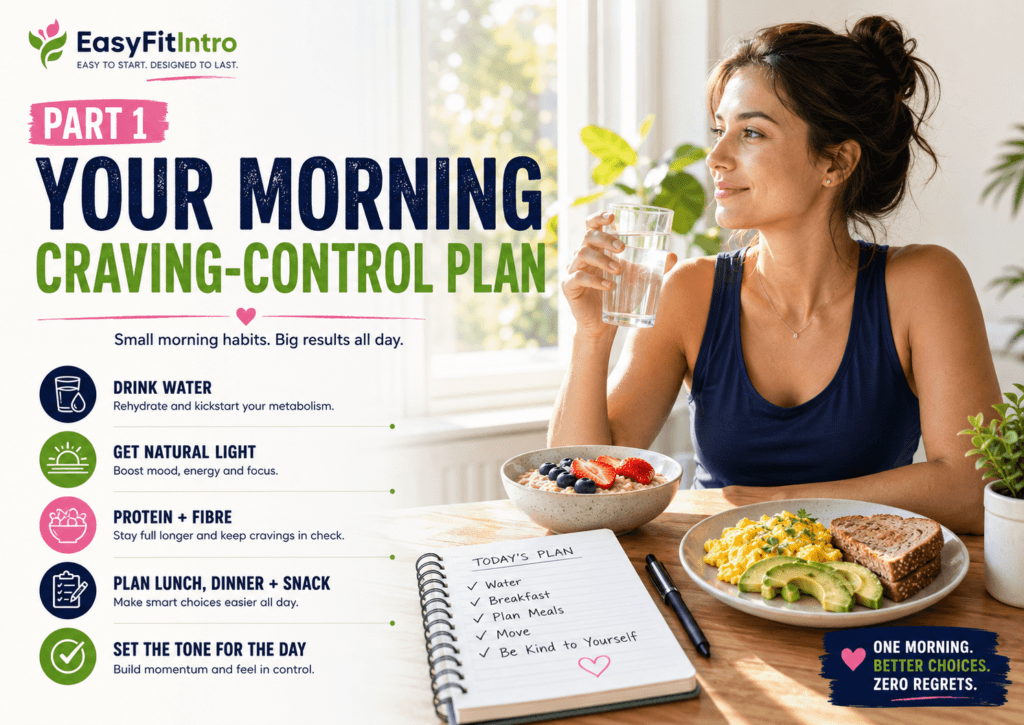
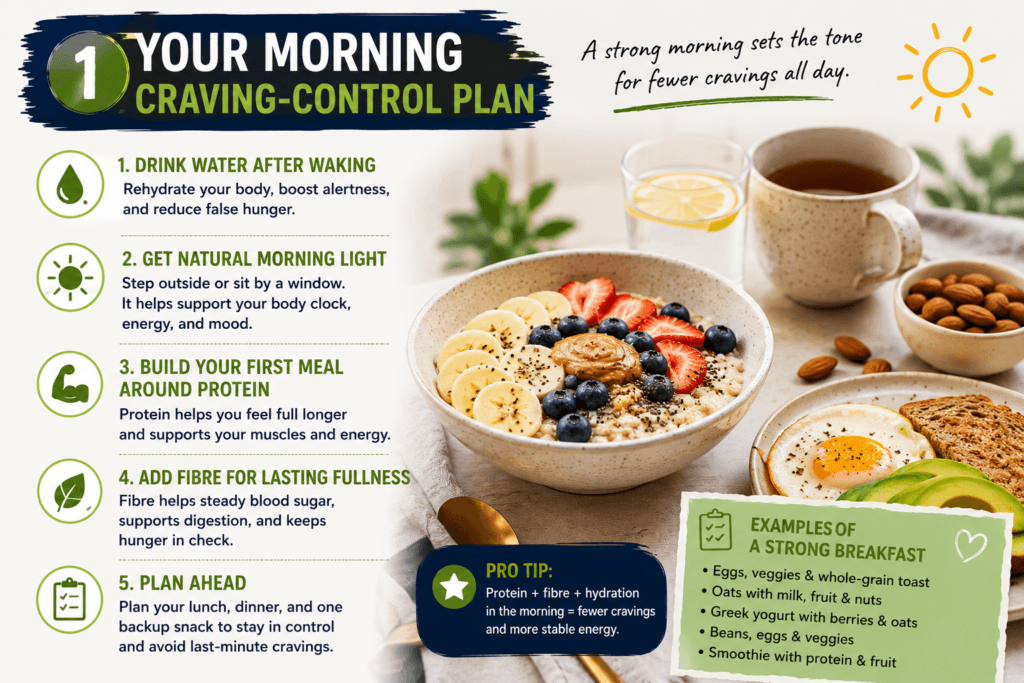
1. Drink Water After Waking
Begin with a glass of water.
Water does not directly burn belly fat or switch off cravings. However, staying hydrated supports normal body function and gives you a moment to assess whether you are thirsty, hungry, or simply tired.
Keep the habit simple:
- Put water beside your bed.
- Drink before your first coffee.
- Carry a refillable bottle.
- Add lemon, cucumber, or mint if preferred.
Do not force excessive amounts of water. One glass is enough to begin.
2. Get Natural Morning Light
Open the curtains, step outside, or take a short morning walk.
Natural light helps your body recognize that the day has begun and supports your sleep-wake rhythm.
A more consistent daily rhythm can help with alertness during the day and sleep preparation at night.
You do not need to stare directly at the sun.
Try:
- Five minutes outside
- A short walk
- Drinking water near an open window
- Sitting outdoors while planning the day
Even cloudy outdoor light is usually much brighter than ordinary indoor lighting.
3. Build Your First Meal Around Protein
When you eat your first meal, include a clear protein source.
Protein can help a meal feel more satisfying and supports muscle maintenance, recovery, and general nutrition.
Practical options include:
- Eggs
- Greek yogurt
- Maas
- Cottage cheese
- Beans
- Lentils
- Tuna
- Chicken
- Milk
- Pilchards
- Peanut butter combined with another protein source
You do not have to eat immediately after waking if you are not hungry.
The important point is to avoid reaching midday after surviving only on sweetened coffee or sugary snacks.
Protein-Rich Breakfast Examples
- Eggs, vegetables, and whole-grain toast
- Oats with milk and peanut butter
- Greek yogurt with fruit and oats
- Beans with eggs and vegetables
- Tuna on whole-grain toast
- Leftover chicken with vegetables
Read next: Not Getting Enough Protein? Why Belly Fat and Cravings Feel Harder to Control
4. Add Fibre to Your Morning Meal
Protein works well alongside fiber.
Fiber supports digestion and can help meals feel more filling.
Good morning sources include the following:
- Oats
- Fruit
- Vegetables
- Beans
- Lentils
- Whole-grain bread
- Nuts
- Seeds
Use this simple formula:
Protein + fibre-rich carbohydrate + fruit or vegetables + water
For example:
- Eggs, toast, and tomato
- Yogurt, oats, and berries
- Oats, milk, peanut butter, and banana
- Beans, vegetables, and a small starch portion
The goal is not to eliminate carbohydrates. It is to combine foods in a way that gives you longer-lasting satisfaction.
5. Plan Lunch, Dinner, and One Backup Snack
Planning reduces the number of decisions you must make while hungry.
Before the day becomes busy, answer three questions:
- What will I eat for lunch?
- What will I eat for dinner?
- What will I eat if I become hungry between meals?
Your plan may look like this:
Lunch: Chicken, rice, and vegetables
Snack: Yogurt and fruit
Dinner: Beans, potatoes, and salad
Or:
Lunch: Tuna sandwich and salad
Snack: Boiled eggs and an apple
Dinner: Chicken stew with vegetables
The meals do not need to be impressive.
They need to be available.
Read next: 7 Morning Habits That Reduce Cravings and Support Belly Fat Loss
Part 2: Your Mid-Morning Plan
The hours between breakfast and lunch can reveal whether your morning routine is supporting you.
Check Your Hunger Instead of Following the Clock Automatically
Ask:
- Is my stomach empty?
- Is my energy dropping?
- Would several foods sound acceptable?
- Am I thirsty?
- Am I bored?
- Did I eat enough at breakfast?
If you are genuinely hungry, eat a balanced snack.
Do not try to suppress physical hunger with endless coffee or water.
Mid-Morning Snack Options
- Fruit and nuts
- Yogurt
- Boiled eggs
- Peanut butter on whole-grain toast
- Maas and fruit
- Cottage cheese and fruit
- Tuna with whole-grain crackers
If you are not hungry, there is no need to snack simply because a certain time has arrived.
Use Coffee Carefully
Coffee can fit into a healthy routine.
The problem begins when it replaces water, food, or sleep.
Be mindful of:
- Large amounts of added sugar
- Flavoured syrups
- Energy drinks
- Using several coffees to cover exhaustion
- Drinking caffeine late enough to affect sleep
Try drinking water first and ask whether you need caffeine, food, movement, or rest.
Part 3: Your Lunchtime Craving-Control Plan
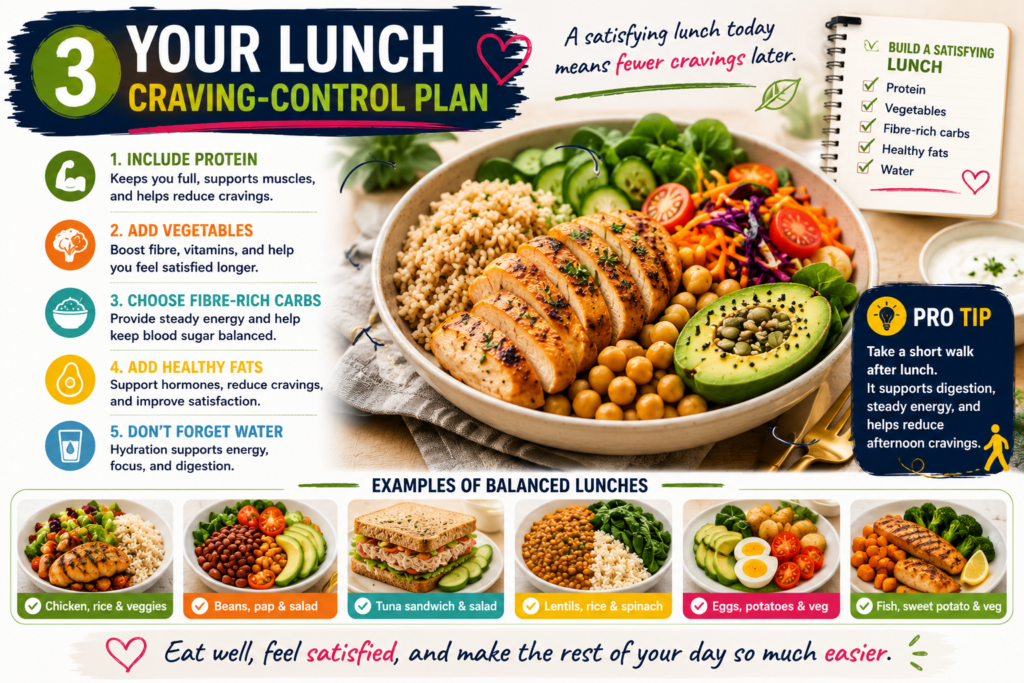
Lunch should help you reach the afternoon with stable energy—not leave you searching for sugar an hour later.
Build a Satisfying Lunch
Use this meal formula:
Protein + vegetables + fibre-rich carbohydrates + healthy fats
Protein
- Chicken
- Fish
- Eggs
- Beans
- Lentils
- Tuna
- Lean meat
- Tofu
Vegetables
- Spinach
- Cabbage
- Carrots
- Tomatoes
- Broccoli
- Mixed vegetables
- Salad
Fibre-Rich Carbohydrates
- Brown or white rice in a suitable portion
- Potatoes
- Sweet potatoes
- Beans
- Lentils
- Whole-grain bread
- Pap combined with protein and vegetables
Healthy Fats
- Avocado
- Nuts
- Seeds
- Peanut butter
- Olive or canola oil in sensible amounts
You do not need every meal to be perfectly measured.
The goal is to include enough food to feel satisfied without becoming uncomfortably full.
Practical Lunch Examples
- Chicken, rice, and vegetables
- Beans, pap, and spinach
- Tuna sandwich with salad
- Eggs, potatoes, and vegetables
- Lentil curry with rice
- Leftover stew with vegetables
Read next: The Simple Meal Formula That Helps Reduce Cravings and Belly Fat Struggles
Avoid the Tiny-Lunch Trap
A piece of fruit, coffee, or a small salad without protein may not be enough to carry you through a long afternoon.
Eating less at lunch does not automatically mean better fat loss.
If the small lunch causes you to buy sweets, drink sugary coffee, snack continuously, and overeat at night, it has not supported your goals.
A satisfying meal can make the rest of the day easier to manage.
Take a Short Walk After Eating
When practical, walk for five to ten minutes after lunch.
A short walk may:
- Interrupt prolonged sitting
- Support digestion
- Help manage the post-meal glucose response
- Improve alertness
- Give you a mental break
The walk does not need to be intense.
Walk around the building, outside, through the office, or as part of your return journey.
Part 4: Your Afternoon Craving-Control Plan
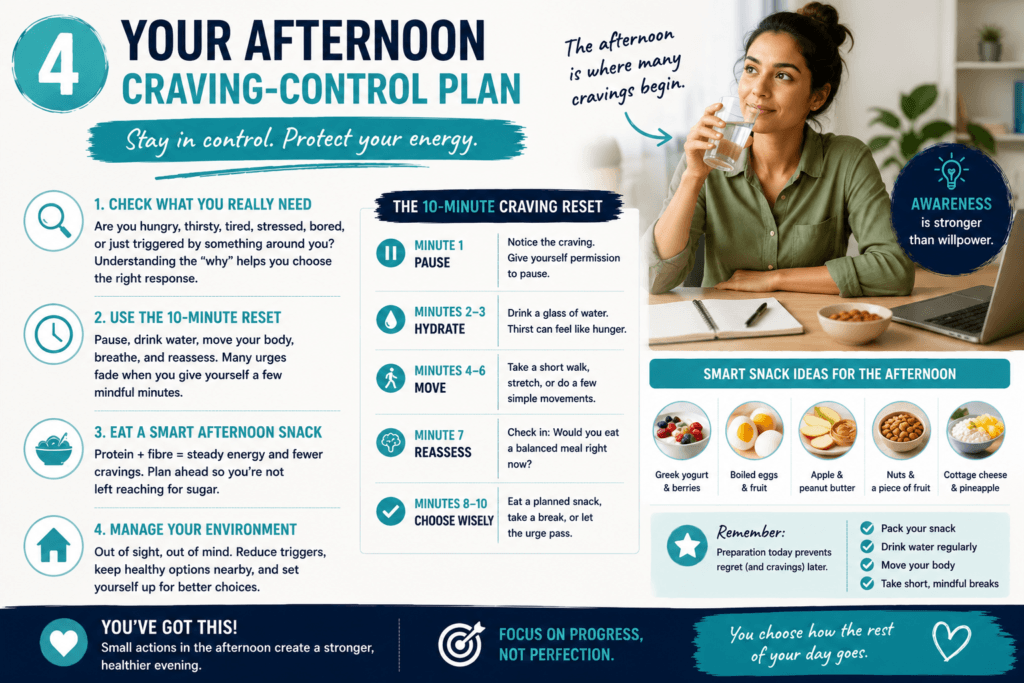
The afternoon is where many routines begin to fall apart.
Energy drops, stress accumulates, and convenient sweet foods become more tempting.
First, Identify What You Actually Need
When a craving appears, do not immediately label yourself as undisciplined.
Ask:
- Am I physically hungry?
- Did lunch contain enough protein?
- How long has it been since I ate?
- Am I thirsty?
- Am I tired?
- Am I stressed?
- Did seeing or smelling food trigger this?
- Do I need a break rather than food?
Physical hunger and emotional hunger can overlap.
You may need nourishment and stress relief at the same time.
Read next: Emotional Hunger vs Physical Hunger: 7 Signs to Know What Your Body Really Needs
Use the 10-Minute Craving Reset
Minute 1: Pause
Name what you are experiencing:
- Hunger
- Tiredness
- Stress
- Boredom
- Thirst
- Frustration
Minutes 2–3: Drink Water
Have a glass of water, but do not use water to suppress genuine hunger.
Minutes 4–6: Move
Walk, stretch, or step outside.
Minute 7: Reassess
Ask whether you would eat a balanced snack.
If several foods sound acceptable, you may be physically hungry.
Minutes 8–10: Choose Deliberately
Choose one response:
- Eat your planned snack.
- Take a proper break.
- Have a sensible portion of the sweet food.
- Continue without eating if the urge has passed.
The goal is not to avoid food at all costs.
The goal is to prevent an automatic reaction.
Eat a Planned Afternoon Snack When Needed
A planned snack can stop moderate hunger from turning into an evening food emergency.
Choose protein, fiber, or both.
Affordable Snack Ideas
- Boiled eggs and fruit
- Banana with peanut butter
- Apple and peanuts
- Maas
- Plain yogurt
- Popcorn in a sensible portion
- Tuna with whole-grain bread
- Oats
- Pilchards on toast
- Leftover chicken
- Fruit and nuts
Pack the snack in the morning.
Preparation is stronger than willpower when hunger becomes intense.
Read next: Why You Crave Sugar in the Afternoon: 7 Hidden Causes and What to Do Instead
Change Your Food Environment
Your surroundings can trigger eating even when physical hunger is low.
Common cues include:
- Biscuits on the desk
- Sweets near the checkout
- Food advertisements
- A daily trip past the bakery
- Snacks while scrolling
- Tea automatically paired with biscuits
Make the supportive choice easier:
- Keep water visible.
- Store sweets out of sight.
- Bring a balanced snack.
- Change your route past a trigger shop.
- Avoid shopping while extremely hungry.
- Eat from a plate rather than a large packet.
You do not need unlimited willpower.
You need a better environment.
Part 5: Your After-Work Transition
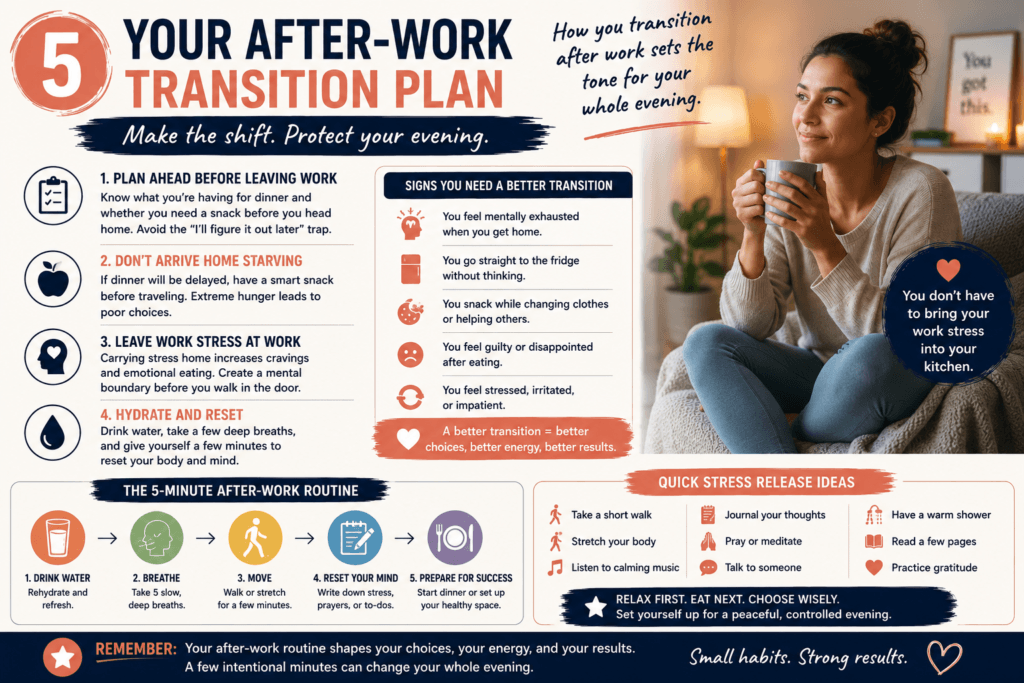
The period between work and dinner can be dangerous for cravings.
You may arrive home mentally exhausted, hungry, and ready to eat whatever is immediately available.
Create a short transition routine.
Do Not Walk Into the Evening Unprepared
Before leaving work or starting the journey home, ask:
- What am I eating for dinner?
- Do I need a planned snack before traveling?
- Am I extremely hungry?
- Am I carrying stress into the house?
If dinner will be delayed, eat a balanced snack instead of waiting until you become desperate.
Create a Five-Minute Stress Release
Before entering the kitchen:
- Change clothes.
- Drink water.
- Take five slow breaths.
- Walk briefly.
- Stretch.
- Sit quietly.
- Pray or meditate.
- Write down the main stress from the day.
This creates a boundary between work stress and evening eating.
Food should not have to carry the full emotional weight of your day.
Part 6: Your Dinner Craving-Control Plan
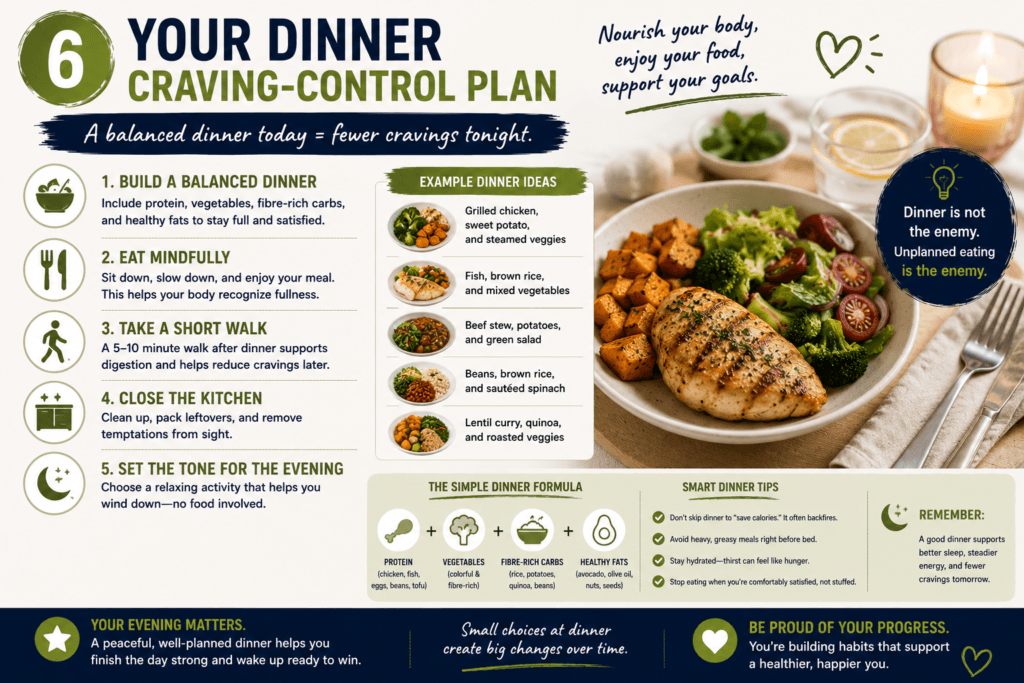
Dinner should satisfy your body and support a calmer evening.
Build a Balanced Dinner
Use the same simple formula:
Protein + vegetables + fibre-rich carbohydrates + healthy fats
Examples:
- Chicken, potatoes, and vegetables
- Eggs with vegetables and avocado
- Beans, rice, and salad
- Fish, pap, and spinach
- Lentils, vegetables, and rice
- Beef stew with vegetables and potatoes
Do not make dinner so small that you begin searching for snacks immediately afterward.
At the same time, avoid eating until you are painfully full.
Aim for comfortable satisfaction.
Eat With Fewer Distractions
When possible:
- Sit down.
- Put the food on a plate.
- Reduce phone scrolling.
- Eat more slowly.
- Notice when your hunger begins to settle.
You do not need to eat in complete silence.
The point is to stay aware enough to notice the meal.
Take a Short Walk After Dinner
A gentle walk can help you move from eating into the evening without immediately beginning another snack cycle.
Even five to ten minutes can become a useful routine.
Use the walk to:
- Talk with family
- Clear your mind
- Support digestion
- Reduce stress
- Signal that dinner is complete
Part 7: Your Night-Time Craving-Control Plan
Night cravings are often the result of the entire day.
They may come from genuine hunger, poor sleep, stress, boredom, habit, or eating too little earlier.
Ask Whether You Are Hungry or Seeking Relief
Use the proper-meal test:
Would I eat eggs, yogurt, beans, chicken, oats, or a normal meal?
If yes, physical hunger may be present.
If only chocolate, biscuits, or chips sound acceptable, the urge may be more connected to emotion, reward, or habit.
This is not a perfect test.
You can be physically hungry and still prefer a specific food. Use it as one clue—not a strict rule.
Create a Kitchen-Closing Routine
After dinner:
- Pack leftovers.
- Clean the kitchen.
- Prepare tomorrow’s breakfast or lunch.
- Fill your water bottle.
- Turn off unnecessary kitchen lights.
- Move into a calming evening activity.
The routine signals that the eating part of the day is ending.
It also reduces the number of times you stand near food while bored.
Choose a Better Response to Emotional Hunger
When the need is emotional, try addressing the emotion directly.
If You Are Stressed
- Breathe slowly.
- Stretch.
- Journal.
- Pray or meditate.
- Take a warm shower.
If You Are Bored
- Read.
- Tidy one small area.
- Listen to music.
- Prepare for tomorrow.
- Work on a relaxing hobby.
If You Are Lonely
- Call someone.
- Send a message.
- Spend time with family.
- Plan a social activity.
If You Are Tired
- Stop scrolling.
- Prepare for sleep.
- Reduce unnecessary tasks.
- Go to bed earlier.
Food may provide temporary comfort, but it cannot completely resolve the deeper need.
What to Eat If You Are Truly Hungry at Night
Do not punish yourself for genuine hunger.
Choose something satisfying and moderate.
Options include:
- Greek yogurt
- Maas
- Boiled eggs
- Cottage cheese
- A small bowl of oats
- Peanut butter on whole-grain toast
- Tuna with cucumber
- Fruit and nuts
- A small balanced leftover portion
Eat deliberately rather than directly from a large packet.
Read next: Late-Night Snacking and Belly Fat: Why Cravings Get Worse After Dinner
Part 8: Protect Your Sleep
A strong craving-control day ends with sleep preparation.
Poor sleep can increase fatigue and make quick-energy foods more appealing the following day.
Most adults should generally aim for at least seven hours of sleep, although individual needs vary.
Build a Simple Wind-Down Routine
Try:
- Reduce bright screens before bed.
- Keep caffeine earlier in the day.
- Avoid a very heavy meal immediately before lying down.
- Dim the lights.
- Prepare clothes and meals for tomorrow.
- Stretch, pray, journal, or breathe.
- Keep a reasonably consistent bedtime.
The goal is not a perfect sleep ritual.
It is to stop the day from running at full speed until the moment your head touches the pillow.
Read next: Poor Sleep and Belly Fat: Why Cravings Feel Harder to Control When You’re Tired
Your Complete 24-Hour Craving Control Checklist
Morning
- Drink water.
- Get natural light.
- Include protein in your first meal.
- Add fiber.
- Plan lunch, dinner, and one snack.
Mid-Morning
- Check whether hunger is physical.
- Eat a balanced snack if needed.
- Avoid replacing food and sleep with coffee.
Lunch
- Eat a satisfying balanced meal.
- Include protein and vegetables.
- Take a short walk when possible.
Afternoon
- Pause before reacting to cravings.
- Drink water.
- Move briefly.
- Eat your planned snack if hungry.
- Identify stress and environmental triggers.
After Work
- Release stress before entering the kitchen.
- Confirm the dinner plan.
- Avoid arriving home extremely hungry.
Dinner
- Eat a balanced meal.
- Reduce distractions.
- Walk briefly afterward.
Night
- Check whether the urge is hunger, stress, boredom, or tiredness.
- Close the kitchen.
- Choose a calming replacement activity.
- Eat a sensible snack if genuinely hungry.
Bedtime
- Reduce screens.
- Prepare for tomorrow.
- Protect enough time for sleep.
A Realistic Example Day
6:00 AM
Wake, drink water, and open the curtains.
6:15 AM
Take a short walk or complete light movement.
6:45 AM
Eat eggs, vegetables, and whole-grain toast.
10:00 AM
Have yogurt and fruit if physically hungry.
1:00 PM
Eat chicken, rice, and vegetables.
1:15 PM
Walk for ten minutes.
3:30 PM
Use the craving check. Eat fruit and nuts if hungry.
6:30 PM
Eat beans, potatoes, and salad.
6:50 PM
Take a gentle walk.
8:00 PM
Close the kitchen and prepare tomorrow’s lunch.
9:00 PM
Reduce screens, stretch, and begin winding down.
10:00 PM
Sleep.
Your schedule may look completely different.
Adjust the timing to your work, family, transport, training, and responsibilities.
Focus on the order and structure—not copying exact times.
Common Mistakes That Keep Cravings Strong
1. Trying to Survive on Willpower
Improve the system instead of demanding perfect discipline.
2. Skipping Meals After Overeating
Return to normal balanced eating at the next meal.
3. Eating Too Little During the Day
Under-eating can make evening cravings much harder to manage.
4. Treating Every Craving as Physical Hunger
Sometimes the real need is rest, comfort, movement, or connection.
5. Treating Every Craving as Emotional
Sometimes your body genuinely needs food.
6. Keeping Trigger Foods Constantly Visible
Change the environment before testing your willpower.
7. Using Coffee to Replace Sleep
Caffeine can reduce the feeling of tiredness temporarily, but it does not restore your body.
8. Expecting to Never Want Sweet Food Again
Craving control means making conscious choices—not becoming a person who never enjoys food.
How This Plan Supports Belly Fat Loss
This plan does not directly target belly fat.
You cannot choose exactly where your body loses fat first.
However, the plan can support fat loss by helping you:
- Reduce unplanned snacking
- Build more satisfying meals
- Manage emotional eating
- Move more consistently
- Protect sleep
- Reduce extreme hunger
- Maintain a reasonable calorie deficit
- Stay consistent for longer
Belly fat loss is influenced by overall energy balance, genetics, age, sex, hormones, sleep, stress, activity, alcohol intake, and medical factors.
The value of this plan is that it makes the behaviors supporting fat loss easier to repeat.
Start With Three Actions
Do not try to perfect the entire 24-hour plan tomorrow.
Begin with:
- Include protein in your first meal.
- Pack one balanced afternoon snack.
- Create a kitchen-closing routine after dinner.
Practice these for seven days.
Then add water, morning light, short walks, meal planning, and better sleep preparation.
Small habits become powerful when they are repeated.
Related EasyFitIntro Guides
Continue building your full craving-control system with these guides:
- 7 Morning Habits That Reduce Cravings and Support Belly Fat Loss
- The Simple Meal Formula That Helps Reduce Cravings and Belly Fat Struggles
- Not Getting Enough Protein? Why Belly Fat and Cravings Feel Harder to Control
- Why You Crave Sugar in the Afternoon: 7 Hidden Causes and What to Do Instead
- Emotional Hunger vs Physical Hunger: 7 Signs to Know the Difference
- Poor Sleep and Belly Fat: Why Cravings Feel Harder to Control When You’re Tired
- Late-Night Snacking and Belly Fat: Why Cravings Get Worse After Dinner
The Bottom Line
Craving control is not one decision.
It is the result of what happens across the whole day.
Your morning affects your afternoon.
Your afternoon affects your evening.
Your evening affects your sleep.
Your sleep affects tomorrow.
A strong 24-hour plan includes the following:
- Water
- Natural light
- Protein
- Fibre
- Balanced meals
- Planned snacks
- Short walks
- Stress management
- Environmental changes
- Better sleep preparation
You will not follow the plan perfectly every day.
That is not required.
The goal is to build enough structure that one difficult moment does not control the rest of the day.
When a craving appears, pause and ask:
Am I hungry?
Am I tired?
Am I stressed?
What does my body actually need?
Then choose the response that supports you best.
That is how you move from reacting to cravings to managing them with awareness.
Free Belly Fat Reset Workbook
Want to turn this 24-hour plan into a simple routine you can follow every day?
Download the free Belly Fat Reset Workbook from EasyFitIntro.
It includes beginner-friendly checklists and practical steps for the following:
- Balanced meals
- Craving control
- Movement
- Better sleep
- Stress management
- Daily consistency
Get My Free Belly Fat Reset workbook
Frequently Asked Questions
Can I completely stop food cravings?
Probably not, and you do not need to. Cravings are normal. The goal is to reduce their intensity and respond more deliberately.
What is the best breakfast for controlling cravings?
A useful breakfast includes protein, fiber, and a suitable carbohydrate source. Eggs with vegetables and toast or yogurt with oats and fruit are practical examples.
Should I snack between meals?
Snack when it helps manage genuine hunger between meals. You do not have to snack when you feel satisfied.
What should I eat when I crave sugar in the afternoon?
Try a snack combining protein and fiber, such as yogurt and fruit, eggs and an apple, or nuts and fruit. You may also choose a moderate portion of the sweet food deliberately.
Does drinking water stop cravings?
Water may help when thirst is contributing to the urge, but it should not be used to suppress genuine hunger.
Can poor sleep make cravings worse?
Poor sleep can increase tiredness and make quick-energy, highly rewarding foods more appealing. Protecting sleep is therefore part of the craving-control system.
Is emotional eating always bad?
No. Eating for comfort occasionally is normal. It becomes a concern when food is your main coping strategy or causes repeated distress and loss of control.
Can short walks help with cravings?
Walking can interrupt automatic snacking, reduce stress, and support the post-meal glucose response. It is one useful tool, not a complete treatment.
Will this plan remove belly fat?
No plan can guarantee targeted belly fat loss. The routine supports the eating, activity, sleep, and stress habits that can make overall fat loss more sustainable.
How quickly should I expect results?
Focus first on changes in hunger, energy, planning, and consistency. Body-composition changes require time and depend on your total food intake, activity, sleep, health, and starting point.
Medical Note
This article provides general educational information and is not a substitute for personalized medical or nutritional advice.
Speak with a qualified healthcare professional if you experience:
- Persistent excessive hunger
- Unexplained weight changes
- Faintness, shaking, sweating, or confusion
- Excessive thirst or frequent urination
- Repeated loss-of-control eating
- Severe guilt or anxiety around food
- Vomiting, fasting, or excessive exercise to compensate for eating
- Symptoms that may be related to diabetes or another medical condition
People who are pregnant, breastfeeding, managing diabetes, taking glucose-lowering medication, or living with an eating disorder may need individual guidance on meal timing, snacks, exercise, and carbohydrate intake.
Source guidance
Adults generally need at least seven hours of sleep, and insufficient sleep can affect health, energy, and daily behavior. The article therefore treats sleep as part of the craving-control system rather than presenting it as a stand-alone fat-loss treatment.
Controlled breakfast studies suggest that higher-protein breakfasts can improve short-term fullness in some groups, although they do not consistently reduce total daily calorie intake. That is why the article says protein can help meals feel more satisfying, rather than promising that it eliminates cravings.
A systematic review and meta-analysis found that activity performed after eating—particularly walking soon after a meal—reduced acute post-meal glucose rises compared with inactivity or exercise performed before eating. This supports the short-walk recommendation without claiming that walking directly removes belly fat.
Research shows that stress can influence food reward, cravings, eating behavior, and preference for highly palatable foods, although people do not all respond to stress in the same way.