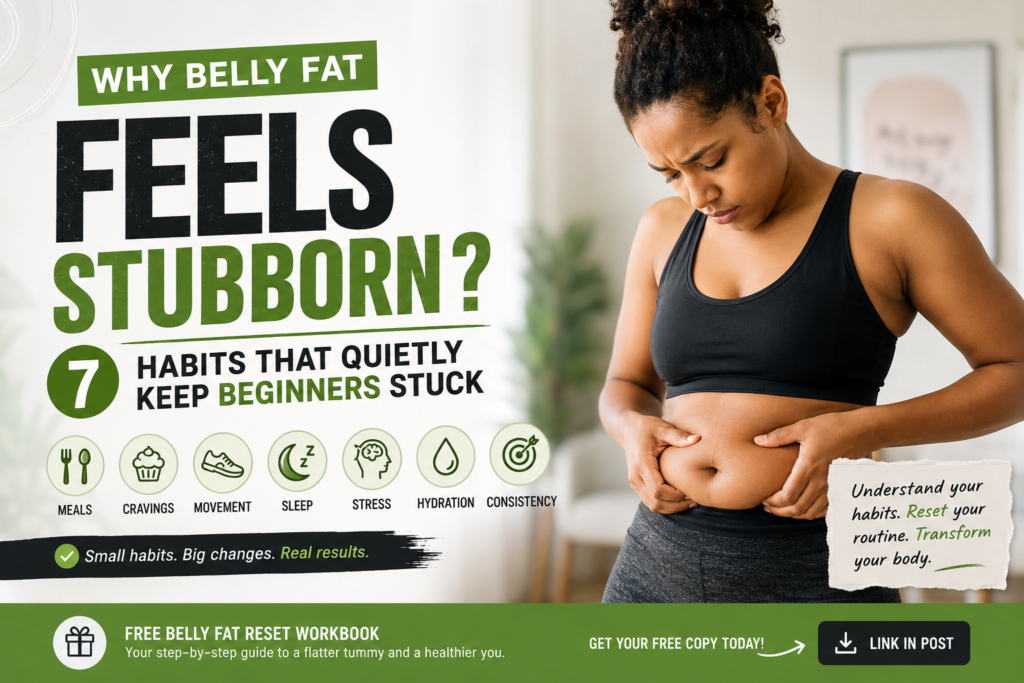
Belly fat can feel personal.
You try to eat better.
You start exercising.
You drink more water.
You promise yourself that this week will be different.
But after a few days, the routine breaks again. Cravings return. The scale barely moves. Your waistline feels the same. Then frustration starts speaking louder than discipline.
If this sounds familiar, pause before blaming yourself.
Belly fat is rarely a one-problem issue.
It is usually connected to a full system of habits: meals, cravings, movement, sleep, stress, hydration and consistency. Healthy weight management is supported by healthy eating patterns, regular physical activity, enough sleep and stress management. [1]
That means your progress may be stuck not because you are lazy, but because several small habits are quietly working against each other.
Let’s break down seven habits that can make belly fat feel stubborn for beginners—and what to fix first.
Why Belly Fat Feels So Difficult to Lose
Many people want a single answer.
They ask:
“What food burns belly fat?”
Or:
“Which workout removes stomach fat?”
But the body does not work that simply.
You cannot choose exactly where your body burns fat first. Doing stomach exercises can strengthen your core, but it does not guarantee fat loss only from your belly. One controlled study found that six weeks of abdominal exercise improved abdominal muscle endurance but did not significantly reduce abdominal fat or waist circumference. [2]
This does not mean exercise is useless.
It means belly-fat progress usually requires a bigger system.
That system includes:
- Better meals
- More daily movement
- Less sitting
- Improved sleep
- Stress management
- Craving control
- Better hydration
- Consistency over time
If one part of the system keeps breaking, belly fat can feel stubborn even when you are trying hard.
Habit 1: You Eat Less, But Your Meals Do Not Keep You Satisfied
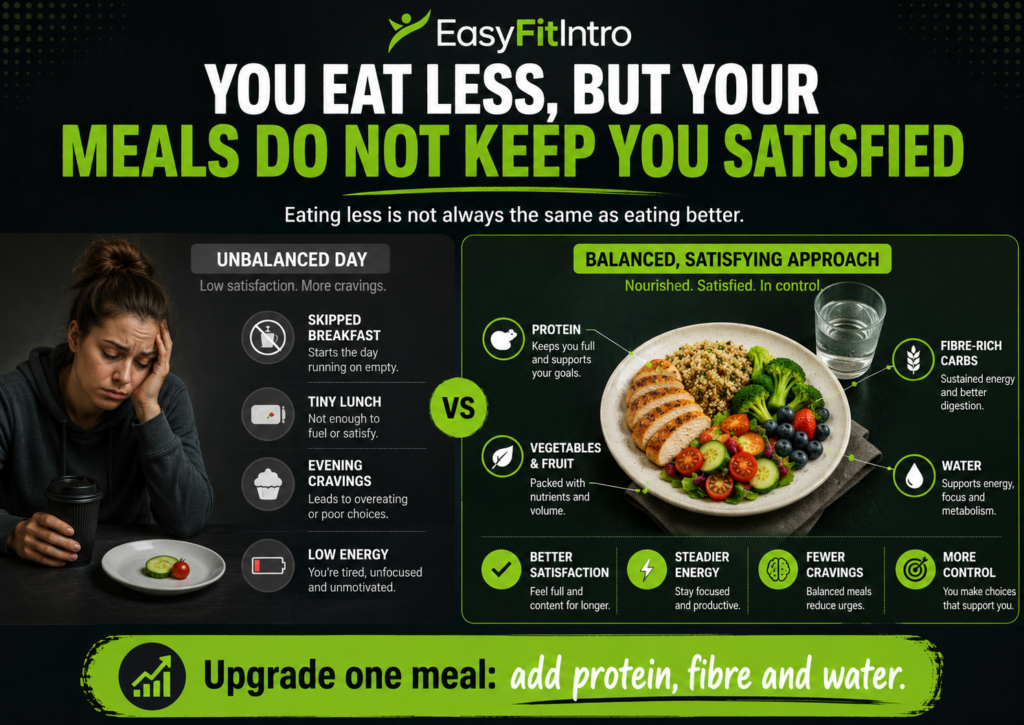
Many beginners believe the fastest way to lose belly fat is simply to eat less.
So they skip breakfast.
They drink coffee and push through hunger.
They eat a very small lunch.
They avoid proper meals because they think eating less means they are doing better.
But by evening, they are tired, hungry and vulnerable to cravings.
This creates a cycle:
Under-eat during the day → lose control later → feel guilty → restart tomorrow.
The problem is not always the amount of food. Sometimes the problem is meal quality.
A small meal with little protein, little fibre and very little volume may not keep you satisfied for long.
Protein can help increase fullness, and fibre-rich foods can support appetite regulation and digestive health. [3]
That is why a better meal should help you feel satisfied and stable for longer.
What a better beginner meal can include
A helpful meal may contain:
- A clear protein source
- Vegetables or fruit
- A fibre-rich carbohydrate
- Water
- A realistic portion size
Examples:
Breakfast option:
Eggs with wholegrain toast and tomato.
Lunch option:
Chicken, rice and mixed vegetables.
Budget option:
Beans, pap and cabbage.
Quick option:
Plain yoghurt or maas with oats and fruit.
You do not need to starve your body to make progress.
You need meals that support control.
Beginner Fix
Upgrade one meal today.
Do not start by removing everything.
Start by adding:
- Protein
- Fibre
- Water
- A better structure
Ask yourself:
“Will this meal help me stay satisfied, or will it leave me hunting for snacks later?”
Habit 2: You Fight Cravings When It Is Already Too Late
Most people try to fight cravings at the hardest time of the day.
They wait until the craving is already strong.
They are tired.
They are stressed.
They are sitting with their phone or watching TV.
Then the craving arrives and they try to use willpower.
But cravings are often created earlier in the day.
Ask yourself:
- Did I skip a meal?
- Did I drink enough water?
- Did I eat enough protein?
- Did I sleep badly?
- Did I go too long without eating?
- Am I physically hungry, or am I tired, bored or stressed?
Emotional eating can happen when food is used to cope with difficult emotions instead of physical hunger. [4]
That does not mean you are weak.
It means the craving may be sending a message.
Sometimes the message is hunger.
Sometimes it is tiredness.
Sometimes it is stress.
Sometimes it is boredom.
Sometimes it is habit.
Example
You finish dinner.
You sit down to watch TV.
You start scrolling.
Suddenly you want something sweet.
Before eating, ask:
- Am I physically hungry?
- Did I eat enough dinner?
- Am I tired?
- Is this just my normal TV-snacking habit?
- Would water, tea or a short walk help me pause first?
You may still choose to eat something.
But now the choice is more conscious.
Beginner Fix
Before eating an unplanned snack, pause for 60 seconds and ask:
“What triggered this?”
Then choose one response:
- Drink water first
- Take a short walk
- Eat a planned snack
- Wait five minutes
- Move away from the kitchen
- Write down what you are feeling
- Choose a smaller portion and eat it slowly
The goal is not to win every craving.
The goal is to stop reacting automatically.
Habit 3: You Exercise Randomly Instead of Moving Consistently
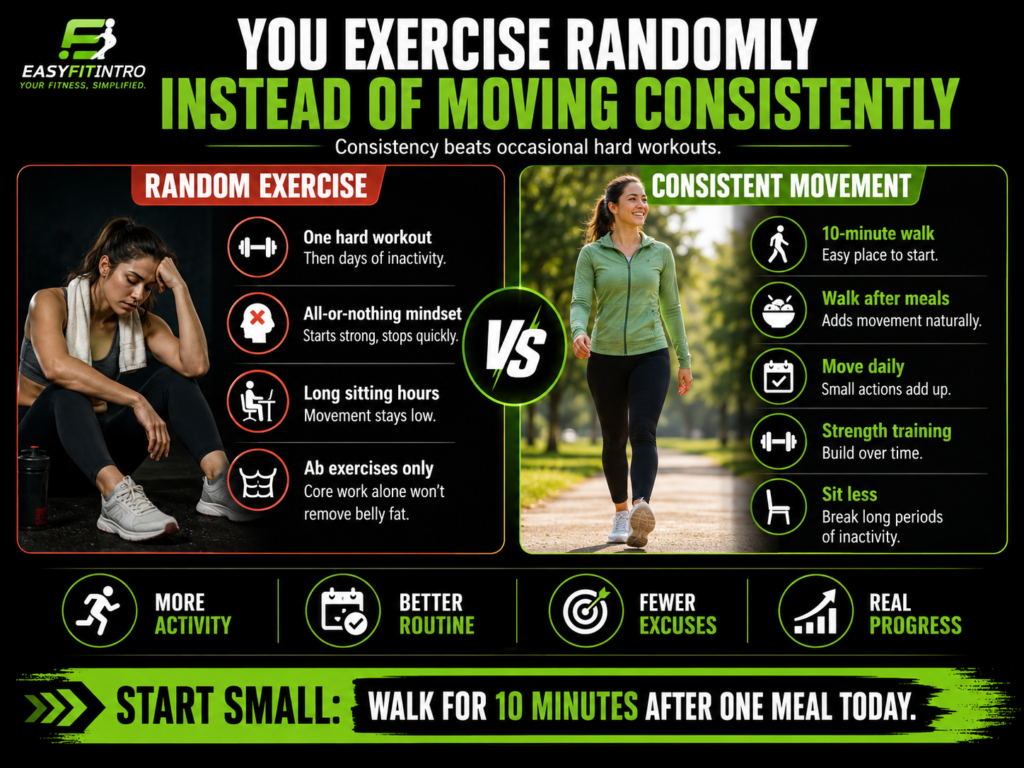
Exercise is important, but random exercise rarely beats daily consistency.
Some people do one hard workout, then sit for most of the week.
Others only exercise when they feel guilty.
Some focus only on stomach exercises, hoping belly fat will disappear from that area.
But belly-fat progress needs more than occasional punishment workouts.
Adults are generally encouraged to aim for at least 150 minutes of moderate-intensity physical activity per week, plus muscle-strengthening activity on two days. [5]
That does not mean a beginner must start with a complicated gym plan.
It means movement should become part of the weekly routine.
What counts as beginner-friendly movement?
You can start with:
- A 10-minute walk after dinner
- Walking during lunch break
- Marching in place at home
- Taking the stairs when realistic
- Light bodyweight exercises
- Standing and stretching during long sitting periods
- Weekend walks
- Cleaning or household movement
- Short walking sessions after meals
A short walk after eating may also help reduce the rise in blood sugar after meals compared with staying inactive. [6]
That can be useful because it turns movement into a natural part of your eating routine.
Beginner Fix
Start with one 10-minute walk after a meal.
Do not overcomplicate it.
Try this:
- Finish dinner.
- Drink water.
- Walk gently for 10 minutes.
- Come back and check whether you still want to snack.
Small movement repeated often is better than intense exercise done once and abandoned.
Habit 4: You Sleep Too Little and Expect Strong Discipline
Poor sleep can make the next day harder.
You may feel:
- More hungry
- More emotional
- Less patient
- Less motivated
- More likely to crave quick energy
- More likely to skip planning
Sleep does not replace healthy eating and movement, but it supports the decisions that make healthy eating and movement easier.
Research has linked sleep restriction with changes in appetite-related hormones and hunger regulation, although responses can vary between individuals. [7]
In simple terms, when you are exhausted, cravings can feel louder.
When you are rested, better choices often feel more manageable.
This is why belly-fat progress is not only about what happens in the kitchen or gym.
Your evening routine matters too.
Signs sleep may be affecting your eating
You may notice:
- Stronger cravings after a short night
- More snacking when tired
- Less patience with meal preparation
- More sugary drinks or caffeine
- Skipping workouts because energy is low
- Eating late at night while scrolling
Beginner Fix
Create a simple sleep preparation routine.
Choose one:
- Set a wind-down time
- Reduce late-night scrolling
- Prepare tomorrow’s first meal
- Stop working close to bedtime when possible
- Keep caffeine earlier in the day if it affects you
- Charge your phone away from the bed
- Do a short evening stretch
- Write tomorrow’s main task before sleeping
You do not need perfect sleep tonight.
You need a better routine than yesterday.
Habit 5: You Use Food as the Fastest Stress Relief
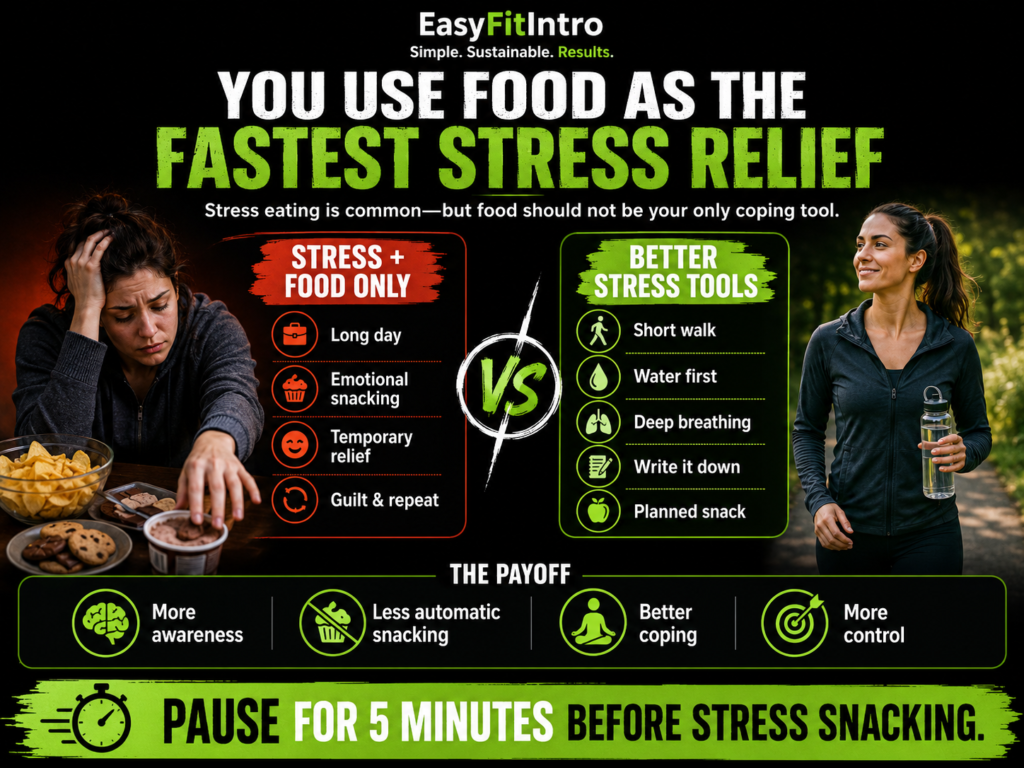
Stress eating is common.
After a difficult day, food can feel like a reward, escape or comfort.
The problem is not that you enjoy food.
The problem is when food becomes your only stress-management tool.
If every stressful moment leads to snacking, your routine becomes difficult to control.
Stress can also affect sleep, energy, motivation and planning. That means it can indirectly affect the choices you make throughout the day.
The goal is not to remove comfort from your life.
The goal is to add more tools.
Better stress-response options
Try:
- A short walk
- Drinking water first
- Breathing slowly for two minutes
- Writing down what you feel
- Calling someone
- Taking a shower
- Listening to calming audio
- Preparing a planned snack instead of grazing
- Stepping outside for fresh air
- Stretching for five minutes
Example
Instead of:
“I had a bad day, so I deserve to eat everything.”
Try:
“I had a hard day. I need relief. Let me pause first and choose what will actually help me.”
You may still choose food.
But now food is not carrying the whole emotional load alone.
Beginner Fix
When stress cravings hit, delay the snack for five minutes and do one calming action first.
This is not punishment.
It is a pause.
A pause gives you power.
Habit 6: You Restart Every Monday Instead of Adjusting Immediately
This habit keeps many beginners stuck.
They eat one unplanned meal and think:
“I failed. I will start again Monday.”
But one meal does not destroy progress.
The restart mindset does.
The restart cycle looks like this:
Start strong → make one mistake → feel guilty → give up → restart Monday.
That cycle keeps you busy but not consistent.
A better mindset is:
“Adjust the next choice.”
If breakfast were poor, improve lunch.
If lunch was rushed, improve dinner.
If you missed your walk, do it five minutes later.
If you overate, do not punish yourself. Return to the next helpful action.
The people who make progress are not perfect.
They recover faster.
Examples of adjusting instead of restarting
If you skipped breakfast:
Eat a balanced lunch instead of waiting until dinner.
If you had takeaway:
Add water and a short walk afterwards.
If you snacked at night:
Review what triggered it and prepare a better evening plan.
If you missed your workout:
Do five minutes of walking or stretching.
If the whole day went badly:
Prepare tomorrow’s first meal before sleeping.
Beginner Fix
Remove this phrase:
“I will start again Monday.”
Replace it with:
“My next choice matters.”
That one sentence can change your consistency.
Habit 7: You Only Measure Weight and Ignore Real Progress
The scale can be useful, but it is not the full story.
Weight can change because of:
- Fluid balance
- Salt intake
- Digestion
- Meal timing
- Exercise
- Sleep
- Stress
- Hormones
If you only look at the scale, you may miss important progress.
Track other signs too.
Better progress markers
You can track:
- Waist measurement
- Clothing fit
- Craving intensity
- Energy
- Sleep quality
- Water intake
- Walking consistency
- Balanced meals
- Night snacking
- Mood and confidence
- How often you recover after an imperfect meal
Sometimes your first win is not dramatic weight loss.
Sometimes it is:
“I walked four days this week.”
“I stopped skipping lunch.”
“I drank more water.”
“I had fewer night cravings.”
“My stomach feels less heavy.”
That progress matters because it shows the system is changing.
Beginner Fix
Choose three non-scale progress markers and track them for seven days.
For example:
- Water intake
- Night cravings
- Walking after meals
This gives you more information than the scale alone.
The EasyFitIntro Way: Build the System
If belly fat feels stubborn, do not only ask the following:
“How do I lose belly fat?”
Ask:
“What part of my system is breaking down?”
At EasyFitIntro, the goal is to help beginners build five simple anchors.
1. Fuel
Build meals that keep you satisfied.
This means:
- Protein
- Fibre
- Vegetables or fruit
- Realistic portions
2. Hydrate
Drink water consistently and reduce unnecessary sugary drinks.
Too much added sugar can contribute to weight gain and other health problems over time. [8]
You do not need to fear sugar.
You need to know where it is coming from.
3. Move
Walk more, sit less and add beginner-friendly activity.
Start with what you can repeat.
4. Reset
Improve sleep, stress and evening habits.
Your evening routine often decides tomorrow’s discipline.
5. Track
Measure the habits that influence results.
Track what helps you adjust.
This is not about punishment.
It is not about starving.
It is not about chasing the latest trick.
It is about building a routine you can repeat.
A Simple 7-Day Beginner Reset Plan
If you feel overwhelmed, start here.
Day 1: Observe
Write down your current meals, cravings, water, sleep and movement.
Do not judge.
Just observe.
Day 2: Upgrade Your First Meal
Add protein and a fibre-rich food.
Example:
Eggs and toast.
Yoghurt, oats and fruit.
Beans and bread.
Day 3: Drink Water More Consistently
Choose a realistic water goal.
Link water to meals.
Example:
Water after waking, with lunch and with dinner.
Day 4: Walk After One Meal
Choose one meal.
Walk for 5–10 minutes afterwards.
Do not worry about speed.
Day 5: Build One Balanced Plate
Include:
- Protein
- Vegetables or fruit
- A sensible starch
- Water
Example:
Chicken, pap and cabbage.
Beans, rice and spinach.
Eggs, potatoes and salad.
Day 6: Reduce One Sugar Source
Choose one:
- Sugary drink
- Sweetened coffee
- Flavoured yoghurt
- Biscuits
- Large dessert portion
- Sauce used daily
Reduce it or replace it with a better option.
Day 7: Review
Ask:
- What improved?
- What was difficult?
- When were cravings strongest?
- Did I walk?
- Did I drink water?
- Did I sleep better?
- What is one habit I will repeat next week?
This is how change starts.
Not with perfection.
With awareness and repetition.
Common Beginner Mistakes to Avoid
Mistake 1: Trying to Fix Everything at Once
Do not change your meals, workouts, sleep, water, sugar and stress routine all in one day.
Choose one or two actions first.
Mistake 2: Cutting Too Much Food
If you become extremely hungry, cravings may become harder to manage.
Build better meals instead of simply eating as little as possible.
Mistake 3: Only Exercising When You Feel Guilty
Movement should not be punishment.
Build walking into your normal routine.
Mistake 4: Ignoring Sleep
If sleep is poor, discipline becomes harder.
Protect your evening routine.
Mistake 5: Treating One Bad Meal as Failure
One meal is not the problem.
Giving up afterwards is the problem.
Mistake 6: Copying a Plan That Does Not Fit Your Life
A plan full of expensive ingredients or complicated workouts will not last if it does not match your reality.
Start with ordinary foods and simple movement.
Mistake 7: Measuring Only Weight
Track habits too.
Your habits are the system that creates future results.
Frequently Asked Questions
Why does belly fat feel so stubborn?
Belly fat can feel stubborn because it is influenced by several habits and factors at the same time. Meals, movement, sleep, stress, cravings, hydration, medication, age, hormones and consistency can all play a role. This is why one quick fix usually does not solve the problem.
Can I lose belly fat by doing ab exercises?
Ab exercises can strengthen your abdominal muscles, but they do not guarantee fat loss specifically from your stomach. Belly-fat progress usually requires overall fat-loss habits such as balanced eating, regular movement, strength training, sleep and consistency.
Why am I eating less but not losing belly fat?
Eating less may not work well if your meals leave you hungry, tired and craving later. Very small or unbalanced meals can lead to overeating at night. Focus on building meals with protein, fibre, vegetables or fruit and realistic portions.
Do cravings mean I have no discipline?
No. Cravings can be linked to hunger, stress, tiredness, boredom, habit, poor sleep, skipped meals or food triggers. Instead of judging yourself, pause and ask what may have triggered the craving.
Is walking enough to lose belly fat?
Walking is a helpful beginner habit because it increases daily movement and reduces sitting time. It can support a fat-loss routine, but it works best together with balanced meals, better sleep, stress management and consistency.
Why do I snack more at night?
Night snacking may be linked to skipped meals, low protein intake, stress, tiredness, boredom or evening habits such as watching TV while eating. The solution is not only willpower. You need a better full-day routine.
How often should I weigh myself?
This depends on the person. Some people do well with weekly weigh-ins, while others become discouraged or obsessed. If you weigh yourself, also track non-scale progress such as waist measurement, cravings, energy, sleep, walking and meal consistency.
What is the easiest first step for beginners?
Start with one simple action: add protein to your first meal, drink water before your next meal, or take a 10-minute walk after dinner. Do not try to fix everything at once.
Can stress really affect belly-fat progress?
Stress can affect eating behaviour, sleep, motivation and cravings. Some people eat more when stressed, while others eat less. If food becomes your only stress-relief tool, consistency becomes harder.
What should I do after a bad eating day?
Do not restart next Monday. Adjust immediately. Drink water, eat your next balanced meal, take a short walk, and prepare for tomorrow. Progress comes from returning quickly, not from being perfect.
Take the Next Step
If belly fat feels stubborn, the answer is not to punish yourself harder.
The answer is to understand your system.
Your meals.
Your cravings.
Your water.
Your movement.
Your sleep.
Your stress.
Your consistency.
That is why I created the Free EasyFitIntro Belly Fat Reset Workbook.
Inside, you will check your current habits and start building a simple, beginner-friendly routine around the following:
- Balanced meals
- Hydration
- Craving control
- Daily movement
- Sleep habits
- Progress tracking
- Consistency
You do not need a perfect plan.
You need a clear starting point.
Start small.
Build the system.
Stay consistent.
Your next better choice can begin today.
Science Proof and Sources
[1] CDC — About Healthy Weight and Growth
[2] Vispute et al. — The Effect of Abdominal Exercise on Abdominal Fat
[3] Protein, fibre and appetite regulation research
[4] MedlinePlus — Break the Bonds of Emotional Eating
[5] CDC — Adult Physical Activity Guidelines
[6] Post-meal walking and post-meal blood glucose research
[7] Sleep deprivation and appetite regulation research
[8] CDC — Get the Facts: Added Sugars
Read more related articles on easyfitintro
- Why Exercise Alone Isn’t Enough to Lose Belly Fat
- The 24-Hour Craving Control Plan
- Walking After Meals: Can 10 Minutes Help Blood Sugar, Cravings and Belly Fat?
- Why Poor Sleep Makes Belly Fat Harder to Lose
- Emotional Hunger vs Physical Hunger
- The Simple Meal Formula That Helps Reduce Cravings and Belly Fat Struggles