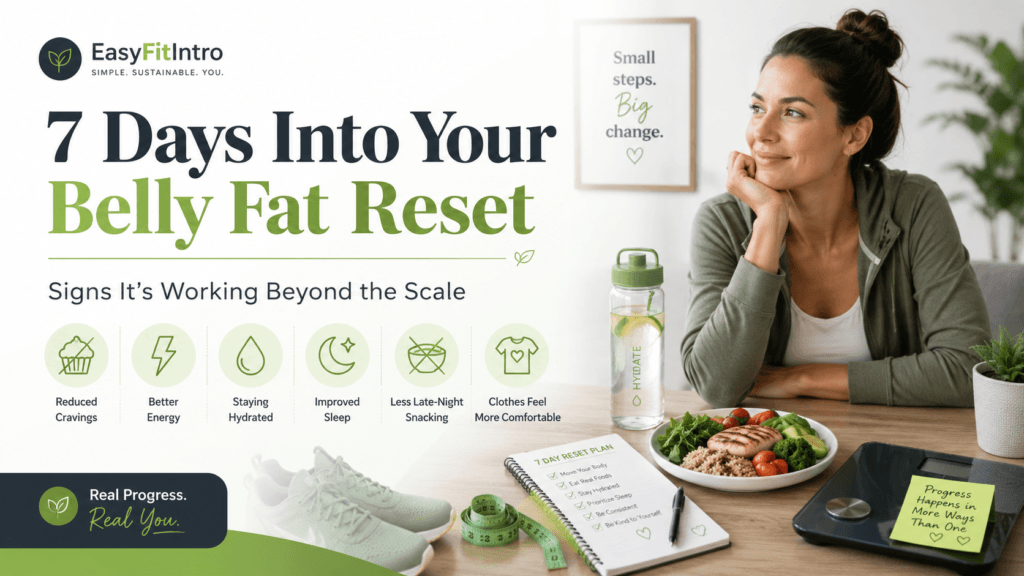
You have completed seven days of healthier meals, increased water intake, better movement, and greater awareness of your cravings.
Then you step onto the scale.
The number has barely changed—or it has not changed at all.
Does that mean your belly fat reset is not working?
No.
Seven days is enough time to begin changing your habits, but it may not be enough time to produce a dramatic physical transformation.
That is why your Week 1 check-in should measure more than body weight.
Your cravings, energy, digestion, waist measurement, evening eating, and daily decisions can all reveal whether you are moving in the right direction.
Watch the Week 1 Belly Fat Reset Check-In with Coach Modisa
Let us look at what progress after seven days can realistically mean.
How Much Weight Can You Realistically Lose in Seven Days?
Healthy, lasting weight loss is usually gradual.
The CDC explains that people who lose weight steadily—around one to two pounds per week—are more likely to maintain their results than people who chase rapid weight loss. That is approximately half to one kilogram per week, although results vary from person to person.
Some people lose more during their first week, but not all of that change necessarily represents body fat.
Changes in water balance, recent meals, digestion, and carbohydrate storage can influence what appears on the scale.
Other people may follow the program well without seeing a large change during the first seven days.
This does not automatically mean nothing is happening.
Your first week should be treated as the beginning of a longer process—not a deadline for achieving a flat stomach.
The Scale Does Not Tell the Complete Story
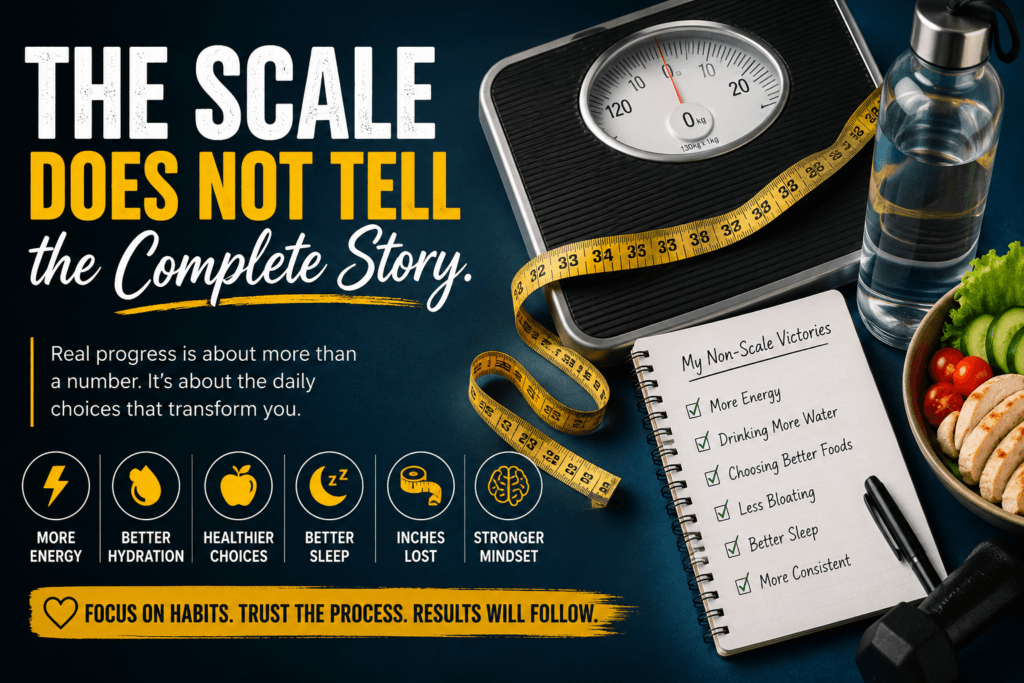
Body weight is useful, but it is only one measurement.
It does not tell you:
- How well you controlled a craving
- Whether you stopped drinking sugary drinks
- Whether your energy became more stable
- Whether your clothes fit more comfortably
- Whether you reduced late-night snacking
- Whether you are becoming more active
- Whether you are learning to stop when comfortably satisfied
Waist circumference can also provide useful information alongside body weight because abdominal size is associated with health risk.
The important word is alongside.
Do not allow one scale reading to erase every positive change you made during the week.
7 Signs Your Belly Fat Reset Is Working
1. Your Cravings Are Becoming Easier to Manage
You may still experience sugar cravings, but perhaps you are no longer reacting to every craving immediately.
You might now pause, drink water, wait for 10 minutes, or ask whether you are physically hungry.
That pause is progress.
The goal is not to become a person who never wants chocolate, biscuits, or sugary drinks again.
The goal is to become someone who can experience a craving without automatically surrendering control.
2. Your Energy Feels More Stable
Constantly skipping meals or eating meals dominated by refined carbohydrates may leave some people feeling hungry and tired again soon afterwards.
After a week of more balanced meals, you may notice fewer afternoon crashes or less desperation for a quick sugary snack.
You may not feel energetic every minute of the day, but fewer extreme highs and lows can be an encouraging sign.
3. You Are Drinking More Water
Hydration may sound like a small habit, but it can replace sugary drinks and create a useful pause before meals or snacks.
Your progress may include:
- Remembering to drink water in the morning
- Carrying a water bottle
- Drinking water before a main meal
- Replacing one fizzy drink
- Checking thirst before assuming you are hungry
Do not dismiss this because it feels simple.
Simple behaviors are often the ones you can repeat long enough to produce results.
4. You Are Snacking Less at Night
Late-night eating can become automatic when you are tired, stressed, watching television, or scrolling on your phone.
Progress may mean that you now pack leftovers away, brush your teeth, make unsweetened tea, or leave the kitchen after dinner.
You may still experience the urge to snack.
The difference is that you are beginning to recognize the trigger and respond with a plan.
5. You Feel Less Bloated or More Comfortable
Bloating is not the same thing as body fat, but feeling less swollen or uncomfortable can still be a meaningful improvement.
Changes in food choices, meal size, eating speed, and regular movement may influence how comfortable you feel after eating.
Your stomach may feel lighter even before a major change in body fat becomes visible.
Do not advertise this to yourself as instant fat loss.
Recognize it honestly as improved comfort and a possible sign that some of your new habits are helping.
6. Your Clothes Feel Slightly Different
Your clothes may feel less tight around your waist even when the scale has not moved much.
Use similar clothing when checking this.
You can also measure your waist, but use a consistent method. Stand upright, keep the measuring tape level, and avoid pulling it tightly enough to dig into your skin. Measuring under similar conditions makes comparisons more useful.
A single centimeter is not “nothing.”
It is information.
7. You Are Making Better Decisions More Consistently
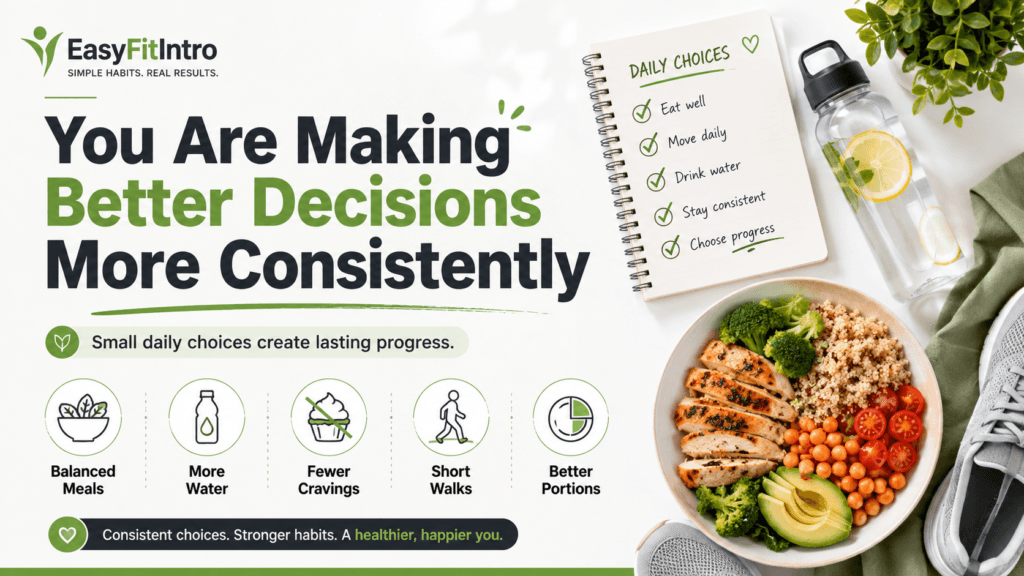
This may be your most important Week 1 result.
You may now be:
- Adding protein to breakfast
- Building a more balanced plate
- Walking after dinner
- Eating more slowly
- Choosing one portion instead of eating from a packet
- Drinking water before reacting to a craving
- Preparing for difficult moments in advance
None of these actions creates a dramatic transformation overnight.
Repeated together, however, they build the conditions needed for gradual weight loss and improved health.
Why Sleep Should Be Part of Your Check-In
Ask yourself whether your sleep improved during the first week.
Sleep and appetite are connected, although the relationship is complex and does not affect everyone in exactly the same way.
Clinical research has found that insufficient sleep can increase appetite or make higher-calorie foods more appealing in some circumstances. An NIH-supported trial also found that increasing sleep duration reduced calorie intake among adults who were habitually sleeping too little.
A more recent review found that the effects of sleep restriction on appetite are not completely consistent across all studies. That means sleep should be treated as one important part of the picture—not a magical fat-loss solution.
Your week 1 progress might therefore include the following:
- Going to bed earlier
- Reducing unnecessary late-night scrolling
- Eating less after dinner
- Waking up with more energy
- Feeling better prepared to make decisions the next day
How to Complete Your Week 1 Check-In
Use the same conditions you used when you started whenever possible.
Try to:
- Weigh yourself at approximately the same time
- Use the same scale
- Wear similar clothing
- Measure your waist in the same place
- Keep the measuring tape level
- Record how your clothes feel
- Write down at least one non-scale victory
Then answer these four questions:
What am I proud of?
Choose one real victory.
It could be drinking more water, preparing breakfast, controlling one late-night craving, or completing several short walks.
Which habit helped me most?
Identify the habit that made your week easier.
Protect that habit during Week 2.
What was my biggest challenge?
Do not hide from it.
Perhaps your challenge was emotional eating, poor planning, sugary drinks, work pressure, or evening snacking.
Naming the problem makes it easier to prepare a response.
What is my Week 2 promise?
Choose one simple, measurable action.
For example:
- I will include protein at breakfast.
- I will drink water before every main meal.
- I will walk for 10 minutes after dinner.
- I will stop eating directly from packets.
- I will use the 10-Minute Reset when cravings appear.
- I will complete my evening closing routine.
One clear commitment is better than a long list you cannot maintain.
What Not to Do When Results Feel Slow
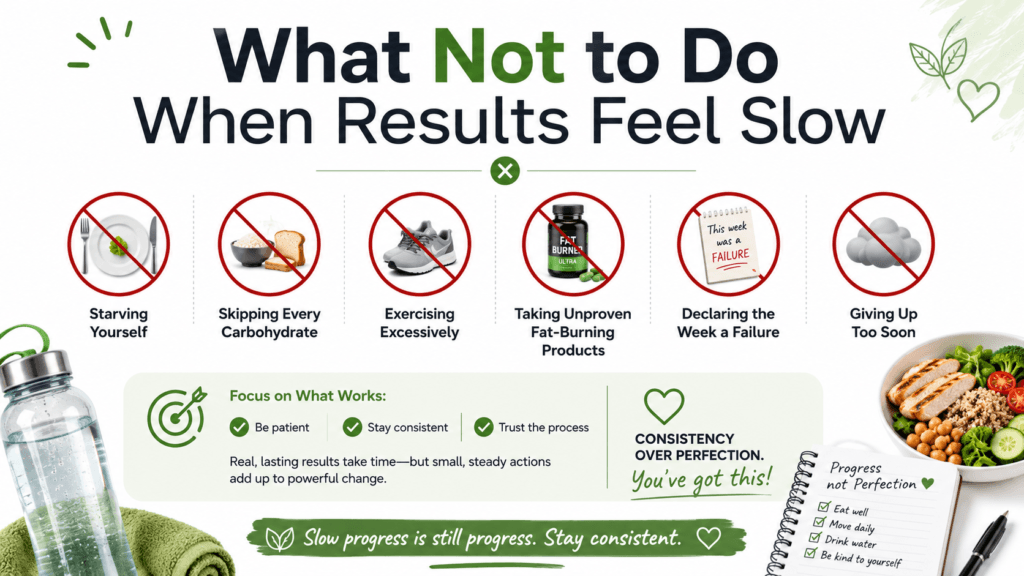
Do not react to a disappointing weigh-in by
- Starving yourself
- Skipping every carbohydrate
- Exercising excessively
- Taking unproven fat-burning products
- Declaring the week a failure
- Giving up before your habits have had time to work
Unrealistic short-term goals can leave people discouraged, while gradual changes are more likely to be maintained.
Your body does not need punishment.
It needs enough consistency for your actions to produce a measurable pattern.
What Happens During Week 2?
Week 1 was about awareness and control.
You started learning how to:
- Build balanced meals
- Manage sugar cravings
- Reduce liquid sugar
- Control late-night snacking
- Hydrate more consistently
- Move more often
- Understand the difference between hunger and habit
Week 2 is where you strengthen those behaviors.
You are not starting again.
You are continuing with information about what works for you and what still needs attention.
That experience makes your second week more powerful than your first.
Your Day 7 Action
Before continuing, record:
- One Week 1 result you are proud of
- One habit you will continue
- One challenge you will prepare for
- One measurable promise for Week 2
Do not judge your progress only by how quickly your stomach changes in the mirror.
Judge it by whether you are becoming more capable of repeating the behaviors that support lasting change.
Seven days may not completely transform your body.
But seven days can prove that you are capable of transforming your habits.
That is where meaningful progress begins.
Ready to Continue?
Download the free EasyFitIntro Belly Fat Reset Workbook and use its beginner-friendly checklists to improve your meals, cravings, hydration, movement, and daily routine.
Continue taking this journey one realistic action at a time.
You do not need perfection. You need a plan you can repeat.
This article provides general educational information and is not personalized medical advice. Speak with a qualified healthcare professional before making major dietary or exercise changes, particularly if you have a medical condition, take medication, are pregnant or have a history of disordered eating.