You finish eating a meal.
For a short while, you feel satisfied.
Then, less than an hour later, you are opening the cupboard, searching for biscuits or wondering what else you can eat.
It can feel confusing.
You may ask yourself:
“Why am I still hungry when I have just eaten?”
Feeling hungry soon after eating does not automatically mean that you lack discipline or need to eat much larger portions.
Sometimes the problem is not the amount of food on your plate.
It is how the meal was built, how quickly you ate it, how well you slept and whether the desire to eat is coming from physical hunger or a familiar craving.
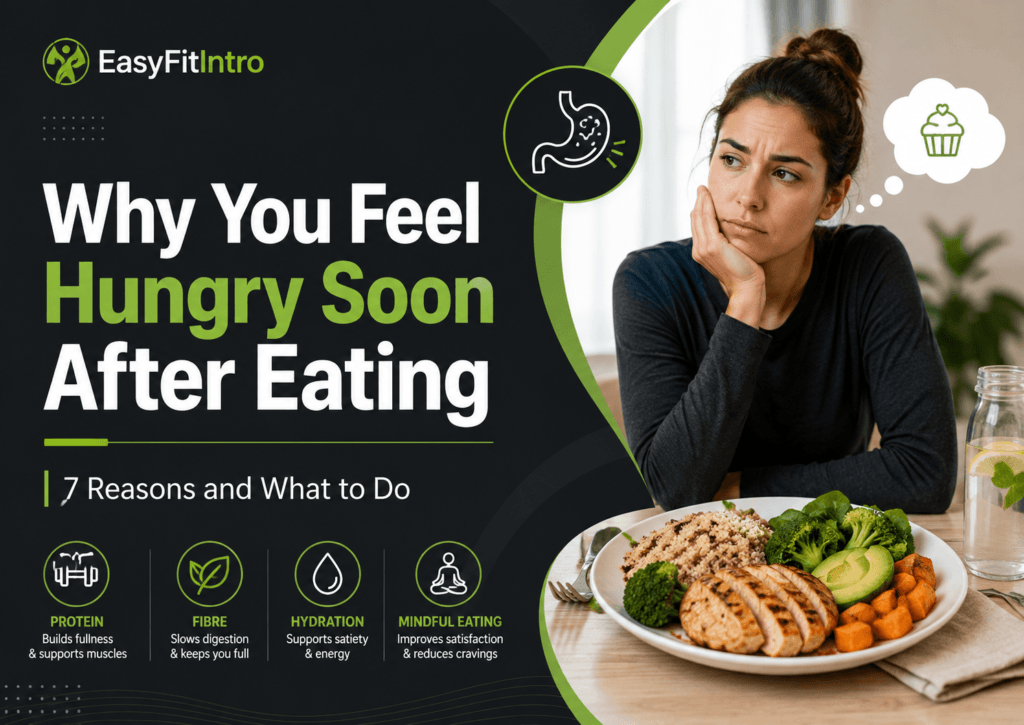
Here are seven common reasons your meals may not be keeping you satisfied—and realistic ways to improve them.
1. Your Meal Contains Too Little Protein
A meal may look filling but still contain very little protein.
For example:
- Toast with jam
- Sweetened cereal
- Plain pap without a protein source
- A plate dominated by rice
- Biscuits with tea
- A pastry or muffin for breakfast
These foods may provide energy, but you could soon begin looking for something else to eat.
Protein tends to be more satisfying than the same amount of energy from some other nutrients. Research suggests that consuming more protein can improve feelings of fullness under certain conditions, although the strength of the effect differs between people and studies.
What to do
Include a clear protein source in your main meals.
Affordable options include:
- Eggs
- Chicken
- Fish
- Lean mince
- Tinned tuna
- Beans
- Lentils
- Plain yoghurt
- Cottage cheese
You do not need an enormous portion.
Start by asking:
“Where is the protein in this meal?”
Simple meal improvements
Instead of toast with jam alone, add eggs.
Instead of eating pap by itself, combine it with beans, chicken, fish or lean mince.
Instead of sweetened cereal alone, choose oats with plain yoghurt or have eggs on the side.
The goal is not to remove every carbohydrate.
It is to stop expecting carbohydrates to do the entire job of keeping you satisfied.
2. Your Plate Has Very Little Fibre or Volume
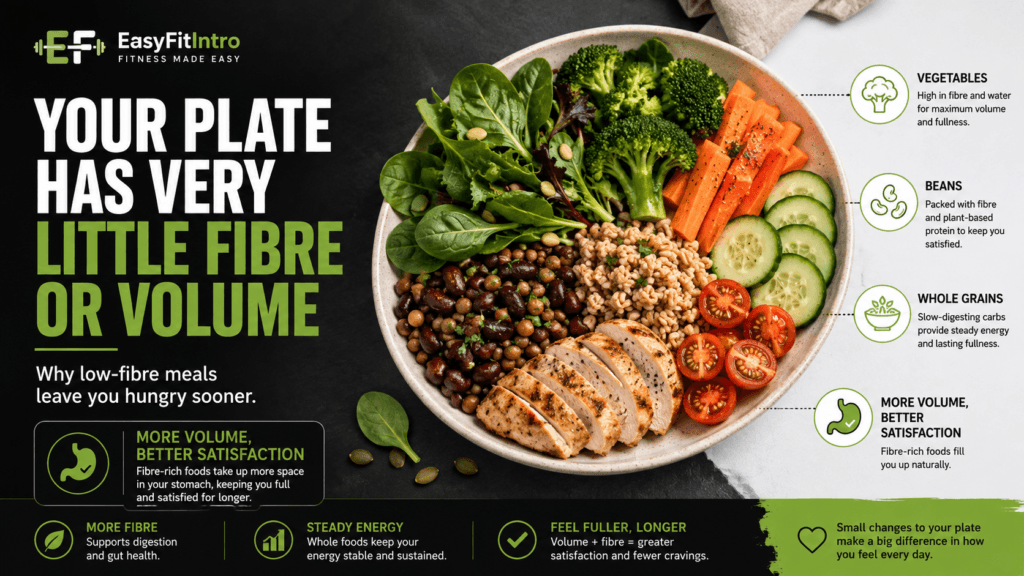
A small meal made mostly from refined foods can disappear quickly without creating much satisfaction.
Vegetables, fruit, legumes and some whole grains add volume and fibre to meals.
However, it is important not to exaggerate what fibre can do. Research shows that different types of fibre affect hunger differently, and not every added fibre product produces a strong immediate reduction in appetite. Whole meals containing suitable fibre-rich foods are a more practical focus than relying on a fibre supplement as a miracle solution.
What to do
Try to include vegetables or another fibre-rich food in your main meals.
Examples include:
- Spinach
- Cabbage
- Carrots
- Green beans
- Broccoli
- Tomato
- Cucumber
- Apples
- Pears
- Oats
- Beans
- Lentils
A useful beginner plate can contain:
- Half a plate of vegetables or salad
- A palm-sized protein source
- A controlled serving of carbohydrates
- A small amount of healthy fat
You do not have to build the perfect plate at every meal.
Improving one meal is a useful start.
3. Your Meal Is Dominated by Highly Processed Foods
Some processed foods are easy to eat quickly, highly rewarding and less satisfying than expected for the amount of energy they contain.
In a controlled inpatient trial, participants ate more calories and gained weight while following an ultra-processed diet compared with a minimally processed diet, even though the diets were designed to be similar in several presented nutrients.
That does not mean every packaged food is harmful or that you must prepare everything from scratch.
It means that a meal built mainly from foods such as pastries, crisps, sweets, processed snack foods and sugary drinks may make portion control harder for some people.
What to do
Build most meals around recognisable foods:
- Eggs
- Chicken
- Fish
- Beans
- Lentils
- Vegetables
- Fruit
- Oats
- Rice
- Potatoes
- Pap
- Plain yoghurt
Convenience still matters.
Tinned beans, frozen vegetables, tinned tuna and plain yoghurt can all make simple meals easier.
The aim is not perfection.
The aim is to make minimally processed foods the foundation more often.
4. You Are Drinking Your Calories
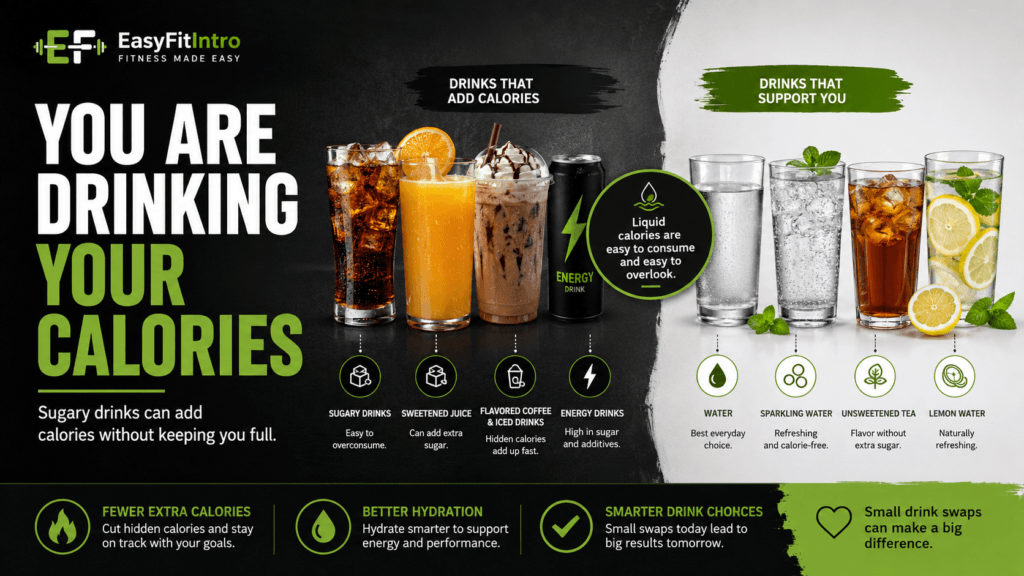
A sweetened drink can contain substantial energy without satisfying you in the same way as a balanced meal.
Sugary drinks have been linked with weight gain partly because liquid energy may not always be fully compensated for by eating less later. However, the evidence around liquid versus solid satiety is more complicated than the simple claim that “liquid calories never fill you up.” Different beverages, ingredients and situations can produce different responses.
The practical problem is that it is easy to drink a fizzy drink or sweetened juice alongside a full meal without reducing the food portion.
What to do
Choose water more often with meals.
You can also try:
- Sparkling water
- Unsweetened tea
- Coffee with less added sugar
- Water with lemon, cucumber or mint
Do not try to change every drink immediately.
Begin by replacing one sugary drink each day.
That gives you a clear action without making the plan feel extreme.
5. You Eat Too Quickly
When you are hungry, busy or distracted, you may finish a meal before you have fully registered the experience of eating.
Research comparing eating speeds suggests that slower eating is generally associated with lower energy intake during a meal, although results vary and slowing down does not guarantee that everyone will eat less.
Eating more slowly may also help you notice when you are becoming comfortably satisfied.
What to do
You do not need to count every bite.
Use simple techniques:
- Sit down while eating
- Put your phone away
- Take smaller bites
- Chew properly
- Place your fork or spoon down occasionally
- Pause halfway through the meal
- Ask whether you are still hungry or simply continuing automatically
Try to give your meal your attention.
Eating while scrolling, working or watching something intensely can make it harder to remember and appreciate what you ate.
6. You Are Tired, Stressed or Emotionally Drained
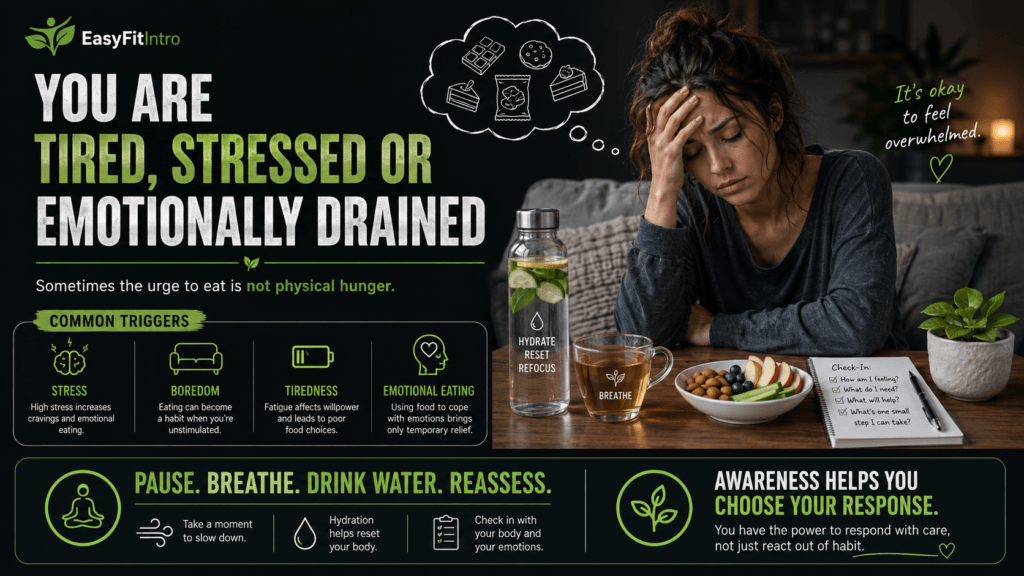
Sometimes the desire to eat is not caused by an empty stomach.
It is caused by a difficult day.
Stress, sadness, boredom, tiredness and frustration can influence eating behaviour, although people respond differently. Reviews have found associations between stress, negative emotions and less helpful eating patterns in many adults, but the relationship is not identical for everyone.
Sleep can also play a role.
Some studies suggest that sleep loss may increase appetite, food desire or energy intake. However, a recent review found that effects on subjective appetite are inconsistent, meaning poor sleep should not be blamed for every craving.
What to do
Before eating again, pause and ask:
- Is my stomach physically empty?
- Would I eat a proper meal?
- Am I looking for one specific comfort food?
- Am I tired?
- Am I stressed?
- Am I bored?
- Did something upsetting happen?
Then use a 10-minute reset:
- Drink some water.
- Move away from the food area.
- Take several slow breaths.
- Stretch or walk briefly.
- Reassess your hunger.
If you remain physically hungry, eat something satisfying.
The goal is not to ignore real hunger.
It is to avoid using food automatically whenever your emotions become uncomfortable.
7. Your Meal Was Too Small—or You Have Not Eaten Enough
Not every case of hunger after eating is caused by the wrong food choice.
Sometimes you are still hungry because the meal was simply not enough.
This may happen when you:
- Skip breakfast and eat a tiny lunch
- Try to survive on salads with little protein
- Remove carbohydrates completely
- Exercise without adjusting your food intake
- Follow an extremely low-calorie plan
- Avoid eating because you feel guilty
- Serve yourself an unrealistically small portion
You should not respond to every hunger signal by trying to suppress it.
Persistent hunger can be your body telling you that it needs more food.
What to do
Check whether the meal contained:
- A protein source
- Vegetables or fruit
- A suitable carbohydrate portion
- Enough total food for your needs
If you are genuinely hungry, add something useful rather than fighting yourself until you overeat later.
For example:
- Add an egg
- Add beans or lentils
- Add plain yoghurt
- Add a fruit
- Add vegetables
- Add a moderate portion of potatoes, rice, oats or pap
Sustainable weight management does not require constant hunger.
How to Tell Physical Hunger From a Craving
Physical hunger and cravings can overlap, but they often feel different.
Physical hunger may:
- Develop gradually
- Be felt in the stomach
- Appear several hours after eating
- Make several foods sound acceptable
- Improve after eating a balanced meal
- Come with lower energy or reduced concentration
A craving may:
- Appear suddenly
- Focus on one specific food
- Begin after seeing or smelling food
- Become stronger during boredom or stress
- Continue even after a recent meal
- Feel more like emotional urgency than stomach hunger
This is not a perfect test.
But pausing to ask the question helps you become less automatic around food.
A Better Meal Formula for Lasting Satisfaction
Use this simple EasyFitIntro formula for your main meals:
Add protein.
Choose eggs, chicken, fish, lean meat, tuna, beans, lentils or plain yoghurt.
Add vegetables or fruit.
Aim for colour and volume where possible.
Add a controlled carbohydrate.
Choose pap, rice, potatoes, oats, wholegrain bread or another suitable option.
Include a little healthy fat
Examples include avocado, nuts, seeds, peanut butter or a small amount of cooking oil.
Drink water.
Use water as your default meal drink more often.
Slow down.
Give yourself time to notice satisfaction.
Simple Meal Examples
Breakfast
Two eggs with spinach and one slice of whole-grain toast.
Or:
Oats with plain yoghurt and fruit.
Lunch
Chicken, mixed vegetables and a controlled serving of rice or pap.
Or:
Beans, cabbage and a medium potato.
Dinner
Fish with vegetables and sweet potato.
Or:
Lean mince with carrots, spinach and a moderate portion of pap.
Snack when genuinely hungry.
Choose something that offers more than quick sugar:
- A boiled egg and fruit
- Plain yoghurt
- Apple with a small amount of peanut butter
- Tuna with cucumber
- A small handful of nuts
- Leftover chicken and vegetables
What to Do When You Feel Hungry Shortly After Eating
Use this five-step check:
Step 1: Pause
Do not immediately begin searching for food.
Step 2: Check the meal.
Ask whether it contained enough protein, fibre and total food.
Step 3: Check the time.
Did you eat 20 minutes ago or four hours ago?
Step 4: Check the trigger.
Are you tired, stressed, bored or watching someone else eat?
Step 5: Respond appropriately.
If you are physically hungry, eat a balanced snack or improve your next meal.
If it is a craving, use your 10-minute reset.
When Frequent Hunger May Need Medical Attention
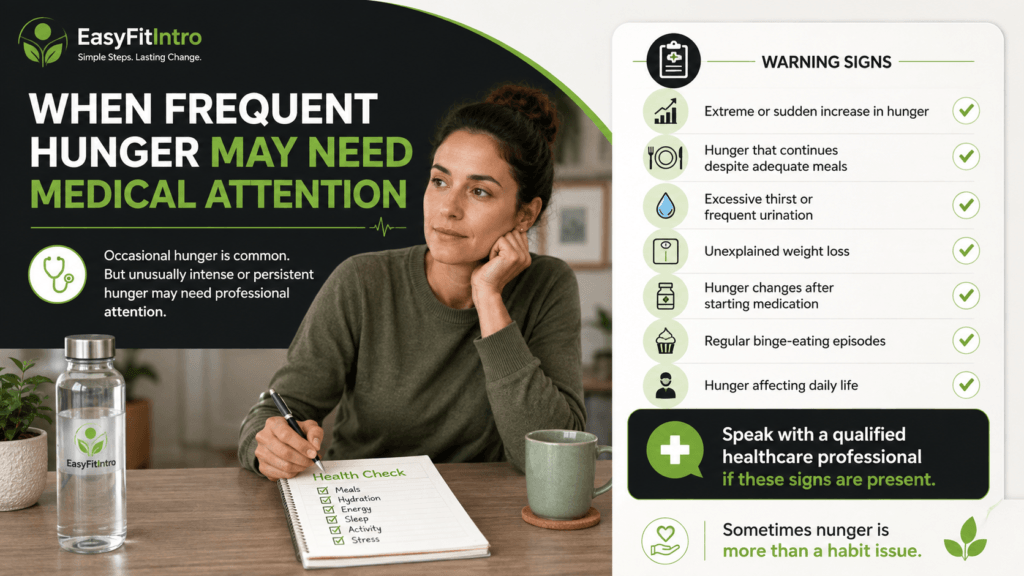
Occasional hunger after eating is common.
But unusually intense or persistent hunger can sometimes be connected to medication, blood-sugar problems, thyroid conditions, pregnancy or other health factors.
Speak with a qualified healthcare professional if you’re hungry:
- Is extreme or suddenly different
- Continues despite eating adequate meals
- Comes with excessive thirst or frequent urination
- Is accompanied by unexplained weight loss
- Began after starting medication
- Causes regular binge-eating episodes
- Is affecting your daily life
There is no weakness in asking for medical guidance.
Sometimes hunger is more than a habit issue.
Your Action for Today
Choose one meal and improve its staying power.
Ask:
- Where is my protein?
- Where is my fibre-rich food?
- Is the meal large enough?
- Am I drinking calories?
- Am I eating too quickly?
- Am I physically hungry or emotionally triggered?
Do not try to repair your entire diet today.
Build one more satisfying meal.
Then notice how you feel one, two and three hours afterwards.
Coach Modisa’s Message
Feeling hungry soon after eating does not automatically mean you are greedy, weak or incapable of losing belly fat.
Your meal may simply need a better structure.
Start with protein.
Add vegetables or another fibre-rich food.
Control rather than fear your carbohydrates.
Drink water.
Slow down.
And learn to recognise the difference between physical hunger and a craving.
You do not need to spend your entire weight-loss journey fighting your appetite.
You need meals and habits that work with your body instead of constantly challenging it.
One better plate can change the direction of the rest of your day.
Ready to Build More Satisfying Habits?
Download the free EasyFitIntro Belly Fat Reset Workbook for beginner-friendly guidance on meals, hydration, cravings, movement and daily progress.
You do not need an extreme diet.
This article is for general education and does not replace personalised medical or nutritional advice. Speak with a qualified healthcare professional before making major dietary changes, particularly if you have a medical condition, take medication, are pregnant or have a history of disordered eating.
You need simple actions you can repeat.