
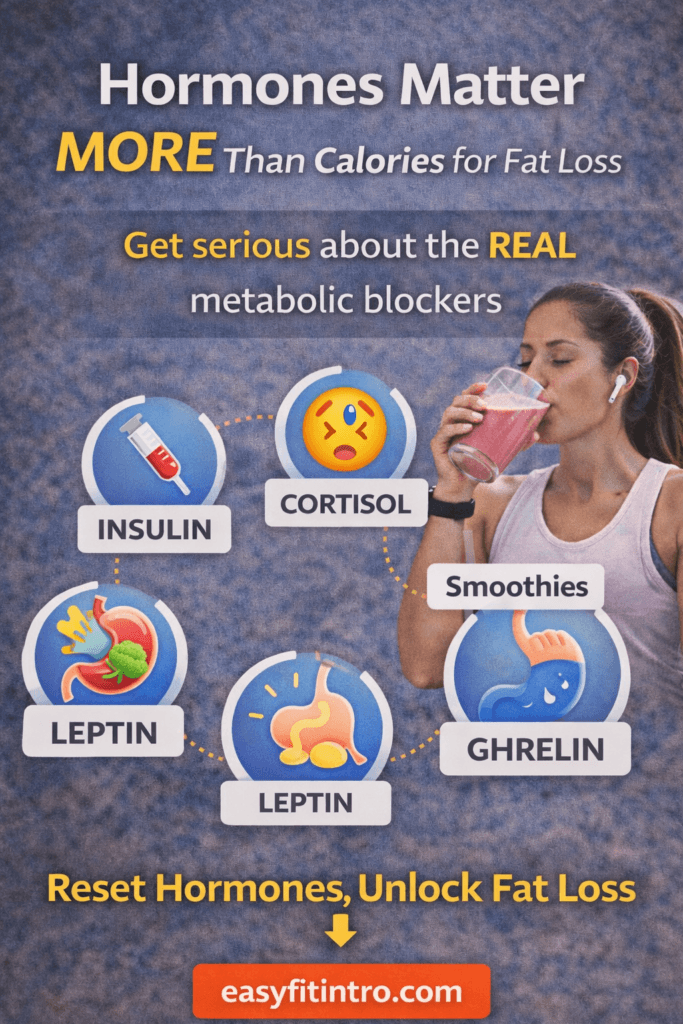
Hormones and Fat Loss: How to Reset Your Body to Burn Fat
Introduction
If fat loss were only about calories, everyone who “ate less” would be lean.
But real life tells a different story.
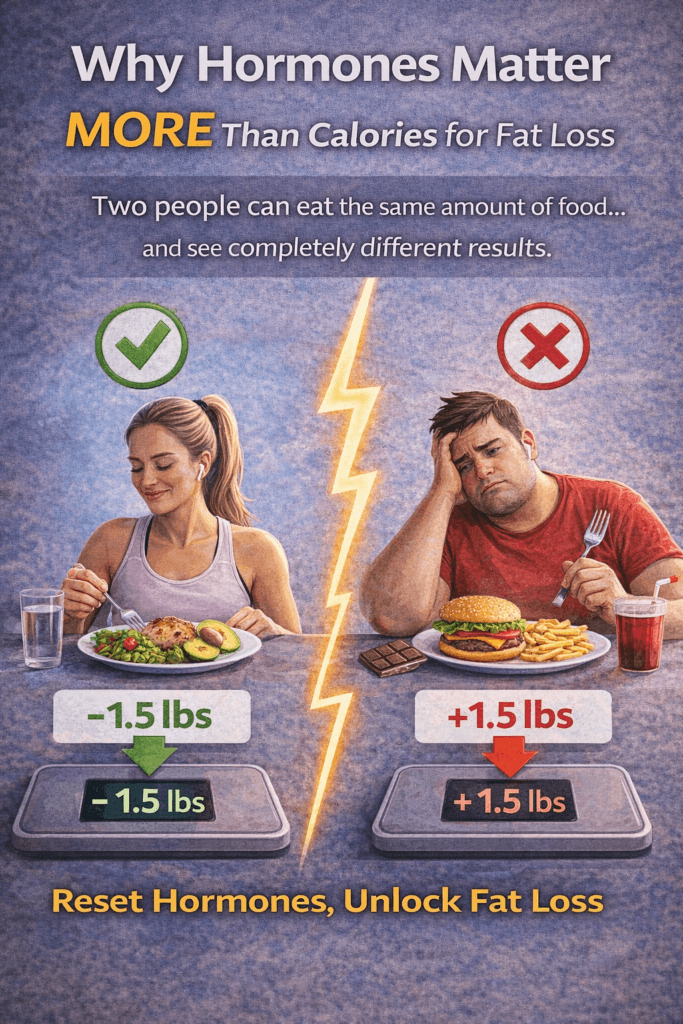
Two people can eat the same amount of food… and see completely different results.
Why?
Hormones.
Hormones decide whether your body burns fat, stores it, or makes you ravenously hungry later in the day.
Scientific research now shows that blood sugar control, stress levels, sleep, and muscle activity can strongly influence fat-storage hormones—sometimes within days.
In this guide, you’ll learn:
- Which hormones control fat loss
- What science says about insulin and belly fat
- Why stress hormones matter
- How sleep changes hunger signals
- The daily habits proven to reset metabolism
- How smoothies can simplify the process
Let’s fix the root cause.
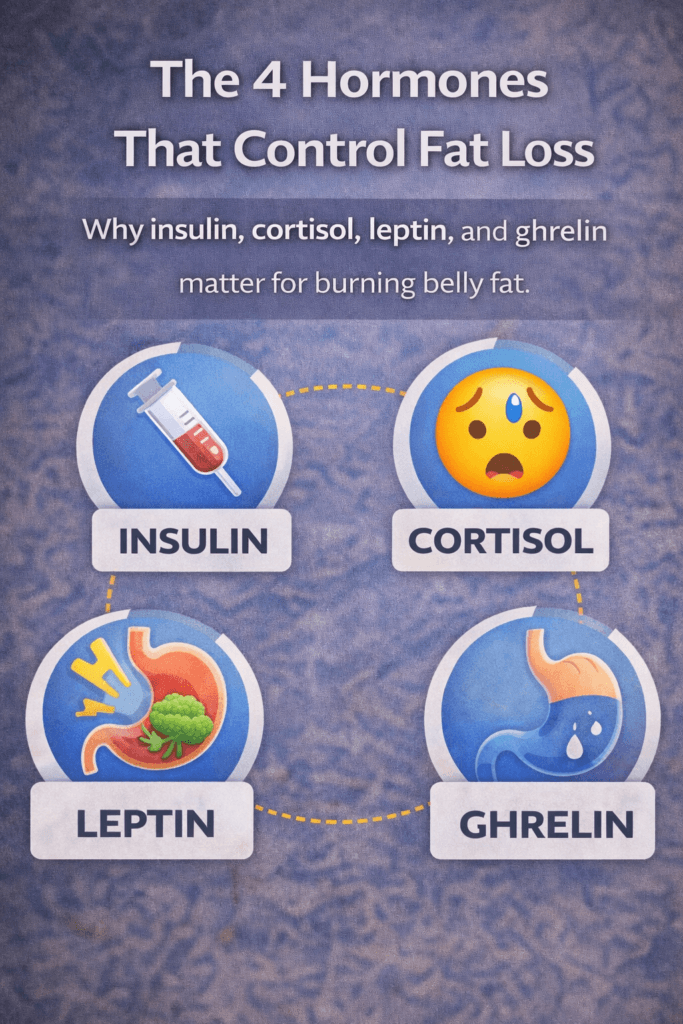
The 4 Hormones That Control Fat Loss
? 1) Insulin—The Fat-Storage Switch
Insulin moves sugar from your bloodstream into cells for energy.
According to reviews in Nature Reviews Endocrinology, insulin suppresses fat breakdown (lipolysis) and promotes fat storage when chronically elevated.
Meals that digest quickly—especially refined carbs—create sharp glucose spikes, followed by insulin surges.
Studies in The American Journal of Clinical Nutrition show high-glycemic meals trigger larger insulin responses and increased hunger later.
? Translation:
Frequent sugar spikes keep insulin high… and high insulin blocks fat burning.
Walking after meals helps counter this.
Randomized trials in Diabetes Care and meta-analyses in Sports Medicine found that light post-meal walking significantly reduces blood-sugar rises compared to sitting.
? 2) Cortisol — The Stress Hormone
Cortisol helps regulate blood pressure and energy during stress.
But chronic stress keeps cortisol elevated.
Research published in Psychosomatic Medicine and Obesity links high cortisol responses to increased abdominal (visceral) fat accumulation.
Sleep deprivation experiments in The Journal of Clinical Endocrinology & Metabolism also show higher evening cortisol after short sleep.
? Translation:
Chronic stress and poor sleep = stronger belly-fat signals.
? 3) Leptin — The Fullness Signal
Leptin tells your brain when you’ve eaten enough.
Poor sleep and ultra-processed diets reduce leptin sensitivity.
A classic study in the Annals of Internal Medicine showed that sleeping only 4–5 hours raised ghrelin (hunger hormone) and lowered leptin.
? 4) Ghrelin—The Hunger Hormone
Ghrelin increases appetite.
Short sleep and calorie restriction raise ghrelin levels, making people feel hungrier even while dieting.
Reviews in Physiology & Behavior confirm that disrupted sleep and processed foods worsen appetite signaling.
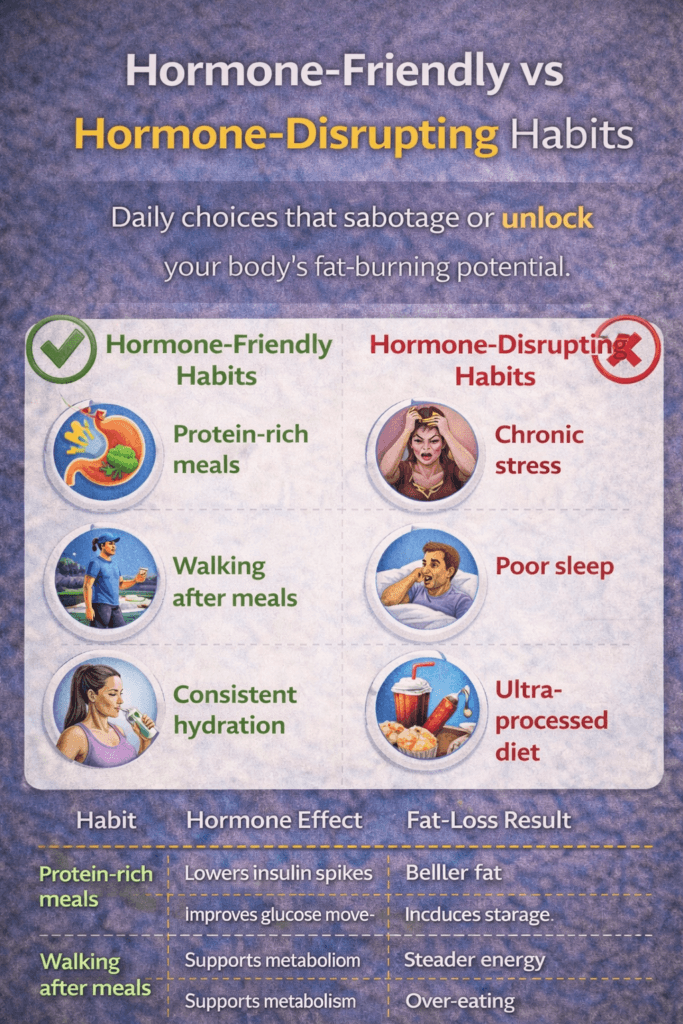
? Hormone-Friendly vs Hormone-Disrupting Habits
| Habit | Hormone Effect | Fat-Loss Result |
|---|---|---|
| Protein-rich meals | Lower insulin spikes | Easier fat burning |
| Walking after meals | Improves glucose uptake | Less fat storage |
| Chronic stress | Raises cortisol | Belly fat gain |
| Poor sleep | Raises ghrelin | Increased cravings |
| Hydration | Supports metabolism | Steadier energy |
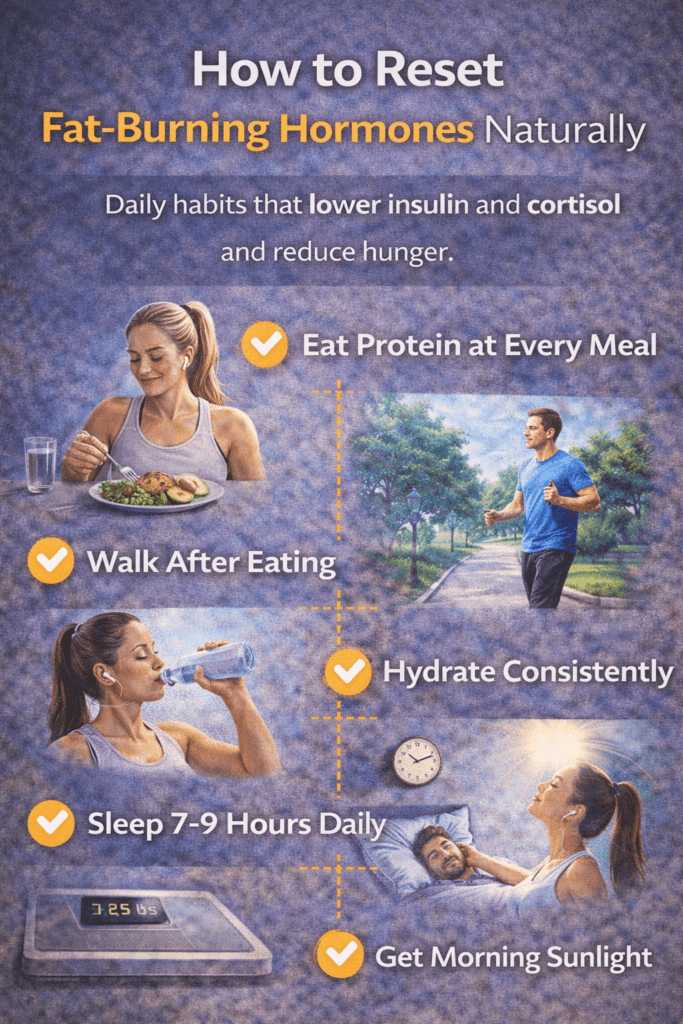
How to Reset Fat-Burning Hormones Naturally
These strategies are strongly supported by metabolic research.
✅ 1) Eat Protein at Every Meal
Protein slows digestion and boosts fullness hormones like GLP-1 and peptide YY.
Studies in The American Journal of Clinical Nutrition and Obesity Reviews link higher-protein diets to improved appetite control and fat-mass loss during weight-loss programs.
✅ 2) Walk After Eating
Just 10 minutes of walking activates muscle glucose uptake and lowers insulin demand.
This is one of the fastest daily metabolic upgrades you can make.
✅ 3) Hydrate Consistently
Mild dehydration mimics fatigue and hunger.
Adequate hydration supports circulation, digestion, and appetite control.
✅ 4) Sleep 7–9 Hours
Sleep regulates leptin, ghrelin, insulin sensitivity, and cortisol.
Even a few nights of short sleep can increase hunger hormones.
✅ 5) Get Morning Sunlight
Natural light supports circadian rhythm, which influences insulin sensitivity and cortisol patterns.
? SCIENCE SNAPSHOT—Hormones & Fat Loss
✔ Insulin suppresses fat burning (Nature Reviews Endocrinology)
✔ Stress increases belly fat (obesity).
✔ Short sleep raises hunger hormones (Annals of Internal Medicine)
✔ Walking after meals lowers glucose spikes (Diabetes Care)
✔ Protein boosts satiety hormones (AJCN)
? Smoothie Habit
One of the easiest ways to support fat-burning hormones is with protein-rich, fiber-loaded smoothies.
Inside my 21-Day Smoothie Challenge, I show you:
✔ how to build hormone-friendly smoothies
✔ ingredients that stabilise blood sugar
✔ how to reduce cravings naturally
✔ simple daily systems for busy people
It’s built for people who want sustainable fat loss—not extreme dieting.
FAQs
Do hormones really matter more than calories?
Calories matter—but hormones decide how your body uses them.
Can walking really change insulin?
Yes. Muscle contraction improves glucose uptake immediately.
How fast can hormones improve?
Some change within days; others improve over weeks with consistency.
Are smoothies always good for fat loss?
Only when balanced with protein, fiber, and healthy fats.
Final Thoughts
Fat loss isn’t about punishing your body.
It’s about aligning biology.
Stabilize blood sugar.
Lower stress.
Sleep better.
Move daily.
? Comment on EasyFitIntro:
Which hormone habit will you start today?