
Introduction
If you are eating better, walking more, and trying to lose belly fat but the results still feel slow, your sleep may be one of the hidden reasons.
Most people only think about food and exercise when they want to lose belly fat. But your body does not burn fat based only on calories. Your hormones, stress levels, blood sugar, appetite, and recovery also play a major role.
Poor sleep can make belly fat harder to lose because it affects the same systems that control hunger, cravings, insulin, cortisol, and energy. This does not mean one bad night will ruin your progress. But when poor sleep becomes a pattern, your body can start working against your fat loss goals.
In this article, we will break down the simple science behind sleep and belly fat, why cravings feel stronger when you are tired, and what you can do tonight to support better results.
Why Sleep Matters for Belly Fat Loss
Sleep is not just rest. It is a recovery system.
While you sleep, your body works on hormone balance, blood sugar control, muscle repair, stress recovery, brain health, and appetite regulation. When sleep is too short or poor in quality, your body may struggle to manage these systems properly.
That is why poor sleep can make fat loss feel harder even when you are trying to do the right things.
The problem is not only that you feel tired the next day. The bigger problem is that tiredness can change your choices, cravings, hunger signals, and energy levels.
You may notice that after poor sleep:
- You crave more sugar or high-calorie foods.
- You feel hungrier than usual.
- You have less motivation to exercise.
- You snack more at night.
- You feel stressed or irritated.
- You struggle to stay consistent.
This is where belly fat becomes stubborn. Poor sleep does not directly “create belly fat overnight,” but it can create the perfect environment for weight gain, cravings, and slower fat loss.
1. Poor Sleep Can Increase Hunger
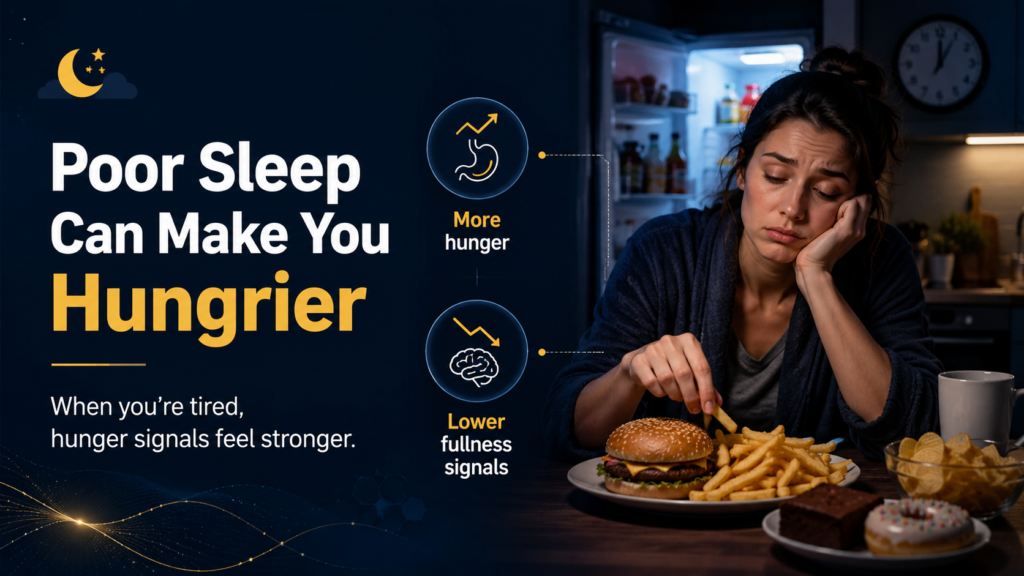
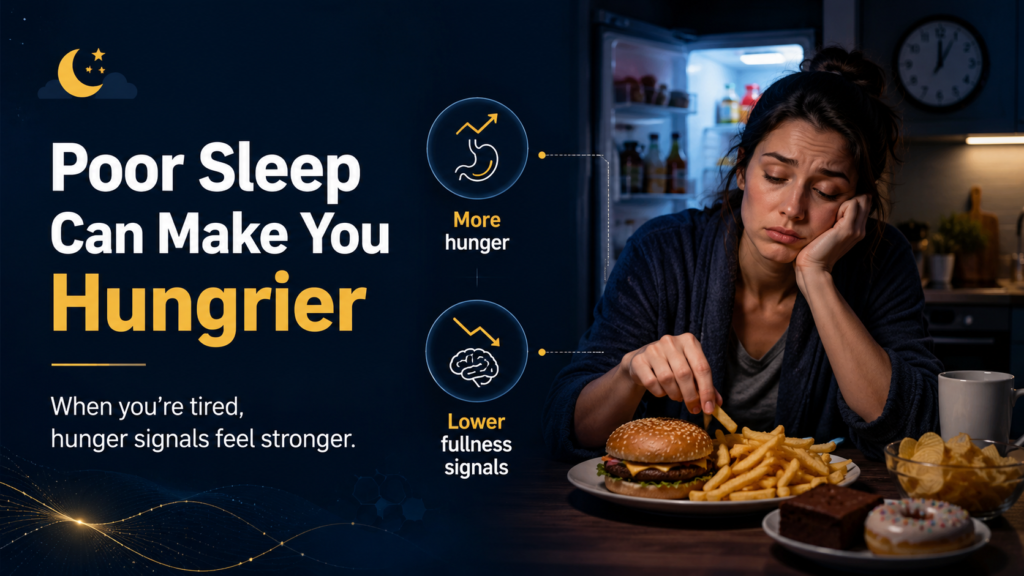
One of the biggest ways sleep affects belly fat is through appetite regulation.
Your body uses hormones to tell you when you are hungry and when you are full. Two important hormones involved in this process are ghrelin and leptin.
Ghrelin is often called the hunger hormone because it helps increase appetite. Leptin helps signal fullness and tells your brain that you have had enough food.
When you do not sleep well, these hunger signals can become less balanced. You may feel like you need more food to feel satisfied, even if your body has already received enough energy.
This is why poor sleep can make you feel hungry even after eating.
It is not always a lack of discipline. Sometimes your body is simply sending stronger hunger signals because it is tired and stressed.
2. Poor Sleep Can Make Cravings Stronger
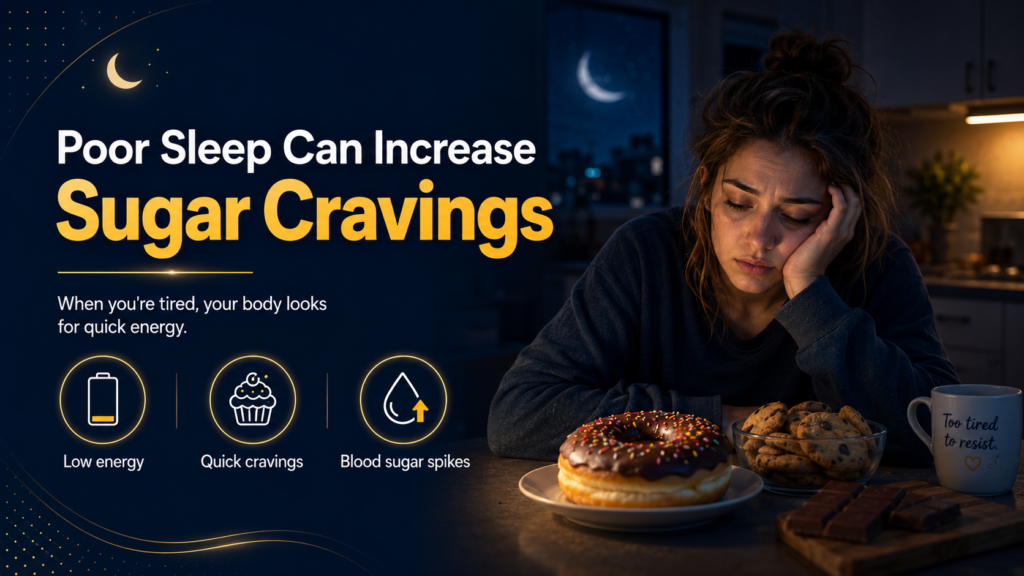
When you are tired, your brain looks for quick energy.
That is why cravings for sweet drinks, bread, chips, chocolate, takeaways, or late-night snacks can feel stronger after poor sleep. Your body wants fast fuel because it feels drained.
The issue is that these foods often cause blood sugar spikes and crashes. After the crash, you may feel tired again, hungry again, and tempted to snack again.
This cycle can look like this:
Poor sleep → low energy → stronger cravings → blood sugar spikes → energy crash → more cravings
Over time, this cycle can make it harder to reduce belly fat because it keeps you stuck in a pattern of overeating, snacking, and energy instability.
This is why fixing sleep is not just about feeling rested. It can also help you make better food choices without fighting yourself all day.
3. Poor Sleep Can Affect Insulin Sensitivity
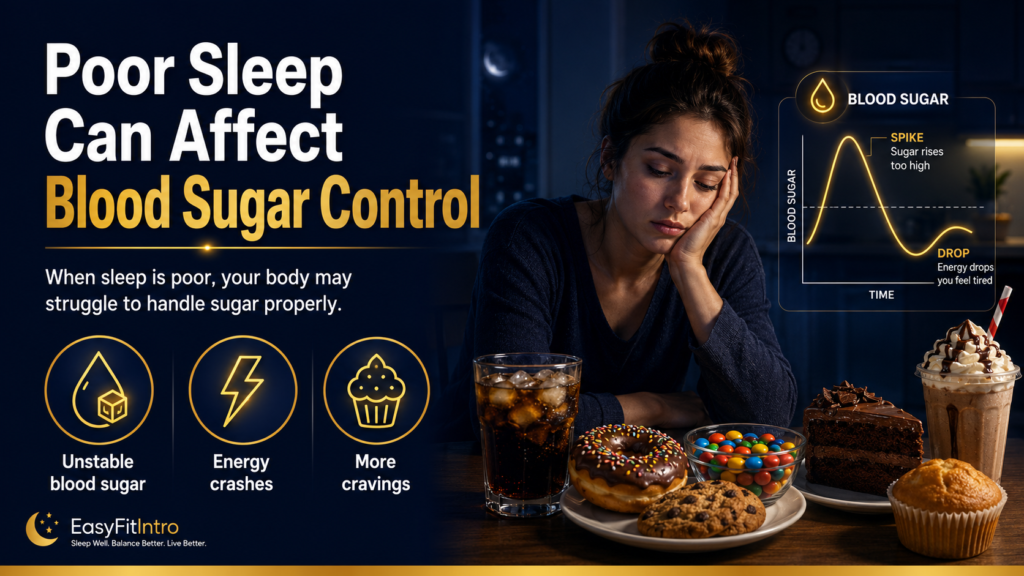
Insulin is the hormone that helps move sugar from your blood into your cells for energy.
When your body is more insulin sensitive, it handles carbohydrates and blood sugar better. When insulin sensitivity is poor, your body may struggle to manage blood sugar properly.
Poor sleep can make insulin sensitivity worse. This means your body may not handle sugar and carbohydrates as efficiently as it should.
For belly fat loss, this matters because unstable blood sugar can lead to more hunger, more cravings, lower energy, and easier fat storage over time.
This does not mean carbohydrates are bad. It means your body needs good sleep, balanced meals, and movement to use energy properly.
A simple plate that supports better blood sugar includes the following:
- Protein
- Fibre-rich carbohydrates
- Healthy fats
- Vegetables
- Water
For example: eggs with vegetables, chicken with rice and salad, oats with Greek yogurt, or beans with vegetables and avocado.
The goal is not extreme dieting. The goal is to help your body feel stable.
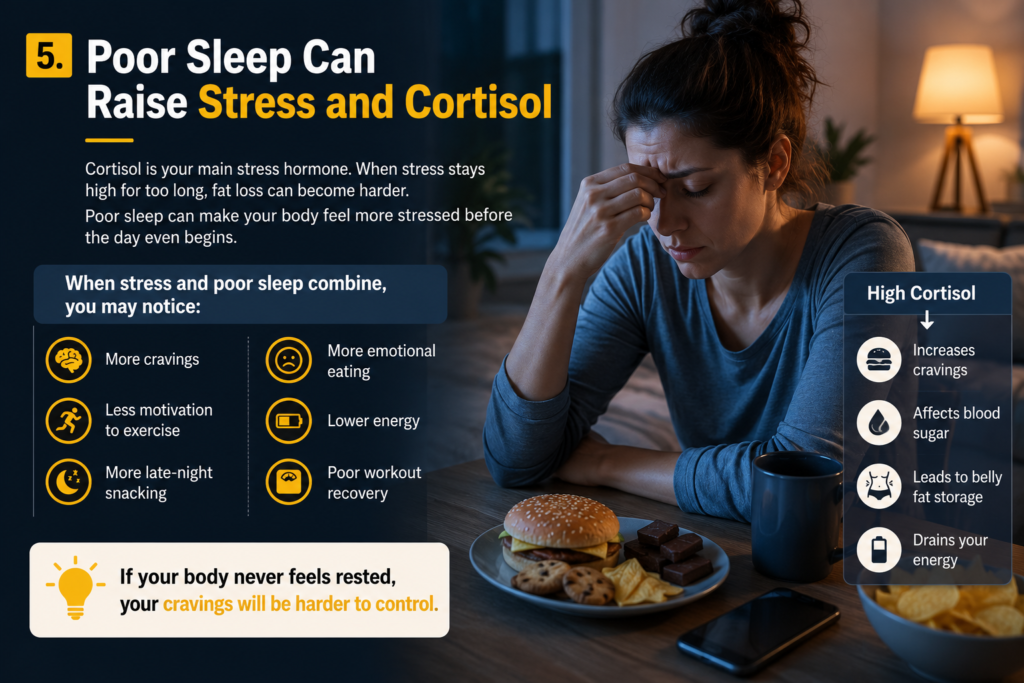
4. Poor Sleep Can Raise Stress and Cortisol
Cortisol is the body’s main stress hormone.
Cortisol is not bad. You need it to wake up, focus, respond to pressure, and manage energy. But when stress stays high for too long, it can interfere with fat loss.
Poor sleep can make your body feel more stressed. When you wake up tired, your nervous system may already feel under pressure before the day even starts.
This can lead to:
- More emotional eating
- Stronger cravings
- Lower patience
- Less motivation to exercise
- Higher evening snacking
- Poor recovery from workouts
Belly fat is often connected to long-term stress patterns because the body does not feel safe, rested, and regulated.
That is why sleep should not be treated as optional. It is part of the fat loss system.
5. Poor Sleep Can Reduce Workout Recovery
Exercise is powerful, but your body changes during recovery.
If you train hard but sleep poorly, your body may struggle to repair muscle, restore energy, and recover properly. This can leave you feeling sore, tired, and less motivated to train again.
Poor recovery can also lead to lower daily movement. You may skip workouts, walk less, sit more, or choose easier food because you feel drained.
This matters because belly fat loss is not only about one workout. It is about the full daily pattern.
Good sleep helps you show up better the next day.
You train better.
You walk more.
You think clearer.
You crave less.
You recover faster.
That is how sleep supports consistency.
6. Late-Night Eating Can Make the Problem Worse
Many people who sleep poorly also eat late at night.
This can happen because of stress, boredom, long work hours, emotional pressure, or cravings. The problem is that eating heavy meals close to bedtime may affect digestion, sleep quality, and blood sugar control.
Your body follows a natural rhythm. During the day, your body is generally better prepared to handle food, movement, and energy use. At night, the body should be winding down.
When you eat large, sugary, or heavy meals late at night, your body may have to focus on digestion when it should be preparing for deep rest.
This can create a cycle:
Late eating → poorer sleep → stronger cravings tomorrow → more late eating
Breaking this cycle can make belly fat loss much easier.
You do not need to be perfect. Start by creating a simple evening cut-off routine.
For example:
- Eat dinner earlier when possible.
- Avoid very heavy meals right before bed.
- Choose protein and fiber at dinner.
- Drink water instead of sugary drinks.
- Use tea, stretching, or breathing instead of stress snacking.
Small changes can create a big difference when done consistently.
7. Short Sleep May Be Linked to More Visceral Fat
Visceral fat is the deeper fat stored around the organs. This is the type of belly fat strongly linked with metabolic health risks.
Research has shown a connection between shorter sleep duration and greater visceral fat accumulation. This does not mean sleep is the only cause of belly fat. Diet, movement, stress, genetics, hormones, and lifestyle all matter.
But sleep is one of the foundations.
If you are trying to lose belly fat while sleeping only 4 to 5 hours most nights, your body may be fighting from a disadvantaged position.
This is why the goal should not only be
“How do I burn more calories?”
A better question is
“How do I create a body environment where fat loss becomes easier?”
Sleep is part of that environment.
The Simple Sleep and Belly Fat Reset Plan
You do not need a complicated nighttime routine. Start with the basics.
1. Set a realistic bedtime
Choose a bedtime that gives you a better chance of getting enough sleep. If you currently sleep very late, do not force a perfect routine overnight. Move bedtime earlier by 15 to 30 minutes.
2. Stop heavy eating close to bedtime.
Try not to go to bed overly full. A heavy meal late at night can make sleep uncomfortable and may affect digestion.
3. Build a calming evening routine
Your body needs a signal that the day is ending. This can include dimming lights, taking a warm shower, stretching, journaling, prayer, meditation, or deep breathing.
4. Reduce late-night caffeine
Caffeine can stay active in your system for hours. If you drink coffee late in the day and struggle with sleep, try moving it earlier.
5. Keep your phone away before sleep
Scrolling at night keeps your brain alert. It can also trigger comparison, stress, cravings, and emotional eating.
6. Use a protein-based dinner
A balanced dinner with protein, vegetables, and fiber can help you feel satisfied and reduce late-night snacking.
7. Walk after dinner
A short walk after dinner can support digestion and blood sugar control. It does not need to be intense. Even 10 minutes can help build the habit.
Example Evening Routine for Belly Fat Loss
Here is a simple routine you can start tonight:
6:30 PM – 7:30 PM: Eat a balanced dinner
7:30 PM – 7:45 PM: Take a short walk
8:00 PM: Prepare clothes, lunch, or water for tomorrow
8:30 PM: Reduce bright lights and avoid heavy snacking
9:00 PM: Stretch, breathe, pray, journal, or relax
9:30 PM – 10:00 PM: Get into bed
The goal is not perfection. The goal is rhythm.
Your body responds well to rhythm because hormones, digestion, sleep, and energy all follow patterns.
What to Eat at Night if You Are Hungry
If you are genuinely hungry at night, do not punish yourself. Choose something that supports your body instead of triggering a craving cycle.
Better options include:
- Greek yogurt
- Boiled eggs
- Cottage cheese
- A small protein smoothie
- Peanut butter on whole-grain toast
- A small bowl of oats
- Tuna or chicken with vegetables
Try to avoid turning nighttime hunger into a sugar-heavy snack routine.
The goal is to satisfy hunger without spiking cravings.
Quick Table: Poor Sleep vs Better Sleep
| Area | Poor Sleep Pattern | Better Sleep Pattern |
|---|---|---|
| Hunger | Stronger appetite | Better appetite control |
| Cravings | More sugar and snack cravings | More stable choices |
| Energy | Low energy, less movement | Better energy for activity |
| Stress | Higher emotional pressure | Calmer nervous system |
| Workouts | Poor recovery | Better recovery |
| Belly fat | Harder to lose consistently | Easier to stay consistent |
Related EasyFitIntro Guides
Poor sleep is one part of the bigger belly fat and cravings picture. These guides will help you understand how food, protein, blood sugar, and hidden habits all connect:
- If cravings are your biggest struggle, read The Simple Meal Formula That Helps Reduce Cravings and Belly Fat Struggles
- If you are not eating enough protein, read: Not Getting Enough Protein? Why Belly Fat and Cravings Feel Harder to Control
- If you feel hungry soon after eating, read Why You’re Always Hungry After Eating: The Blood Sugar–Craving Cycle Explained
- If sugar spikes keep pulling you back into cravings, read: The Hidden Sugar Spikes That Keep Belly Fat Stubborn
- If belly fat still feels stuck even when you are trying your best, read the following: The Hidden Reasons Your Belly Fat Doesn’t Go Away (Even When You’re Doing Everything Right)
Common Mistakes That Keep the Cycle Going
Many people unknowingly make sleep and belly fat worse through small daily habits.
The most common mistakes include:
- Drinking caffeine too late
- Eating heavy meals right before bed
- Scrolling in bed
- Sleeping at different times every night
- Using alcohol to relax
- Skipping breakfast after poor sleep, then overeating later
- Ignoring stress until nighttime cravings take over
The fix is not to shame yourself. The fix is to build a better system.
When your evening system improves, your morning choices improve too.
The Bottom Line
Poor sleep can make belly fat harder to lose because it affects hunger, cravings, insulin sensitivity, cortisol, energy, and recovery.
You can still lose weight with imperfect sleep, but consistent poor sleep makes the process harder than it needs to be.
If your belly fat feels stubborn, do not only look at your workouts. Look at your sleep, stress, meal timing, and evening routine.
Fat loss becomes easier when your body feels rested, stable, and supported.
Start tonight with one simple change: eat a balanced dinner earlier, reduce late-night scrolling, and give your body a calm signal that it is time to rest.
Small habits repeated daily can change your belly fat journey.
Free Belly Fat Reset Workbook
If you want a simple step-by-step system to support your belly fat loss journey, download the free Belly Fat Reset Workbook from EasyFitIntro.
It will help you build beginner-friendly habits around food, movement, sleep, stress, and daily consistency.
Get the free Belly Fat Reset Workbook here:
Frequently Asked Questions
Can poor sleep really stop belly fat loss?
Poor sleep may not stop fat loss completely, but it can make it harder. It can increase hunger, cravings, stress, and low energy, which makes consistency more difficult.
How many hours of sleep do adults need?
Most adults should aim for at least 7 hours of sleep per night. Some people may need more depending on stress, training, health, and recovery needs.
Does sleeping more burn belly fat?
Sleep itself is not a fat-burning shortcut. But better sleep supports the hormones, energy, and habits that make fat loss easier.
Why do I crave sugar after poor sleep?
When you are tired, your brain looks for quick energy. This can increase cravings for sweet, salty, or high-calorie foods.
Is late-night eating bad for belly fat?
Late-night eating is not automatically bad, but heavy, sugary, or high-calorie meals close to bed can affect sleep, digestion, and blood sugar control.
What is the best evening habit for belly fat loss?
Start with a balanced dinner, a short walk after eating, less screen time before bed, and a consistent bedtime routine.
Sources to Reference
- CDC — Sleep in Adults
- NIH / PMC — Sleep Deprivation and Appetite Regulation
- NIH / PMC — Metabolic Consequences of Sleep and Sleep Loss
- PubMed — Shorter Sleep Duration and Visceral Fat
- Mayo Clinic — Sleep Tips and Eating Before Bed
- NIH / PMC — Circadian Regulation of Glucose, Lipid, and Energy Metabolism
For the source section, these are the strongest references behind the article: The CDC lists adults as needing 7 or more hours of sleep daily; NIH reviews connect sleep loss with appetite hormones, including ghrelin and leptin; and studies link sleep restriction with reduced insulin sensitivity and visceral fat accumulation over time.