
Introduction
Does your energy suddenly disappear in the afternoon?
You may start the day feeling focused and determined. Then, sometime between lunch and dinner, you begin thinking about chocolate, biscuits, sweets, fizzy drinks, pastries, or another cup of sweetened coffee.
Afternoon sugar cravings are common, but they do not always mean your body desperately needs sugar.
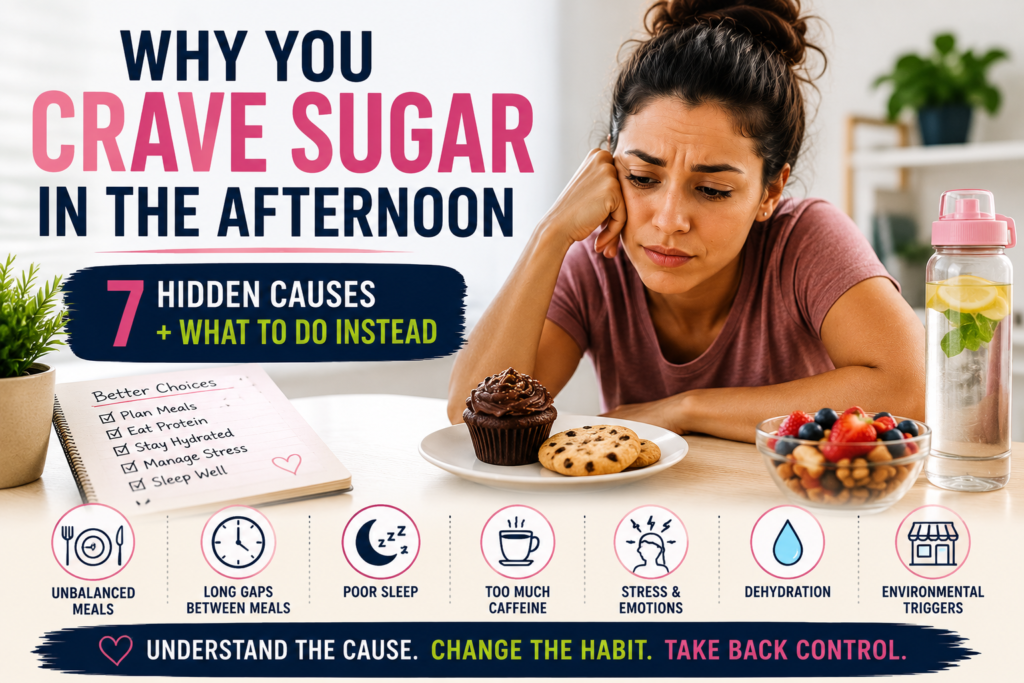
They may be connected to poor sleep, an unbalanced breakfast, a small lunch, dehydration, stress, caffeine habits, boredom, or simply having tempting food nearby.
Cravings are also different from physical hunger.
Physical hunger usually develops gradually and can be satisfied by many types of food. A craving often feels more specific and urgent. You may not want a proper meal—you want one particular sweet food.
That distinction matters.
Once you understand what is driving the craving, you can choose a response that actually solves the problem instead of temporarily covering it.
This article explains seven hidden reasons afternoon sugar cravings may become stronger and what you can do instead.
Why Afternoon Sugar Cravings Matter
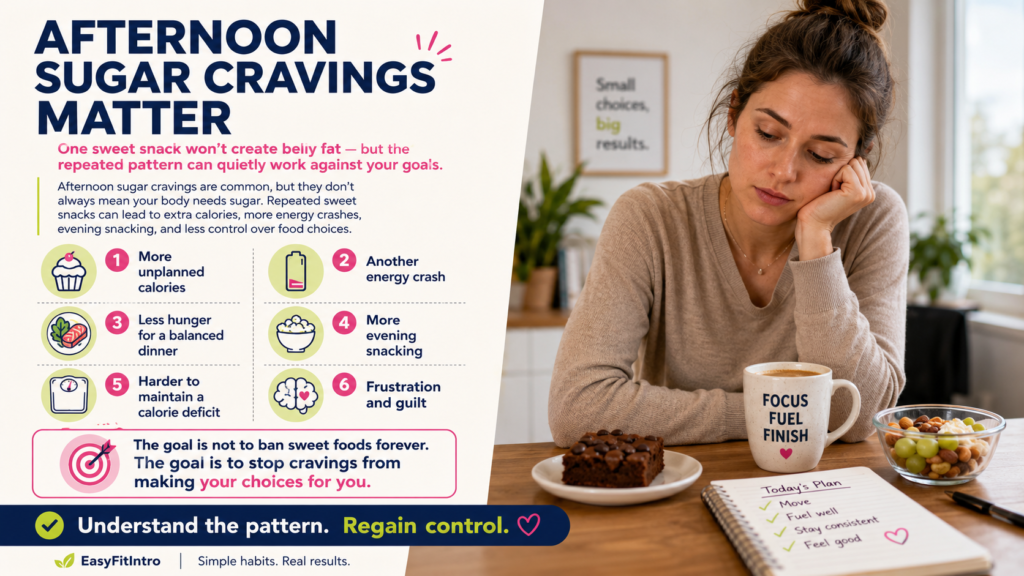
One afternoon snack will not create belly fat.
The problem is the repeated pattern.
A daily habit of sweet drinks, biscuits, chocolate, pastries, or takeaway snacks can quietly add a significant amount of energy without providing lasting fullness.
That may lead to:
- More unplanned calories
- Another energy crash
- Less hunger for a balanced dinner
- More evening snacking
- Difficulty maintaining a calorie deficit
- Frustration and guilt
- A feeling that your appetite is out of control
The goal is not to remove every sweet food from your life.
It is to stop afternoon cravings from making your choices for you.
Cause 1: Your Breakfast Did Not Keep You Full
What you eat early in the day can influence how hungry you feel later.
A breakfast made mainly from refined carbohydrates or added sugar may provide quick energy but little lasting satisfaction when it contains very little protein or fiber.
Examples include:
- Sweetened cereal
- Biscuits and coffee
- White bread with a sugary spread
- Pastries
- Sweetened yogurt alone
- A sugary drink instead of a meal
- Coffee with several teaspoons of sugar
These foods are not automatically forbidden.
The problem is eating them alone and expecting them to carry you through a demanding morning.
Protein and fibre can make a meal more satisfying and slow digestion. This may make it easier to reach lunch without constantly searching for snacks.
What to Do Instead
Build your first meal around a clear protein source.
Options include:
- Eggs
- Greek yogurt
- Maas or unsweetened cultured dairy
- Cottage cheese
- Beans
- Lentils
- Tuna
- Chicken
- Milk
- Peanut butter alongside another protein source
Then add fibre through:
- Oats
- Fruit
- Vegetables
- Whole-grain bread
- Beans
- Seeds
- Nuts
Balanced Breakfast Examples
- Eggs, tomato, and whole-grain toast
- Oats with milk, peanut butter, and banana
- Greek yogurt with oats and fruit
- Beans with eggs and vegetables
- Tuna on whole-grain toast
- Leftover chicken with vegetables and a small starch portion
You do not need a perfect breakfast.
You need one that gives your body more than a quick sugar rush.
Read the related post here: Not Getting Enough Protein? Why Belly Fat and Cravings Feel Harder to Control
Cause 2: Your Lunch Was Too Small or Unbalanced
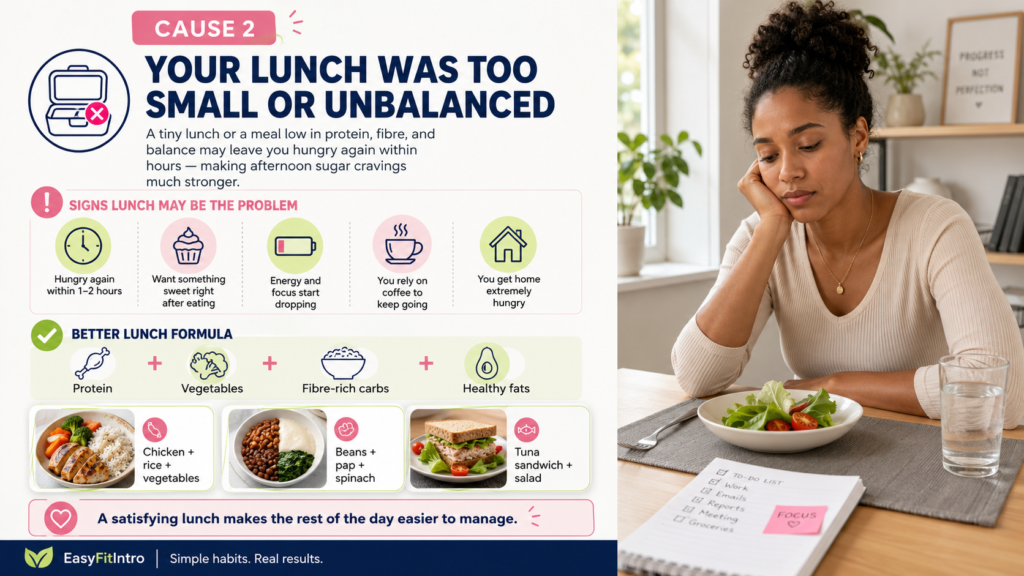
Many people try to be “good” at lunch by eating as little as possible.
Then the afternoon craving arrives.
A tiny salad, a piece of fruit, or coffee may not be enough to fuel several more hours of work, commuting, exercise, and concentration.
An unbalanced lunch can also leave you unsatisfied even when it contains enough calories.
For example, a meal built mainly from white bread, chips, or a large refined-carbohydrate portion may lack enough protein, fiber, vegetables, and healthy fats to keep you comfortably full.
Signs Your Lunch May Be the Problem
- You feel hungry again within one or two hours.
- You immediately want something sweet after eating.
- You struggle to concentrate later.
- You rely on coffee or an energy drink to continue working.
- You arrive home extremely hungry.
- You snack continuously before dinner.
What to Do Instead
Use a simple meal formula:
Protein + vegetables + fibre-rich carbohydrate + a small amount of healthy fat
Examples:
- Chicken, rice, and vegetables
- Beans, pap, and spinach
- Tuna, whole-grain bread, and salad
- Eggs, potatoes, and vegetables
- Lentils with rice and mixed vegetables
- Beef or chicken stew with vegetables and a sensible starch portion
The meal does not have to be expensive or complicated.
It must be satisfying enough to support the rest of your day.
Read meal formula here: The Simple Meal Formula That Helps Reduce Cravings and Belly Fat Struggles
Cause 3: You Waited Too Long Between Meals
Long gaps between meals can make hunger feel urgent.
When you become extremely hungry, your brain is less interested in planning a balanced meal. It wants fast, convenient energy.
That is when chocolate, sweets, biscuits, chips, sweetened coffee, and fizzy drinks become more tempting.
This does not mean everyone must eat every two hours.
Some people naturally do well with longer gaps between meals. Others become distracted, irritable, tired, and likely to overeat.
The right meal pattern depends on your schedule, preferences, activity, health, and how your body responds.
What to Do Instead
Look at your real pattern.
If you eat breakfast at 6:00 AM, have a small lunch at 11:00 AM, and will not eat dinner until 7:00 PM, a planned afternoon snack may be sensible.
A planned snack is different from random grazing.
Better Afternoon Snack Options
Choose a combination that includes protein, fiber, or both:
- Greek yogurt and fruit
- A boiled egg and an apple
- Peanut butter with whole-grain toast
- Cottage cheese and fruit
- Tuna with whole-grain crackers
- Nuts and fruit
- Maas with a piece of fruit
- Hummus with carrots or cucumber
- Leftover chicken with salad
- A small bowl of oats
The goal is to prevent extreme hunger—not to eat constantly.
Plan Before the Craving Starts
Pack your snack in the morning.
When a good option is already available, you are less likely to buy the first sweet food you see.
Cause 4: Poor Sleep Is Increasing Your Desire for Quick Energy
A bad night can change the way the next day feels.
You may wake up tired, rely on caffeine, move less, feel more stressed, and become more attracted to high-energy foods.
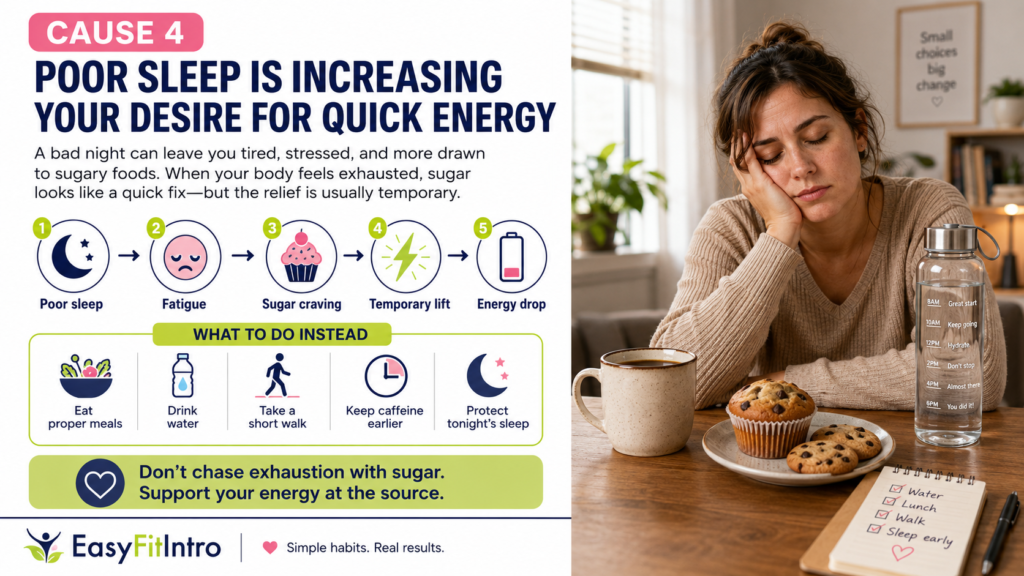
When your body feels exhausted, sugar looks useful because it offers fast energy and reward.
The relief is usually temporary.
You may feel better briefly, but the underlying sleep debt remains. Then the cycle continues:
Poor sleep → fatigue → sugar craving → temporary lift → energy drop → more caffeine or sugar
Poor sleep can also affect appetite regulation and make healthier decisions feel more difficult.
What to Do Instead
You cannot always repair a bad night immediately, but you can reduce the damage.
Try to:
- Eat proper meals instead of surviving on coffee.
- Drink water throughout the day.
- Take a short walk for alertness.
- Avoid chasing fatigue with repeated sugary snacks.
- Keep caffeine earlier if later use disrupts your sleep.
- Protect your bedtime that evening.
- Aim for at least seven hours of sleep when your schedule allows.
One poor night does not ruin progress.
The real problem is allowing poor sleep, caffeine, sugar, and late-night snacking to become a repeating system.
Read why poor sleep might be the reason: Poor Sleep and Belly Fat: Why Cravings Feel Harder to Control When You’re Tired
Cause 5: You Are Using Caffeine to Cover Fatigue
Coffee can be useful.
It can improve alertness and may support exercise performance. But caffeine does not replace food, water, or sleep.
The afternoon problem often begins when someone uses caffeine to push through exhaustion and then adds sugar, flavored powders, cream, syrups, or sweet snacks.
A large sweetened coffee may contain far more energy than expected while providing little lasting fullness.
Caffeine consumed later in the day may also interfere with sleep in people who are sensitive to it. That can create a loop:
Late caffeine → poorer sleep → more fatigue tomorrow → more caffeine and sugar
What to Do Instead
Use caffeine strategically:
- Drink water before automatically buying another coffee.
- Check whether you are actually hungry.
- Reduce added sugar gradually.
- Pair coffee with a balanced snack when needed.
- Notice what time caffeine begins affecting your sleep.
- Avoid using energy drinks as a daily fatigue solution.
- Choose a smaller serving if you only need a mild lift.
A Gradual Sugar Reduction Strategy
If you normally use three teaspoons of sugar, do not assume you must switch to zero overnight.
Try:
- Week 1: Reduce from three to two.
- Week 2: Reduce from two to one.
- Week 3: Add cinnamon or choose a less sweet drink.
- Week 4: Decide what level feels sustainable.
A gradual change often lasts longer than a strict rule you resent.
Cause 6: Stress Is Creating a Reward Craving
Afternoon cravings are not always about energy.
Sometimes they are about relief.
By the afternoon, you may have dealt with deadlines, customer pressure, traffic, conflict, boredom, financial stress, or a demanding workload.
Sweet food provides a quick reward.
That does not make you weak. It means your brain has learned that food is an easy way to change how you feel.
The problem is that the relief is brief.
The stress remains, and you may then add guilt or frustration on top of it.
Ask This Before Eating
Pause and ask:
Am I physically hungry, or do I need a break?
Then check:
- Would I eat a proper meal?
- Would I eat yogurt, eggs, chicken, beans, or fruit?
- Did the craving appear immediately after something stressful?
- Do I always crave the same food at the same time?
- Am I eating because everyone around me is eating?
You are still allowed to eat.
The pause simply gives you a chance to make a conscious decision.
Five-Minute Stress Reset
Before reaching for sugar, try one of these:
- Walk outside.
- Take ten slow breaths.
- Drink water.
- Stretch your shoulders and back.
- Step away from your phone.
- Write down what is stressing you.
- Send a message to someone supportive.
- Listen to one calming song.
- Pray or meditate briefly.
After five minutes, reassess.
If you are still hungry, eat a planned snack without guilt.
Cause 7: Your Environment Is Triggering the Craving
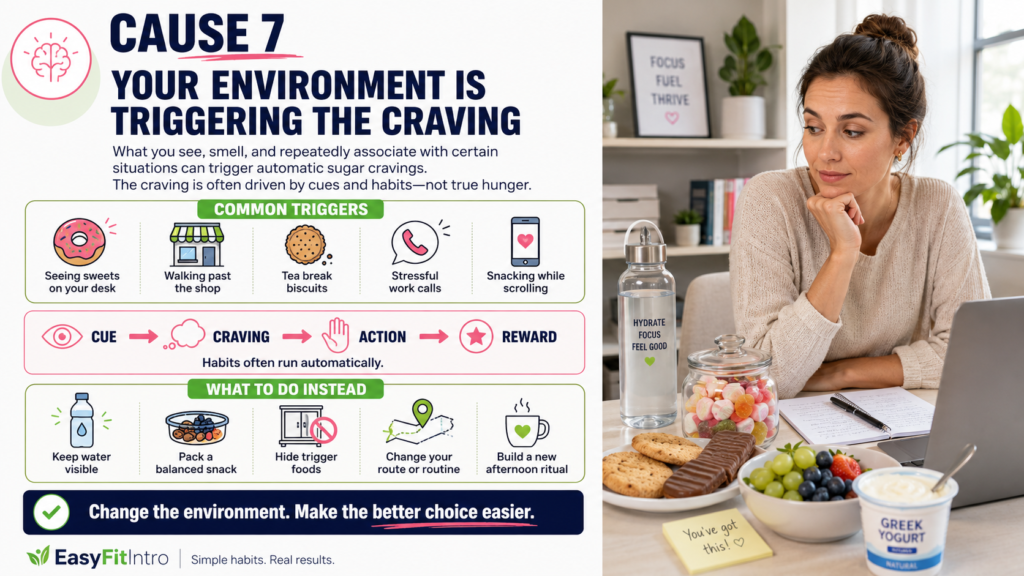
Food cravings are strongly influenced by what you see, smell, and repeatedly associate with certain situations.
You may not think about biscuits until someone opens a packet.
You may not want a sweet drink until you walk past the vending machine.
You may automatically buy chocolate at the same shop every afternoon because the behavior has become part of your routine.
This is a cue-response pattern:
Cue → craving → action → reward
Examples:
- Afternoon meeting → biscuits
- Tea break → sugar
- Stressful call → chocolate
- Taxi rank → sweet drink
- Watching videos → snacks
- Walking past the shop → pastry
What to Do Instead
Change the environment before relying on willpower.
Try:
- Keep water visible.
- Pack a satisfying snack.
- Avoid storing sweets on your desk.
- Take a different route past the shop.
- Bring unsweetened tea or coffee.
- Keep fruit where you can see it.
- Do not shop while extremely hungry.
- Buy single portions instead of large packets.
- Create a new afternoon ritual.
Build a Replacement Ritual
Your new afternoon routine could be the following:
- Drink water.
- Walk for five minutes.
- Eat your planned snack.
- Return to work.
Repeat it long enough and the new pattern becomes easier.
Is It Hunger or a Sugar Craving?
Use this quick comparison:
| Physical Hunger | Sugar Craving |
|---|---|
| Builds gradually | Can appear suddenly |
| Many foods sound acceptable | One specific food feels necessary |
| Often comes with an empty stomach | May appear even after eating |
| Improves after a balanced meal | May continue after random snacking |
| Usually connected to a meal gap | Often connected to stress, habit, or cues |
| Can be planned for | Feels urgent and emotional |
The two can overlap.
You can be physically hungry and crave sugar at the same time. In that case, eating a proper snack or meal is often more useful than fighting yourself with willpower.
The 10-Minute Afternoon Craving Reset
When a craving arrives, follow this sequence:
Minute 1: Pause
Do not immediately act on the craving.
Name what you are feeling:
- Hungry
- Tired
- Stressed
- Bored
- Thirsty
- Frustrated
Minute 2–3: Drink Water
Have a glass of water.
This will not magically remove genuine hunger, but it gives you time to assess the situation.
Minute 4–6: Move
Walk, stretch, climb stairs, or step outside.
Movement can improve alertness and interrupt automatic snacking.
Minute 7: Reassess
Ask whether you would eat a balanced snack.
If yes, you are probably hungry.
Minute 8–10: Choose Deliberately
Choose one of three paths:
- Eat your planned snack.
- Have a small portion of the sweet food and move on.
- Continue without eating because the craving has passed.
The goal is control—not perfection.
What to Eat Instead of a Sugary Afternoon Snack
You do not need to replace every craving with plain vegetables.
Choose something satisfying.
If You Want Something Sweet
Try:
- Greek yogurt with fruit
- Banana with peanut butter
- Oats with cinnamon
- Apple with nuts
- Maas with fruit
- Cottage cheese with berries
- A small portion of dark chocolate with yogurt or nuts
If You Want Something Crunchy
Try:
- Roasted chickpeas
- Nuts
- Carrots and hummus
- Whole-grain crackers with tuna
- Popcorn in a sensible portion
- Apple slices with peanut butter
If You Need Something Fast
Try:
- Boiled eggs
- Fruit and nuts
- Yogurt
- Peanut butter sandwich on whole-grain bread
- Tuna pouch or tinned tuna with crackers
- Leftovers from lunch
If You Still Want the Sweet Food
Eat it deliberately.
Put one portion on a plate instead of eating from the packet. Sit down, enjoy it, and avoid turning one choice into an “I ruined everything” reaction.
A sustainable eating pattern can include enjoyable food.
Foods That May Make the Afternoon Crash Worse
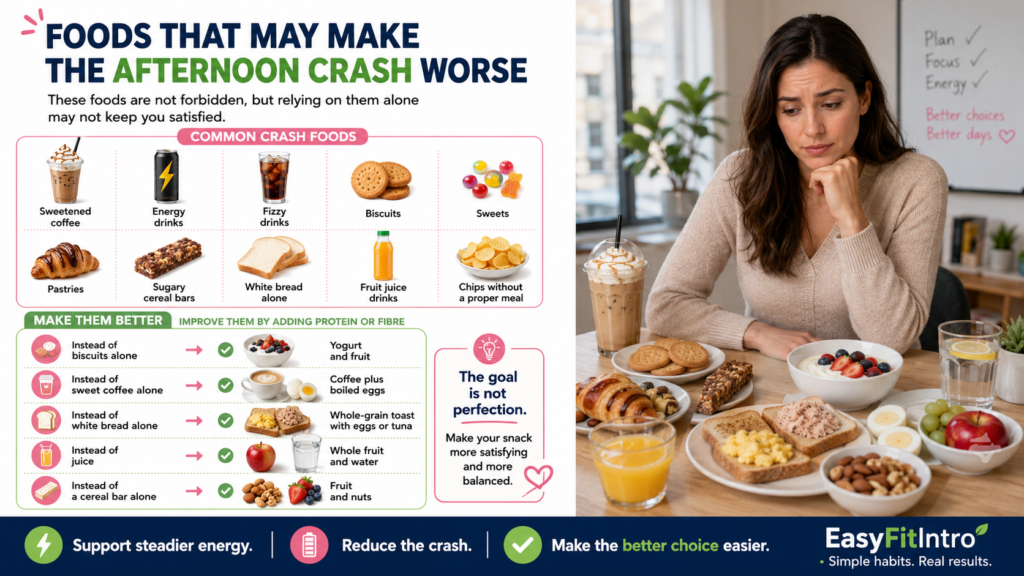
These foods are not forbidden, but relying on them alone may not keep you satisfied:
- Sweetened coffee
- Energy drinks
- Fizzy drinks
- Biscuits
- Sweets
- Pastries
- Sugary cereal bars
- White bread alone
- Fruit juice drinks
- Chips without a proper meal
Improve them by adding protein or fiber.
For example:
- Instead of biscuits alone: yogurt and fruit
- Instead of sweet coffee alone: coffee plus boiled eggs
- Instead of white bread alone: whole-grain toast with eggs or tuna
- Instead of juice: whole fruit and water
- Instead of a cereal bar alone: fruit and nuts
A Sample Day for Fewer Afternoon Cravings
Breakfast
Eggs, whole-grain toast, tomato, and water
Mid-Morning
Coffee with little or no added sugar
Lunch
Chicken, rice, and vegetables
Planned Afternoon Snack
Greek yogurt and fruit
Dinner
Beans, potatoes, and salad
This is only an example.
You can adjust it according to your culture, budget, schedule, preferences, and nutritional needs.
The principle is what matters:
Do not arrive at the afternoon underfed, exhausted, dehydrated, and unprepared.
Affordable South African Snack Ideas
Healthy snacks do not need to be expensive.
Practical options include:
- Boiled eggs
- Banana and peanut butter
- Apple and peanuts
- Maas
- Plain yogurt
- Popcorn
- Tinned tuna with bread
- Beans on whole-grain toast
- Leftover chicken
- Oats
- Pilchards on toast
- Carrots with homemade bean dip
Buy foods you will actually eat.
A cheap snack that sits untouched is not helpful.
Common Mistakes When Trying to Stop Sugar Cravings
1. Cutting Out All Sugar Overnight
An extreme rule may increase obsession and lead to overeating later.
2. Skipping Meals to “Save Calories”
This can make afternoon and evening hunger much harder to manage.
3. Eating Fruit Alone When You Are Very Hungry
Fruit is nutritious, but it may not be enough as a complete snack. Add yogurt, nuts, peanut butter, or another protein source.
4. Using Coffee Instead of Food
Coffee can delay the feeling of tiredness without solving hunger.
5. Keeping Trigger Foods Within Reach
Make the better choice easier by changing your environment.
6. Treating One Sweet Food as Failure
One snack does not ruin your progress. The all-or-nothing reaction often causes more damage than the snack itself.
7. Ignoring Sleep
You cannot consistently out-discipline exhaustion.
Can Afternoon Sugar Cravings Cause Belly Fat?
Sugar cravings do not directly create belly fat.
However, repeatedly acting on cravings can increase your overall calorie intake. If you consistently consume more energy than your body uses, body fat can increase over time.
You also cannot choose where your body stores or loses fat.
Belly fat is influenced by:
- Overall energy balance
- Genetics
- Age
- Sex
- Hormones
- Sleep
- Stress
- Physical activity
- Health conditions
- Alcohol intake
- Eating patterns
Managing afternoon cravings is therefore one part of a broader fat-loss system.
It helps by reducing unplanned eating and making consistency easier.
A Seven-Day Afternoon Craving Challenge
For the next seven days:
Every Morning
- Pack one balanced afternoon snack.
- Fill your water bottle.
- Decide what you will eat for lunch.
Every Afternoon
When the craving appears, record:
- The time
- What you ate at breakfast
- What you ate at lunch
- How well you slept
- Your stress level
- What food you wanted
- What you chose
After seven days, look for patterns.
You may discover that cravings are worse when
- You skip breakfast.
- Lunch lacks protein.
- You sleep poorly.
- Work becomes stressful.
- You drink too much coffee.
- You pass the same shop.
- You have no snack prepared.
Once the pattern becomes visible, the solution becomes clearer.
Related EasyFitIntro Guides
Continue building your cravings and belly fat system with these guides:
- 7 Morning Habits That Reduce Cravings and Support Belly Fat Loss
- The Simple Meal Formula That Helps Reduce Cravings and Belly Fat Struggles
- Not Getting Enough Protein? Why Belly Fat and Cravings Feel Harder to Control
- Why You’re Always Hungry After Eating: The Blood Sugar–Craving Cycle Explained
- The Hidden Sugar Spikes That Keep Belly Fat Stubborn
- Poor Sleep and Belly Fat: Why Cravings Feel Harder to Control When You’re Tired
- Late-Night Snacking and Belly Fat: Why Cravings Get Worse After Dinner
- The Hidden Reasons Your Belly Fat Doesn’t Go Away (Even When You’re Doing Everything Right)
The Bottom Line
Afternoon sugar cravings are not always a sign that you lack discipline.
They may be a response to the following:
- A breakfast that did not keep you full
- An unbalanced or undersized lunch
- Long gaps between meals
- Poor sleep
- Too much dependence on caffeine
- Stress and emotional reward-seeking
- Environmental triggers and habits
The solution is not necessarily to ban sugar forever.
Start by improving the conditions that make cravings stronger.
Eat enough protein and fiber.
Plan lunch.
Pack a snack.
Drink water.
Protect your sleep.
Use caffeine wisely.
Take a short break when stress rises.
Change the environment around you.
When the system improves, the craving becomes easier to manage.
You do not need perfect control.
You need a better response repeated consistently.
Free Belly Fat Reset Workbook
Want a simple daily structure for improving your meals, cravings, movement, sleep, and consistency?
Download the free Belly Fat Reset Workbook from EasyFitIntro.
The workbook gives you beginner-friendly checklists and practical habits that can help you build a more sustainable belly fat routine without extreme dieting.
Get your free Belly Fat Reset Workbook here:
Get My Free Belly Fat Reset Workbook
Frequently Asked Questions
Why do I crave sugar every afternoon?
Common causes include an unbalanced breakfast, a small lunch, long gaps between meals, poor sleep, stress, caffeine habits, dehydration, and environmental food cues.
Does craving sugar mean my blood sugar is low?
Not necessarily. Cravings can have many causes, and the feeling alone cannot diagnose low blood sugar. People taking diabetes medication should follow guidance from their healthcare professional if they experience symptoms such as shaking, sweating, confusion, or dizziness.
What is the best snack for afternoon sugar cravings?
A snack that combines protein and fiber is a strong option. Examples include yogurt and fruit, eggs and an apple, nuts and fruit, or peanut butter on whole-grain toast.
Should I completely stop eating sugar?
Not necessarily. A sustainable eating pattern can include some added sugar. Focus on frequency, portion size, overall diet quality, and whether sweet foods are replacing balanced meals.
Can dehydration cause sugar cravings?
Thirst and fatigue may sometimes be mistaken for hunger, but dehydration is not the only possible cause of a sugar craving. Drink water and then reassess whether you need food.
Does coffee reduce cravings?
Caffeine may temporarily reduce tiredness and sometimes appetite, but it does not replace proper meals or sleep. Sweetened coffee can also add a significant amount of sugar.
Why do I crave chocolate when I am stressed?
Sweet and highly palatable foods can provide temporary comfort or reward. Repeatedly using them during stress can strengthen the connection between emotional discomfort and eating.
Can a protein breakfast stop afternoon cravings?
It may help some people feel fuller, but it is not a guarantee. Your lunch, sleep, total food intake, stress, and environment also matter.
What should I do when I genuinely want chocolate?
Choose a portion, sit down, enjoy it consciously, and continue with your normal routine. Avoid treating one food choice as failure.
Will stopping afternoon snacks reduce belly fat?
It may help if those snacks were adding more calories than your body needed. However, belly fat loss depends on your total eating pattern, activity, sleep, stress, health, and consistency.
Medical Note
This article provides general educational information and is not a substitute for medical diagnosis or personalized nutrition advice.
Speak with a qualified healthcare professional if you experience:
- Persistent or extreme hunger
- Shaking, sweating, faintness, or confusion
- Unexplained weight changes
- Excessive thirst or frequent urination
- Repeated binge-eating episodes
- Severe fatigue
- Symptoms that may be related to diabetes or another medical condition
People who are pregnant, breastfeeding, managing diabetes, taking glucose-lowering medication, or living with an eating disorder should seek individual guidance before making major changes to meal timing or carbohydrate intake.
Science and source guidance
CDC guidance says adults generally need at least seven hours of sleep daily, and it notes that insufficient sleep can contribute to unhealthy food choices and lower motivation for activity.
Controlled breakfast studies suggest that higher-protein meals can improve fullness or reduce hunger in some groups, but findings are not identical across every population. The article therefore says protein may help instead of promising it will eliminate cravings.
Research reviews and trials show that caffeine’s amount and timing can affect later sleep. Individual sensitivity varies, so the article encourages readers to notice their own response instead of prescribing one universal cut-off time.
The evidence around cravings is complex: food cravings are related to—but distinct from—ordinary hunger and can be shaped by reward, learned cues, nutritional factors, and emotional states.