
Affiliate Disclosure: This article contains an affiliate link. If you purchase through it, EasyFitIntro may earn a commission at no extra cost to you.
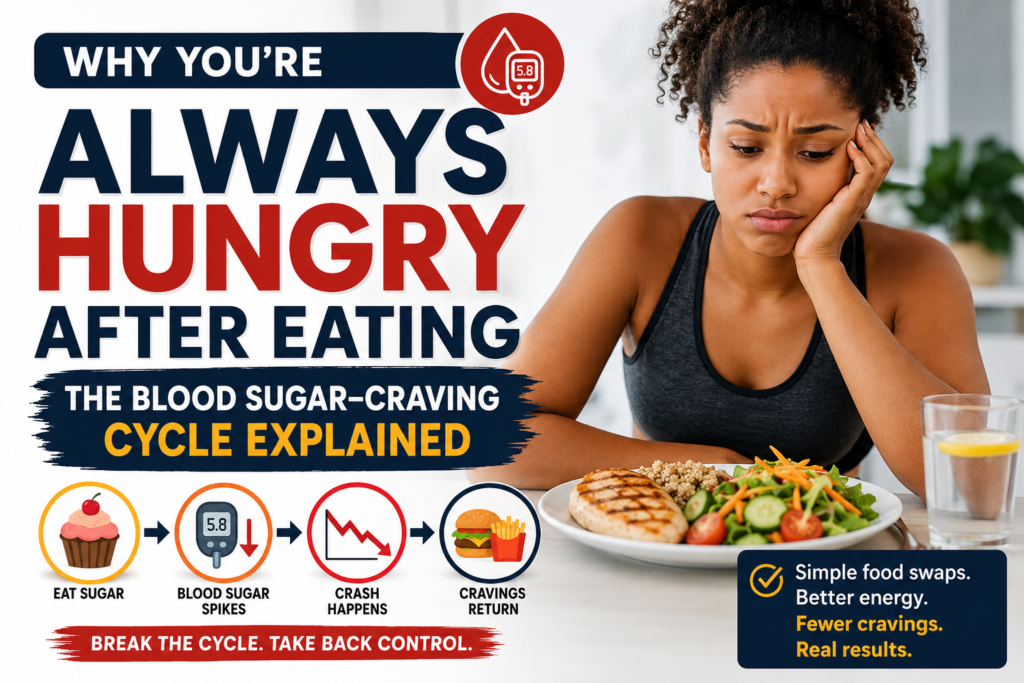
You ate breakfast less than two hours ago.
But now you are hungry again.
You reach for something small: a biscuit, sweet coffee, chips, bread, a cereal bar, or another snack.
For a moment, you feel better.
Then the hunger returns.
If this cycle sounds familiar, it does not automatically mean you lack discipline.
Sometimes the meal you ate was simply not built to keep you full.
A meal that digests very quickly—especially one high in refined carbohydrates or liquid sugar and low in protein and fiber—can cause blood glucose to rise quickly and then fall again. Research in healthy adults has found that larger post-meal glucose dips were associated with greater hunger, shorter time until the next meal, and higher later energy intake.
That cycle matters when your goal is to reduce belly fat, because feeling hungry all day makes it much harder to maintain consistent portions, resist cravings, and follow a realistic fat-loss routine.
This article explains what may be happening, which common meals can make it worse, and how to build meals that keep you satisfied for longer.
First: Hunger Is Not Always a Willpower Problem
Hunger is normal. Your body needs energy.
But feeling hungry again shortly after a meal may be influenced by several things:
- the amount of protein in your meal
- the amount and type of carbohydrate
- whether you drank calories instead of eating whole foods
- fiber content
- sleep quality
- stress
- meal size
- medical conditions or medication
Blood sugar is only one piece of the picture, but it is an important one.
In a study involving more than 1,000 people wearing continuous glucose monitors, researchers found that people who experienced larger drops in glucose two to three hours after eating reported more hunger and ate more later in the day. This does not mean every craving is caused by blood sugar, but it shows why some meals may leave you wanting more food sooner than expected.
The goal is not to fear food or eliminate carbohydrates. The goal is to build meals that satisfy you instead of sending you into a hunger-craving-snacking loop.
What Is the Blood Sugar–Craving Cycle?
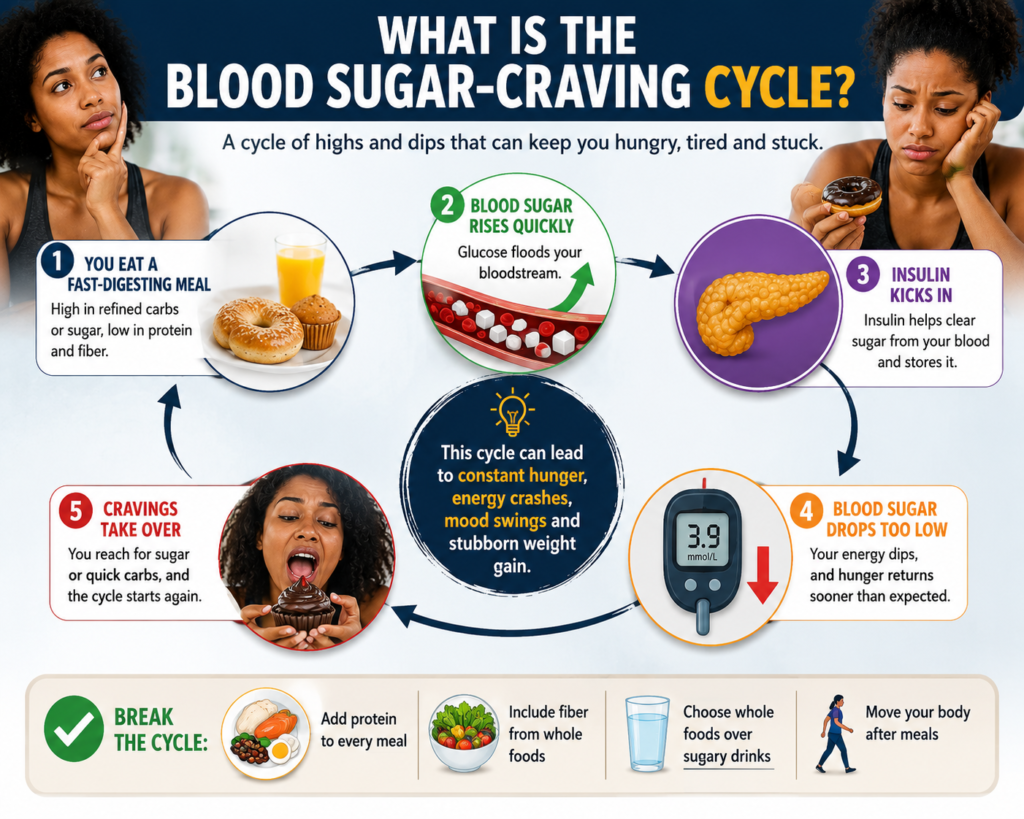
When you eat carbohydrate-containing foods, your body breaks much of that carbohydrate down into glucose. Glucose enters your bloodstream, and insulin helps move it into cells where it can be used or stored for energy.
That process is normal and necessary.
The problem is that some meals raise blood sugar more quickly than others.
For example, fruit juice generally raises blood sugar faster than whole fruit, and eating carbohydrates together with protein, fat, or fiber can slow how quickly blood sugar rises.
The Cycle in Simple Terms
| Stage | What May Happen | What You Feel |
|---|---|---|
| You eat a fast-digesting meal | Blood sugar rises quickly | Temporary energy boost |
| Your body responds | Insulin helps clear glucose | Energy begins to settle |
| Glucose drops quickly afterward | Hunger may return sooner | Cravings, tiredness, irritability |
| You snack for relief | Another rise begins | The cycle repeats |
A single meal will not determine your body shape.
But if this pattern happens most days, it can make fat loss feel far harder than it needs to be.
Why This Cycle Can Keep Belly Fat Goals Stuck
Belly fat is not caused by one food, one hormone, or one sugar spike.
Body fat changes over time when overall energy intake repeatedly exceeds what your body uses. Genetics, sleep, stress, physical activity, muscle mass, and metabolic health all matter.
However, repeated hunger and cravings can push you into patterns that make a calorie deficit difficult to sustain:
| Hunger-Craving Pattern | How It Can Affect Progress |
|---|---|
| Hungry soon after breakfast | More snacking before lunch |
| Afternoon energy crash | Sweet drinks or convenience foods |
| Constant grazing | Extra calories without feeling satisfied |
| Strong evening cravings | Larger late-night portions |
| Poor meal structure | Difficult to stay consistent |
This is why managing hunger is not a side issue.
It is one of the practical foundations of sustainable fat loss.
Hidden Hunger Trigger #1: A Breakfast That Looks Healthy but Has No Staying Power
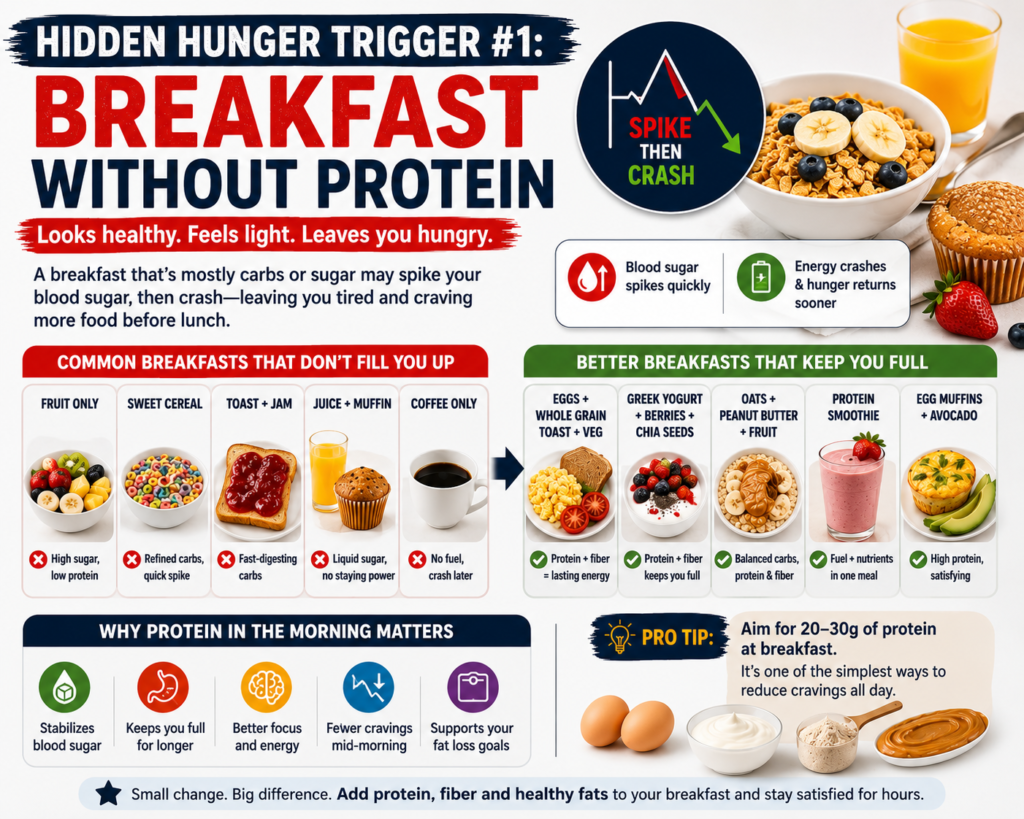
Breakfast is where many people unknowingly start the craving cycle.
You may believe you are making a healthy choice because your meal contains fruit, cereal, or toast. But if it contains very little protein or fiber, it may not hold you for long.
Common Examples
- fruit only
- cereal with sweetened milk
- toast with jam
- coffee with sugar and no food
- fruit juice and a muffin
- a smoothie made from fruit juice and several fruits only
These meals are not automatically “bad.” But they may digest quickly and leave you hungry again before lunch.
High-glycemic carbohydrate foods are absorbed more quickly and can produce larger blood sugar fluctuations, while slower-digesting carbohydrate choices tend to create a more gradual response.
What to Eat Instead
Build breakfast around protein + fiber + a controlled carbohydrate portion.
| Instead of This | Try This Instead | Why It May Satisfy Better |
|---|---|---|
| Fruit only | Greek yogurt + berries + chia seeds | Protein and fiber support fullness |
| Toast and jam | Eggs + whole-grain toast + avocado | More balanced digestion |
| Sweet cereal | Oats + plain yogurt + peanut butter | Slower, more filling meal |
| Coffee only | Eggs, oats or a balanced smoothie | Helps prevent rebound hunger |
| Juice smoothie | Whole fruit + greens + yogurt/protein + seeds | More fiber and protein |
Affordable South African Breakfast Examples
- Two eggs with one slice of whole-grain toast and tomato
- Oats with plain yoghurt, peanut butter and cinnamon
- Maize meal porridge served with eggs rather than sugar alone
- Smoothie made with plain yoghurt, spinach, peanut butter, a small banana and water or milk
The rule is simple:
Do not let your breakfast be carbohydrates only. Add something that helps you stay full.
Hidden Hunger Trigger #2: Drinking Sugar Without Realising It
Many people look at their meals but forget to count what they drink.
Liquid calories can pass quickly and may not create the same satisfaction as chewing a balanced meal.
Common examples include:
- fruit juice
- sweetened tea
- flavoured coffee
- energy drinks
- fizzy drinks
- large fruit-heavy smoothies
- sweetened yoghurt drinks
Whole fruit contains fiber, while fruit juice removes much of that structural fiber. Mayo Clinic recommends whole fruits over juice when aiming for better blood sugar management because fiber moderates digestion.
Simple Drink Swaps
| Instead of | Try |
|---|---|
| Fruit juice with breakfast | Water plus whole fruit with the meal |
| Sugary coffee | Reduce sugar gradually or use plain milk |
| Energy drink | Water, unsweetened coffee or tea |
| Fizzy drink | Sparkling water with lemon |
| Fruit-only smoothie | Balanced smoothie with protein and fiber |
Important Note About Smoothies
A smoothie is not automatically good or bad.
A smoothie made from juice, honey, and several fruits can become a high-sugar drink.
A better smoothie includes:
- one moderate fruit portion
- leafy greens
- a protein source, such as plain Greek yoghurt or protein powder
- fiber or healthy fat, such as chia seeds, flaxseed or peanut butter
- water or unsweetened milk as the base
That is the difference between a drink that simply tastes healthy and one designed to be more satisfying.
Hidden Hunger Trigger #3: Eating Carbohydrates on Their Own
Carbohydrates are not the enemy.
Rice, pap, potatoes, bread, oats, and fruit can all fit into a healthy eating pattern.
The problem is when most of your meals are built around carbohydrates alone, without enough protein, vegetables, or healthy fats.
Examples:
- pap only, or pap with a very small protein portion
- bread and tea as a full meal
- rice-heavy plate with little meat or vegetables
- fruit as the only snack
- biscuits between meals
- pasta with little protein
The CDC notes that eating carbohydrate foods with protein, fat or fiber slows how quickly blood sugar rises.
Build a Better Plate
A practical balanced plate can look like this:
| Portion of Plate | Food Examples |
|---|---|
| Half the plate | spinach, cabbage, green beans, mixed vegetables, salad |
| Quarter of the plate | chicken, fish, eggs, lean beef, beans, lentils |
| Quarter of the plate | pap, rice, potatoes, sweet potato, whole grains |
| Optional healthy fat | avocado, olive oil, peanut butter, seeds |
This structure is similar to the plate method recommended by the American Diabetes Association for building balanced meals.
Real Meal Upgrades
| Typical Meal | More Filling Version |
|---|---|
| Large pap portion with gravy | Moderate pap + chicken/beef + spinach |
| Bread and tea | Whole-grain bread + eggs + avocado/tomato |
| Rice only with sauce | Rice + chicken + mixed vegetables |
| Potato chips as lunch | Baked potato + tuna/eggs + salad |
| Fruit snack only | Fruit + plain yoghurt or peanut butter |
You do not need special “diet food.”
You need meals that are built properly.
Hidden Hunger Trigger #4: Snacking Because Your Main Meals Are Too Weak
There is nothing wrong with having a snack when you genuinely need one.
But if you are reaching for food every two hours, the deeper question is
Was your last meal satisfying enough?
Many people snack because their breakfast or lunch was mostly quick carbohydrates:
- tea and biscuits
- sweet yoghurt
- cereal bars
- crisps
- white bread
- sugary coffee
- fruit alone
That may give quick energy, but it often does not solve the underlying hunger.
What to Do Instead
Start by strengthening your main meals.
Then, if you still need a snack, choose one with protein or fiber.
Better Snack Options
| Snack | Why It Is More Satisfying |
|---|---|
| Boiled eggs | Protein-based and easy to prepare |
| Plain yoghurt + berries | Protein plus fruit |
| Apple + peanut butter | Fiber plus healthy fat |
| Nuts + a piece of fruit | More satisfying than fruit alone |
| Cottage cheese or plain yoghurt | Protein-rich option |
Do not try to win the day through willpower while eating meals that leave you starving.
Build meals that help you stay in control.
Hidden Hunger Trigger #5: Poor Sleep Makes Cravings Harder to Control
Sometimes your food is not the only issue.
A tired body often wants quick energy.
When you are sleeping badly, cravings for higher-calorie foods can become harder to resist, and appetite regulation may suffer. Poor sleep is consistently linked with poorer weight-management outcomes and greater appetite in research on sleep and metabolism.
This matters for people working long shifts, waking early, training, and then trying to stay disciplined throughout the day.
Signs Sleep May Be Contributing
- you wake up hungry for sugar
- you depend on sweet coffee for energy
- afternoon cravings feel extreme
- you overeat late at night
- you feel too tired to prepare balanced food
What Helps
- aim for a more consistent bedtime
- reduce scrolling in bed
- prepare breakfast or lunch before a busy day
- avoid using sugar as your main energy strategy
- keep an easy protein option available, such as boiled eggs or yoghurt
You do not need a perfect life before you improve your nutrition.
But you do need to understand that hunger can increase when recovery is poor.
Hidden Hunger Trigger #6: Stress Can Push You Toward Quick Relief Foods
Stress changes how you eat.
When you feel overwhelmed, frustrated, or under pressure, you may not reach for food because you are physically starving. You may reach for it because your brain wants comfort or fast energy.
That does not mean you are weak.
It means you need a better strategy than simply saying, “I must stop craving.”
Stress-Eating Loop
| Situation | Common Reaction | Better Response |
|---|---|---|
| Difficult workday | sweets or takeaway after work | planned dinner + short walk |
| Financial pressure | snacking while overthinking | water, breathing, then proper meal |
| Poor mood | eating for comfort | speak to someone, walk, then assess hunger |
| Fatigue | energy drinks or biscuits | protein snack plus hydration |
Stress management does not replace nutrition.
But ignoring stress can make nutrition far harder to follow.
Research Insight: The Post-Meal Glucose Dip
One of the most useful findings in this area comes from a 2021 study published in Nature Metabolism.
Researchers monitored glucose responses in more than 1,000 healthy adults across thousands of meals. They found that larger glucose dips two to three hours after eating were associated with:
- increased hunger
- shorter time until the next meal
- greater calorie intake later in the day
The study does not prove that blood sugar is the only cause of hunger, and it does not mean everyone should track glucose. But it supports a practical point:
The way a meal affects you after eating matters—not only whether that meal appears healthy on the surface.
What Actually Works: Build Meals That Keep You Satisfied
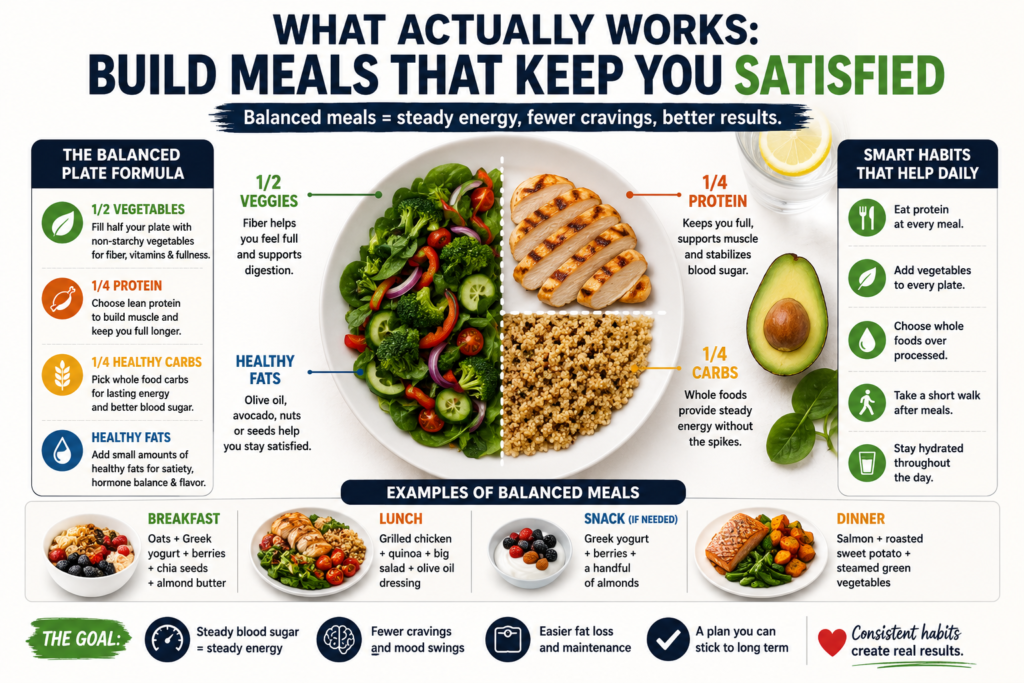
The goal is not to eat less by force.
The goal is to eat in a way that helps you feel satisfied, steady, and consistent.
1. Add Protein to Every Main Meal
Protein is one of the strongest tools for making meals more satisfying.
Protein food examples include:
- eggs
- chicken
- fish
- lean beef
- plain Greek yoghurt
- cottage cheese
- beans
- lentils
- tofu
A three-year randomized trial found that a higher-protein, lower-glycemic-index eating pattern suppressed hunger more than a moderate-protein, higher-glycemic-index pattern, although it did not prevent all weight regain by itself. That is an important truth: protein can support hunger control, but it is not magic without overall consistency.
Practical Protein Upgrades
| Meal | Add This |
|---|---|
| Oats | plain yoghurt, milk or peanut butter |
| Toast | eggs or tuna |
| Pap | chicken, fish, beans or lean meat |
| Salad | eggs, tuna or grilled chicken |
| Smoothie | plain yoghurt or protein source |
2. Include Fiber, Especially From Whole Foods
Fiber helps meals feel more substantial and can slow digestion.
Good sources include:
- vegetables
- beans and lentils
- oats
- whole fruit
- seeds
- whole grains
The CDC explains that fiber does not raise blood sugar in the same way as digestible carbohydrates and can support blood sugar control and weight management.
Easy Fiber Additions
| Current Meal | Add Fiber With |
|---|---|
| Eggs | tomato, spinach or avocado |
| Chicken and rice | mixed vegetables or salad |
| Yoghurt | berries and chia seeds |
| Smoothie | greens and flax/chia seeds |
| Pap meal | spinach, cabbage or beans |
3. Stop Drinking Your Hunger
Drink water regularly and reduce sweet drinks.
A person can easily drink a lot of sugar without feeling as satisfied as they would after eating a proper meal.
Weekly Challenge
For seven days:
- replace juice with water and whole fruit
- reduce sugar in tea or coffee
- avoid energy drinks unless medically necessary or specifically required
- build smoothies with protein and fiber, not just fruit
This is simple, but it can expose how much of your hunger cycle begins with drinks.
4. Walk Briefly After Meals
A short walk after eating is one of the easiest habits to apply.
A 2023 systematic review and meta-analysis concluded that walking has a greater immediate benefit for post-meal high blood sugar when done as soon as possible after eating rather than much later or before the meal.
You do not need a gym session after lunch.
Try:
- 10 minutes after lunch
- 10 minutes after dinner
- walking during your break
- light movement around the house when a formal walk is not possible
This supports blood sugar management and gives you a repeatable habit rather than another strict diet rule.
5. Build a Simple Daily Eating Rhythm
A structure you can repeat is better than a perfect plan you quit after three days.
Example Daily Rhythm
| Time | Meal Goal | Example |
|---|---|---|
| Breakfast | Protein + fiber | eggs and toast, or oats with yoghurt |
| Lunch | Balanced plate | chicken, rice and vegetables |
| Snack if genuinely needed | Protein/fiber based | yoghurt and fruit, or boiled eggs |
| Dinner | Balanced, not oversized | fish, potatoes and salad |
| After meals | Light movement | 10-minute walk |
This does not require expensive ingredients.
It requires intention.
A Simple One-Day Meal Example for Fewer Cravings
| Meal | Example | Why It Helps |
|---|---|---|
| Breakfast | Oats with plain yoghurt, peanut butter and berries | Protein, fiber and slower digestion |
| Lunch | Chicken, moderate pap portion and spinach | Balanced and realistic |
| Snack | Apple with peanut butter | More filling than fruit alone |
| Dinner | Fish, sweet potato and salad | Balanced evening meal |
| Drink | Water, unsweetened tea or reduced-sugar coffee | Reduces liquid sugar |
This is not a rigid diet prescription.
It is a practical example of how to build meals that may help you stay fuller for longer.
FREE Belly Fat Reset Workbook: Start Here
If you are tired of eating “healthy” but still struggling with cravings, bloating, or stubborn belly fat, I created a simple starting guide for you.
Download the FREE Belly Fat Reset Workbook here:
Inside, you will learn how to:
- identify habits that may be blocking your progress
- improve your meal structure
- reduce guesswork around belly fat and bloating
- build a simple routine you can actually follow
Important publishing note: Keep this CTA in the article draft today, but do not drive traffic hard to it until we confirm tomorrow that your MailerLite payment, form capture, and delivery automation are working correctly.
Want a Simpler Eating Structure? Try the 21-Day Smoothie Challenge
Many people know what healthy eating should look like but still struggle with the daily planning.
That is where a structured recipe plan can be helpful.
The 21-Day Smoothie Challenge is for readers who want a simpler way to build consistent meal habits using planned smoothie recipes rather than guessing every day.
Learn more about the 21-Day Smoothie Challenge here:
Before publishing or promoting, click this link yourself once and confirm that it loads correctly and your affiliate tracking is still attached.
A smoothie plan should support your eating routine—not replace balanced nutrition, medical care, or realistic habits.
Related Articles to Read Next
Add these internal links naturally inside the article and again here at the end:
- The Hidden Sugar Spikes That Keep Belly Fat Stubborn
- The Hidden Reasons Your Belly Fat Doesn’t Go Away Even When You’re Doing Everything Right
- Healthy Foods That Actually Cause Bloating: The Science Explained + What to Eat Instead
- Why Exercise Alone Isn’t Enough to Lose Belly Fat
Frequently Asked Questions
Why am I hungry again shortly after eating?
You may be hungry again because your meal was too small, low in protein or fiber, or high in fast-digesting carbohydrates, or because you are tired, stressed, or genuinely need more food. Research also suggests that larger blood sugar dips after meals are associated with increased hunger and greater later energy intake.
Can blood sugar crashes cause cravings?
Post-meal glucose dips may contribute to hunger and the desire to eat again sooner. Cravings are not always caused by blood sugar; however, sleep, stress, habits, emotional eating, and overall diet also matter.
What breakfast keeps you full for longer?
A breakfast built around protein and fiber is usually more satisfying than a carb-only breakfast. Examples include eggs with whole-grain toast and avocado, oats with plain yogurt and peanut butter, or a balanced smoothie containing protein, fiber, and whole fruit.
Is fruit bad if I am trying to reduce cravings?
No. Whole fruit provides fiber and nutrients. The issue is more likely to arise when fruit is consumed alone in a meal that lacks protein or when large quantities are blended with juice and sweeteners. Whole fruit is generally preferable to fruit juice for blood sugar management.
Are carbohydrates causing my belly fat?
Carbohydrates alone are not the cause of belly fat. Overall calorie balance, food quality, activity, sleep, stress, and genetics all matter. The practical goal is to choose sensible portions and pair carbohydrate foods with protein, vegetables, fiber, and healthy fats.
Can smoothies help control hunger?
A well-built smoothie can be part of a satisfying meal if it includes protein, fiber, and controlled portions of whole fruit. A smoothie made mainly from juice and several sweet ingredients may leave some people hungry sooner.
Should I eat snacks when trying to lose belly fat?
You can eat snacks when needed. The better question is whether your snack supports fullness. Protein- and fiber-containing snacks, such as plain yogurt with fruit or an apple with peanut butter, may be more satisfying than sugary snacks.
When should I speak to a health professional about constant hunger?
Speak to a healthcare professional if hunger is sudden, extreme, or paired with symptoms such as excessive thirst, frequent urination, unexplained weight loss, faintness, tremors, or other worrying symptoms. Persistent excessive hunger can sometimes be connected to medical conditions that require assessment.
Final Thought
If you are always hungry after eating, do not immediately blame yourself.
Your body may be asking for a better-built meal.
Start by asking:
- Did I include protein?
- Did I include fiber?
- Did I drink my calories?
- Did I eat a carb-heavy meal without balance?
- Did I sleep badly?
- Am I stress-eating rather than physically hungry?
You do not need to cut out every food you enjoy.
You need meals that help you stay full, steady, and consistent.
Because when your hunger becomes easier to manage, your fat-loss plan becomes easier to follow.
Your Turn
Have you ever eaten what you thought was a healthy meal, only to feel hungry again an hour or two later?
Leave a comment below and share the meal that does this to you. Your experience may help someone else understand their own cravings.
Sources and Scientific References
- Wyatt P, Berry SE, Finlayson G, et al. Postprandial glycaemic dips predict appetite and energy intake in healthy individuals. Nature Metabolism. 2021;3:523–529. This study found that larger glucose dips after meals were associated with greater hunger and later energy intake.
- Centers for Disease Control and Prevention. Diabetes Meal Planning. The CDC explains that carbs raise blood sugar and that eating them with protein, fat or fiber slows how quickly blood sugar rises.
- Centers for Disease Control and Prevention. Fiber: The Carb That Helps You Manage Diabetes. The CDC explains how fiber supports blood sugar control and weight management.
- Mayo Clinic. Diabetes diet: Create your healthy-eating plan. Mayo Clinic explains that fiber helps manage blood sugar and recommends whole fruit over fruit juice for fiber benefit.
- Zhu R, Fogelholm M, Larsen TM, et al. A High-Protein, Low Glycemic Index Diet Suppresses Hunger but Not Weight Regain After Weight Loss: Results From a Large, 3-Years Randomized Trial. Frontiers in Nutrition. 2021.
- Engeroff T, et al. After Dinner Rest a While, After Supper Walk a Mile? A Systematic Review and Meta-Analysis on the Acute Postprandial Glycemic Response to Exercise Before and After Meal Ingestion. Sports Medicine. 2023. The review found that walking soon after meals had a greater immediate benefit for post-meal glucose than walking before or later after meals.