Introduction
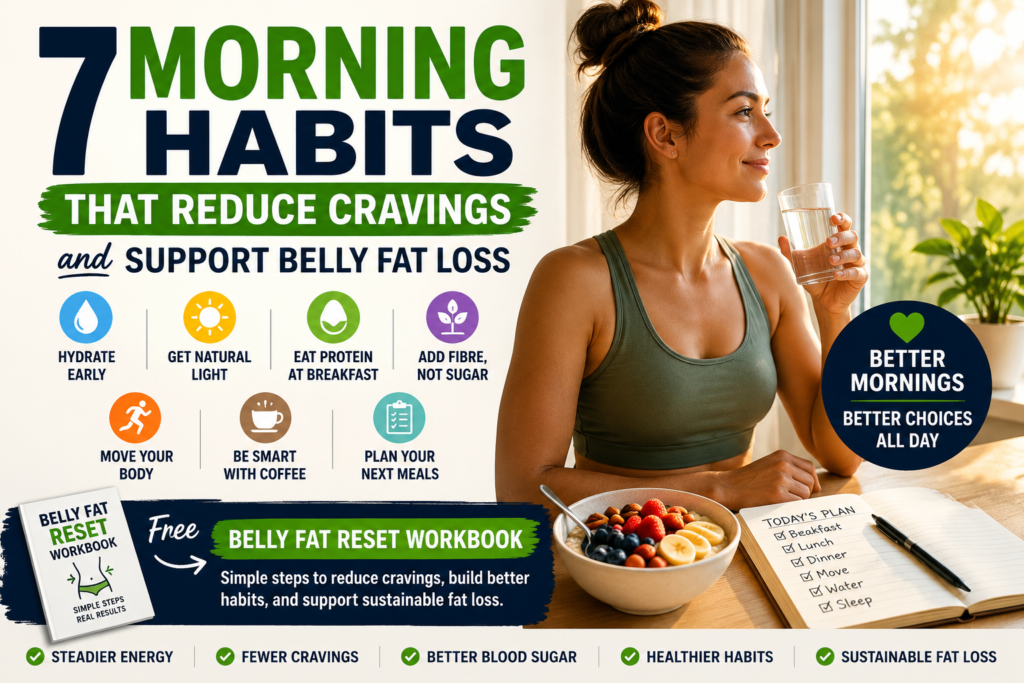
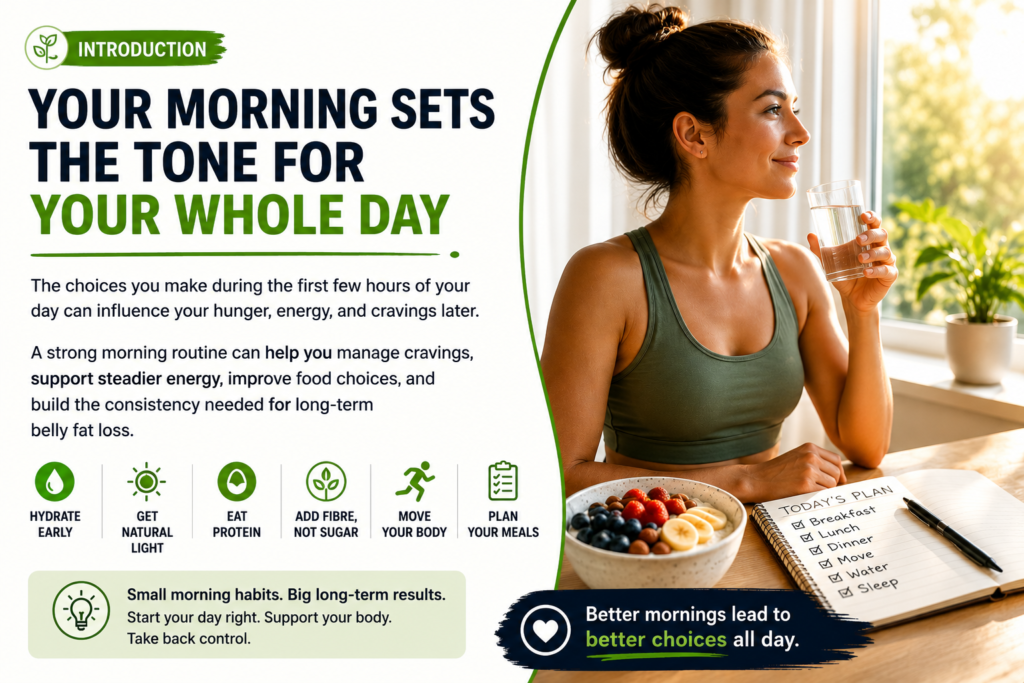
The choices you make during the first few hours of your day can influence your hunger, energy, and cravings later.
If you regularly start the morning tired, dehydrated, rushed, or relying only on coffee and sugary food, you may find yourself fighting hunger by midday and overeating at night.
This does not mean one imperfect morning causes belly fat.
Belly fat changes through your overall pattern of food intake, physical activity, sleep, stress, genetics, and health. However, a better morning routine can make the habits that support fat loss easier to maintain.
The goal is not to create a strict routine that takes two hours.
It is to give your body a steadier start.
The following seven morning habits can help you manage cravings, support more stable energy, improve meal choices, and build the consistency needed for long-term belly fat loss.
Why Your Morning Can Affect Cravings Later
Cravings do not suddenly appear without a reason.
They are often influenced by several factors working together:
- Poor sleep
- Low energy
- Dehydration
- Long gaps between meals
- Meals that lack protein or fibre
- Blood sugar changes
- Stress
- Habit and food availability
- Restricting food too aggressively
Your morning routine cannot solve every craving. However, it can reduce some of the conditions that make cravings stronger.
For example, eating a satisfying breakfast may help some people feel fuller until lunch. Getting enough sleep can support appetite control and clearer food choices. Planning your meals can reduce the chances of grabbing the first convenient snack available.
Think of your morning as preparation.
A strong morning does not guarantee a perfect day, but it makes a difficult day easier to manage.
Habit 1: Drink Water Soon After Waking Up
After several hours of sleep, it is normal to begin the day without having had anything to drink.
Drinking water in the morning helps you rehydrate and can become a useful signal that your healthy routine has started.
Water does not directly burn belly fat. It also cannot replace balanced meals or regular movement. However, staying hydrated supports normal digestion, physical performance, concentration, and general health.
Sometimes thirst, tiredness, and hunger can also feel similar. Drinking water first gives you a moment to understand what your body actually needs.
A Simple Hydration Routine
Try one of these approaches:
- Drink a glass of water after waking.
- Keep a filled water bottle beside your bed or in the kitchen.
- Drink water before your first coffee.
- Carry a refillable bottle to work or the gym.
- Add lemon, cucumber, or mint if plain water feels boring.
You do not need to force several liters into your body early in the morning.
Start with one glass and continue drinking regularly throughout the day.
Common Mistake
Do not assume that drinking water cancels out a poor diet or creates automatic fat loss.
Hydration is one supporting habit—not the entire system.
Habit 2: Get Natural Morning Light
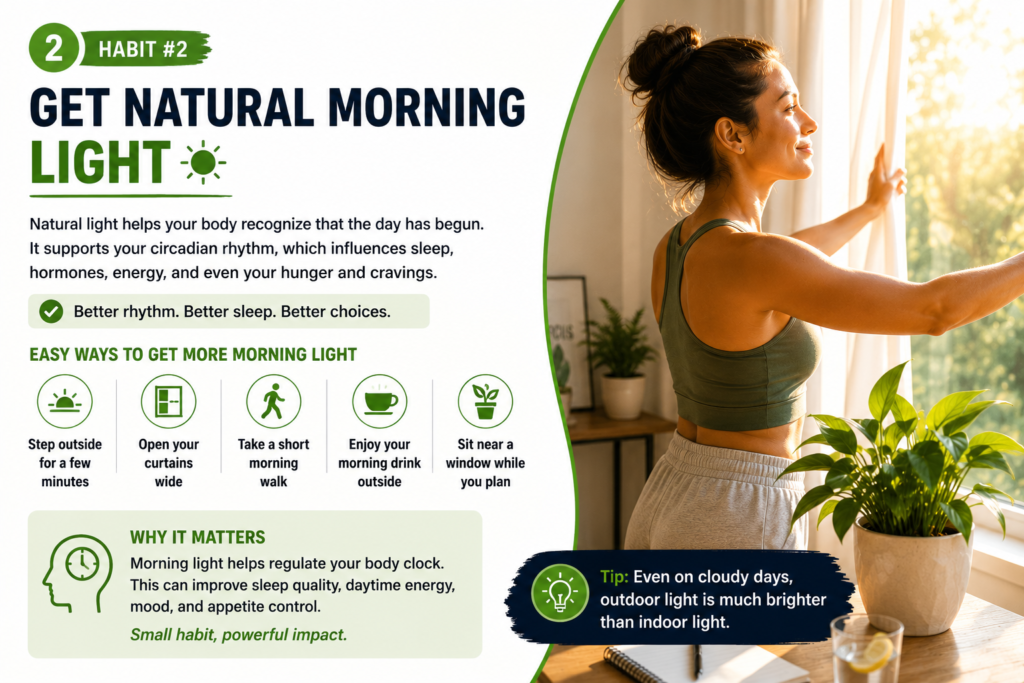
Natural light helps your brain recognize that the day has begun.
Light exposure plays an important role in the circadian rhythm, which influences your sleep-wake cycle, alertness, hormone timing, and eating patterns.
A consistent sleep-wake rhythm may indirectly support cravings and weight management because better sleep makes it easier to regulate appetite, energy, and decision-making.
Morning light does not melt belly fat. Its value comes from helping your body maintain a healthier daily rhythm.
How to Get Morning Light
You can:
- Step outside for a few minutes after waking.
- Drink your water near an open window.
- Walk outside before work.
- Sit outside while planning your day.
- Combine morning light with a short walk.
Outdoor light is usually brighter than indoor lighting, even on a cloudy day.
You do not need to stare at the sun. Simply spending some time outdoors is enough.
Make It Realistic
If you wake before sunrise or work night shifts, your schedule will be different. Focus on creating consistent light and sleep cues that match your routine.
Shift workers may need more personalized guidance because irregular schedules can affect sleep, appetite, and meal timing.
Habit 3: Build Your First Meal Around Protein
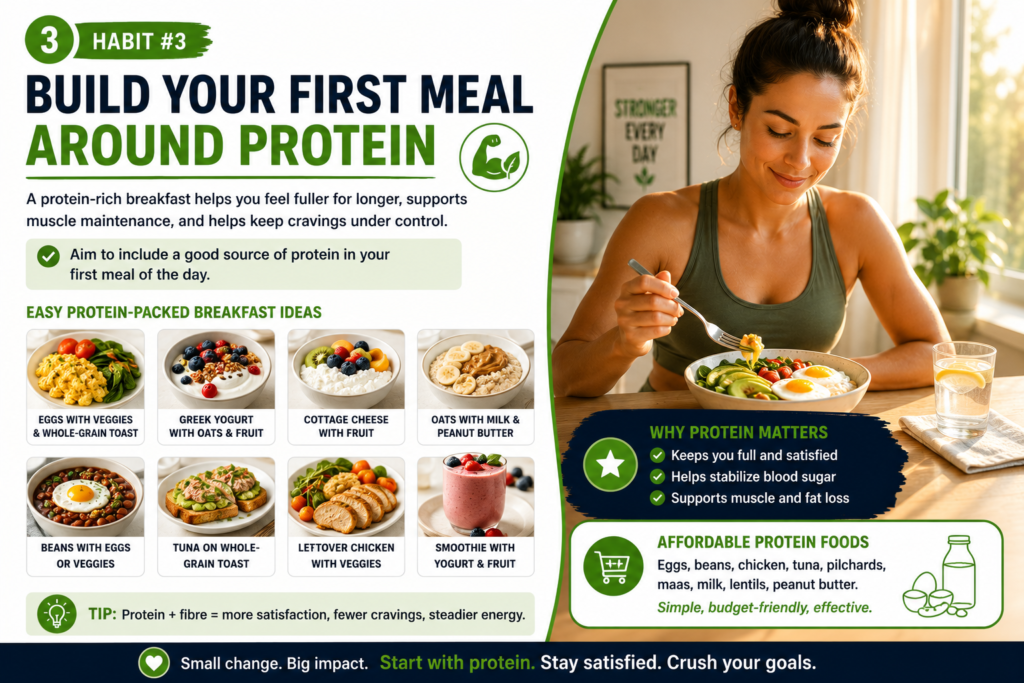
A breakfast that includes protein may help you feel fuller and more satisfied than a meal made mostly from refined carbohydrates.
Protein also supports muscle maintenance and recovery, which matters when you are exercising or trying to lose weight.
This does not mean everyone must eat immediately after waking. Some people are not hungry early in the morning, and meal timing can depend on individual preference, work schedules, medical needs, and training.
The important point is this:
When you eat your first meal, make protein part of it.
Protein-Based Breakfast Ideas
Affordable and practical options include:
- Eggs with vegetables and whole-grain toast
- Greek yogurt with oats and fruit
- Cottage cheese with fruit
- Oats prepared with milk and topped with peanut butter
- Beans with eggs or vegetables
- Tuna on whole-grain toast
- Leftover chicken with vegetables
- A smoothie containing yogurt, milk, or another protein source
For South African beginners, simple foods such as eggs, beans, pilchards, milk, maas, chicken, lentils, peanut butter, and tinned tuna can help build a protein-rich meal without relying on expensive supplements.
What About Protein Shakes?
A protein shake can be convenient, but it is not compulsory.
Whole foods can provide protein alongside fiber, vitamins, minerals, and greater meal satisfaction. Use protein powder as a tool when convenient—not as a requirement for fat loss.
For a deeper explanation, read:
Not Getting Enough Protein? Why Belly Fat and Cravings Feel Harder to Control
Habit 4: Add Fibre Instead of Starting With Sugar Alone
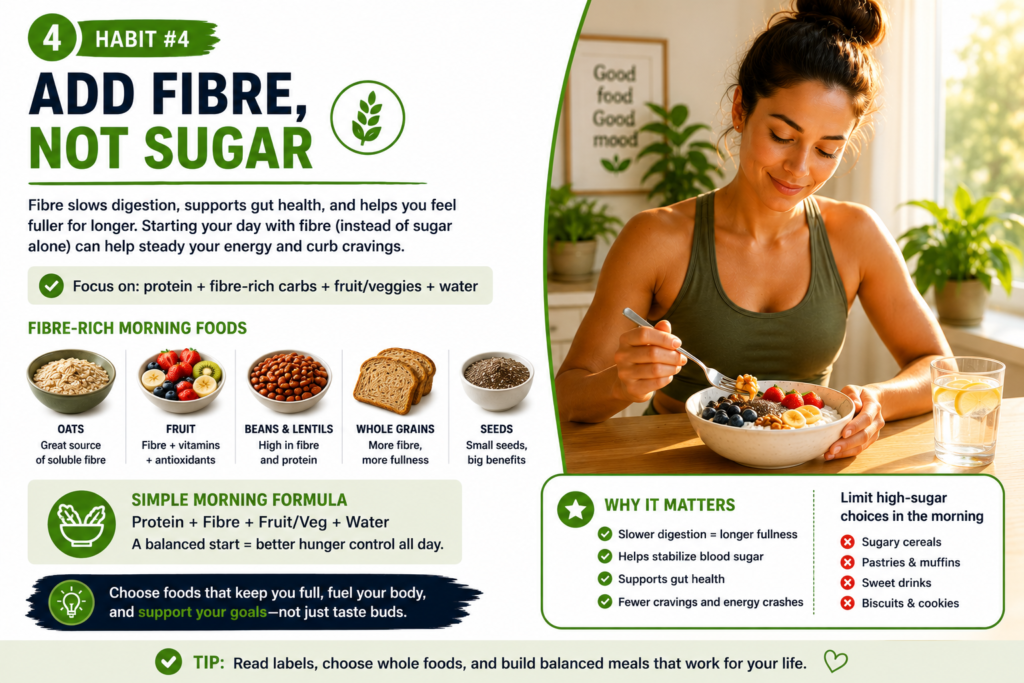
A breakfast made mainly from sugary cereal, sweetened drinks, pastries, biscuits, or white bread may not keep you satisfied for long.
These foods are not automatically forbidden. The problem is relying on them alone without enough protein, fiber, or other nourishing foods.
Fiber slows digestion, supports gut health, and can help meals feel more filling.
Fibre-Rich Morning Foods
Try adding:
- Oats
- Fruit
- Vegetables
- Beans
- Lentils
- Whole-grain bread
- Chia seeds
- Ground flaxseed
- Nuts
- Seeds
A balanced first meal can follow this simple formula:
Protein + fibre-rich carbohydrate + fruit or vegetables + water
Examples:
- Eggs, whole-grain toast, and tomato
- Greek yogurt, oats, and berries
- Beans, vegetables, and a small portion of starch
- Oats, milk, peanut butter, and banana
This approach is more useful than trying to eliminate all carbohydrates.
Carbohydrates provide energy. The goal is to choose satisfying combinations and appropriate portions rather than fear one nutrient.
For more practical meal guidance, read the following:
The Simple Meal Formula That Helps Reduce Cravings and Belly Fat Struggles
Habit 5: Move Your Body Early
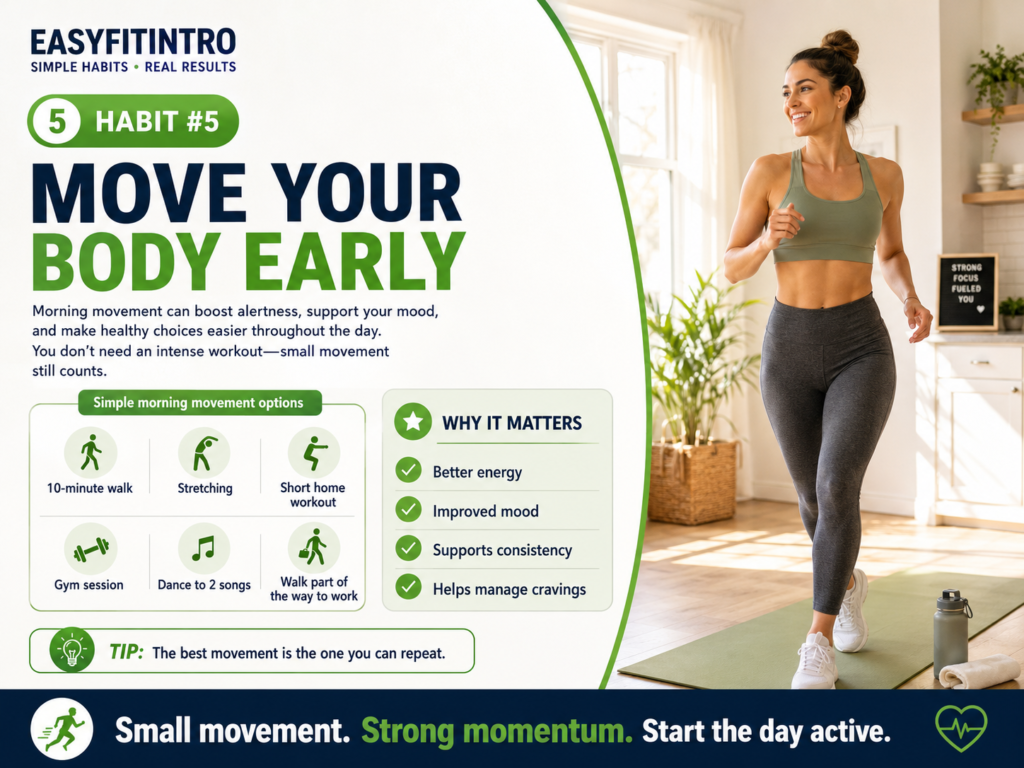
Morning movement can improve alertness, support your mood, and make physical activity easier to complete before the demands of the day take over.
You do not need an intense workout every morning.
A short walk, mobility routine, bodyweight session, or gym workout can all count.
Movement supports fat loss by contributing to energy expenditure, fitness, muscle maintenance, and overall health. It may also reduce stress and help some people manage appetite more effectively.
Simple Morning Movement Options
Choose what fits your current fitness level:
- A 10-minute walk
- Light stretching
- Bodyweight squats and wall push-ups
- A short home workout
- Walking part of the journey to work
- A gym session
- Dancing to two or three songs
- Mobility exercises for stiff joints
The best movement is not the most extreme one.
It is the one you can repeat.
Does Exercise on an Empty Stomach Burn More Belly Fat?
Exercising before breakfast may increase fat use during that specific workout, but this does not automatically lead to greater long-term belly fat loss.
Your overall calorie balance, food quality, activity, sleep, stress, and consistency matter more than whether you exercise before or after breakfast.
Train at the time that allows you to perform safely and consistently.
People taking glucose-lowering medication or managing a medical condition should seek professional guidance before making major changes to fasting or exercise.
Habit 6: Be Strategic With Coffee
Coffee can fit into a healthy routine.
Caffeine may improve alertness and exercise performance for some people. The problem begins when coffee replaces sleep, water, and proper meals.
A morning built around several sweetened coffees and no real food may leave you feeling alert temporarily but hungry and drained later.
Coffee drinks can also contain large amounts of sugar, syrups, cream, or flavored powders without feeling like a meal.
A Better Coffee Strategy
Try to:
- Drink water first.
- Avoid using coffee as your only breakfast every day.
- Limit excessive sugar and syrup.
- Notice whether caffeine increases anxiety or stomach discomfort.
- Avoid consuming caffeine so late that it disrupts your sleep.
- Pair coffee with a balanced meal when hunger appears.
Caffeine affects people differently. Some can drink it later without noticing immediate problems, while others experience poor sleep even when it is consumed hours before bed.
Since sleep affects cravings, your afternoon coffee can influence tomorrow’s morning routine.
For more on this connection, read:
Poor Sleep and Belly Fat: Why Cravings Feel Harder to Control When You’re Tired
Habit 7: Plan Your Next Two Meals Before the Day Gets Busy
One of the most powerful morning habits has nothing to do with supplements, detox drinks, or complicated recipes.
It is planning.
When you begin the day without knowing what you will eat, hunger eventually makes the decision for you.
That often means:
- Buying fast food because it is convenient
- Skipping lunch and overeating later
- Reaching for biscuits or sweets
- Drinking sugary beverages for energy
- Arriving home extremely hungry
- Snacking heavily after dinner
A simple plan reduces the number of food decisions you must make while tired or stressed.
The Two-Meal Planning Method
Each morning, decide:
- What will I eat for lunch?
- What will I eat for dinner?
Then identify one backup snack.
Your plan might look like this:
Lunch: Chicken, rice, and vegetables
Dinner: Eggs, potatoes, and salad
Backup snack: Greek yogurt and fruit
Or:
Lunch: Beans with pap and vegetables
Dinner: Tuna sandwiches with salad
Backup snack: Boiled eggs
The meals do not need to look perfect. They need to be available.
Preparation beats motivation when hunger becomes strong.
Bonus Habit: Protect the Night Before
A good morning often begins the previous evening.
It is difficult to wake up ready to exercise, eat well, and plan your meals when you slept too little or stayed awake snacking.
Adults should generally aim for at least seven hours of sleep, although individual needs can vary.
Before bed, try to:
- Prepare your clothes.
- Fill your water bottle.
- Decide on breakfast.
- Pack lunch where possible.
- Reduce unnecessary late-night scrolling.
- Avoid turning snacks into your main evening relaxation habit.
- Keep a reasonably consistent sleep schedule.
This reduces morning stress and removes several excuses before they appear.
For deeper guidance, read the following:
Late-Night Snacking and Belly Fat: Why Cravings Get Worse After Dinner
A 15-Minute Morning Routine for Busy Beginners
You do not need a perfect wellness routine.
Here is a simple version that can fit into a busy morning:
Minute 1–2: Drink water
Have one glass of water and open the curtains.
Minute 3–7: Get outside or move near natural light
Walk outside, stretch, or stand in the garden.
Minute 8–12: Prepare your first meal
Build it around protein and fiber.
Minute 13–15: Plan lunch, dinner, and one backup snack
Write the plan down or enter it into your phone.
That is enough to start.
The routine can grow later, but consistency comes first.
Example Morning Routines
Routine 1: Early Gym Morning
5:00 AM: Wake and drink water
5:10 AM: Small snack if needed
5:30 AM: Gym session
6:45 AM: Protein-rich breakfast
7:00 AM: Pack lunch and water
7:15 AM: Leave for work
Routine 2: Busy Work Morning
6:00 AM: Wake and drink water
6:10 AM: Five-minute outdoor walk
6:20 AM: Eggs and whole-grain toast
6:35 AM: Pack leftovers for lunch
6:45 AM: Leave for work
Routine 3: No Appetite Early in the Morning
6:00 AM: Water and natural light
6:15 AM: Short walk or stretching
7:00 AM: Coffee without excessive sugar
9:00 AM: Protein-and-fibre first meal
9:15 AM: Confirm lunch and dinner plan
You do not need to copy someone else’s schedule exactly.
Build a routine around your real life.
Morning Habits That Often Backfire
Some popular habits sound healthy but may make cravings harder to control.
1. Drinking Only Coffee Until Lunch
This may work for some people, but for others it leads to low energy, headaches, irritability, and overeating later.
2. Starting With a Sugary Drink
Sweetened coffee, energy drinks, juice drinks, and fizzy drinks can add a large amount of sugar without providing lasting fullness.
3. Eating a Tiny Breakfast While Extremely Hungry
A piece of fruit alone may not be enough when your body needs a full meal. Add protein and fibre.
4. Exercising Hard After Very Little Sleep
Training is valuable, but constant sleep deprivation can reduce recovery and make cravings harder to manage.
5. Trying to “Earn” Food
Exercise should not be punishment for eating. This mindset can create a cycle of restriction, guilt, and overeating.
6. Following a Routine That Is Too Complicated
A routine that takes 90 minutes may look impressive online but fail in real life.
Choose the smallest version you can repeat.
Quick Table: Weak Start vs Supportive Start
| Morning Pattern | What May Happen Later | Better Alternative |
|---|---|---|
| Coffee only | Hunger and low energy | Water plus a protein-rich meal |
| Sugary cereal alone | Hunger returns quickly | Add protein, fruit, and fibre |
| No meal plan | Convenience food takes over | Plan lunch and dinner early |
| Poor sleep | Stronger cravings and fatigue | Protect bedtime and sleep duration |
| No movement | Lower daily activity | Take a short morning walk |
| Sugary drinks | Extra calories with little fullness | Choose water or unsweetened drinks |
| Extreme routine | Burnout and inconsistency | Keep the routine simple |
Do You Have to Eat Breakfast to Lose Belly Fat?
No single meal is compulsory for everyone.
Some people feel better eating breakfast. Others prefer their first meal later. Belly fat loss depends mainly on your overall energy balance, food quality, activity, sleep, and consistency over time.
However, skipping breakfast is not helpful when it repeatedly causes you to become extremely hungry and overeat later.
Pay attention to your own pattern.
Ask:
- Does skipping breakfast improve my control or make it worse?
- Do I feel energetic or exhausted?
- Am I making deliberate choices or simply too rushed to eat?
- Do I overeat at night after eating very little during the day?
Use the answers to build a routine that works for your body and schedule.
How These Habits Support Belly Fat Loss
None of these habits targets belly fat directly.
You cannot choose where your body loses fat first. Genetics, hormones, age, sex, and overall body composition influence fat distribution.
These habits support belly fat loss indirectly by helping you:
- Manage hunger
- Reduce unplanned snacking
- Improve meal quality
- Maintain daily movement
- Support sleep
- Protect muscle
- Control overall calorie intake
- Stay consistent for longer
That is the real advantage.
A morning routine does not replace a calorie deficit. It helps create the conditions in which a sensible calorie deficit becomes easier to maintain.
Start With Only Three Habits
Trying to change everything at once usually leads to frustration.
For the next seven days, begin with:
- Drink water after waking.
- Include protein in your first meal.
- Plan lunch and dinner before the day becomes busy.
Once those feel normal, add morning light, movement, fiber, and better caffeine timing.
Small habits repeated consistently will outperform an extreme routine followed for three days.
Related EasyFitIntro Guides
Continue building your cravings and belly fat system with these guides:
- The Simple Meal Formula That Helps Reduce Cravings and Belly Fat Struggles
- Not Getting Enough Protein? Why Belly Fat and Cravings Feel Harder to Control
- Why You’re Always Hungry After Eating: The Blood Sugar–Craving Cycle Explained
- The Hidden Sugar Spikes That Keep Belly Fat Stubborn
- Poor Sleep and Belly Fat: Why Cravings Feel Harder to Control When You’re Tired
- The Hidden Reasons Your Belly Fat Doesn’t Go Away (Even When You’re Doing Everything Right)
The Bottom Line
A better morning will not magically remove belly fat.
But it can make cravings, energy, meal choices, movement, and consistency easier to manage.
Start your day by:
- Drinking water
- Getting natural light
- Including protein in your first meal
- Adding fibre
- Moving your body
- Using caffeine wisely
- Planning your next meals
You do not need to complete every habit perfectly.
Choose a few, practice them consistently, and build from there.
The goal is not to win one morning.
The goal is to create a routine that supports better decisions all day.
Free Belly Fat Reset Workbook
Want a simple plan that helps you turn these habits into a daily routine?
Download the free Belly Fat Reset Workbook from EasyFitIntro.
It includes beginner-friendly checklists and practical steps for improving your meals, movement, sleep, stress, cravings, and consistency.
Download your free Belly Fat Reset Workbook here:
Frequently Asked Questions
What should I do first in the morning to support fat loss?
Start with a simple action such as drinking water, getting natural light, or taking a short walk. Then eat a balanced first meal when you are hungry.
What is the best breakfast for reducing cravings?
There is no single perfect breakfast. A useful structure includes protein, fiber, fruit or vegetables, and a suitable carbohydrate source. Eggs with vegetables and whole-grain toast or Greek yogurt with oats and fruit are good examples.
Does drinking water in the morning burn belly fat?
No. Water does not directly burn belly fat. However, staying hydrated supports normal body function and can help replace sugary drinks.
Can I drink coffee while trying to lose belly fat?
Yes. Coffee can fit into a healthy diet. Be mindful of added sugar, syrups, cream, total caffeine intake, and whether it affects your sleep.
Is walking in the morning enough exercise?
Walking is a valuable form of activity, especially for beginners. For broader health and body-composition benefits, gradually combine walking with strength training and other activities you enjoy.
Must I eat breakfast to lose weight?
No. Breakfast is not compulsory for weight loss. However, a balanced breakfast may help if skipping it leads to intense hunger, low energy, or overeating later.
How much protein should I eat at breakfast?
Protein needs differ according to body size, age, activity, health, and total daily intake. Instead of chasing one perfect number, begin by including a clear protein source in your first meal.
Can morning sunlight reduce cravings?
Morning light does not directly switch off cravings. It can support your circadian rhythm and sleep-wake schedule, which may indirectly support appetite, energy, and healthier decisions.
How quickly will these morning habits reduce belly fat?
There is no fixed timeline. Fat loss depends on your starting point, overall calorie intake, activity, sleep, health, and consistency. Focus on maintaining the habits rather than expecting rapid spot reduction.
What should I do if I am never hungry in the morning?
You do not need to force a large meal immediately. Hydrate, get some light and movement, and prepare a balanced first meal for when hunger appears.
Medical Note
This article provides general education and is not a substitute for personalized medical advice.
Speak with a qualified healthcare professional if you experience persistent excessive hunger, unexplained weight changes, severe fatigue, dizziness, symptoms of diabetes, disordered eating, or concerns about your medication.
People who are pregnant, breastfeeding, managing diabetes, or living with another medical condition may need individual guidance on meal timing, fasting, exercise, and caffeine.
Source guidance
The article’s sleep recommendation is supported by CDC guidance that adults generally need at least seven hours of sleep per day.
Research indicates that light exposure is closely connected with circadian timing, sleep-wake regulation, eating patterns, and metabolism. The article correctly presents morning light as a supportive habit rather than a direct fat-loss treatment.
Protein-rich breakfasts have improved fullness or reduced pre-lunch hunger in some controlled studies, although outcomes differ across populations and study designs. That is why the article uses careful language rather than promising that breakfast protein eliminates cravings.
A systematic review found that walking soon after eating reduced post-meal glucose excursions more effectively than remaining inactive or exercising before the meal. This supports walking as a useful activity, although the article does not claim that a short walk directly burns belly fat.