
Introduction
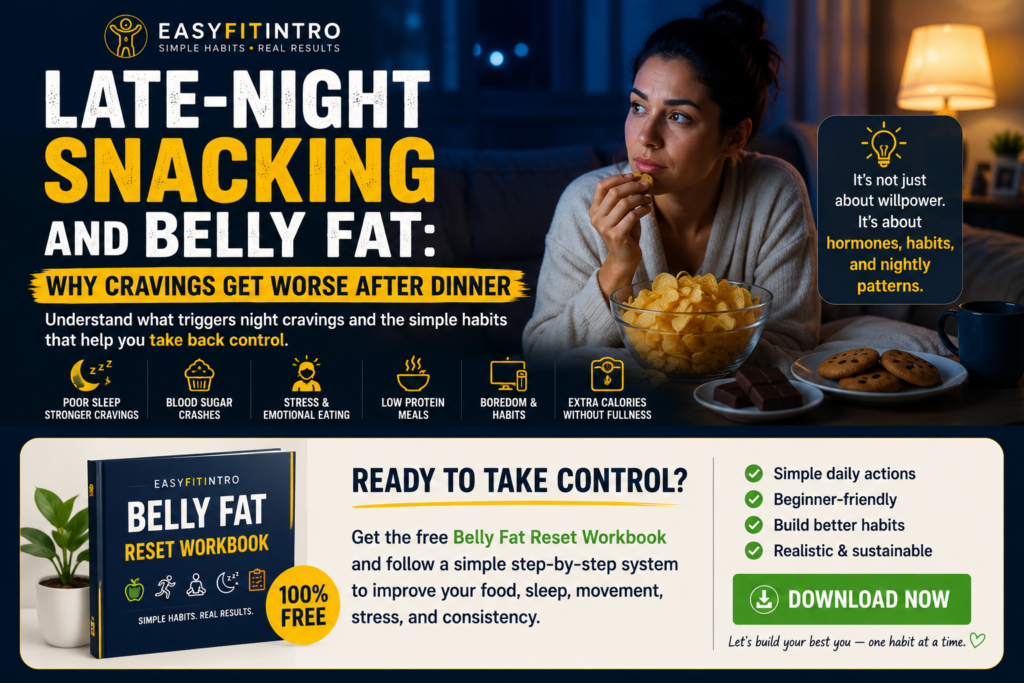
Do your cravings get worse after dinner?
You may eat well during the day, stay focused, and feel in control. But once the evening comes, everything changes. You start craving biscuits, bread, chips, chocolate, fizzy drinks, or something sweet before bed.
If this happens often, you are not alone.
Late-night snacking is one of the most common habits that makes belly fat feel harder to control. The problem is not only the snack itself. The real issue is the cycle behind it.
Late-night cravings can be connected to poor sleep, stress, blood sugar crashes, low-protein meals, boredom, emotional eating, and tiredness. When these things combine, your body starts looking for quick comfort and quick energy.
This article explains why cravings often get worse after dinner, how late-night snacking can affect belly fat, and what simple habits can help you take control without extreme dieting.
Why Cravings Often Get Worse at Night
Night cravings are not always caused by hunger.
Sometimes your body is tired. Sometimes your blood sugar has dropped. Sometimes you did not eat enough protein earlier in the day. Sometimes you are stressed and looking for comfort.
This is why many people can stay disciplined during the day but struggle at night.
During the day, you may be busy, distracted, or focused on work. But at night, when things slow down, your body and mind finally feel the pressure.
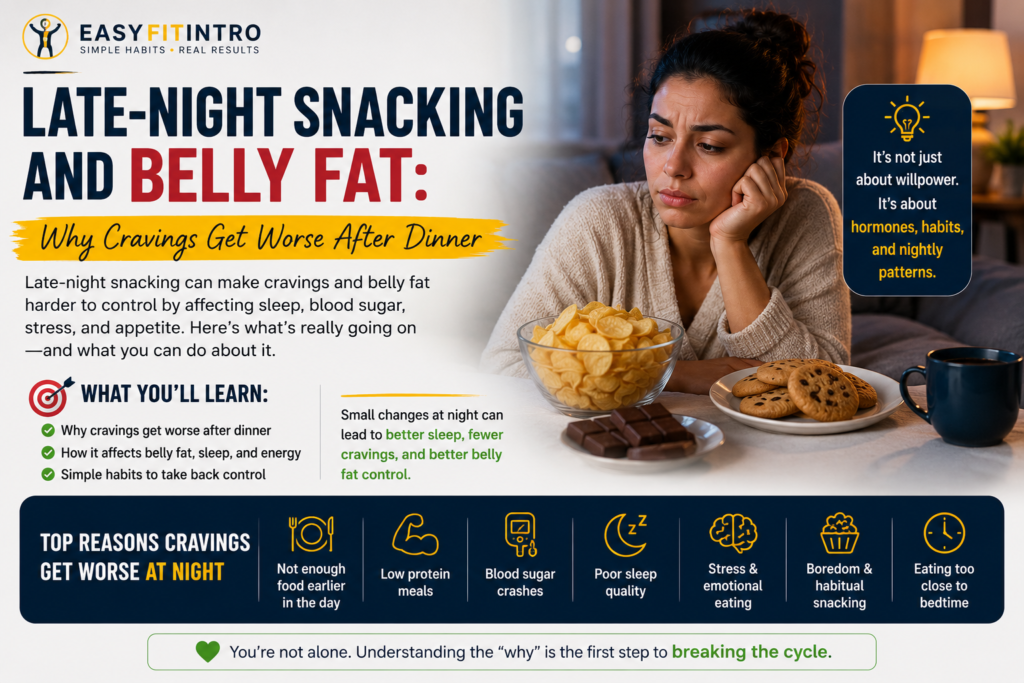
You may notice cravings after dinner because of the following:
- Low energy
- Stress from the day
- Not enough protein
- Blood sugar crashes
- Poor sleep the night before
- Emotional eating
- Habitual snacking while watching TV
- Skipping meals earlier in the day
This is why the solution is not simply to say, “Stop eating at night.”
A better question is
Why does my body keep asking for food at night?
Once you understand the reason, you can fix the pattern.
1. You May Not Be Eating Enough During the Day
One big reason cravings get worse after dinner is that you may not be eating enough earlier in the day.
Some people skip breakfast, eat a small lunch, drink coffee to push through hunger, and then wonder why they feel out of control at night.
The body does not forget.
If you under-eat during the day, your hunger may come back stronger in the evening. This can make late-night snacking feel almost impossible to resist.
A common pattern looks like this:
Small breakfast → rushed lunch → low energy → big dinner → night cravings
This does not mean you must eat a huge breakfast. But you should give your body enough nourishment during the day so it does not feel deprived at night.
A better approach is to build meals around the following:
- Protein
- Fibre
- Healthy fats
- Slow-digesting carbohydrates
- Water
When your daytime meals are more balanced, your evening cravings often become easier to manage.
2. Low Protein Can Make Night Cravings Worse

Protein is one of the most important nutrients for controlling cravings.
It helps you feel fuller for longer, supports muscle repair, and makes meals more satisfying. If your meals are too low in protein, you may feel hungry again soon after eating.
This becomes a problem at night.
You may eat dinner, but if that dinner is mostly refined carbohydrates or too small, your body may still look for something extra before bed.
Examples of low-protein evening meals include:
- Bread and tea only
- Cereal at night
- Pasta with little protein
- Chips or snacks instead of dinner
- A small salad without protein
- Coffee and biscuits after work
These foods may fill your stomach for a short time, but they may not keep you satisfied.
Better dinner protein options include the following:
- Eggs
- Chicken
- Fish
- Beans
- Lentils
- Greek yogurt
- Lean meat
- Cottage cheese
- Tofu
- Tuna
I broke it down in this article here: Not Getting Enough Protein? Why Belly Fat and Cravings Feel Harder to Control.
If your night cravings are intense, check your protein first.
3. Blood Sugar Crashes Can Trigger Evening Snacking
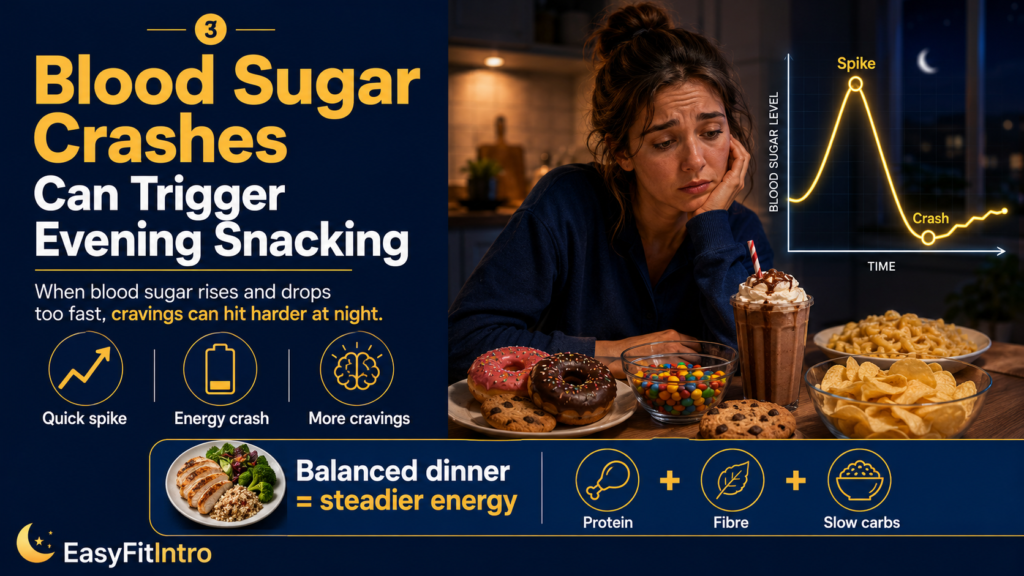
Blood sugar plays a major role in cravings.
When you eat a meal or snack that is high in sugar or refined carbohydrates but low in protein and fiber, your blood sugar may rise quickly. After that, it can drop again, leaving you tired, hungry, and craving more quick energy.
This can happen during the day and continue into the evening.
A blood sugar crash can feel like
- Sudden hunger
- Craving something sweet
- Feeling tired or weak
- Irritability
- Headaches
- Trouble focusing
- Feeling like you “need” a snack
At night, this can easily become biscuit cravings, chocolate cravings, bread cravings, or fizzy drink cravings.
The cycle looks like this:
Sugar spike → energy crash → cravings → late snack → poor sleep → more cravings tomorrow
This is why late-night snacking is not only about calories. It can also keep the blood sugar-craving cycle going.
Read more here: The Hidden Sugar Spikes That Keep Belly Fat Stubborn.
If you want fewer night cravings, your dinner should help keep blood sugar stable.
A simple dinner formula:
Protein + fibre + vegetables + slow carbs + water
Example:
- Chicken, rice, and vegetables
- Eggs with vegetables and avocado
- Beans with salad and a small portion of starch
- Tuna with whole-grain toast and cucumber
- Greek yogurt with oats and berries
The goal is not to fear carbohydrates. The goal is to balance them.
4. Poor Sleep Can Make You Snack More at Night
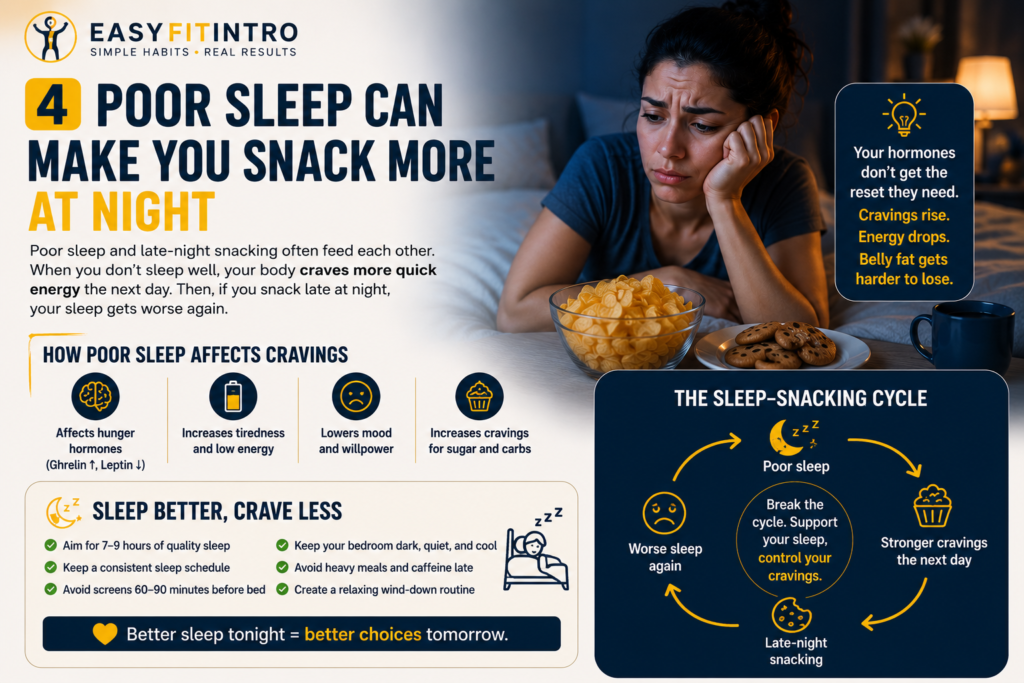
Poor sleep and late-night snacking often feed each other.
When you do not sleep well, your body may crave more quick energy the next day. You may feel tired, stressed, and more likely to reach for sugar or snacks.
Then, if you snack heavily late at night, your sleep may become worse again.
The cycle becomes:
Poor sleep → stronger cravings → late-night snacking → worse sleep → more cravings
This is why sleep is part of the belly fat system.
Poor sleep may affect hunger hormones, energy, mood, and appetite control. When you are tired, it becomes harder to make calm food choices.
Read more here: Poor Sleep and Belly Fat: Why Cravings Feel Harder to Control When You’re Tired.
If you want to reduce late-night snacking, do not only focus on food. Also focus on getting better sleep.
5. Stress Can Turn Night Snacking Into Comfort Eating
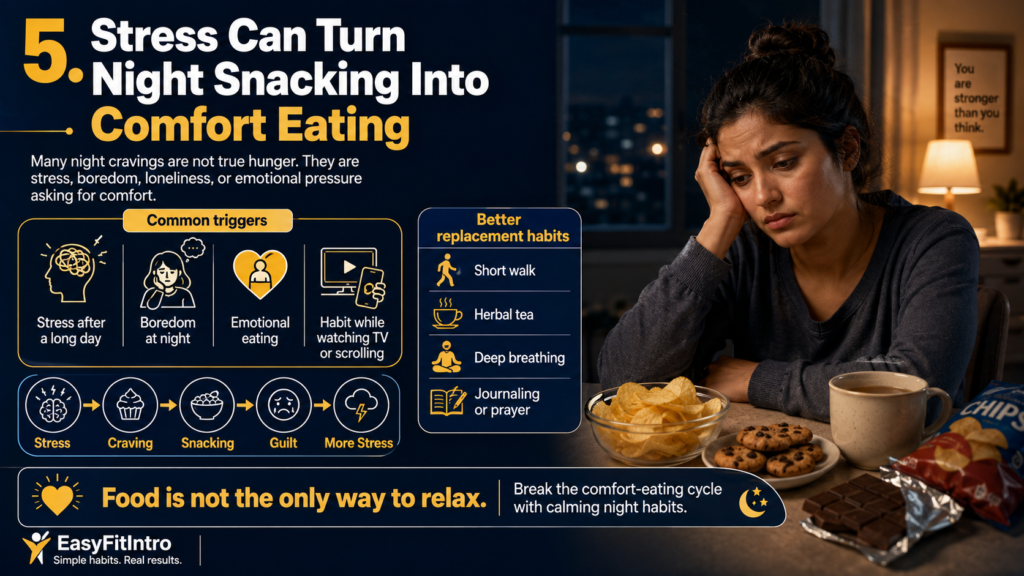
Many people do not snack at night because they are hungry.
They snack because they are tired, stressed, lonely, bored, anxious, or emotionally drained.
After a long day, food can feel like comfort. Sweet and salty snacks can give a quick reward to the brain. This is why night snacking often happens while watching TV, scrolling, or sitting alone.
The issue is that emotional snacking does not solve the stress. It only gives short relief.
Then later, you may feel guilty, heavy, bloated, or frustrated.
This creates another cycle:
Stress → craving → snacking → guilt → more stress
To break this pattern, you need a replacement habit.
Instead of only removing the snack, replace the emotional reward.
Try:
- A short walk
- Herbal tea
- Stretching
- Deep breathing
- Journaling
- Prayer or meditation
- A warm shower
- Preparing tomorrow’s breakfast
- Reading instead of scrolling
The goal is to teach your body that food is not the only way to relax.
6. Eating Too Close to Bed May Affect Sleep and Digestion
Eating late at night is not automatically bad.
But heavy meals and sugary snacks close to bedtime can make sleep and digestion harder for some people.
When you lie down soon after eating, you may feel bloated or uncomfortable or experience heartburn. Your body may also stay busy digesting when it should be winding down for sleep.
This matters because poor sleep can make cravings worse the next day.
You do not need a strict rule, but it can help to create a gentle cut-off routine.
For example:
- Eat dinner earlier when possible
- Avoid heavy snacks right before bed
- Choose lighter protein-based snacks if you’re truly hungry
- Reduce sugary drinks at night
- Avoid eating while lying down
- Give your body time to digest before sleep
A good target is to finish your main meal at least 2 to 3 hours before bed when possible.
If your schedule does not allow that, keep the meal lighter and balanced.
7. Late-Night Snacking Can Add Calories Without Satisfaction

Another reason late-night snacking affects belly fat is simple: it can add extra calories quickly.
The problem is that night snacks are often not balanced meals. They are usually high-calorie, easy-to-overeat foods.
Common night snacks include:
- Chips
- Biscuits
- Chocolate
- Donuts
- Cakes
- Sugary drinks
- Takeaways
- Ice cream
- White bread
These foods are easy to eat quickly and hard to stop once you start.
They may give pleasure, but they often do not provide lasting fullness.
This means you can eat a lot of calories and still feel unsatisfied.
That is why the goal should not be to starve at night. The goal is to eat in a way that actually satisfies your body.
8. Boredom Can Feel Like Hunger
Sometimes night cravings are not about physical hunger. They are bored.
When the day is over and everything becomes quiet, your brain may look for stimulation. Food becomes entertainment.
This is especially common when snacking is connected to watching TV, scrolling social media, or relaxing after work.
Ask yourself:
Am I hungry, or am I looking for something to do?
A simple test:
If you would eat eggs, chicken, yogurt, beans, or a proper meal, it may be real hunger.
If you only want biscuits, chips, chocolate, or sweets, it may be a craving.
That does not mean you are wrong for wanting those foods. It just helps you understand what is happening.
When you can name the pattern, you can control it better.
What to Do Instead of Late-Night Snacking
You do not need to be perfect.
Start with small changes that make your evening easier.
1. Eat a proper dinner
Make sure dinner includes protein, fiber, and a balanced carbohydrate source.
2. Drink water after dinner
Sometimes thirst can feel like hunger. Drink water before deciding you need a snack.
3. Walk for 10 minutes
A short walk after dinner can support digestion, blood sugar, and stress relief.
4. Create a kitchen closing routine
After dinner, clean the kitchen, pack leftovers, and mentally close the eating window.
5. Keep trigger foods out of sight
If snacks are visible, cravings become harder to resist. Put them away or avoid keeping large amounts at home.
6. Build a wind-down routine
Stretch, shower, pray, journal, read, or breathe. Teach your body to relax without food.
7. Plan a better snack if needed
If you are truly hungry, choose something that supports your goals.
Better Night Snack Options
If you are genuinely hungry at night, choose a snack that is more satisfying and less likely to trigger overeating.
Better options include:
- Greek yogurt
- Boiled eggs
- Cottage cheese
- Tuna with cucumber
- A small bowl of oats
- Peanut butter on whole-grain toast
- A small protein smoothie
- Beans or lentils with vegetables
- Chicken pieces with salad
- Herbal tea with a protein-based snack
The goal is not to punish yourself. The goal is to choose food that helps you feel satisfied without restarting the craving cycle.
Quick Table: Craving Snack vs Supportive Snack
| Craving Pattern | What Usually Happens | Better Option |
|---|---|---|
| Chips at night | Easy to overeat | Eggs or tuna with vegetables |
| Chocolate after dinner | Quick pleasure, more cravings | Greek yogurt with berries |
| Sugary drink | Blood sugar spike | Water or herbal tea |
| Biscuits with tea | Low fullness | Peanut butter on whole-grain toast |
| Takeaway late at night | Heavy digestion | Balanced dinner earlier |
| Ice cream before bed | Sugar + poor fullness | Cottage cheese or yogurt |
Simple Evening Routine to Reduce Night Cravings
Try this beginner-friendly routine:
6:30 PM – 7:30 PM: Eat a balanced dinner
7:30 PM – 7:45 PM: Take a short walk
8:00 PM: Drink water or herbal tea
8:15 PM: Prepare your breakfast or lunch for tomorrow
8:30 PM: Close the kitchen
9:00 PM: Stretch, breathe, pray, journal, or shower
9:30 PM – 10:00 PM: Start winding down for sleep
This routine helps your body feel safe, fed, and prepared.
When the evening has structure, cravings have less space to take over.
Related EasyFitIntro Guides
Late-night snacking is part of a bigger cravings and belly fat picture. These guides will help you understand the full system:
- If your meals do not keep you full, read The Simple Meal Formula That Helps Reduce Cravings and Belly Fat Struggles
- If you are not eating enough protein, read: Not Getting Enough Protein? Why Belly Fat and Cravings Feel Harder to Control
- If you feel hungry soon after eating, read Why You’re Always Hungry After Eating: The Blood Sugar–Craving Cycle Explained
- If sugar spikes keep pulling you into cravings, read The Hidden Sugar Spikes That Keep Belly Fat Stubborn
- If sleep is making your cravings worse, read: Poor Sleep and Belly Fat: Why Cravings Feel Harder to Control When You’re Tired
- If belly fat still feels stuck even when you are trying, read The Hidden Reasons Your Belly Fat Doesn’t Go Away (Even When You’re Doing Everything Right)
The Bottom Line
Late-night snacking can make belly fat harder to control, not only because of extra calories but also because it is often connected to poor sleep, stress, blood sugar crashes, low protein, and emotional eating.
If your cravings get worse after dinner, do not only blame yourself.
Look at the full pattern.
Did you eat enough protein during the day?
Did your dinner keep you full?
Did your blood sugar crash?
Are you tired?
Are you stressed?
Are you using food to relax?
When you fix the pattern, the cravings become easier to manage.
Start tonight with one simple change: eat a balanced dinner, take a short walk, drink water, and create a kitchen closing routine.
Small evening habits can make belly fat control feel much easier.
Free Belly Fat Reset Workbook
If you want a simple step-by-step system to support your belly fat journey, download the free Belly Fat Reset Workbook from EasyFitIntro.
It will help you build beginner-friendly habits around food, movement, sleep, cravings, stress, and daily consistency.
Get the free Belly Fat Reset Workbook here:
Frequently Asked Questions
Does late-night snacking cause belly fat?
Late-night snacking does not automatically cause belly fat, but it can make belly fat harder to control if it adds extra calories, disrupts sleep, triggers cravings, or keeps blood sugar unstable.
Why do I crave food after dinner?
You may crave food after dinner because of low protein, blood sugar crashes, stress, boredom, poor sleep, or not eating enough earlier in the day.
What should I eat at night if I am hungry?
Choose protein-based or fiber-rich options such as Greek yogurt, boiled eggs, cottage cheese, oats, tuna, beans, or peanut butter on whole-grain toast.
Is it bad to eat before bed?
Eating before bed is not always bad, but heavy, sugary, or fatty foods close to bedtime may affect digestion and sleep quality for some people.
How can I stop late-night cravings?
Eat balanced meals during the day; include enough protein at dinner; walk after meals; drink water; reduce screen scrolling; manage stress; and create a kitchen closing routine.
Can poor sleep make night cravings worse?
Yes. Poor sleep can affect hunger hormones, energy, mood, and appetite control, making cravings stronger the next day and at night.
What is the best evening habit for belly fat?
A balanced dinner, a short walk, and a consistent wind-down routine are a strong starting point for reducing night cravings and supporting belly fat control.
Sources to Reference
- CDC — Sleep in Adults
- NIH / PMC — Sleep Deprivation and Central Appetite Regulation
- NIH / PMC — The Impact of Meal Timing on Risk of Weight Gain and Obesity
- NIH / PMC — Circadian Timing of Food Intake and Metabolic Health
- Mayo Clinic — Why the Body Is Not Geared for Late-Night Snacking
- Mayo Clinic — Timing Snacks to Avoid Heartburn